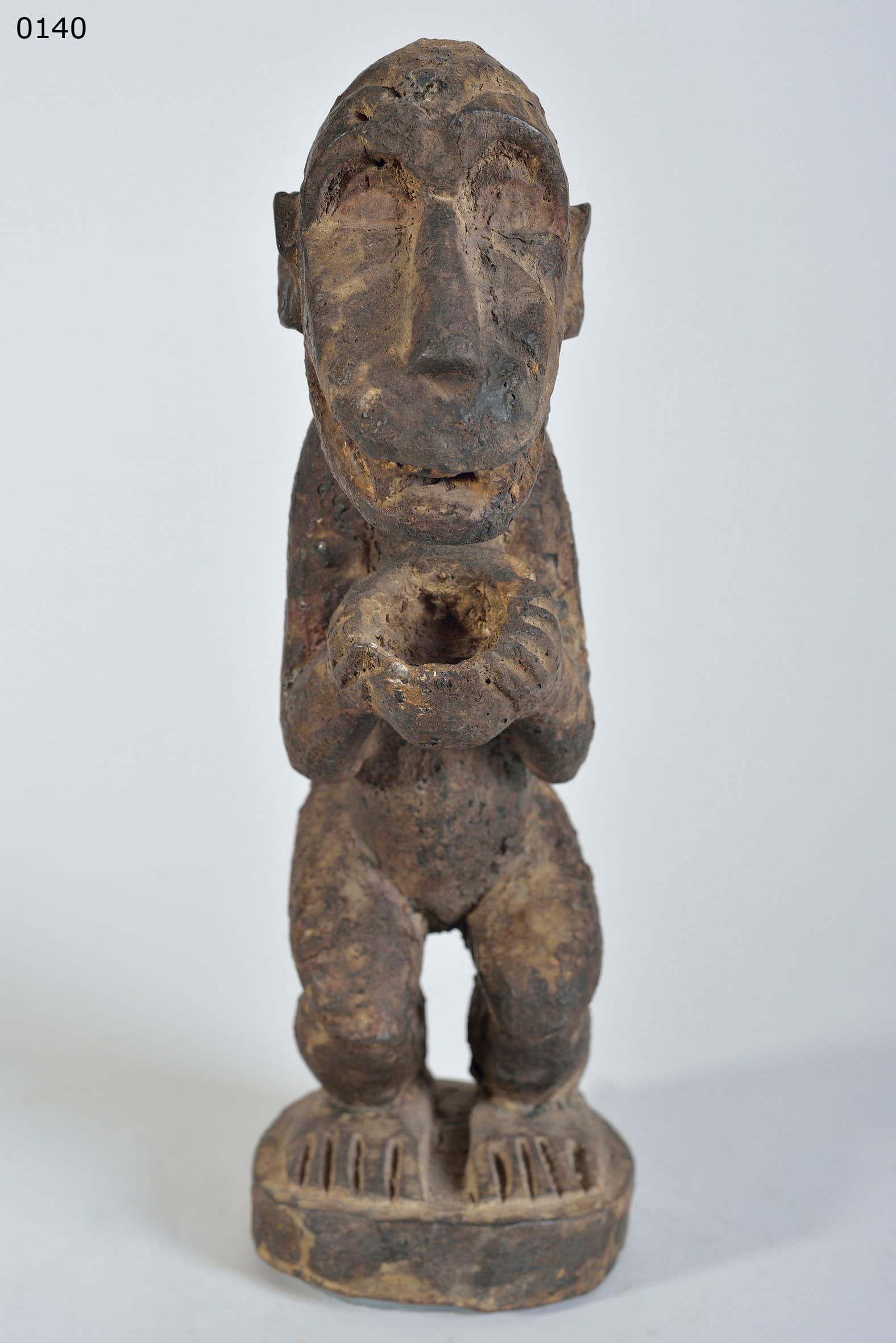
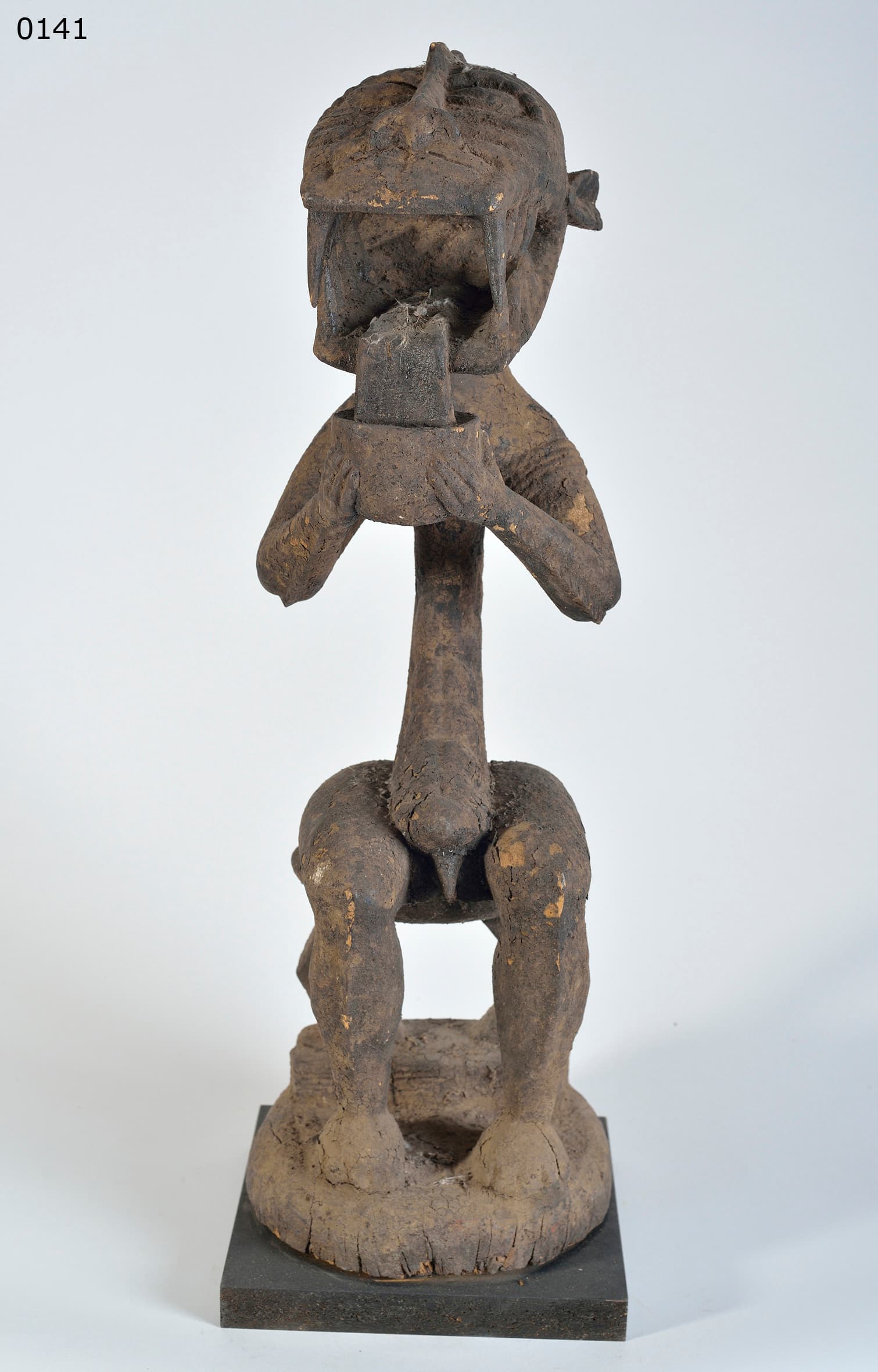
Diese grimmige Holzfigur vereint einen menschlichen weiblichen Torso - mit hervorstehenden Brüsten und einer Opferschale in der Hand - mit dem aggressiven, stilisierten Kopf eines Pavians mit gefletschten Zähnen. Die gesamte Schnitzerei ist mit einer sehr dicken, krustigen und geschwärzten Opferpatina überzogen.
1. Ästhetischer Stil und regionale Eigenheiten
Während das Volk der Baule international für seine heiteren, hochglanzpolierten und naturalistischen Porträtmasken bekannt ist, stellen seine Mbotumbo- (oder Gbekre-) Figuren das genaue ästhetische Gegenteil dar. Diese Skulptur soll die rohe, ungezähmte und gefährliche Energie des tiefen Busches heraufbeschwören. Durch die Kombination der menschlichen weiblichen Form (die den gesellschaftlichen Fortbestand repräsentiert) mit der aggressiven, zahnlosen Visage eines Pavians (einem Geschöpf der Wildnis) baut der Schnitzer visuell eine Brücke zwischen dem zivilisierten Dorf und den chaotischen, mächtigen Kräften der Natur.
2. Rituelle Funktion und Geheimbund-Kontext
Im Gegensatz zu den raffinierten Ahnenporträts der Baule, die im Haus aufbewahrt werden, handelt es sich bei den Mbotumbo-Figuren um furchterregende Kraftobjekte (amoin), die in speziellen, versteckten Schreinen außerhalb des Dorfes oder am Rande des Geländes aufbewahrt werden. Sie werden von Trance-Wahrsagern (komien) benutzt, um die Gemeinschaft vor bösartiger Zauberei, Plagen und bösen Buschgeistern zu schützen. Die Schale an der Brust der Figur dient als Gefäß für intensive rituelle Opfergaben. Der Geist in der Statue gilt als äußerst flüchtig und muss ständig besänftigt und "gefüttert" werden, um seine aggressive Energie auf den Schutz des Geschlechts zu lenken, anstatt ihm zu schaden.
3. Physische Patina und Altersnachweis
Die Oberfläche dieser Figur ist ein besonders charakteristisches Merkmal. Sie ist mit einer dichten, sehr brüchigen und ungleichmäßigen Kruste aus geschwärztem organischem Material überzogen. Dabei handelt es sich um eine Opferpatina, deren Beschaffenheit auf eine jahrzehntelange aktive rituelle Nutzung hindeutet und die aus Resten von Opfergaben wie Hirsebrei oder Palmöl bestehen dürfte. Diese dicke Nyama-Kruste (spirituelle Energie) hat die darunter liegenden Schnitzspuren weitgehend ausgefüllt, was für eine aktive rituelle Nutzung in einem traditionellen Buschschrein der Baule spricht, die sich zeitlich in das frühe 20. Jahrhundert einordnen lässt.
Zusammenfassung
Diese Baule-Mbotumbo-Figur ist ein eindrucksvolles Beispiel der westafrikanischen Schutzmagie. Ihre aggressive Mensch-Tier-Hybridität und die dicke Opferkruste machen sie zu einem bedeutenden Zeugnis dieser rituellen Praxis.
KI-unterstützt erstellt aus Sammlungsgutachten, Objektfotografie und eigener Recherche, redaktionell geprüft. Fehler sind möglich — Hinweise darauf sind uns willkommen. Zum Verfahren →