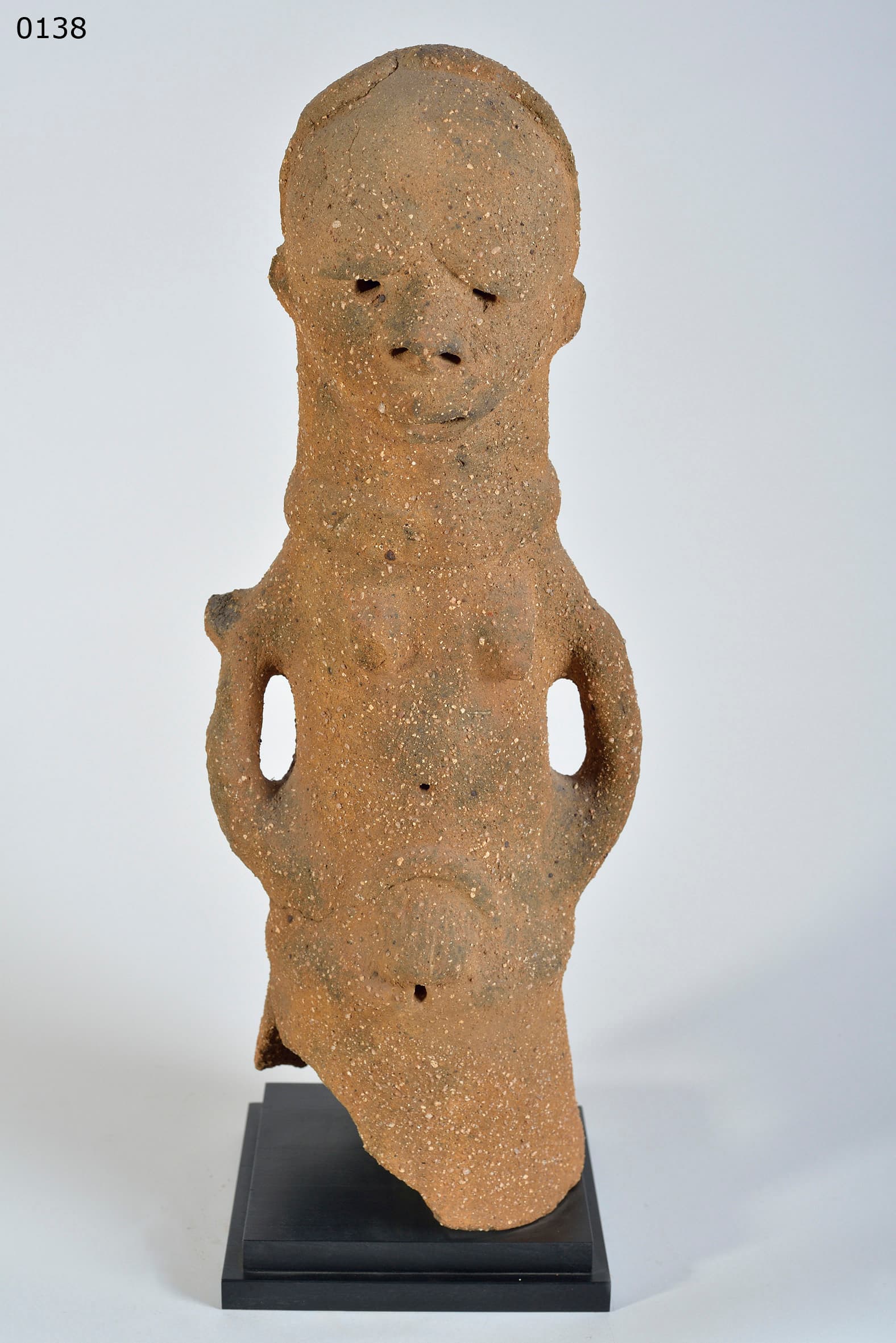
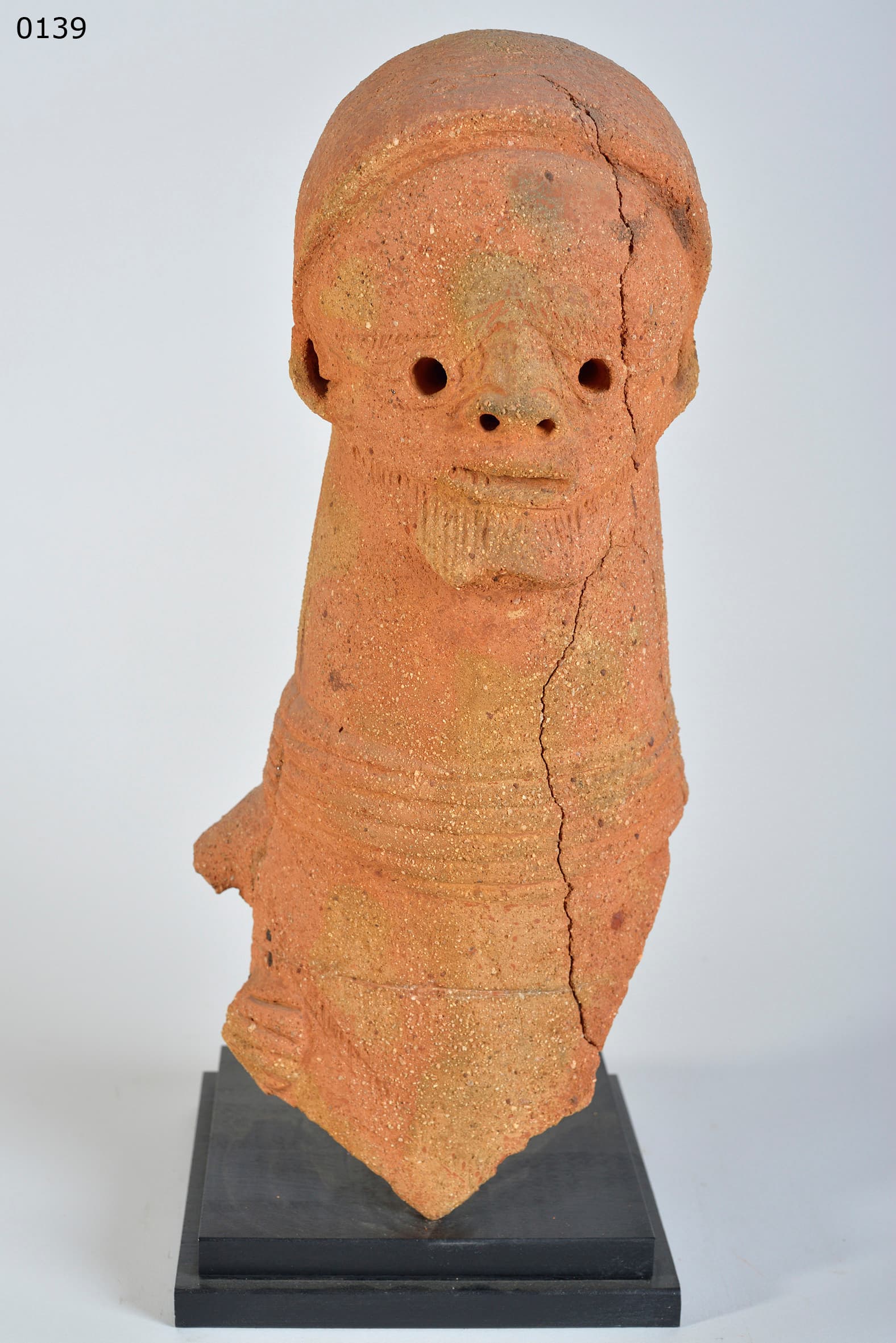
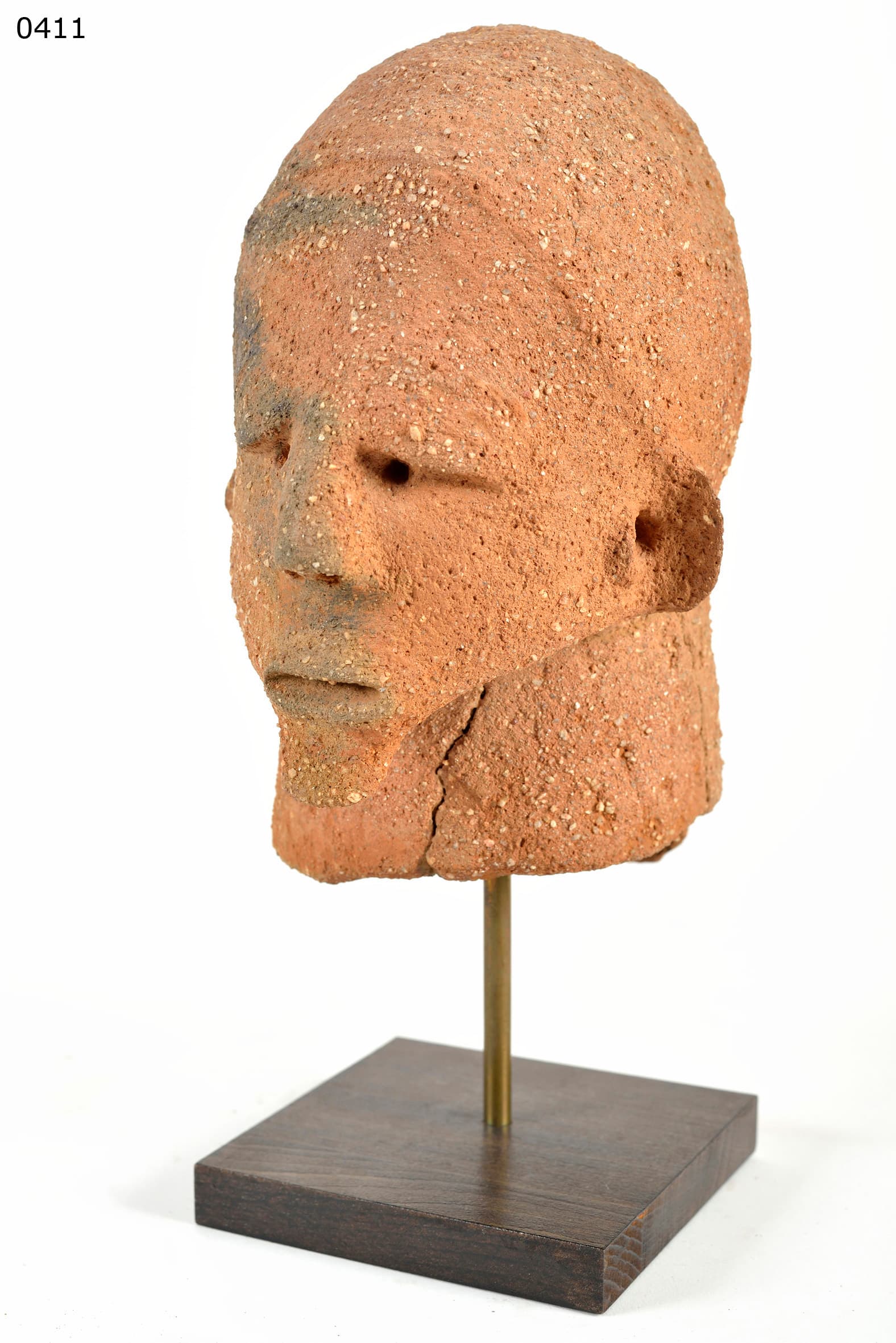
Diese rote Terrakottafigur stellt einen sitzenden, stilisierten Menschen mit stumpfen, rudimentären Gliedmaßen und einem breiten Gesicht mit tief eingeschnittenen, horizontal geschlitzten Augen und einer vorspringenden Nase dar. Der Ton hat eine trockene, matte Oberfläche mit ausgedehnten archäologischen Löchern und Lehmablagerungen.
1. Ästhetischer Stil und regionale Charakteristika
Dieses Stück weist stilistische Merkmale auf, die für die alten Terrakotta-Zivilisationen Nordnigerias charakteristisch sind, insbesondere für die Katsina- oder Sokoto-Kultur (die sich mit der berühmten Nok-Kultur überschneiden). Die Ästhetik ist durch extreme geometrische Abstraktion gekennzeichnet. Die Gliedmaßen sind auf einfache röhrenförmige Formen reduziert, während das Gesicht durch die strenge, horizontale Schlitzung von Augen und Mund dominiert wird - eine Technik, die durch direktes Schneiden in den nassen Ton erreicht wird und tiefe, dramatische Schatten wirft.
2. Rituelle Funktion und religiöse Bedeutung
Die genaue Funktion dieser Figuren, die aus alten Grabhügeln und vergessenen Schreinen ausgegraben wurden, ist nach wie vor Gegenstand archäologischer Debatten. Es wird jedoch allgemein angenommen, dass es sich um Grab- oder Ahnenfiguren handelt. Sie wurden auf Gräbern oder in heiligen Umfriedungen aufgestellt und dienten als ewige Fürsprecher zwischen der lebenden Gemeinschaft und den mächtigen Geistern der Erde, die für die Fruchtbarkeit des Bodens und den erfolgreichen Übergang der Toten in das Reich der Ahnen sorgen sollten.
3. Physische Patina und Altershinweise
Der physische Zustand der Terrakotta spricht für ein hohes Alter. Die Oberfläche zeigt keine Anzeichen moderner Oberflächenveredelungen und weist stattdessen eine tiefgreifende, körnige Zersetzung auf, die auf eine jahrhundertelange Vergrabung hindeutet. Wurzelspuren, verkalkte Mineralien und tief eingebettete Lateritböden sind in die poröse Matrix des Tons eingeschmolzen und stützen eine Datierung in einen Zeitraum von vor rund zwei Jahrtausenden (ca. 500 v. Chr. - 500 n. Chr.).
Zusammenfassung
Trotz ihres Fehlens in der Tabelle ist diese Terrakotta aus Katsina/Sokoto ein bemerkenswertes archäologisches Artefakt. Die auffälligen, minimalistischen Einschnitte und die tief verwitterte Oberfläche verweisen auf die frühen komplexen Gesellschaften Nigerias.
KI-unterstützt erstellt aus Sammlungsgutachten, Objektfotografie und eigener Recherche, redaktionell geprüft. Fehler sind möglich — Hinweise darauf sind uns willkommen. Zum Verfahren →