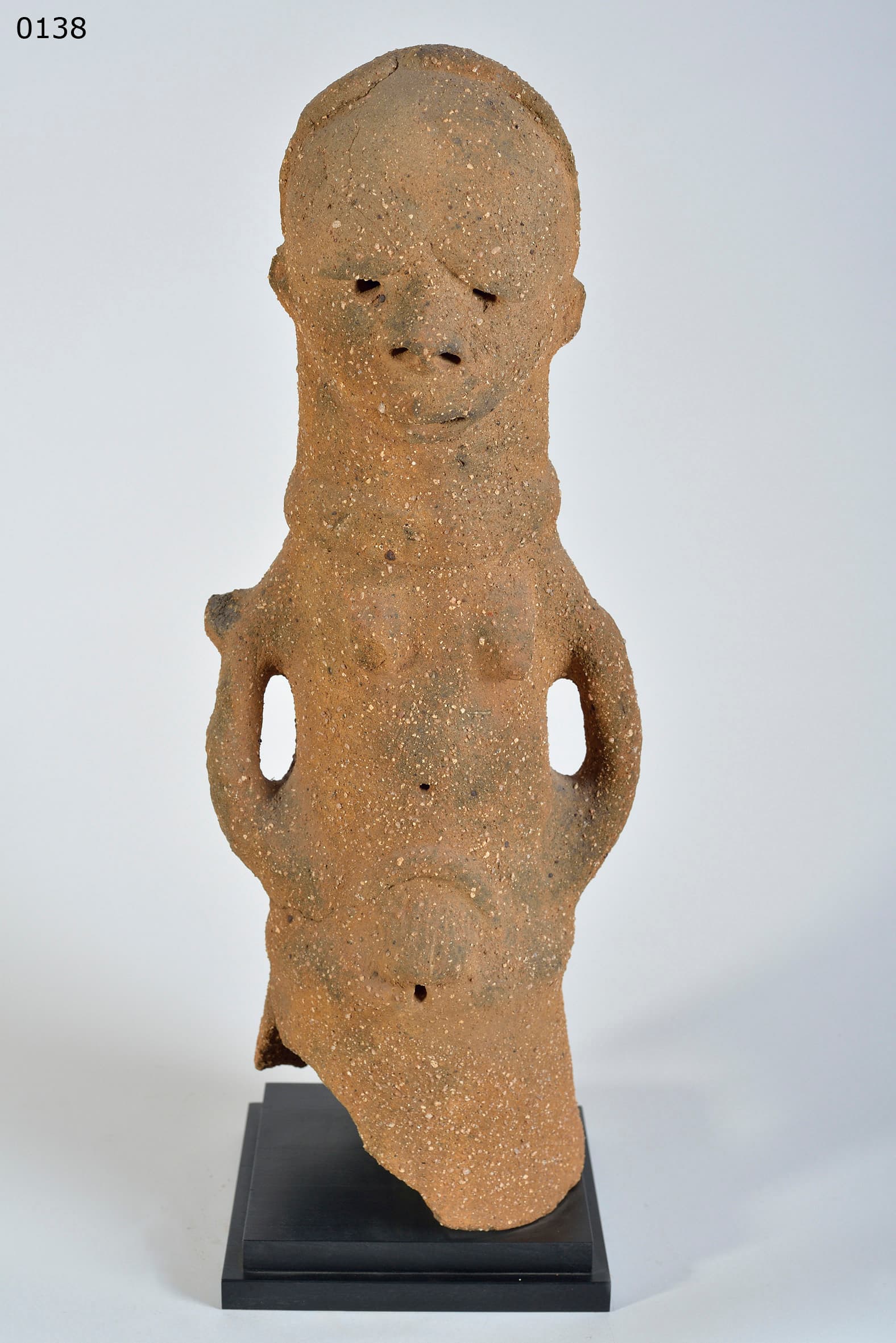
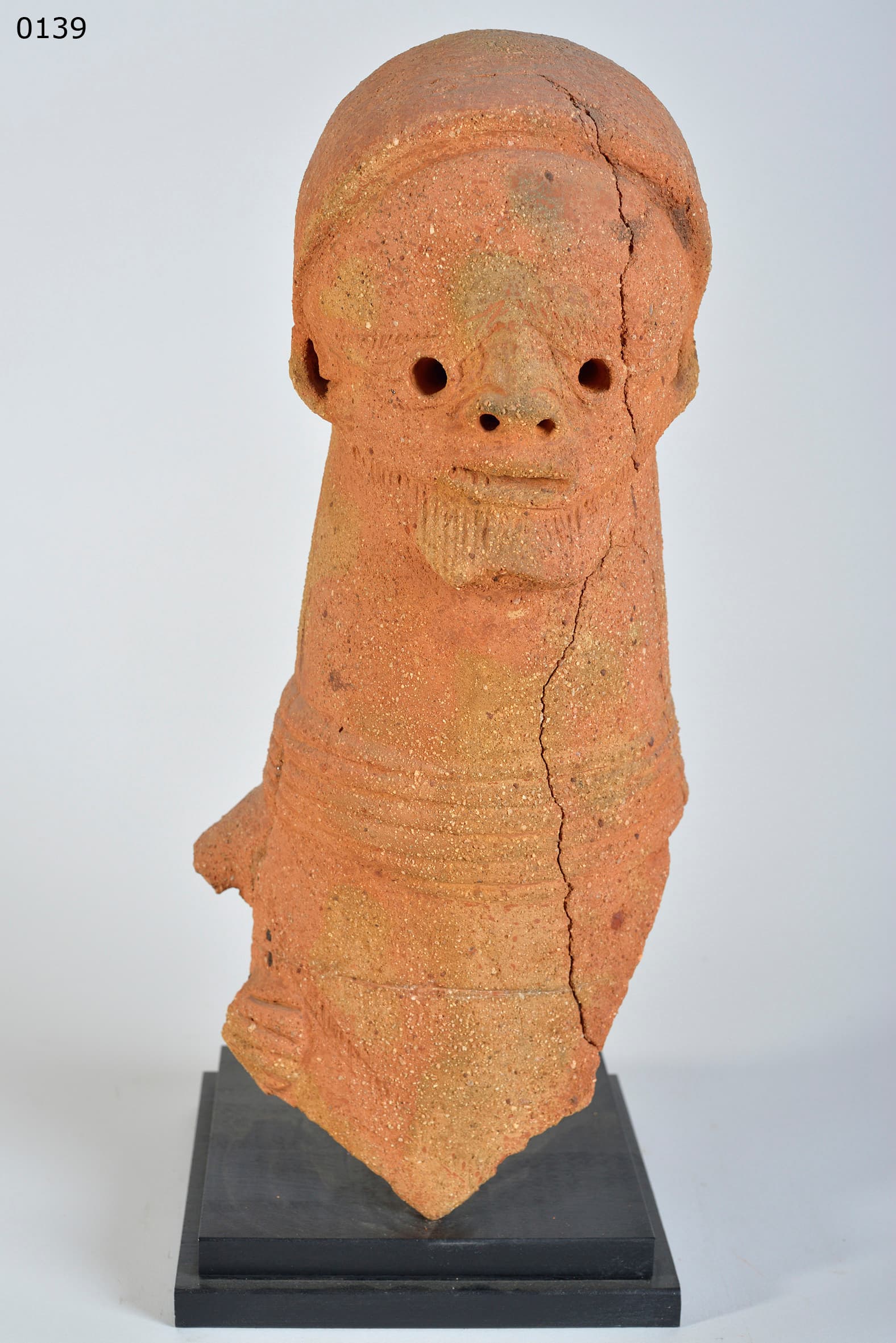
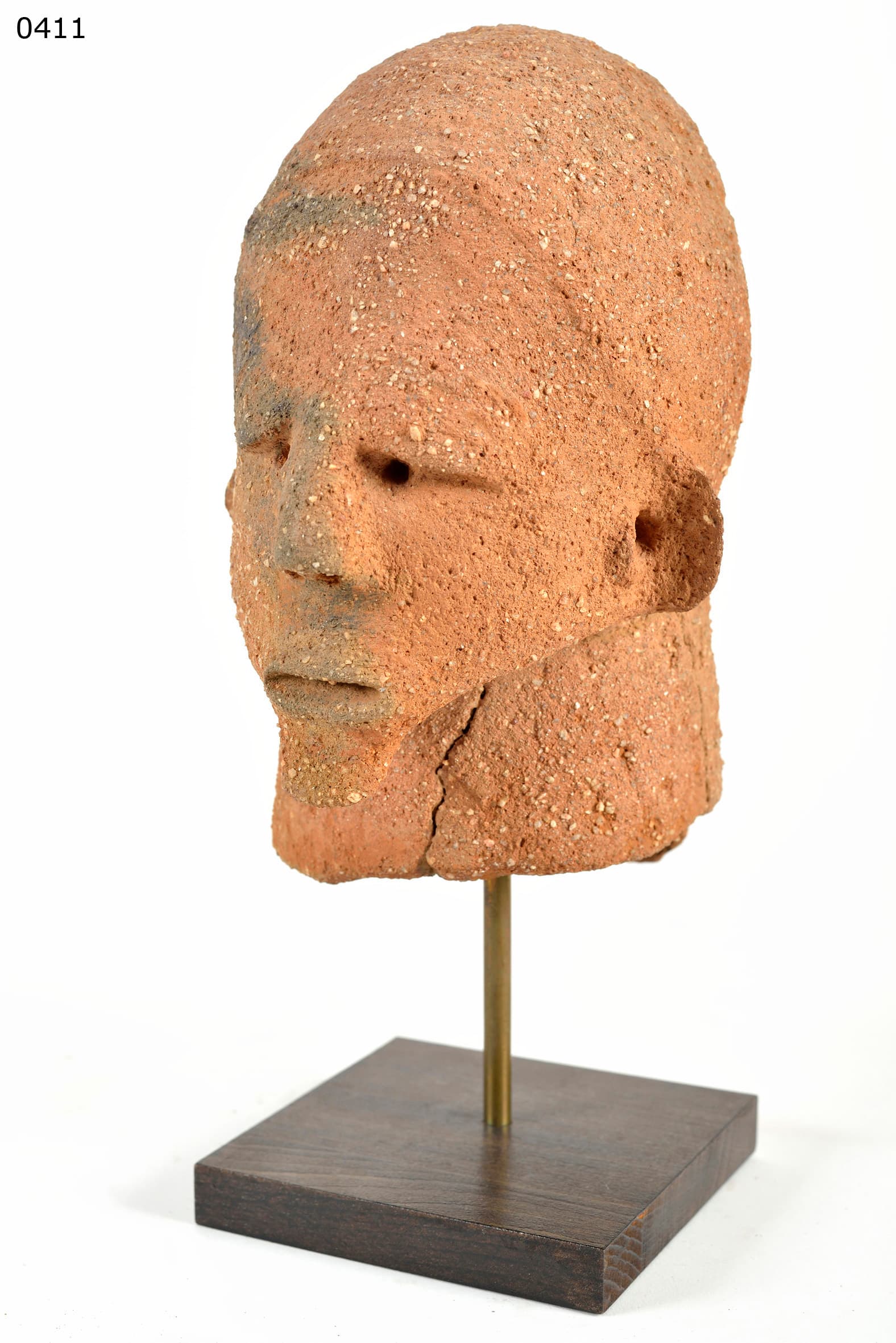
Diese fragmentierte Terrakottabüste zeigt eine stark abstrahierte menschliche Gestalt mit einem markanten, vorspringenden Kinn, einem stark horizontal geschlitzten Mund und einem dicken, säulenartigen Hals. Der stark quarzhaltige Ton ist vollständig mit einer alten, verkalkten Schicht sahelischer Erde überzogen.
1. Ästhetischer Stil und regionale Merkmale
Dieses Stück ist ein ausdrucksstarkes Beispiel für die Geometrie von Sokoto. Während sich die Nok-Kultur auf kunstvolles Haar und präzisen Körperschmuck konzentrierte, reduzierten die Sokoto-Schöpfer die menschliche Form auf wesentliche, grundlegende Formen. Das Gesicht ist auf eine schildartige Fläche reduziert, wobei der Mund lediglich als tiefer, horizontaler Einschnitt im nassen Ton dargestellt ist. Die starke Einarbeitung von Quarzsand in den Tonkörper verleiht der Figur eine raue Textur, die die Umgebung des alten Nordnigeria widerspiegelt.
2. Rituelle Funktion und religiöse Bedeutung
Diese Gedenkfiguren, die mit alten Schreinen und Gräbern assoziiert werden, dienten nach traditioneller Auffassung als Gefäße für die Geister der Verstorbenen. In den frühen westafrikanischen Agrargesellschaften ging man davon aus, dass die Ahnen Einfluss auf den Regen, die Fruchtbarkeit des Bodens und die Gesundheit der Gemeinschaft hatten. Die Aufstellung dieser Figuren in Nekropolen sollte eine physische Brücke zwischen dem irdischen und dem göttlichen Bereich schaffen und die schützende Macht der Ahnen auf dem Land verankern.
3. Physische Patina und Altersnachweis
Die physischen Merkmale sprechen für ein hohes archäologisches Alter dieser Figur. Die Terrakotta weist Spuren auf, die mit einer sehr langen Lagerung im Boden vereinbar sind, was zu einer chemischen Veränderung der äußeren Tonmatrix geführt haben dürfte. Erhalten ist ein tief liegender Kern, der fest mit dicken, verkalkten Schichten aus Lateritboden verbunden ist. Die Bruchstelle am Torso erscheint alt, und die Bruchkanten zeigen Abnutzungen, die auf langjährigen Druck und Wasserfluss unter der Erde hindeuten.
Zusammenfassung
Diese Sokoto-Gedenkfigur ist ein ausdrucksstarkes Überbleibsel der alten nigerianischen Terrakotta-Traditionen und ein charakteristisches Beispiel des prähistorischen Minimalismus. Ihre strengen Züge und die auf ein hohes Alter hindeutende archäologische Verwitterung machen sie zu einem anschaulichen Relikt der frühen afrikanischen Spiritualität.
KI-unterstützt erstellt aus Sammlungsgutachten, Objektfotografie und eigener Recherche, redaktionell geprüft. Fehler sind möglich — Hinweise darauf sind uns willkommen. Zum Verfahren →