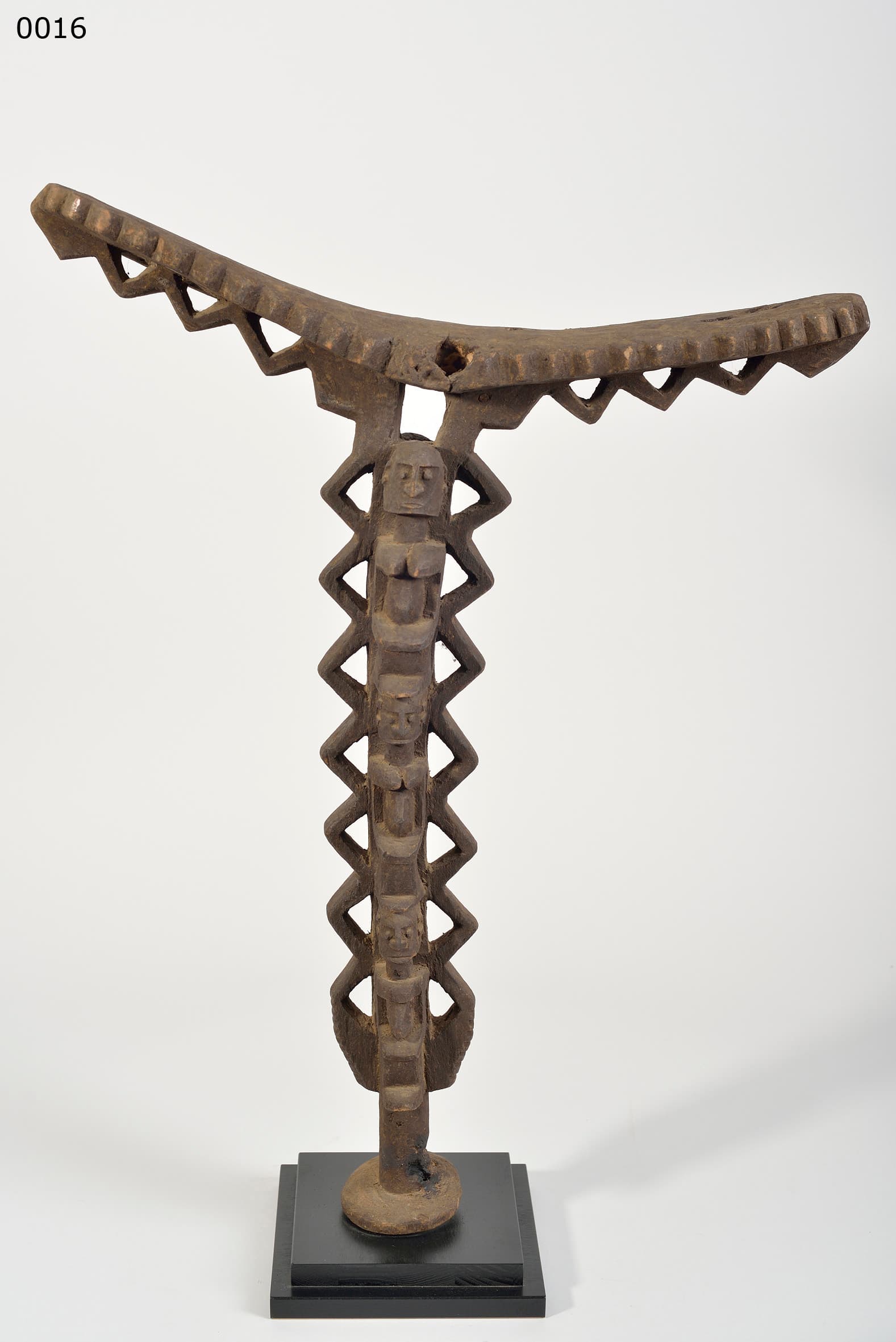
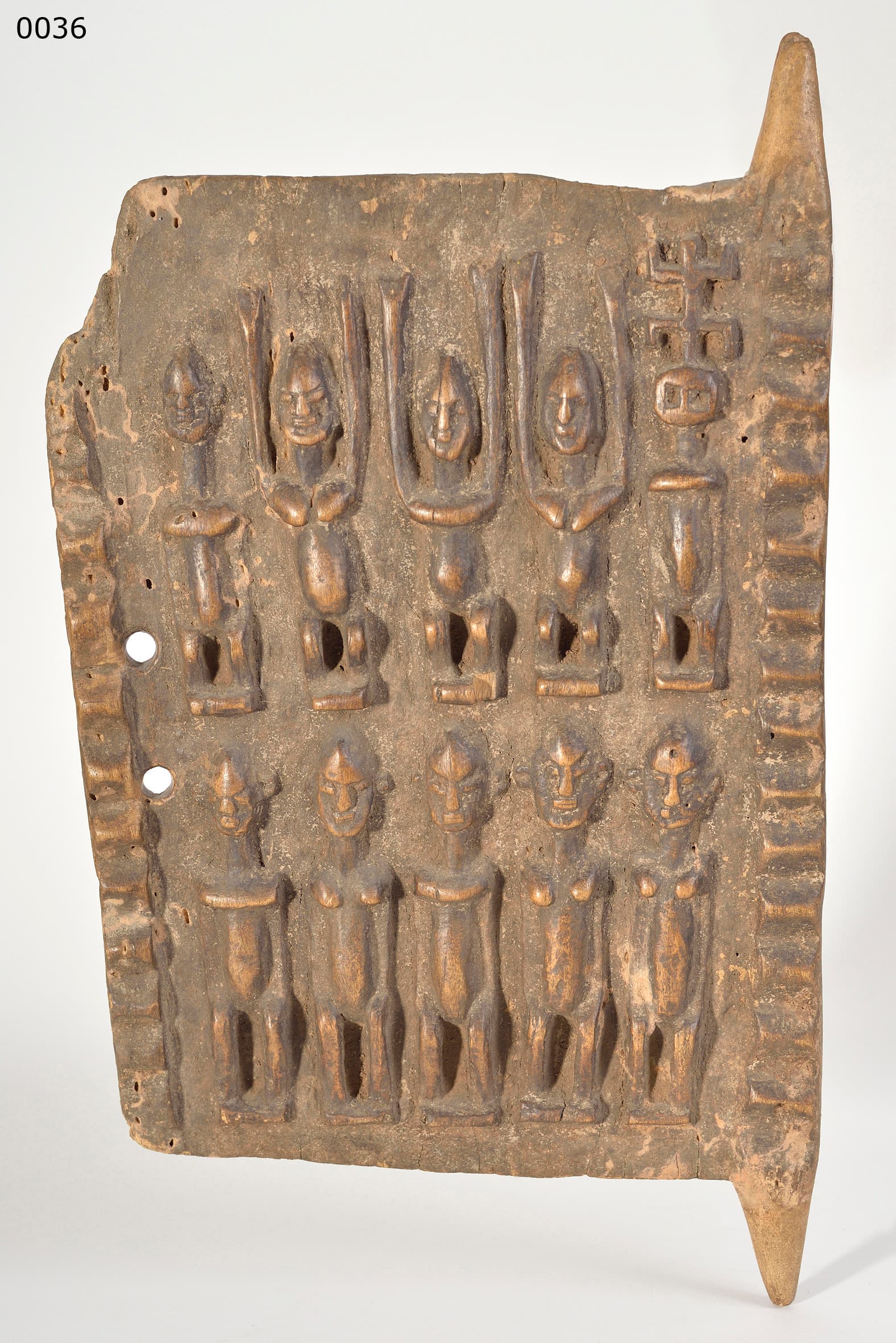
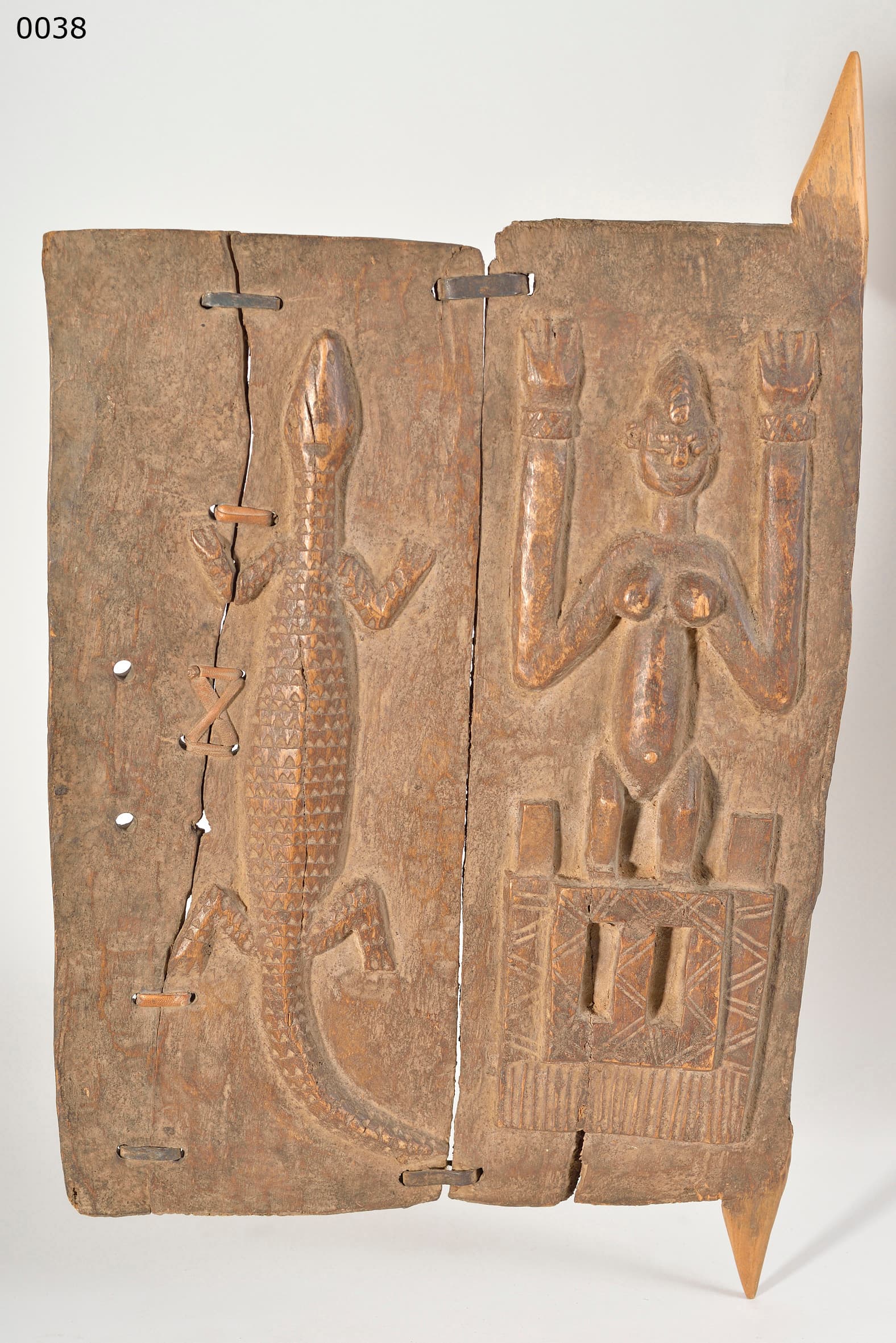
Diese schwere hölzerne Kopfstütze weist einen sanft geschwungenen, von dicken Säulen getragenen Mittelsattel auf, der an beiden Enden in den stilisierten Kopf und Schwanz eines Pferdes übergeht. Das Holz ist stark ausgetrocknet und weist eine versteinerte, graubraune Kruste und tiefe Altersrisse auf.
1. Ästhetischer Stil und regionale Eigenheiten
Diese Kopfstütze, die oft den Tellem- oder frühen Dogon-Kulturen des Bandiagara-Steilhangs zugeschrieben wird, zeichnet sich durch eine straffe, minimalistische Architektur aus. Die Integration des Pferdes in ein funktionales Objekt ist ein Markenzeichen der Ästhetik der Sahel-Elite. Das Tier wird durch eine geschwungene, unnachgiebige Geometrie dargestellt - ein dicker Hals, eine blockige Schnauze und ein starrer Schwanz -, die Stabilität, Kampfkraft und Ausdauer projiziert. Die zentralen Säulen balancieren den geschwungenen Bogen der Nackenstütze aus und verbinden skulpturale Eleganz mit physischem Nutzen.
2. Rituelle Funktion und Geheimbund-Kontext
Während es zu Lebzeiten von einem hochrangigen Ältesten oder Hogon zum Schutz einer aufwendigen, rituell bedeutsamen Frisur während des Schlafs verwendet wurde, diente es letztlich der Bestattung. Das Pferd ist in der Dogon-Kosmologie ein Symbol für unermesslichen Reichtum und steht in engem Zusammenhang mit den Nommo (Urahnen) und ihrem Abstieg auf die Erde. Nach dem Tod des Ältesten wurde diese Kopfstütze in den Grabhöhlen hoch oben in den Klippen platziert und diente dazu, den Kopf des Verstorbenen zu erheben und die Reise der Seele in das Reich der Ahnen physisch zu unterstützen.
3. Physische Patina und Altersnachweis
Die Datierung in das 18. Jahrhundert wird durch den versteinerten Zustand des Holzes sichtbar bestätigt. Nachdem es in dem extrem trockenen Mikroklima der hohen Felshöhlen geruht hat, hat das Holz jegliche innere Feuchtigkeit verloren, was zu tiefen, höhlenartigen Austrocknungsrissen entlang der Maserung geführt hat. Die Oberfläche ist frei von modernen Ölen und trägt stattdessen eine gespenstische, krustige Patina aus altem Fledermausguano, Höhlenstaub und extremer Umweltverwitterung.
Zusammenfassung
Diese Kopfstütze in Form eines Dogon/Tellem-Pferdes ist eine phänomenale Verschmelzung von Gebrauchsdesign und aristokratischer Begräbniskunst. Ihre straffe, pferdeförmige Geometrie und die stark ausgetrocknete, versteinerte Patina machen sie zu einem seltenen und eindrucksvollen Relikt alter malischer Felsengräber.
KI-unterstützt erstellt aus Sammlungsgutachten, Objektfotografie und eigener Recherche, redaktionell geprüft. Fehler sind möglich — Hinweise darauf sind uns willkommen. Zum Verfahren →