Diese stark verkrustete, pflockartige Holzfigur ist auf einem langen, verrosteten Eisendorn montiert, der stark mit schwarzer, geronnener Opfersubstanz überzogen ist und aus dessen Kopf eine eiserne Sichel herausragt. Das Holz ist fast vollständig durch jahrzehntelange organische Opfergaben verdeckt.
1. Ästhetischer Stil und regionale Eigenheiten
In der Fon-Vodun-Kultur sind die bocio (ermächtigte Objekte) absichtlich ungeschliffen und stellen die spirituelle Wirksamkeit über die ästhetische Schönheit. Die Form ist brutal und roh, wobei die menschliche Figur auf einen geometrischen Zylinder reduziert wird, der lediglich als Armatur für die Anwendung magischer Substanzen und Eisenbeschläge dient. Diese Anti-Ästhetik ist selbst eine ästhetische Position - eine bewusste Ablehnung der höfischen Politur, die für die nahe gelegene Yoruba-Skulptur charakteristisch ist, und die Rauheit, die Anhäufung und das widerspenstige Eisen als das wahre visuelle Register der operativen Magie betrachtet.
2. Rituelle Funktion und defensive Mechanik
Die Bocio-Figuren sind aktive Vertreter der Verteidigungsmagie. Sie werden mit ihren eisernen Stacheln an Schwellen, Kreuzungen oder Schreinen in die Erde gepflanzt und dienen als spirituelle Lockvögel, um bösartige Kräfte, Krankheiten oder Hexerei, die sich gegen den Besitzer richten, zu absorbieren. Die eiserne Mondsichel auf dem Kopf ruft Gu, die Gottheit des Eisens und des Krieges, an und verleiht ihnen eine aggressive Schutzkraft. Man ging davon aus, dass ihre Wirksamkeit eher von den Aktivierungsritualen des Priesters als von der Handwerkskunst herrührte - die Gebete und Opfertränke des Bokonon verwandelten einen trägen Holzpflock in eine funktionierende geistige Waffe.
3. Physische Patina und Altersnachweis
Das charakteristische Merkmal dieses Stücks ist seine tiefe, geschwärzte Patina - eine dicke, verkohlte Kruste aus Blut, Palmöl und Trankopfern, die sich über Generationen gebildet hat. Die tiefe, aktive Oxidation und die Lochfraßspuren auf der handgeschmiedeten Eisenangel sprechen für eine Herkunft aus dem 19. Jahrhundert und weisen auf ein langes Leben in einem aktiven Schrein hin. Handgeschmiedetes Eisen dieses Alters weist ein unregelmäßiges, faseriges Korrosionsmuster auf (im Gegensatz zum gleichmäßigen Rost von modernem Industrieeisen), das eine Zuordnung des Stücks zur vorindustriellen rituellen Wirtschaft des Vodun stützt.
Zusammenfassung
Ein charakteristisches Fon Bocio aus dem 19. Jahrhundert, das die viszerale Intensität und defensive Mechanik des spirituellen Schutzes des Vodun eindringlich verkörpert. Die schwere rituelle Verkrustung und die alte Eisenarmatur machen es zu einem ausdrucksstarken Kraftobjekt.
KI-unterstützt erstellt aus Sammlungsgutachten, Objektfotografie und eigener Recherche, redaktionell geprüft. Fehler sind möglich — Hinweise darauf sind uns willkommen. Zum Verfahren →

Seltene Kraftfigur (verwendet in VOODOO-Zeremonien)
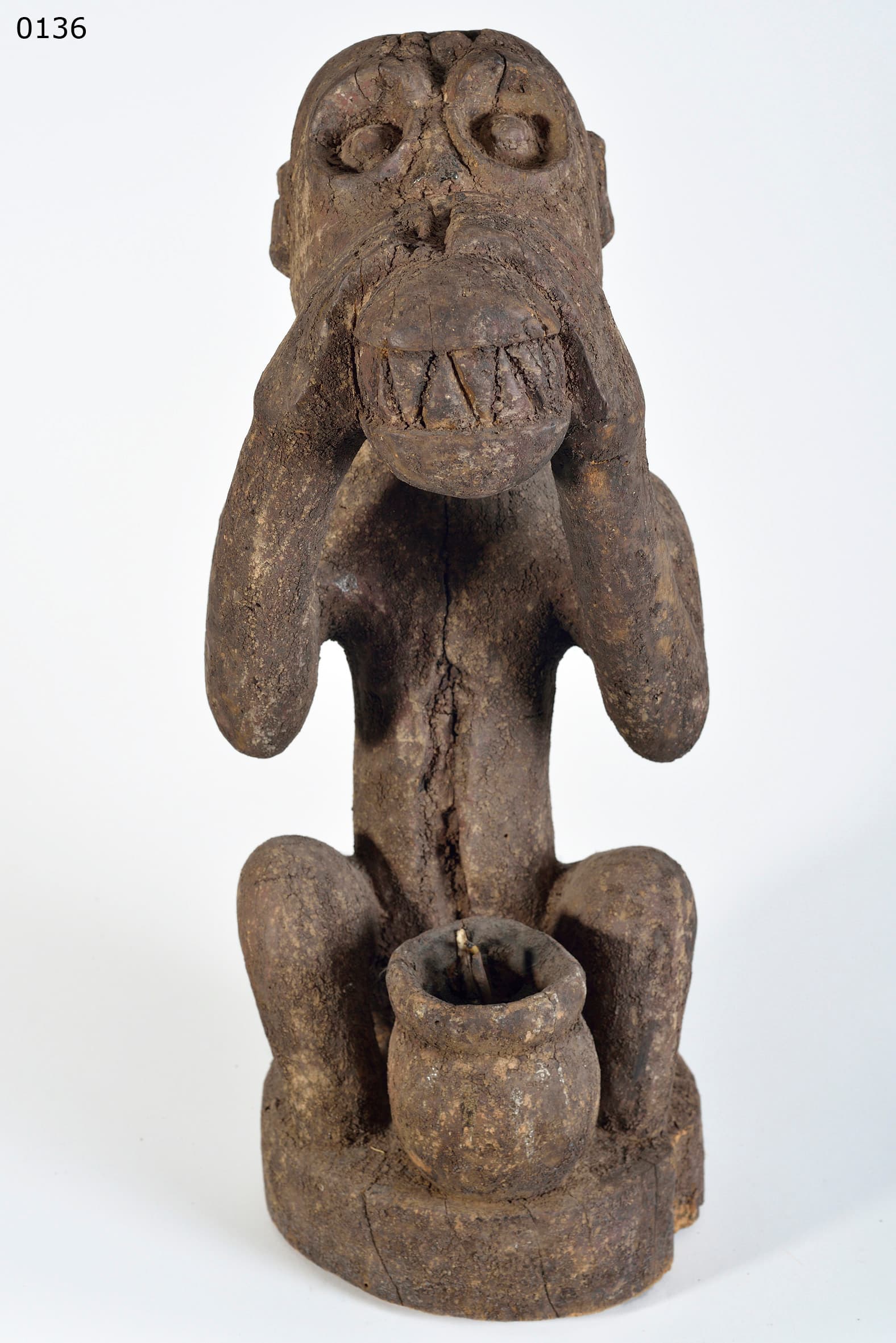
Affenschreinfigur
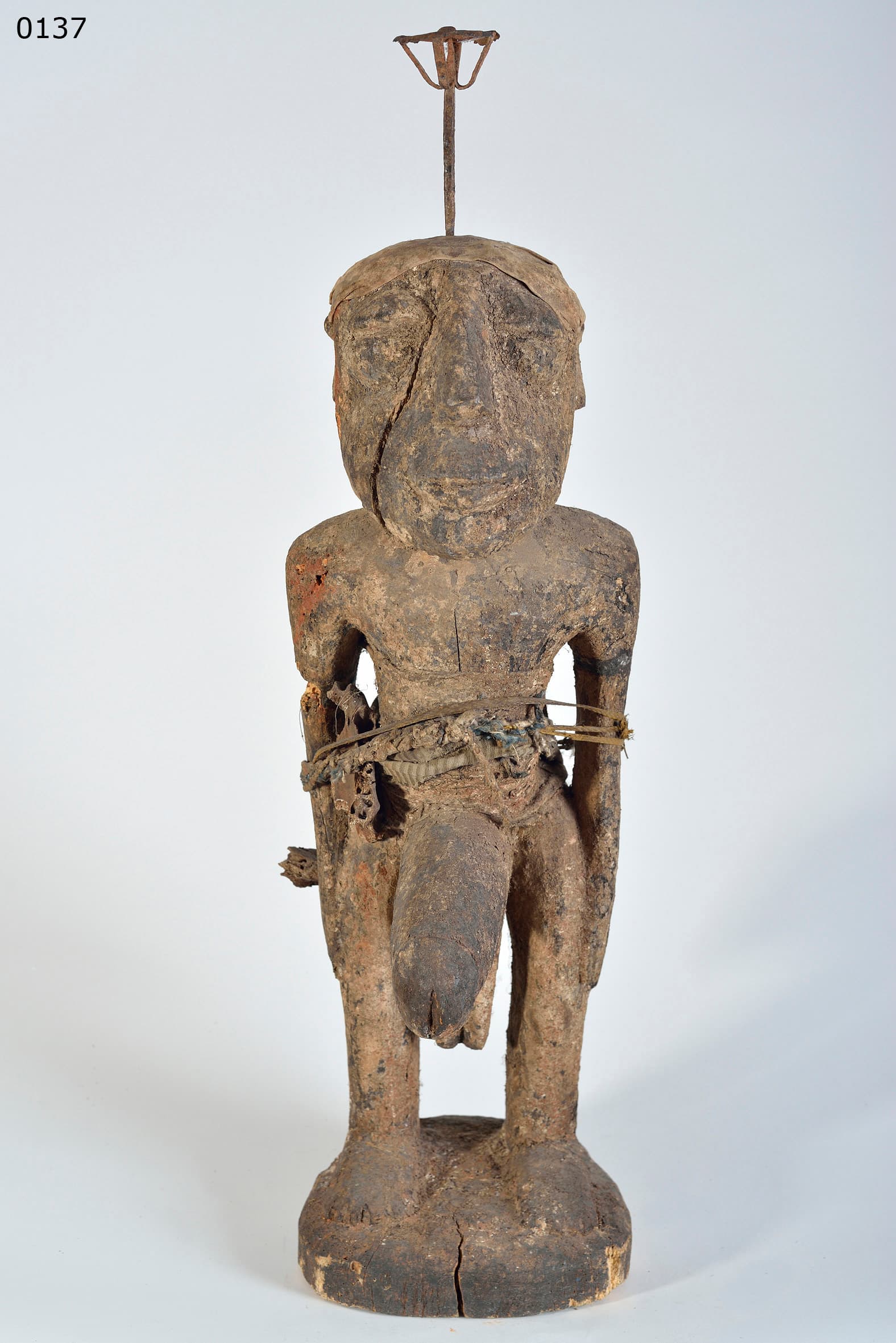
BOCIO-Statue (wird bei Voodoo-Zeremonien verwendet)
