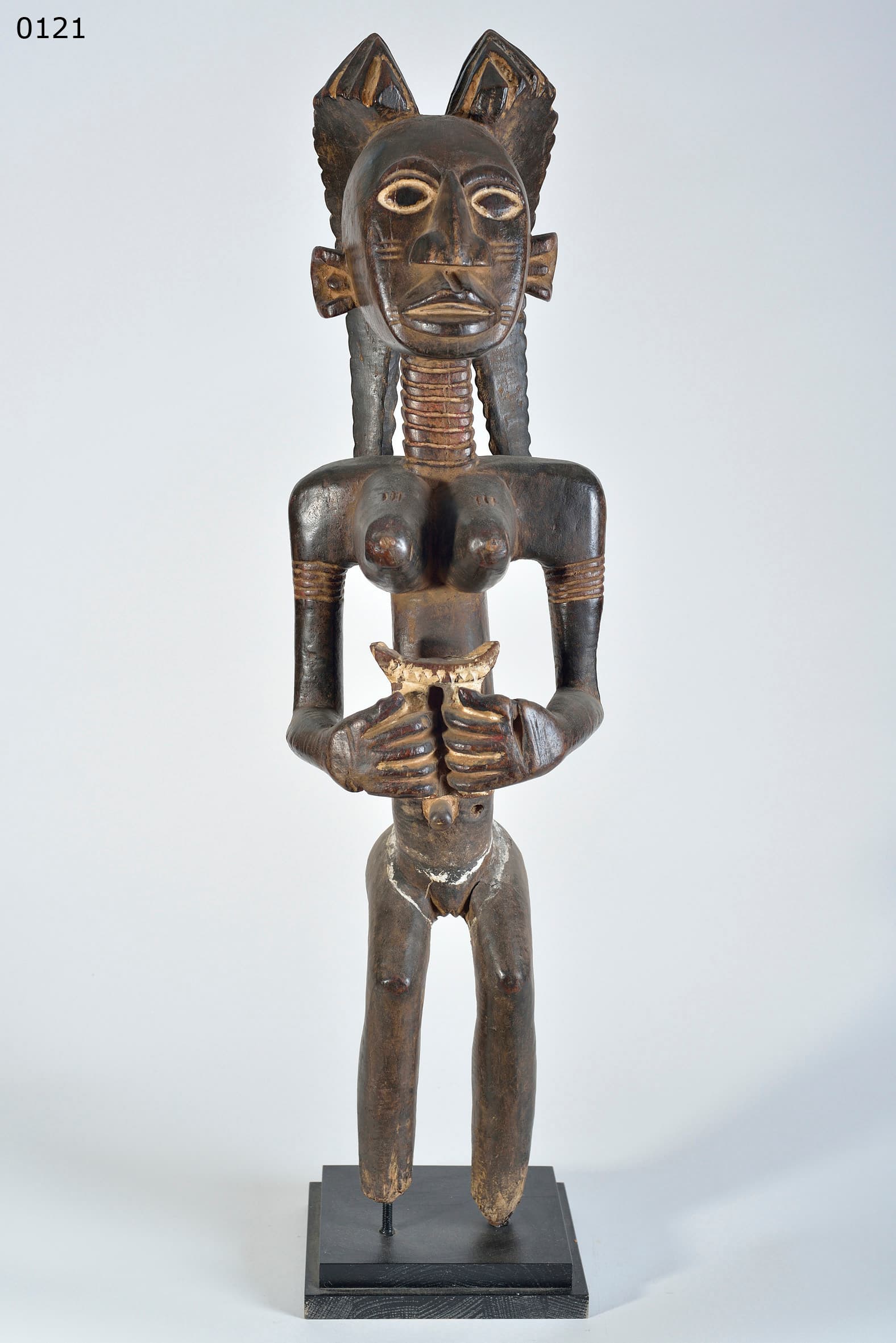
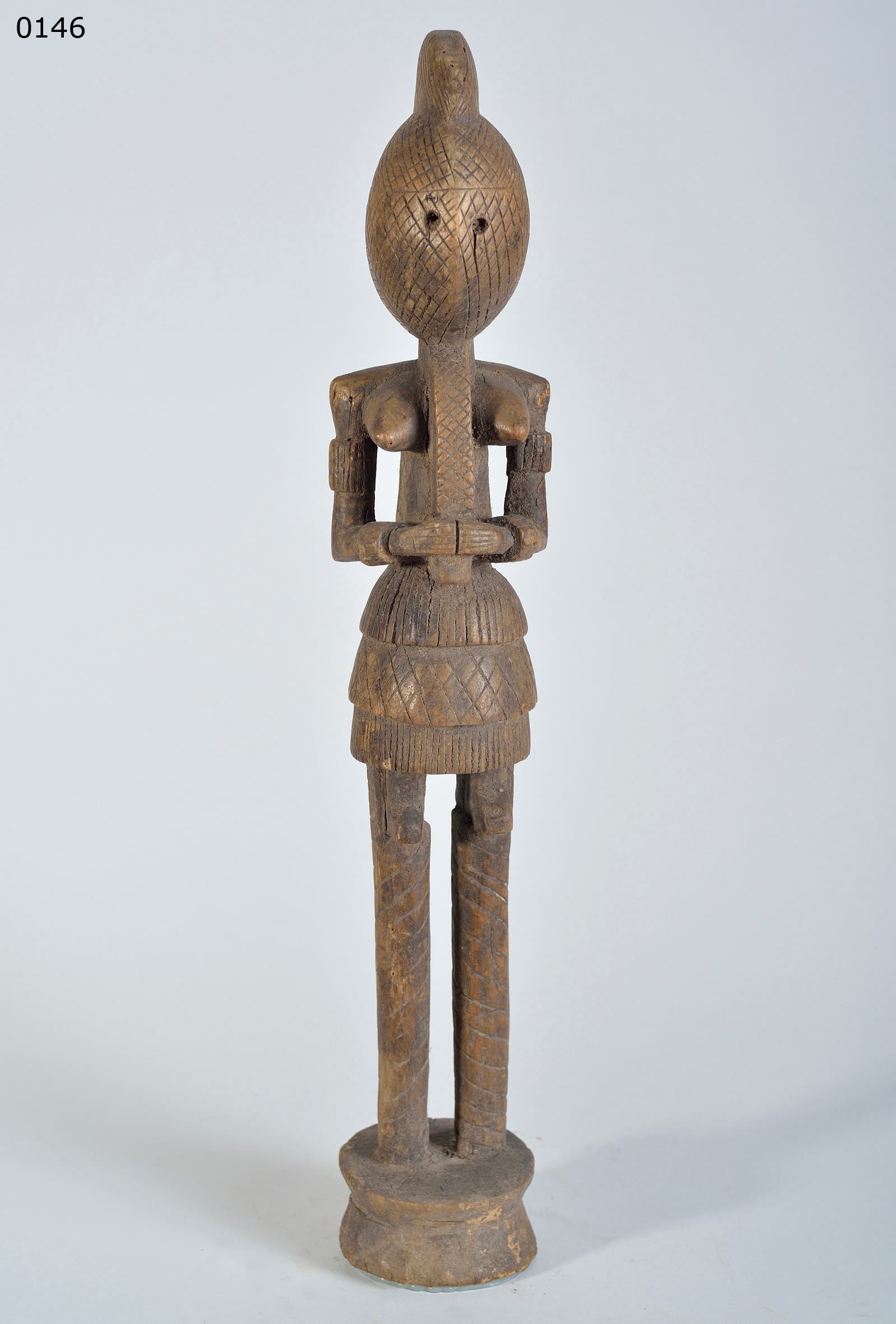
Eine stilisierte hölzerne Fruchtbarkeitspuppe (Biiga) mit halbkreisförmigem, sichelförmigem Kopf, röhrenförmigem Körper ohne Gliedmaßen und feinen geometrischen Einschnitten, mit dunkler, gut behandelter Patina.
1. Ästhetischer Stil und regionale Merkmale
Die Mossi-Biiga (Kind) gilt als ein charakteristisches Beispiel des westafrikanischen abstrakten Reduktionismus. Durch das Weglassen von Armen und Beinen lenkt der Schnitzer die Aufmerksamkeit des Betrachters auf die stark stilisierte Kammfrisur - eine traditionelle Frisur der Mossi-Frauen - und die hängenden Brüste, wodurch das Objekt als Kind sowie als Emblem für zukünftige Mutterschaft und weibliche Reife gedeutet werden kann. Die radikale Vereinfachung prägt das Erscheinungsbild: Die Gestaltung der Biiga verzichtet auf ein konkretes Kinderporträt und zeigt stattdessen eine stilisierte Darstellung der weiblichen reproduktiven Identität.
2. Rituelle Funktion und mütterliche Unterweisung
Diese Puppen erfüllten in der Mossi-Gesellschaft einen doppelten Zweck. Sie wurden jungen Mädchen als Lernspielzeug gegeben, um ihnen die Pflichten der Kindererziehung beizubringen, wozu das Waschen, Anziehen und Tragen der Holzfigur gehörte. Später im Leben, wenn eine Frau mit Unfruchtbarkeit zu kämpfen hatte, wurde die Puppe rituell geweiht und getragen, um den Segen der Ahnen für eine erfolgreiche Schwangerschaft zu erflehen. Ein und dasselbe physische Objekt durchlief also den gesamten Lebenszyklus der Frau - vom Lernspielzeug bis zur geweihten Fruchtbarkeitsfürsprecherin - und erhielt in jeder Phase eine andere rituelle Bedeutung.
3. Physische Patina und Altersnachweis
Die visuelle Wirkung dieses Stücks wird durch seine ausgeprägte Patina unterstrichen. Der Mittelteil, an dem es von jungen Mädchen gegriffen und auf den Rücken geschnallt wurde, zeigt eine glatte Oberfläche. Die dunkle, ölige Oberfläche ist das Ergebnis von Salbungen mit Sheabutter, was für seine tiefe, aktive Integration in das Leben der Mossi-Familie spricht. Die Abnutzung ist asymmetrisch und konzentriert, genau an den Stellen, an denen sich Tragedruck und Ölauftrag auf natürliche Weise konzentrieren würden - ein charakteristisches Muster, das bei künstlich gealterten Reproduktionen in dieser Form selten zu finden ist.
Zusammenfassung
Eine stilisierte Mossi-Biiga, die die Symbolik von Fruchtbarkeit und weiblicher Reife in eine geometrische Holzform übersetzt. Seine tiefe, von Hand polierte Patina legt eine historische Nutzung im traditionellen Kontext Burkina Fasos nahe.
KI-unterstützt erstellt aus Sammlungsgutachten, Objektfotografie und eigener Recherche, redaktionell geprüft. Fehler sind möglich — Hinweise darauf sind uns willkommen. Zum Verfahren →