Ein massiver, stark degradierter und abgeschnittener Holzkopf mit blockhaften, abstrakten Gesichtszügen. Das Holz weist einen immensen Zellabbau, tiefe Austrocknungsrisse und erhebliche Insektenfraßspuren auf, insbesondere am Hals.
1. Ästhetischer Stil und regionale Charakteristika
Dieser von allen dekorativen Verzierungen befreite Bocio-Kopf gilt als Ausdruck der rohen, viszeralen Kraft des Dahomean Vodun. Die Gesichtszüge sind aggressiv und minimal in den schweren Holzblock geschnitzt und betonen die psychologische Intensität und die rohe spirituelle Masse gegenüber künstlerischer Raffinesse. Diese absichtliche Rauheit wird in der Literatur als zentral für die Wirksamkeit von Vodun-Kraftobjekten beschrieben - Verfeinerung würde die Figur schwächen, da die Vodun-Ästhetik Schönheit und operative Macht oft als entgegengesetzte Kräfte behandelt.
2. Rituelle Funktion und Schwellenwächterschaft
Große, abgeschnittene Bocio-Köpfe wie dieser wurden typischerweise als wichtige Grenzmarkierungen oder als zentrale Altarstücke verwendet, um katastrophales Unheil abzuwehren. Sie verweisen oft auf historische Praktiken, bei denen die Ase (Lebenskraft) feindlicher Krieger eingefangen wurde, oder sie dienten als eindrucksvolle, lokal begrenzte Beschützer des königlichen Geländes oder der Domäne eines mächtigen Priesters. Die Abtrennung am Hals ist selbst ikonografisch aufgeladen und erinnert an die abgetrennten Köpfe der Feinde, die historisch gesehen die Grundlage der militärischen und rituellen Praktiken der Dahomea bildeten.
3. Physische Patina und Alterungsspuren
Der physische Zustand dieser Schnitzerei ist bemerkenswert. Die starke Zersetzung der Zellen, die tiefen, zerklüfteten Termitenschäden an der Basis und die trockene, verkrustete Erosion auf der gesamten Oberfläche sind starke Indizien, die für eine Herkunft aus dem 19. Jahrhundert sprechen. Es dürfte Generationen überlebt haben, in denen es den rauen Elementen eines Vodun-Schreins im Freien ausgesetzt war. Das Muster der Insektenschäden am Hals in Verbindung mit der strukturellen Austrocknung des Körpers deutet auf eine jahrzehntelange Exposition hin, was auf einen natürlichen Alterungsprozess hindeutet.
Zusammenfassung
Ein archaischer und imposanter Fon-Bocio-Kopf, der die ungeschminkte, kraftvolle Ästhetik des westafrikanischen Vodun veranschaulicht. Seine tiefgreifende strukturelle Erosion und die starke Verwitterung sprechen für ein historisch bedeutsames Artefakt, das dem 19. Jahrhundert zugeschrieben werden kann.
KI-unterstützt erstellt aus Sammlungsgutachten, Objektfotografie und eigener Recherche, redaktionell geprüft. Fehler sind möglich — Hinweise darauf sind uns willkommen. Zum Verfahren →

Seltene Kraftfigur (verwendet in VOODOO-Zeremonien)
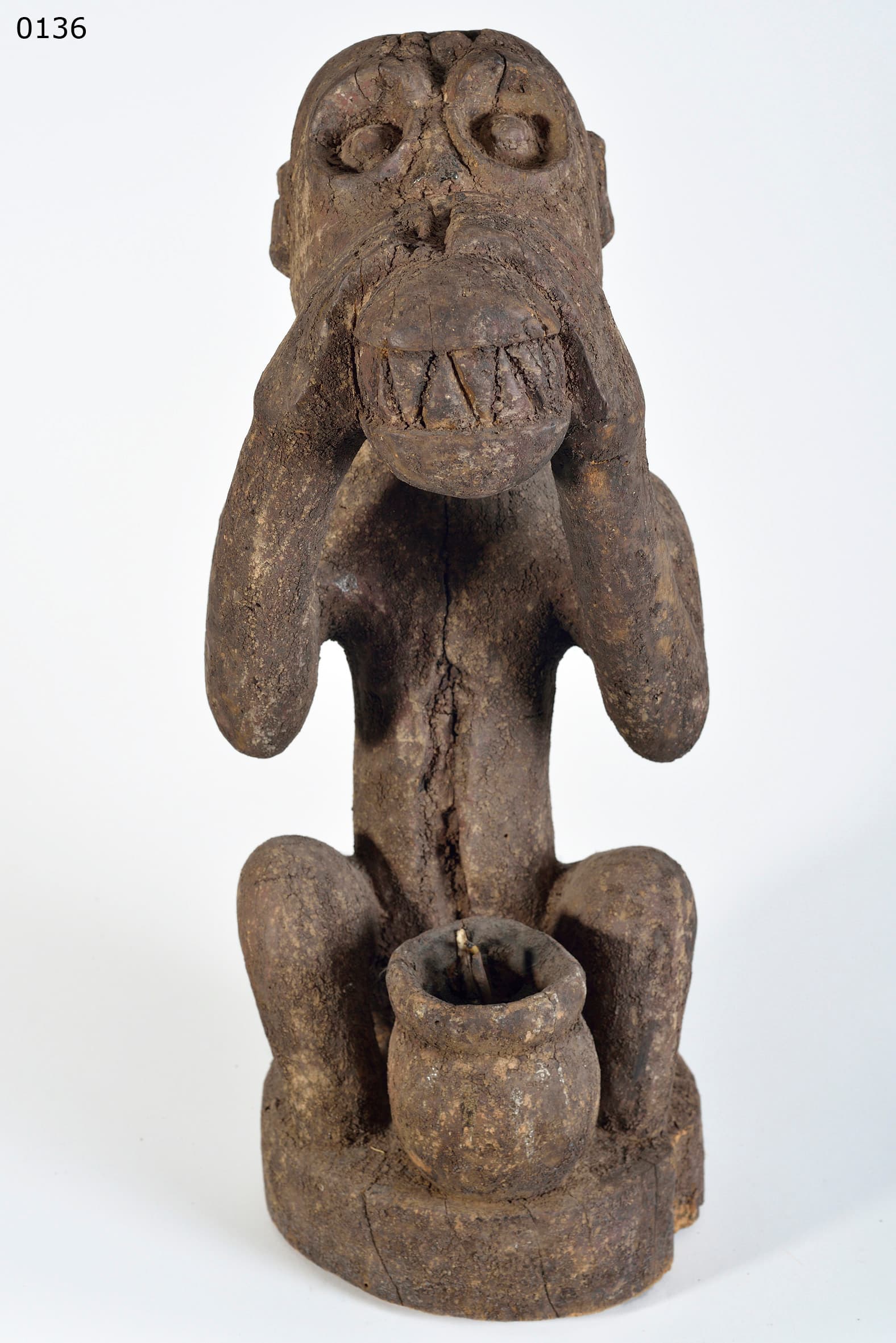
Affenschreinfigur
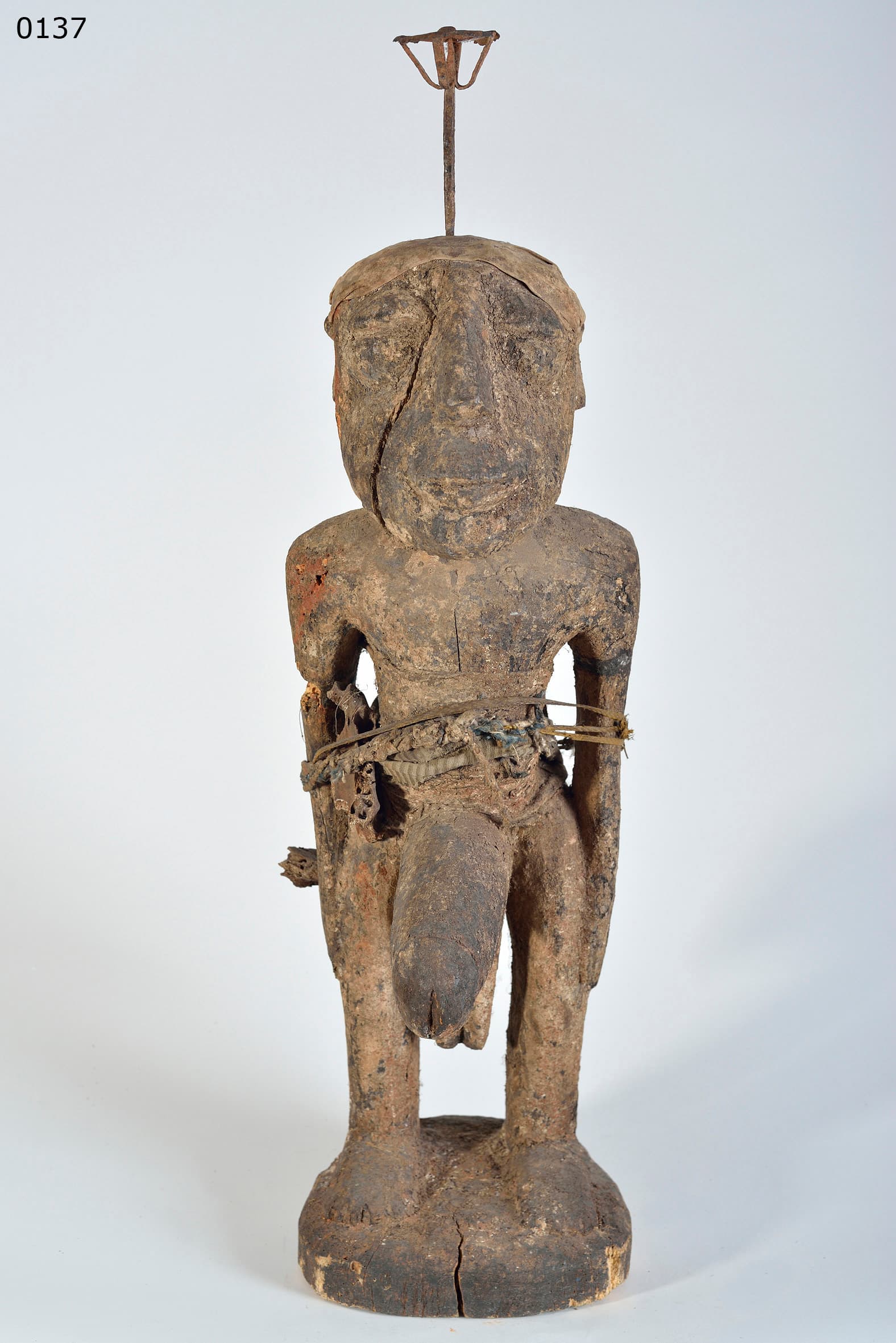
BOCIO-Statue (wird bei Voodoo-Zeremonien verwendet)
