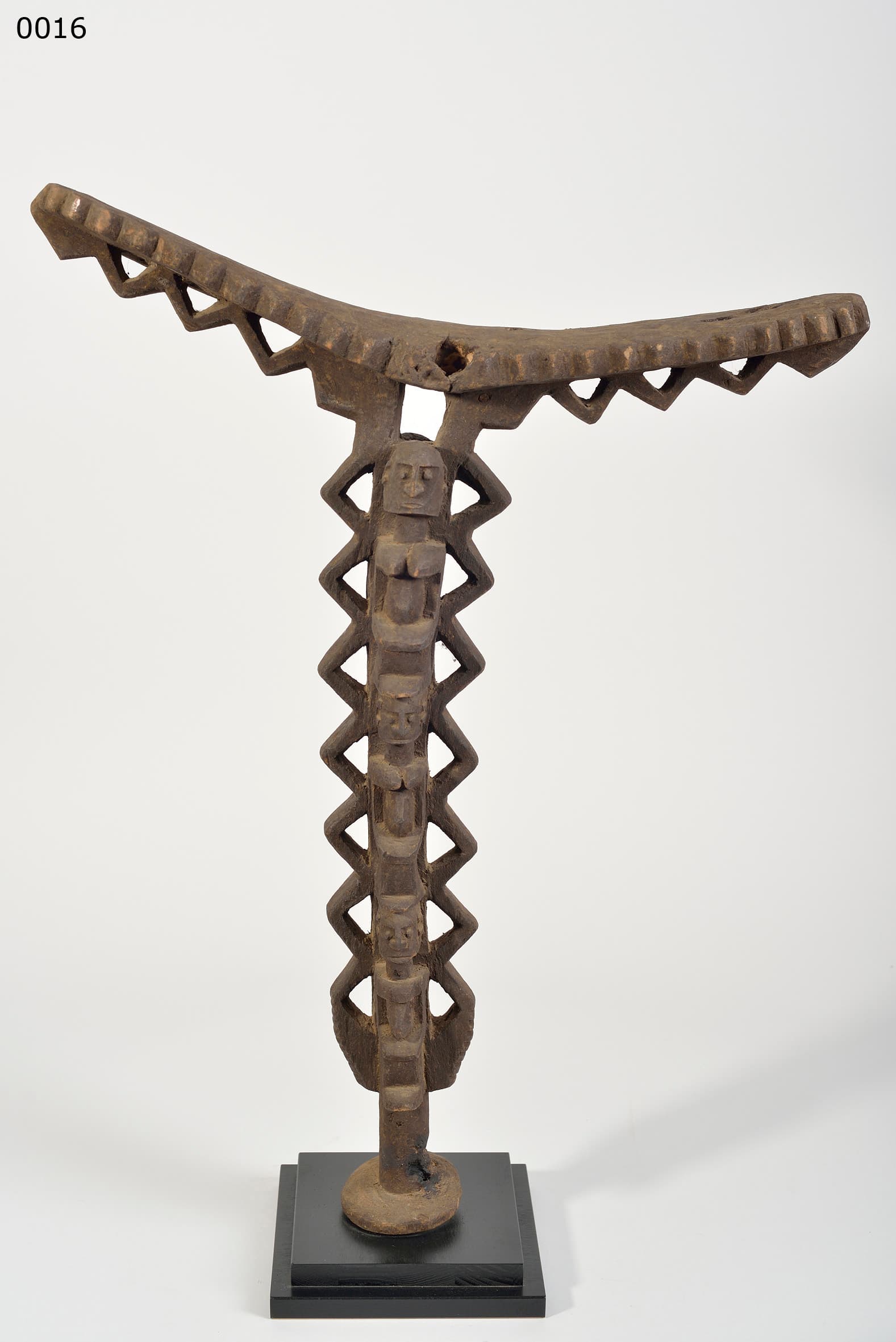
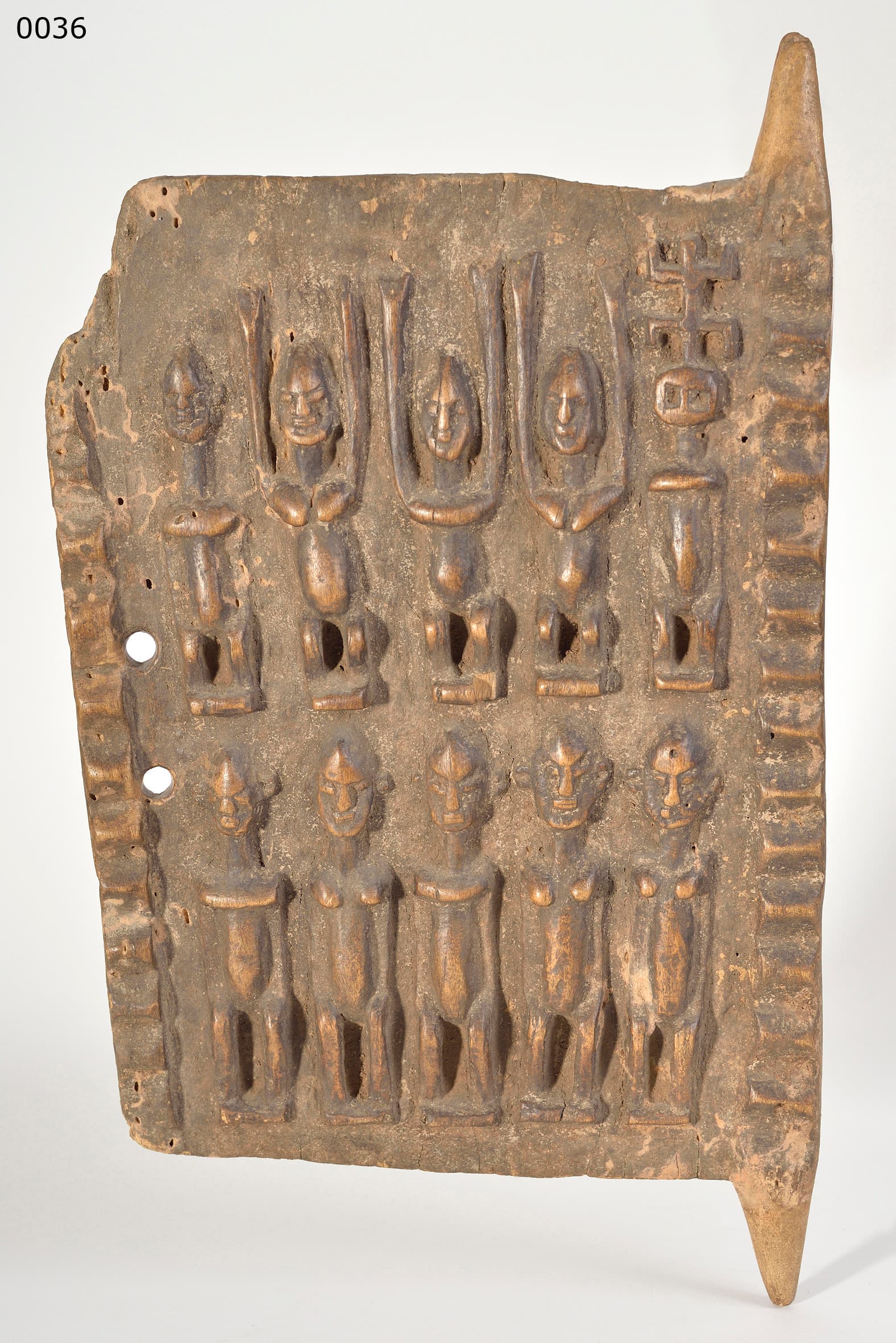
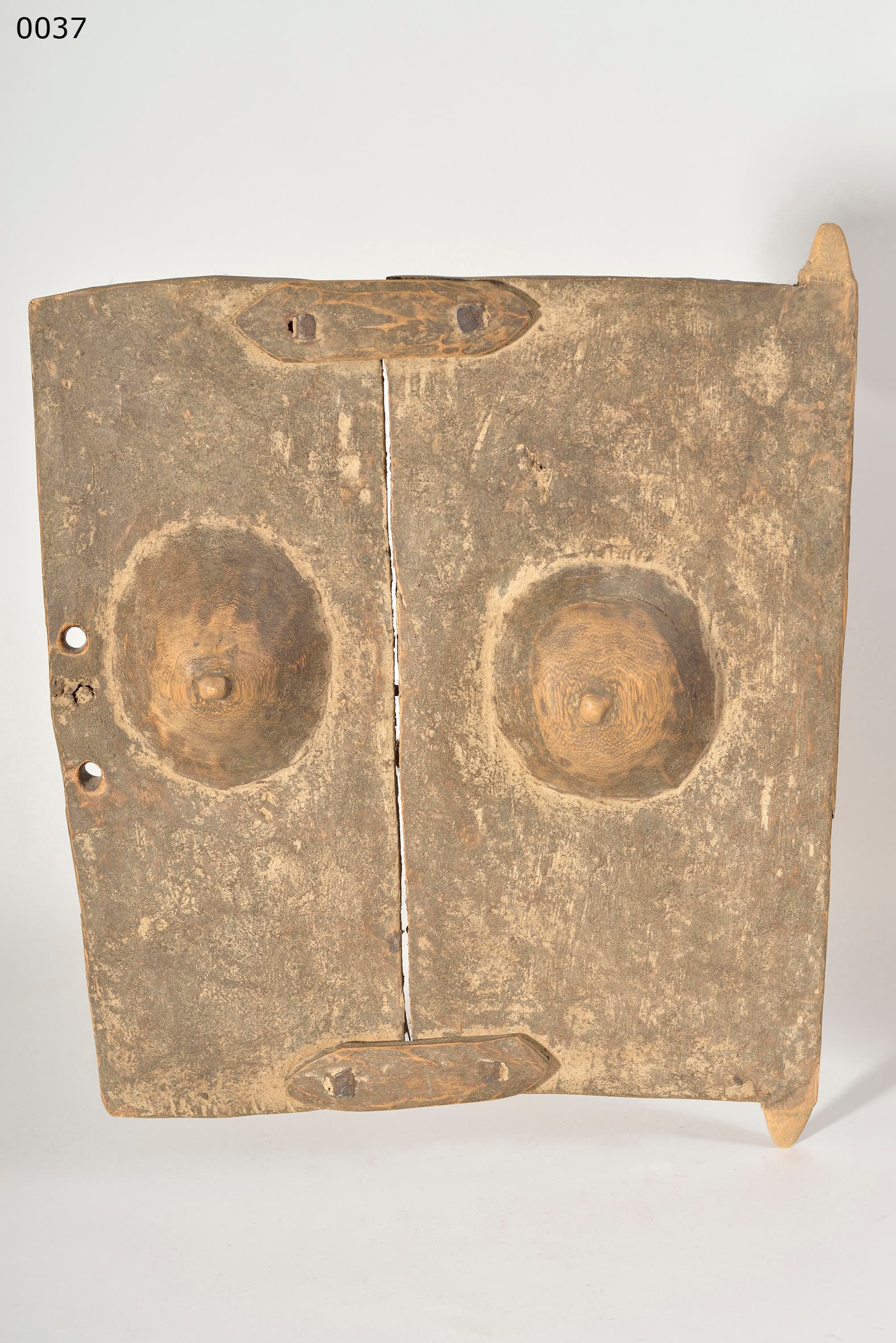
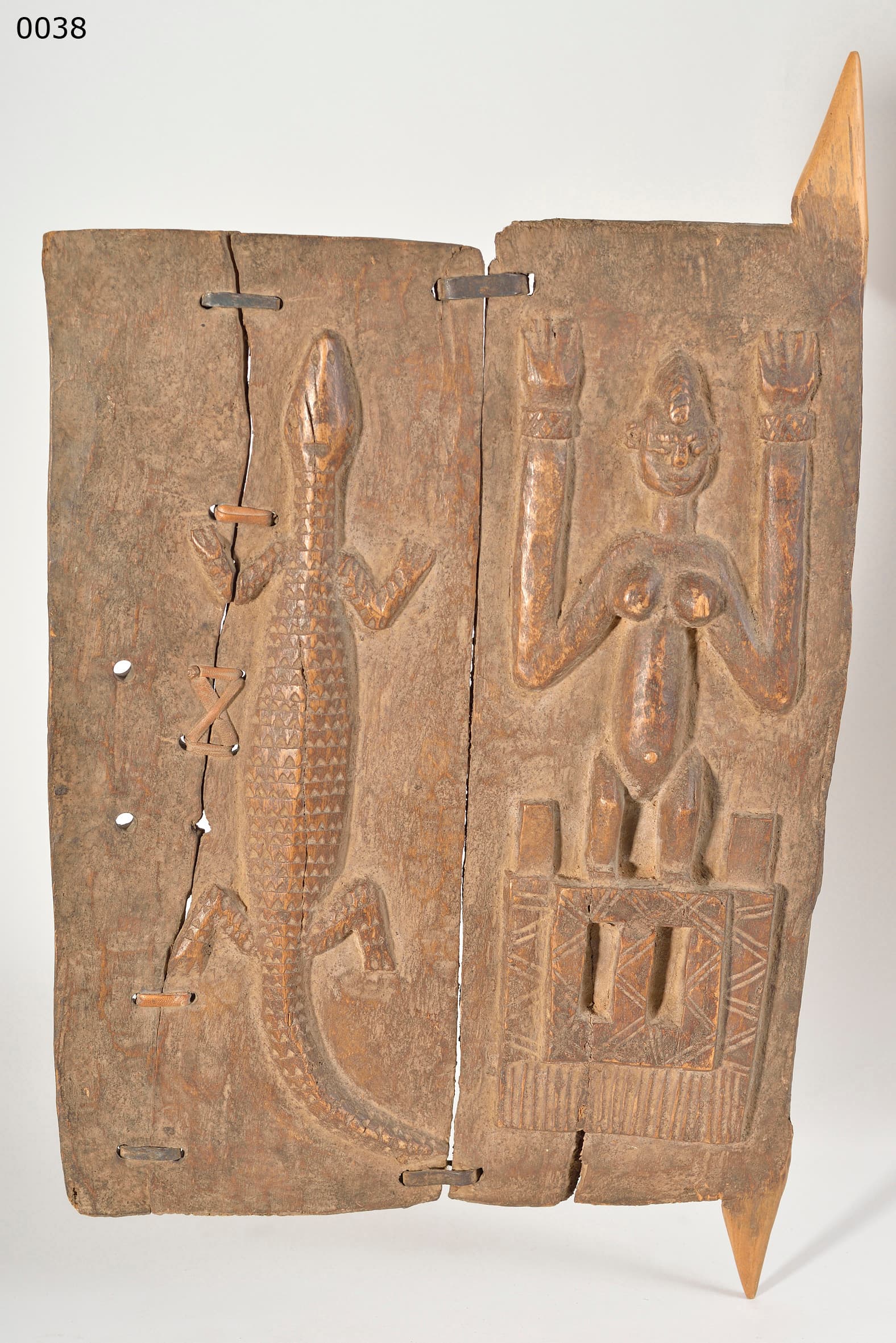
Eine stark abstrahierte, horizontale Holzskulptur, die eine liegende oder gebeugte Figur darstellt, die auf einem stilisierten, zylindrischen Tier reitet. Das Holz ist stark ausgetrocknet und weist tiefe, längliche Risse, Insektenschäden und eine raue, erodierte Oberfläche auf.
1. Ästhetischer Stil und regionale Eigenheiten
Diese Reiterfigur stellt ein bemerkenswertes Beispiel der geometrischen Abstraktion der Dogon dar. Der Künstler hat jeglichen anatomischen Realismus entfernt, indem er das Pferd auf einen länglichen Zylinder und den Reiter auf eine Reihe von sich kreuzenden eckigen Blöcken reduzierte. Diese radikale Vereinfachung erinnert an den alten Tellem-Stil, der der physischen Manifestation eines Mythos Vorrang vor der genauen Darstellung der Realität einräumt. Die horizontale Komposition ist innerhalb des Dogon-Reiterkorpus, in dem vertikale Konfigurationen dominieren, ungewöhnlich und könnte eher auf einen spezifischen erzählerischen Moment als auf ein allgemeines Reitersymbol hinweisen.
2. Rituelle Funktion und kosmische Mythologie
Die Reiterfiguren in der Kunst der Dogon sind niemals Darstellungen alltäglicher Reiter; sie repräsentieren den Hogon (oberster religiöser Führer) oder den ursprünglichen Nommo, das amphibische Schöpferwesen, das in einer Arche vom Himmel herabstieg. Die horizontale, fast schwebende Haltung des Reiters auf diesem ungewöhnlichen Reittier könnte auf diesen mythologischen Abstieg oder die spirituelle Reise zwischen dem Reich der Lebenden und dem der Ahnen verweisen. Die Komposition wirkt wie eine in der Mitte der Handlung eingefrorene Bewegung - eher eine Darstellung des kosmischen Transits als einer statischen Präsenz der Ahnen.
3. Physische Patina und Altersindikatoren
Der physische Zustand dieser Skulptur ist bemerkenswert. Das Holz hat einen massiven Zellabbau erlitten, was zu tiefen strukturellen Rissen, extremer Trockenheit und dem Aufweichen aller geschnitzten Kanten geführt hat. Dieses Ausmaß an umweltbedingter Erosion, das mit einer langfristigen Exposition in den trockenen Höhlen oder offenen Altären des Bandiagara Escarpment übereinstimmt, spricht für das Alter und die tiefgreifende rituelle Geschichte der Skulptur. Die Kombination von Insektenschäden und strukturellem Austrocknen schafft eine vielschichtige chronologische Aufzeichnung, die durch künstliche Alterung nicht reproduziert werden kann.
Zusammenfassung
Eine radikale und hypnotisierende Abstraktion des Dogon-Reitermythos, die die komplexe Kosmologie auf eine eindringliche Geometrie reduziert. Seine starke Austrocknung und strukturelle Erosion machen es zu einem außergewöhnlichen historischen Zeugnis der alten spirituellen Landschaft Malis.
KI-unterstützt erstellt aus Sammlungsgutachten, Objektfotografie und eigener Recherche, redaktionell geprüft. Fehler sind möglich — Hinweise darauf sind uns willkommen. Zum Verfahren →