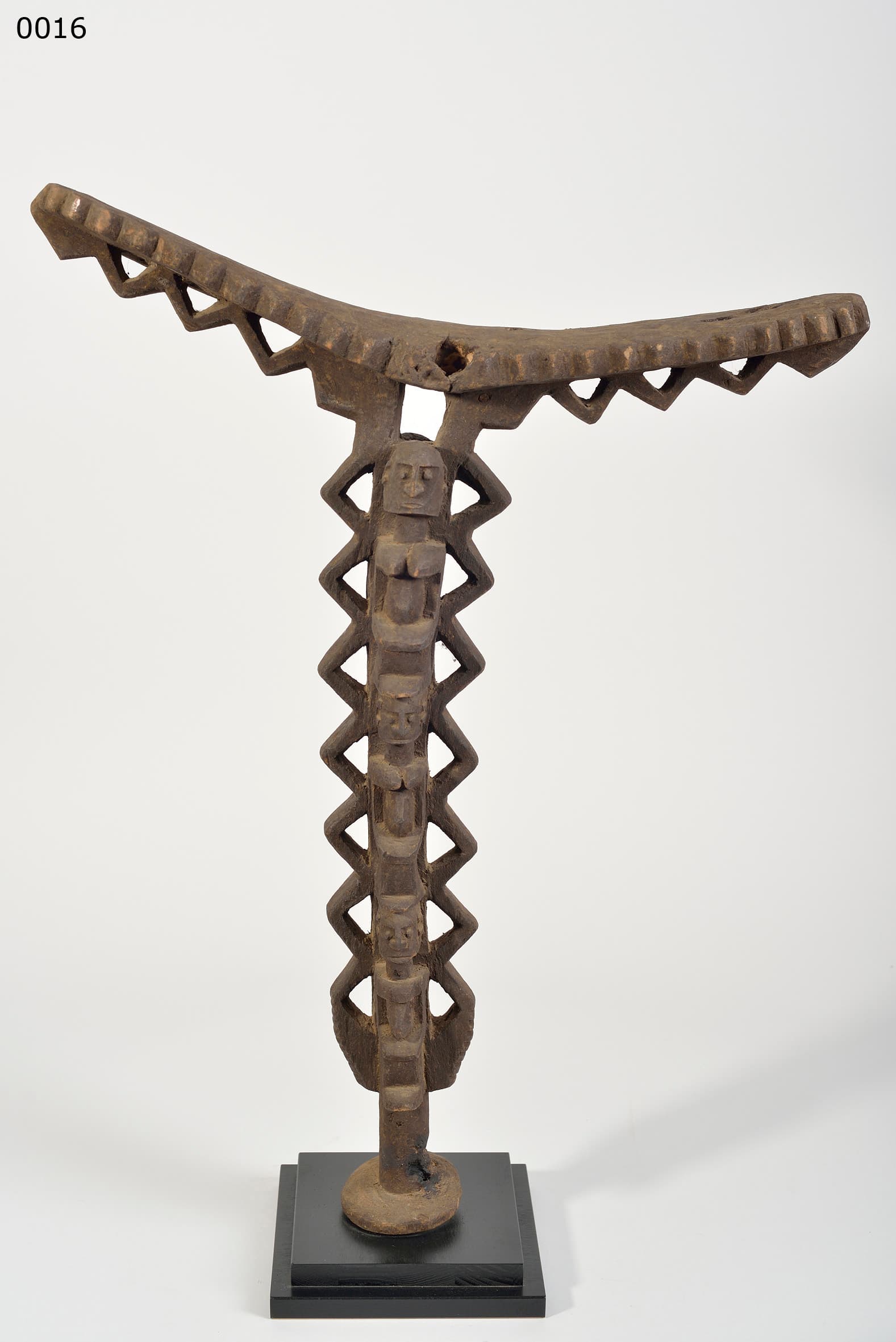
Das Gegenstück zu Artikel 774, ein stark erodierter, natürlich gegabelter Holzast, der eine Y-förmige Miniaturleiter bildet. Er zeigt tiefe, trockene Austrocknung und eine krustige, verwitterte Patina. Die geschnitzten Kerben sind durch Alter und Umwelteinflüsse glatt geworden.
1. Ästhetischer Stil und regionale Eigenheiten
Das Dogon-Volk des Bandiagara-Steilhangs ist für seine einzigartige Architektur bekannt, bei der massive Y-förmige Holzleitern verwendet werden, um zu den Getreidespeichern und Behausungen an den Klippen zu gelangen. Diese Miniaturausgaben sind jedoch völlig frei von praktischem Nutzen. Sie sind rein symbolisch und übersetzen die alltägliche Architektursprache der Dogon in tiefgründige metaphysische Objekte, die die Kluft zwischen dem Irdischen und dem Göttlichen überbrücken sollen. Die Miniaturbearbeitung der Haushaltsleiter überträgt ikonografisch die weltliche Vertikalbewegung in eine kosmische Vertikalbewegung.
2. Rituelle Funktion und Nommo-Abstammung
Diese mythischen Leitern wurden fast ausschließlich in einem rituellen Kontext verwendet und auf binu (totemistischen) Altären oder persönlichen Hausschreinen aufgestellt. Nach der Dogon-Kosmologie stiegen die als Nommo bekannten Schöpfergeister aus dem himmlischen Bereich herab, um auf der Erde für Ordnung zu sorgen. Diese Miniaturleitern fungieren als symbolische, physische Wege, die es den Ahnengeistern und den Nommo ermöglichen, sicher vom Himmel zum irdenen Altar hinabzusteigen, um Gebete, Trankopfer und Opfergaben entgegenzunehmen. Die Rolle der Leiter ist mechanisch innerhalb der Kosmologie - sie stellt den buchstäblichen Weg dar, auf dem die Geister zwischen den Welten reisen.
3. Physische Patina und Altersnachweis
Der physische Zustand dieser beiden Leitern spricht für ein hohes Alter. Beide weisen tiefgreifende Zelltrockenheit, strukturelle Risse und weiche, erodierte Kanten auf, die auf einen langwierigen natürlichen Alterungsprozess hindeuten. Die trockene, krustige und oxidierte Oberfläche des Holzes ist vereinbar mit einer Entstehung im 19. Jahrhundert und legt nahe, dass sie über Generationen dem rauen, trockenen Klima der malischen Klippen ausgesetzt waren. Die Glättung der Kerben durch Witterungseinflüsse und nicht durch Bearbeitung ist ein Indiz dafür, dass der Altar lange Zeit stationär genutzt wurde.
Zusammenfassung
Diese minimalistische und doch kosmologisch tiefgründige Miniatur-Dogon-Leiter verdeutlicht die spirituelle Verbindung zwischen Himmel und Erde. Die extreme Verwitterung und die nackte, rohe Form stützen eine Zuschreibung an das 19. Jahrhundert und legen nahe, dass sie ein Bestandteil eines malischen Altars war.
KI-unterstützt erstellt aus Sammlungsgutachten, Objektfotografie und eigener Recherche, redaktionell geprüft. Fehler sind möglich — Hinweise darauf sind uns willkommen. Zum Verfahren →