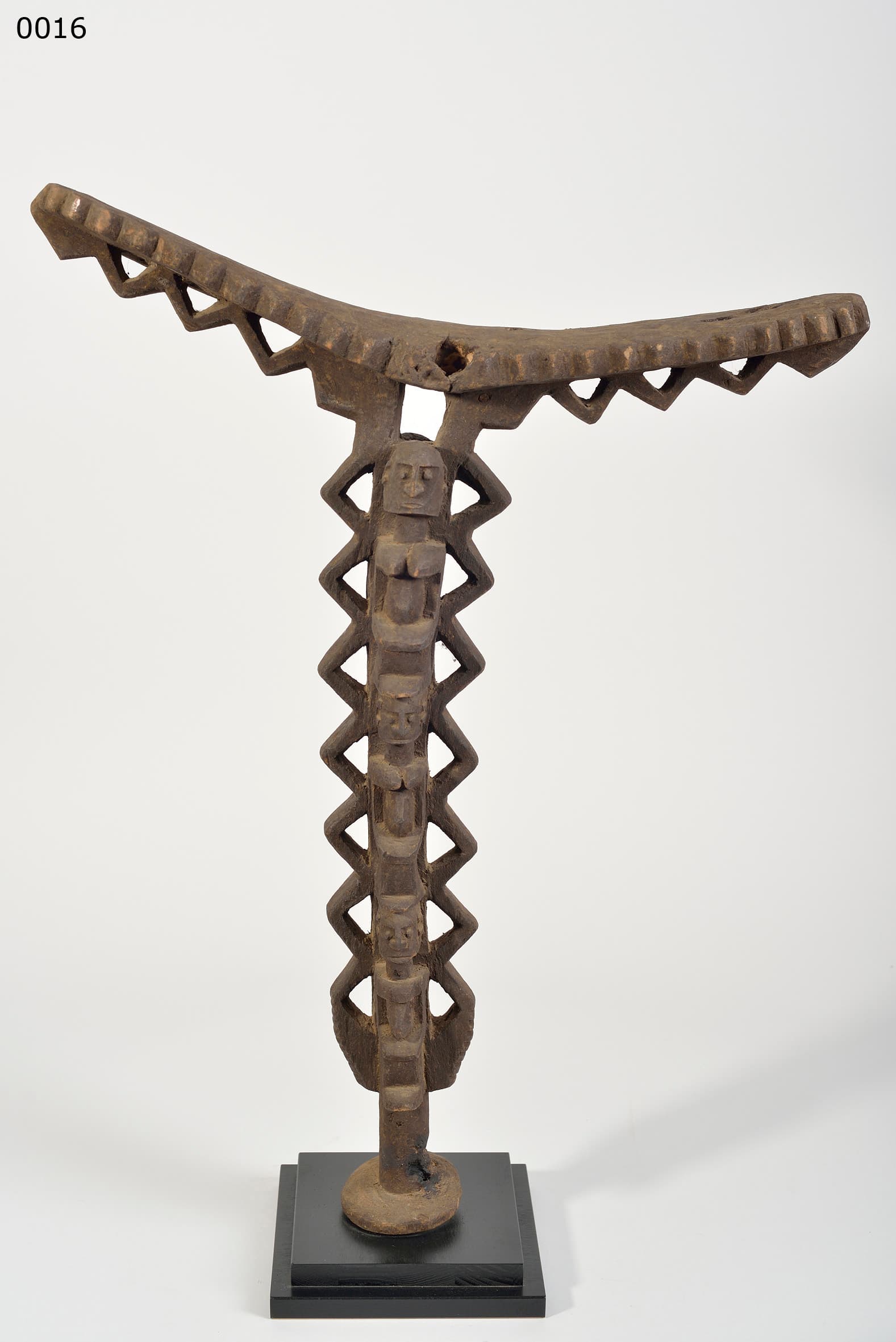
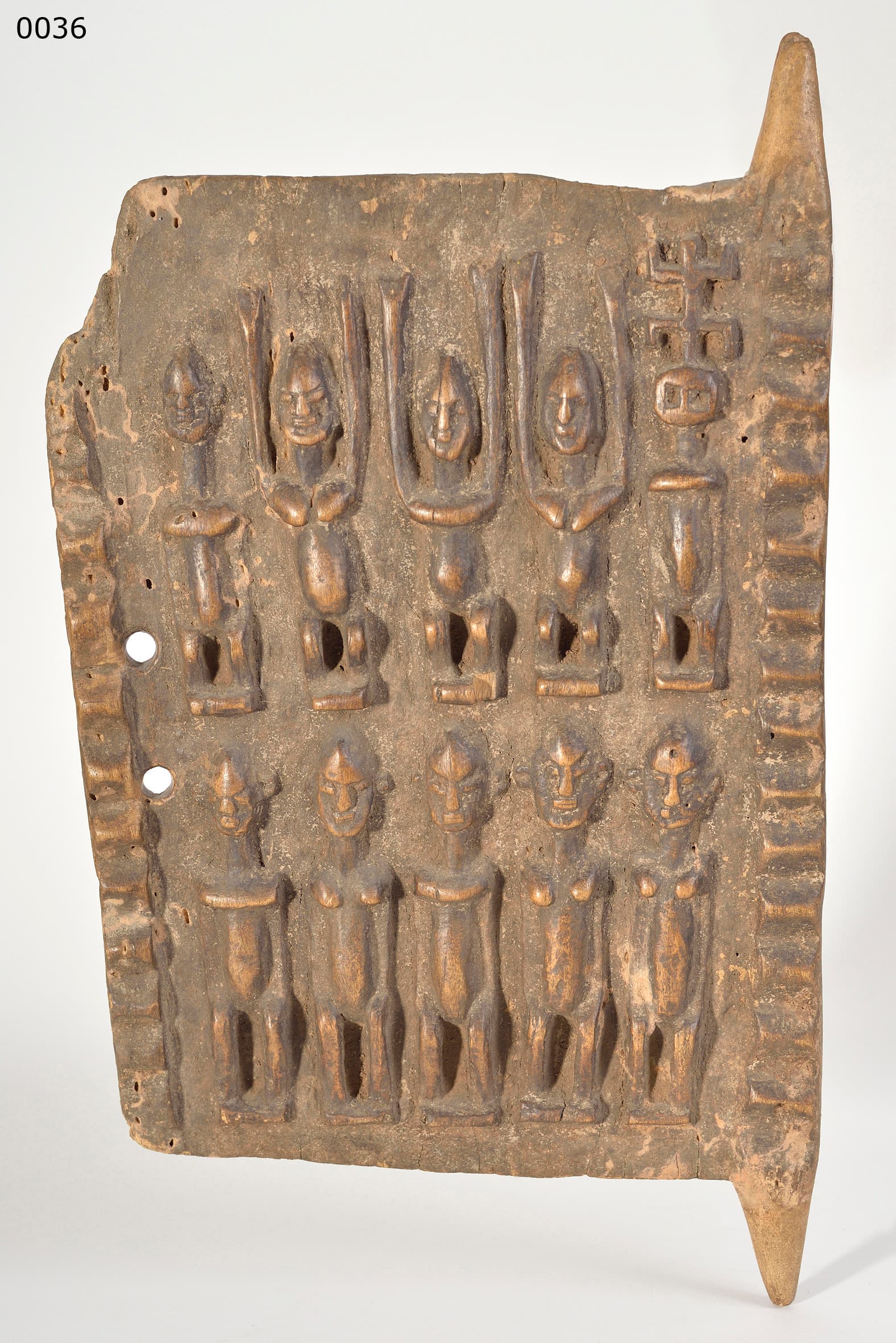
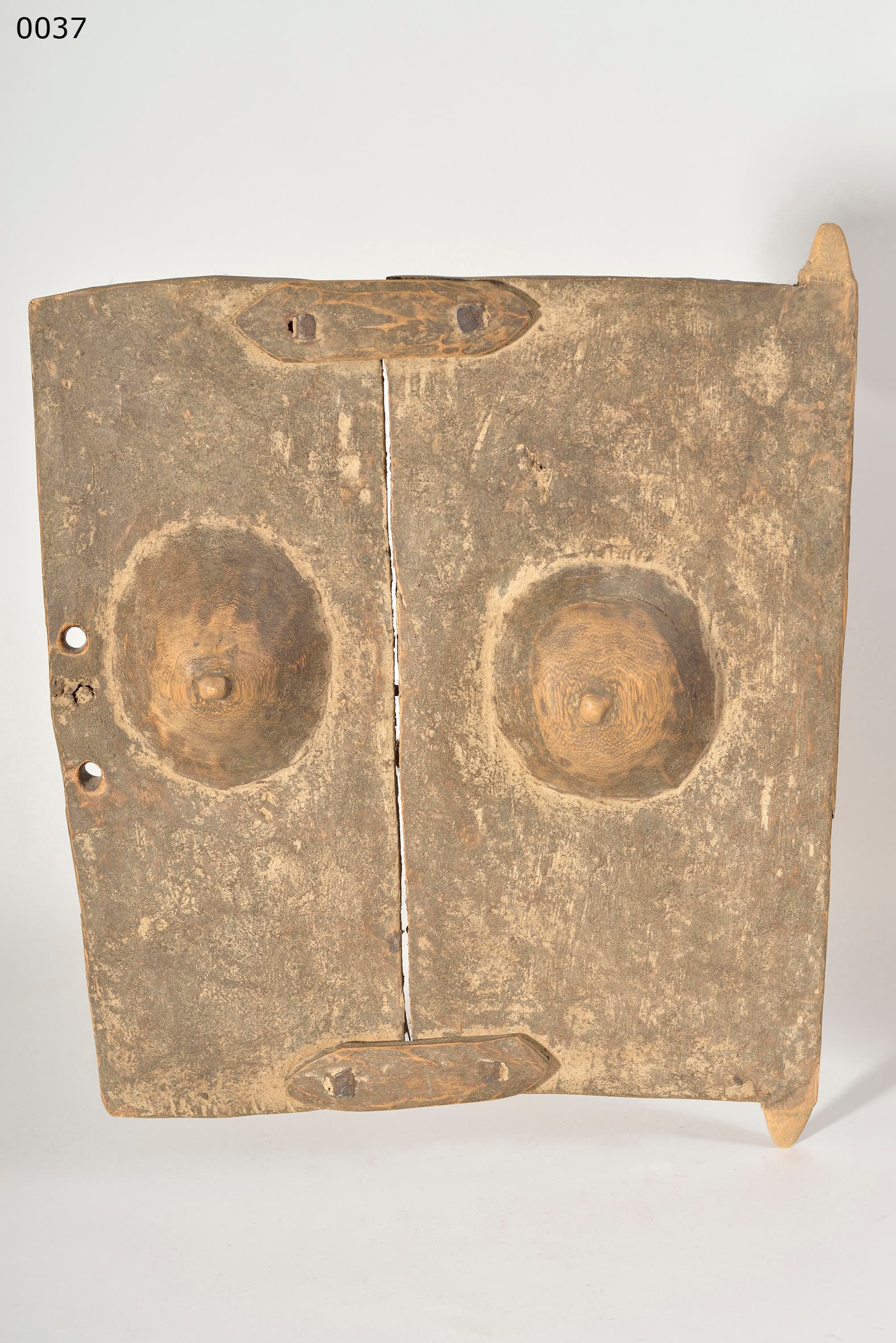
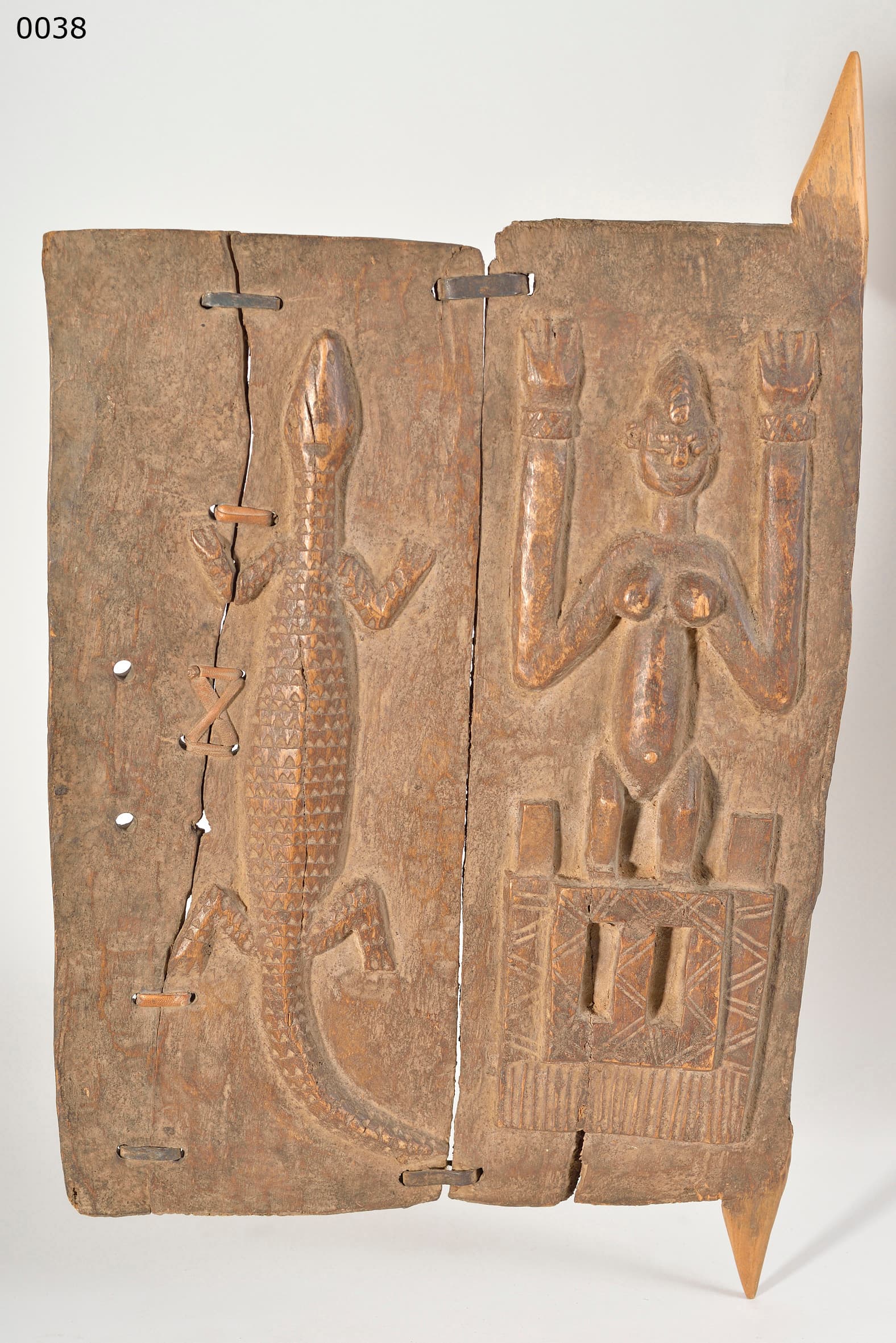
Drei schwere, aufwendig gegossene Bronzeringe. Zwei zeigen stark stilisierte, sitzende oder liegende menschliche Figuren, die direkt in die Struktur des Rings integriert sind, während der dritte ein kunstvolles, durchbrochenes, architektonisches Gerüst aufweist, das eine Reiterfigur umschließt. Alle tragen eine dunkle, oxidierte und leicht krustige Patina.
1. Ästhetischer Stil und regionale Eigenheiten
Diese Dogon-Ringe sind unglaubliche Meisterleistungen des Miniatur-Wachsausschmelzverfahrens. Sie gehen über die Vorstellung von einfachem Schmuck hinaus und verwandeln den Ring in eine komplexe, tragbare Bühne für die Dogon-Mythologie. Die massiven, schweren Schlaufen sorgen dafür, dass sie nur bei feststehenden, sehr formellen Zeremonien getragen werden konnten. Die Integration von sitzenden Ältesten (die für Weisheit stehen) und einer Reiterfigur (die für höchste kriegerische und politische Macht steht) weist den Träger sofort als Mitglied der absoluten Elite aus, wahrscheinlich ein Hogon oder ein hoher Priester. Das Ringformat komprimiert die Ikonographie der Elite auf eine tragbare Größe, ohne die ikonographische Dichte zu beeinträchtigen.
2. Rituelle Funktion und tragbare Autorität
In einer Kultur, in der große Reiterfiguren in ortsfesten Binu-Schreinen versteckt gehalten wurden, ermöglichten diese Ringe einem Führer, diese immense spirituelle und politische Autorität direkt am Körper zu tragen. Die durchbrochene Struktur, die das Pferd und den Reiter einrahmt, wirkt wie ein kosmisches Fenster oder eine schützende Umhüllung und verstärkt das symbolische Gewicht des Rings, wenn er der Gemeinschaft bei wichtigen Ritualen gezeigt wird. Die tragbare Ikonographie dieser Dichte war institutionell eingeschränkt - nur hochrangige religiös-politische Beamte konnten solche komplexen Embleme rechtmäßig tragen.
3. Physische Patina und Altersnachweis
Trotz der starken, verkrusteten Oxidation, die die tiefen Vertiefungen dieser komplizierten Gussstücke bedeckt, wird die Echtheit der Ringe durch ihren spezifischen Reibungsverschleiß belegt. Die Innenseiten der massiven Ösen, wo sie an den Fingern des Trägers rieben, sind deutlich glatter als die äußeren Verzierungen. Diese ausgeprägte, kontrastreiche Patina bestätigt, dass die Ringe im 19. Jahrhundert aktiv als hochrangige Insignien genutzt wurden.
Zusammenfassung
Ein spektakuläres Trio massiver Dogon-Prestige-Ringe, die als tragbare Miniaturmonumente der Führungsideologie der Kultur dienen. Ihre unglaubliche Komplexität im Wachsausschmelzverfahren, der spezifische Reibungsverschleiß und die tiefe Oxidation machen sie zu höchst bedeutenden historischen Artefakten.
KI-unterstützt erstellt aus Sammlungsgutachten, Objektfotografie und eigener Recherche, redaktionell geprüft. Fehler sind möglich — Hinweise darauf sind uns willkommen. Zum Verfahren →