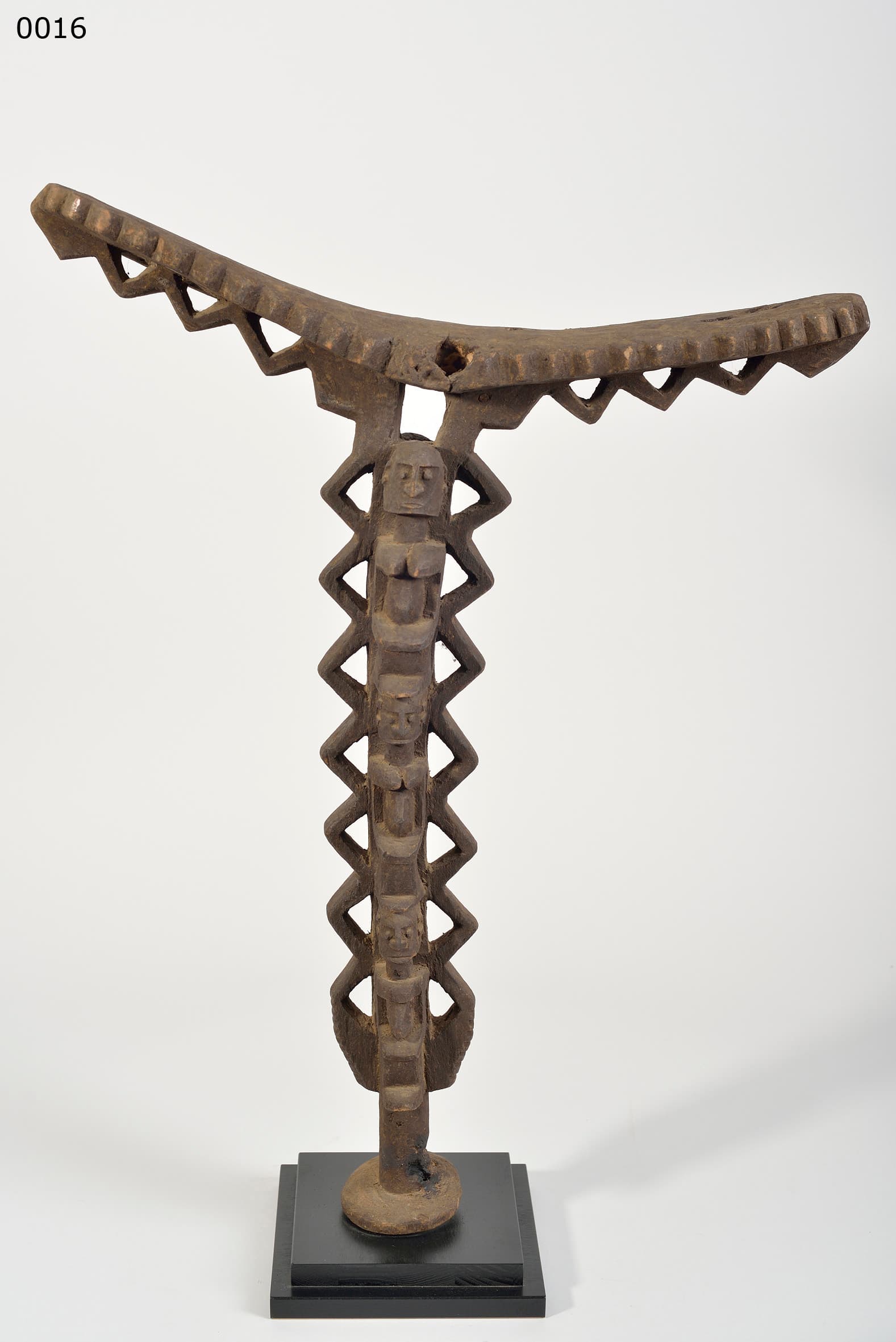
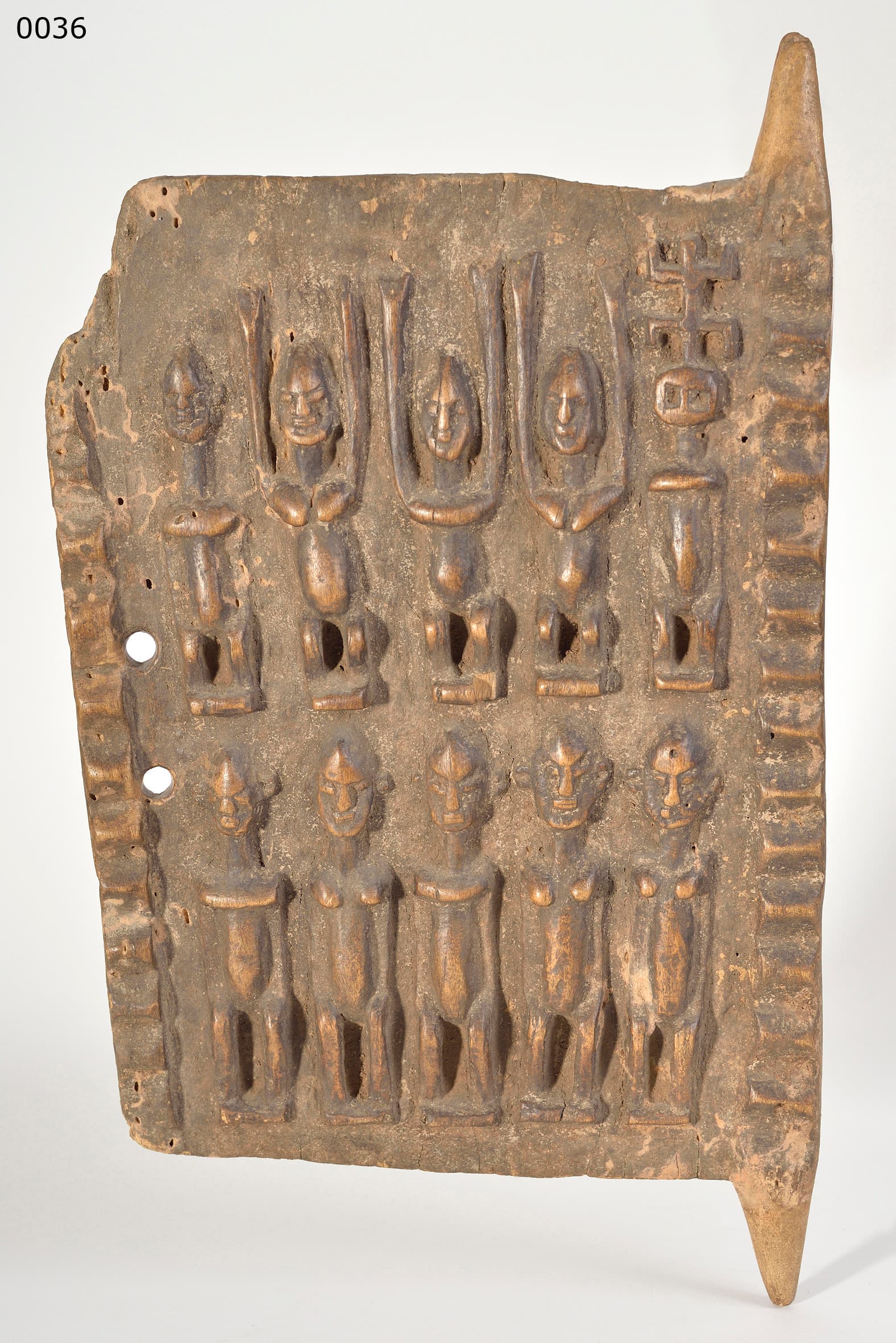
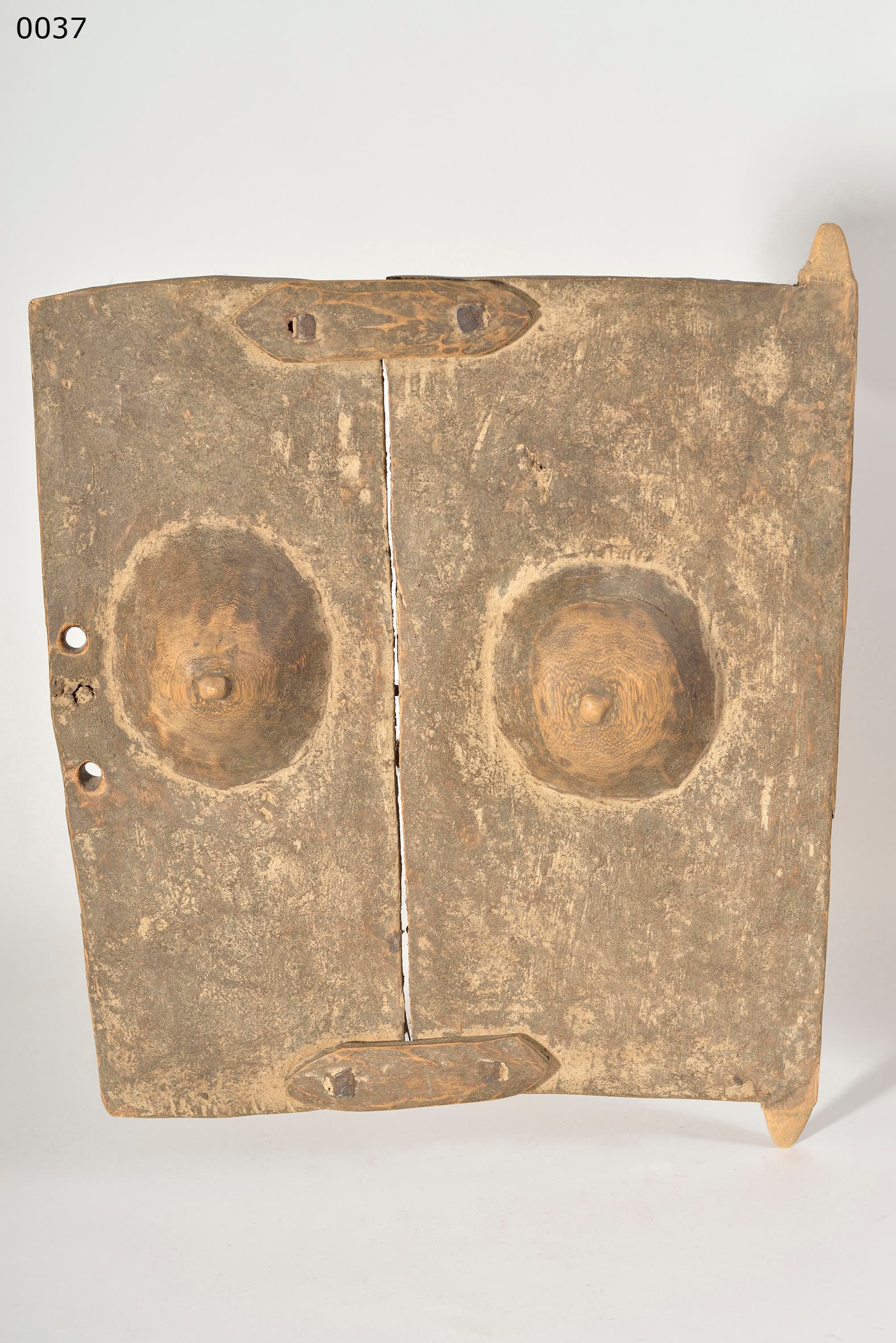
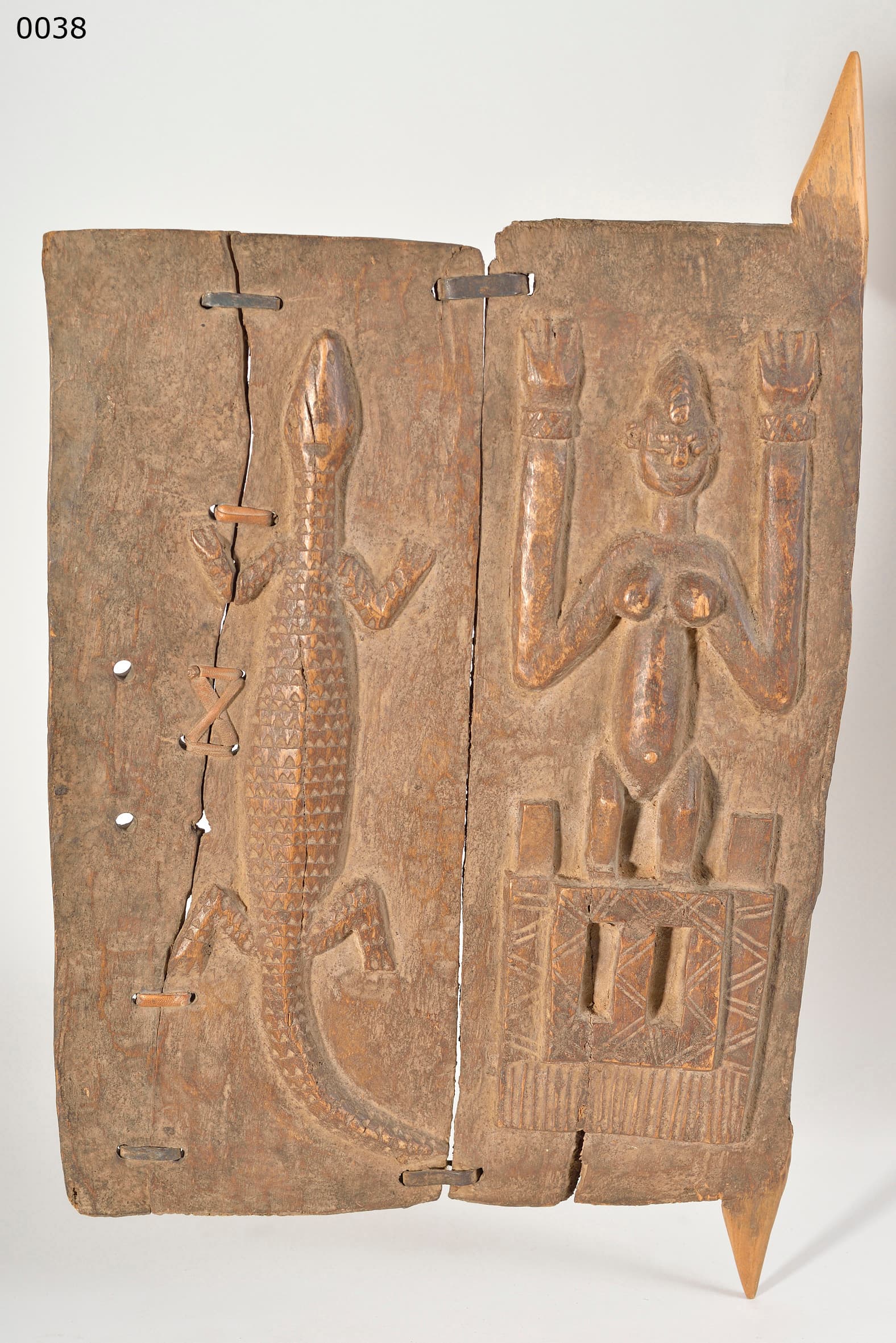
1. Ästhetischer Stil und regionale Eigenheiten
Diese Objekte gelten als herausragende Beispiele der Dogon-Miniaturgüsse im Wachsausschmelzverfahren und verwandeln funktionale Haarnadeln oder kleine Prestigestäbe in komplexe architektonische Monumente. Besonders hervorzuheben ist die Einbeziehung der Reiterfigur - ein Motiv, das häufig mit großen, stationären Holzschreinen assoziiert wird. Damit wird dieses bedeutende Symbol der politischen und kriegerischen Macht der Dogon (der Hogon oder Nommo zu Pferd) zu einem tragbaren, gut sichtbaren Abzeichen, das auf einen hohen Status hinweist. Durch die Übertragung eines stationären Schreinmotivs auf ein tragbares Haarnadelformat wird die ikonografische Reichweite des Reiters in den Bereich der persönlichen Zurschaustellung ausgedehnt.
2. Rituelle Funktion und tragbare Autorität
Wenn sie von einer hochrangigen Priesterin im Haar getragen oder von einem Ältesten mitgeführt wurden, fungierten diese Bronzen als kraftvolle, öffentliche Bekundung der Nähe des Trägers zu den Ahnen. Die komplizierten Endstücke mit durchbrochenen Rahmen und komplexer Geometrie dienen als kosmische Fenster, die das gewaltige spirituelle Gewicht des Dogon-Pantheons einfangen und zu einem intimen, tragbaren Talisman verdichten, der den Besitzer schützen und erheben soll. Das Format der Anstecknadeln kann auf abgestufte Prestigeebenen innerhalb der Insignien des Trägers hinweisen, wobei jede Anstecknadel einen bestimmten zeremoniellen Anlass signalisiert.
3. Physische Patina und Altershinweise
Für das Alter dieser drei Objekte sprechen die unterschiedlichen Abnutzungserscheinungen auf ihren Oberflächen. Die langen, spitz zulaufenden Spitzen aller drei Nadeln sind deutlich glatter und auf einen helleren Bronzeton poliert, was darauf zurückzuführen sein kann, dass sie über einen langen Zeitraum hinweg immer wieder durch dichtes Haar oder Textilien gedrückt wurden. Die filigranen, vertieften Bereiche der reiterlichen und geometrischen Endstücke weisen dagegen eine dicke, krustige und dunkle Oxidation auf, die mit einer Datierung in das 19. Jahrhundert vereinbar ist.
Zusammenfassung
Ein bemerkenswertes Trio von Dogon-Bronzegeräten, die komplexe mythologische Motive der Kultur miniaturisieren. Ihre deutlichen funktionellen Gebrauchsspuren und die tiefe Oxidation sprechen für ein hohes Alter und machen sie zu bedeutenden historischen Artefakten. (Der Gegenstand wurde stilistisch identifiziert; der visuelle Inhalt stimmt nicht mit der Beschreibung im Katalog überein)
KI-unterstützt erstellt aus Sammlungsgutachten, Objektfotografie und eigener Recherche, redaktionell geprüft. Fehler sind möglich — Hinweise darauf sind uns willkommen. Zum Verfahren →