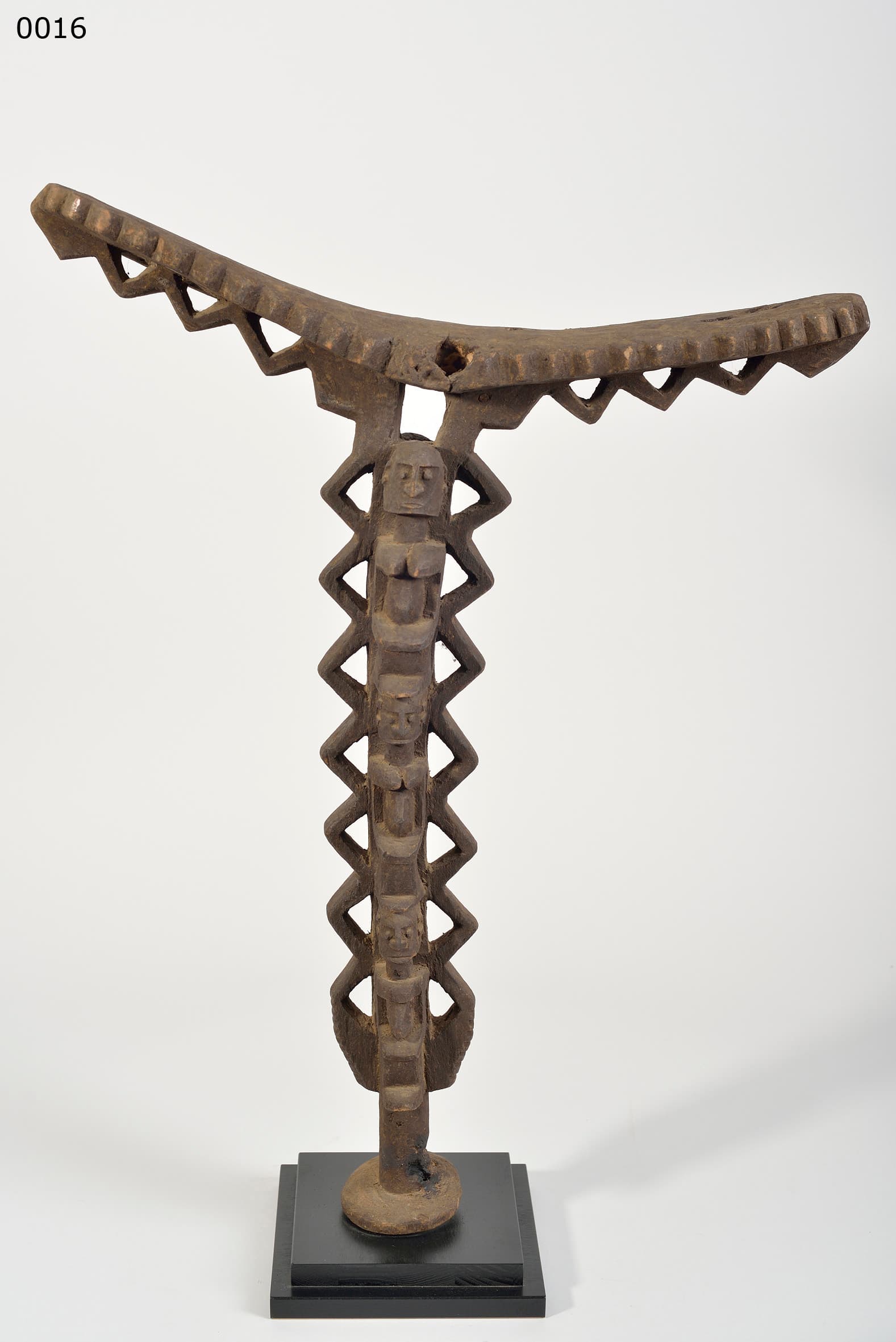
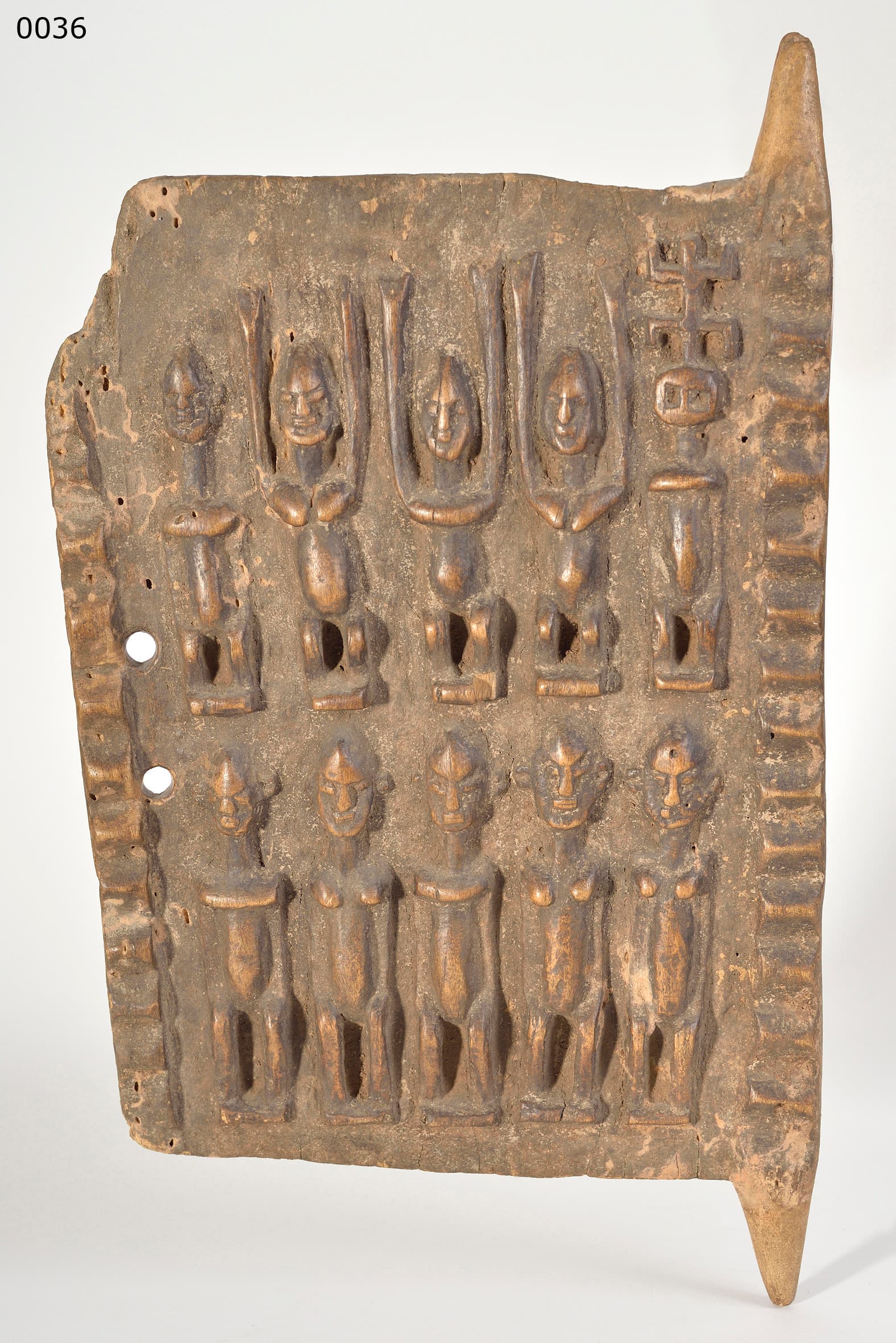
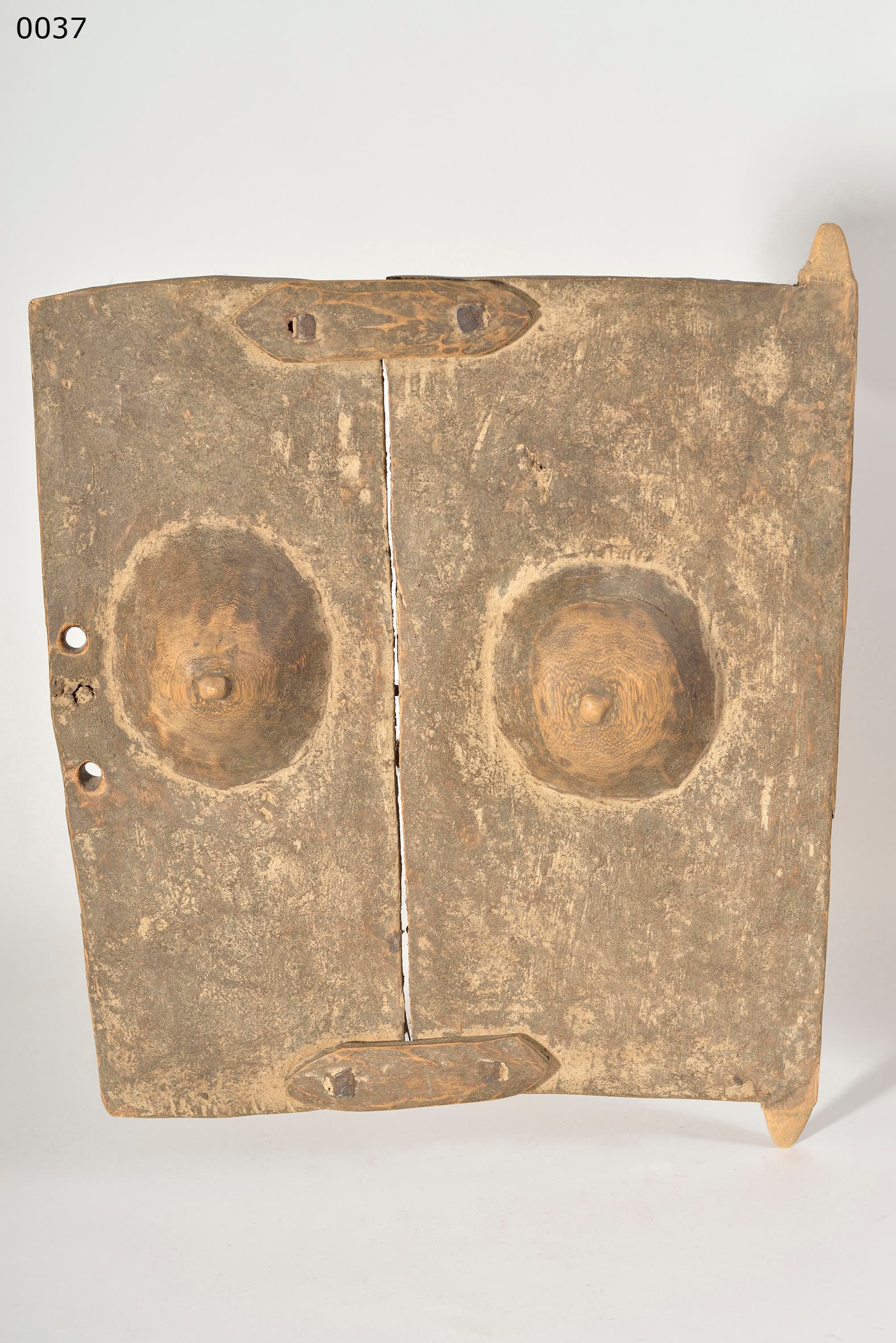
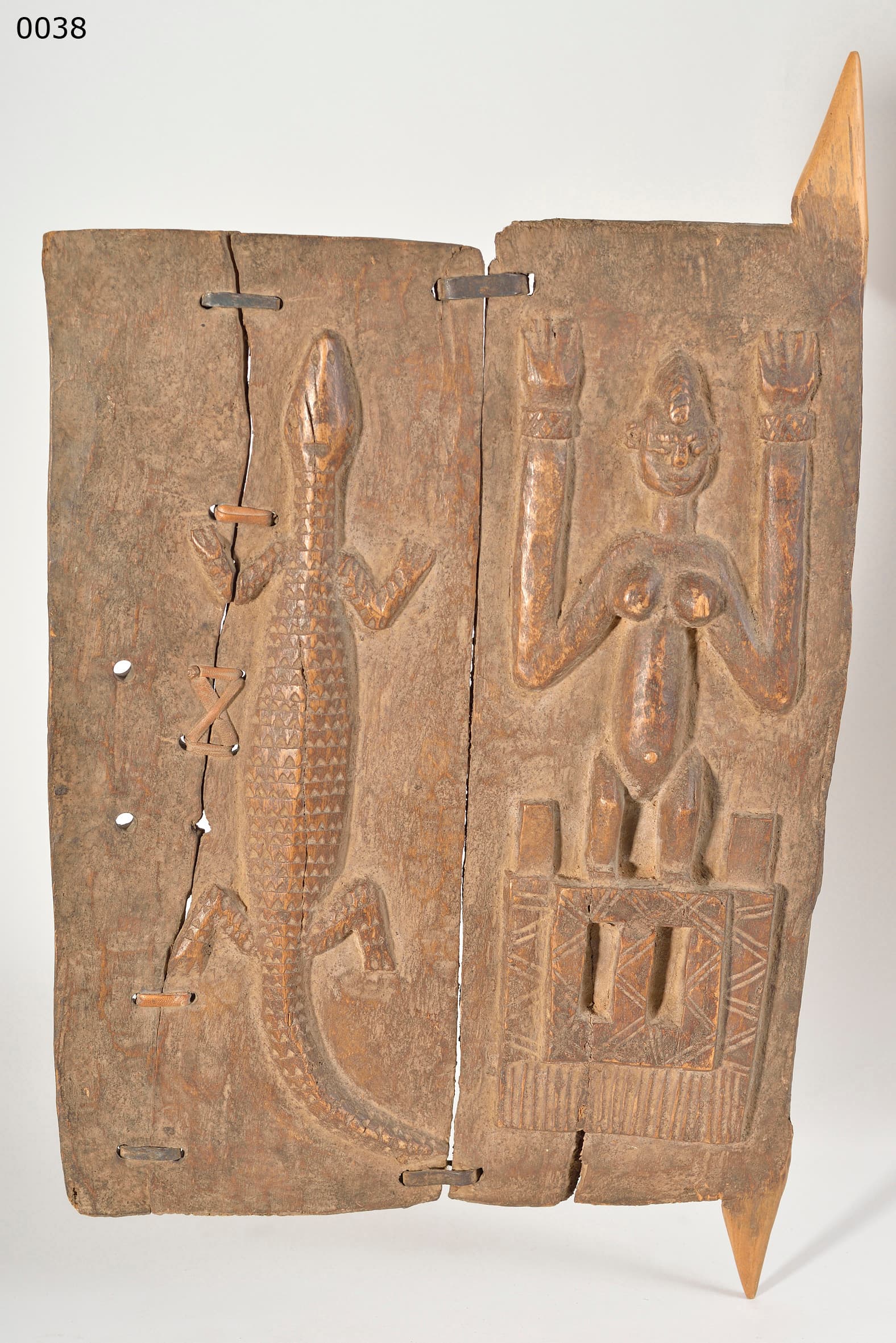
Diese stark abstrahierte Eisenfigur steht nahezu senkrecht, hat einen markanten, phallusförmigen Kopf und zwei dünne, nach unten und außen gebogene Arme. Die gesamte Metalloberfläche ist mit einer schweren, stark oxidierten, rostfarbenen Patina überzogen.
1. Ästhetischer Stil und regionale Eigenheiten
Diese Figur veranschaulicht eine extreme Form der Eisenabstraktion der Dogon, bei der die menschliche Form auf eine vertikale Achse und essenzielle Zeichen reduziert ist. Der stark betonte, helmartige oder phallische Kopf dominiert die Komposition und stellt den dünnen, schematischen Torso in den Hintergrund. Im visuellen Vokabular der Dogon gilt der Kopf als Behälter für Nyama (vitale Lebenskraft), und die phallische Symbolik wird traditionell mit der Regenerationskraft der Nommo (Ur-Ahnen) und der landwirtschaftlichen Fruchtbarkeit der Erde verbunden. Die nach unten gebogenen Arme vermitteln ein Gefühl der Erdung und sollten diese spirituelle Energie symbolisch zurück in den Boden leiten.
2. Rituelle Funktion und Binu-Verankerung
Die der Jemme (Schmiedekaste) zugeschriebenen kleinen Eisenfiguren dieser Art waren als architektonische Bestandteile der Binu-Schreine konzipiert. Sie wurden üblicherweise direkt in die Lehmziegelwände oder den Lehmboden des Altars getrieben und dienten dort als verankernde Elemente. In ihrer rituellen Funktion sollten sie die spirituelle Präsenz der Ahnen symbolisch festhalten und als dauerhafter Ersatz für die menschlichen Verehrer fungieren.
3. Physische Patina und Altersnachweis
Die Bedeutung dieses Stücks wird durch die dokumentierte Herkunft aus der Sammlung René Salanon, das Künzi-Faktenblatt und die Erwähnung in der Publikation "DOGON" gestützt. Physikalisch weist das Eisen eine starke Austrocknung auf. Es ist von einer trockenen, körnigen und abblätternden Schicht aus Eisenoxid umhüllt. Diese ausgeprägte, brüchige Rostschicht spricht dafür, dass das Objekt über einen längeren Zeitraum in einer feuchten Schreinumgebung am Bandiagara Escarpment verblieben sein könnte, bevor es gesammelt wurde.
Zusammenfassung
Diese auf ihre phallische und vertikale Essenz reduzierte Eisenfigur gilt im rituellen Kontext als Leiter der Ahnenenergie der Dogon. Ihre ausgeprägte Rostpatina und die dokumentierte Publikationsgeschichte stützen die Zuschreibung als Binu-Schreinanker, der stilistisch dem 19. Jahrhundert zugeordnet werden kann.
Dokumentation: publiziert in "DOGON".
KI-unterstützt erstellt aus Sammlungsgutachten, Objektfotografie und eigener Recherche, redaktionell geprüft. Fehler sind möglich — Hinweise darauf sind uns willkommen. Zum Verfahren →