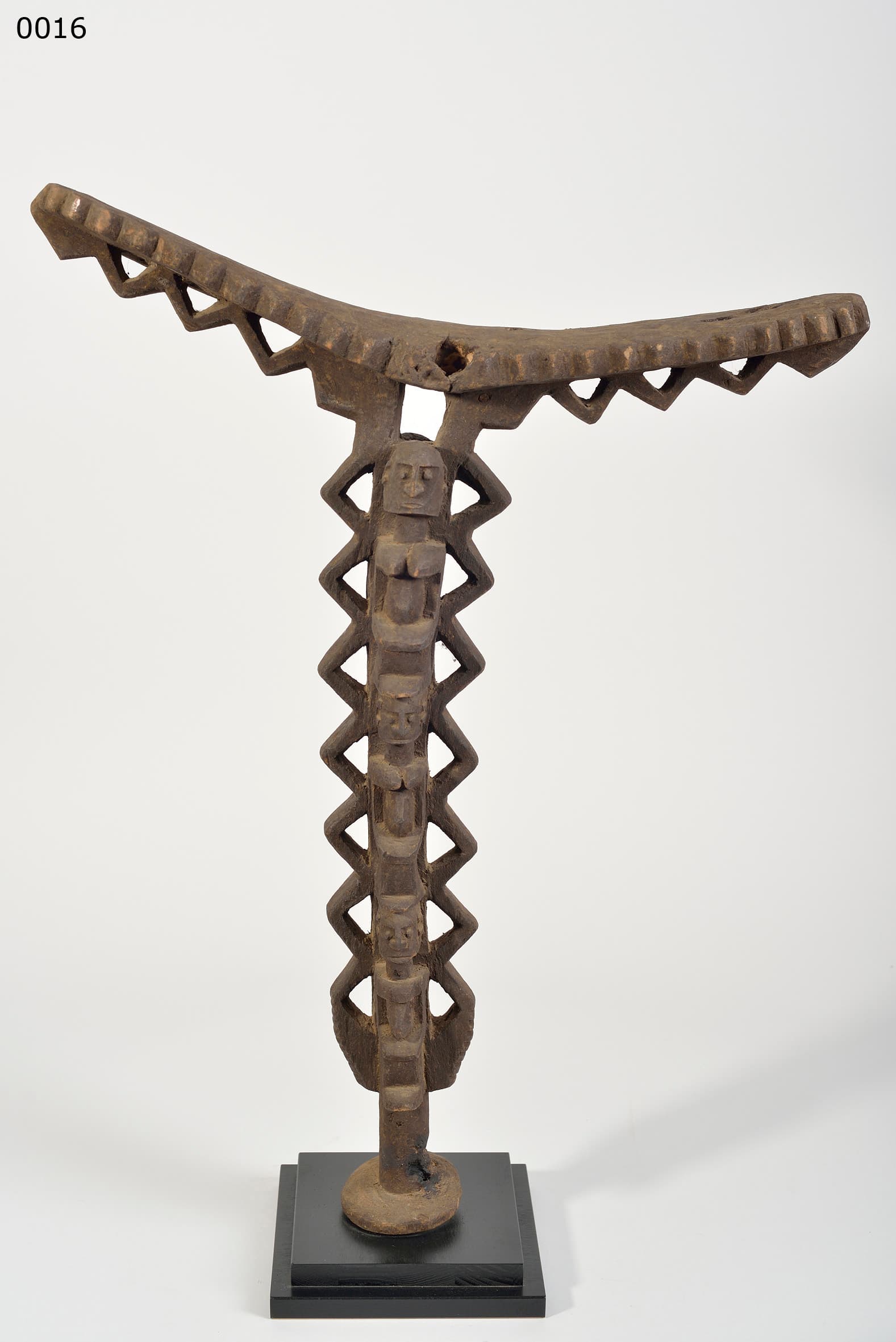
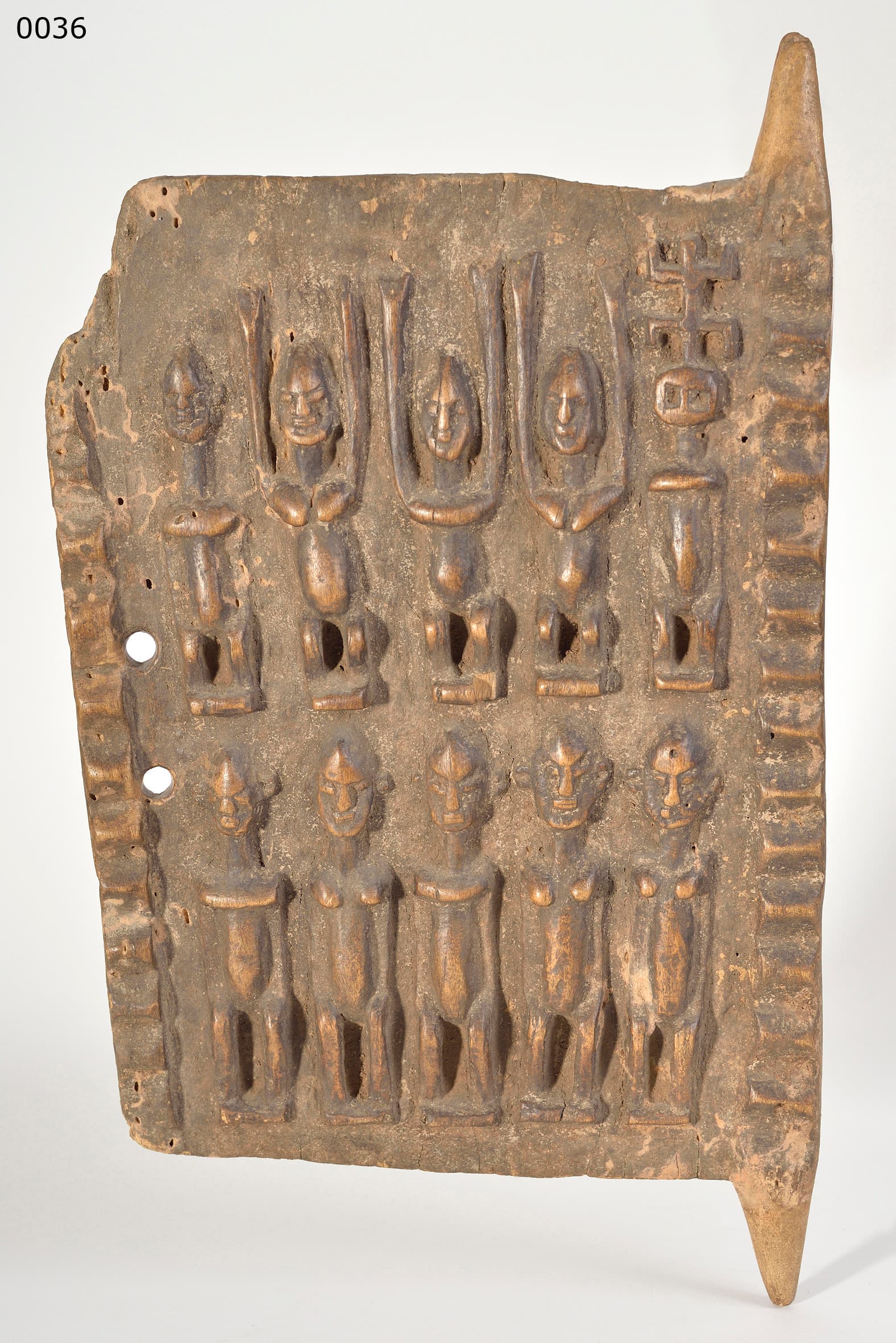
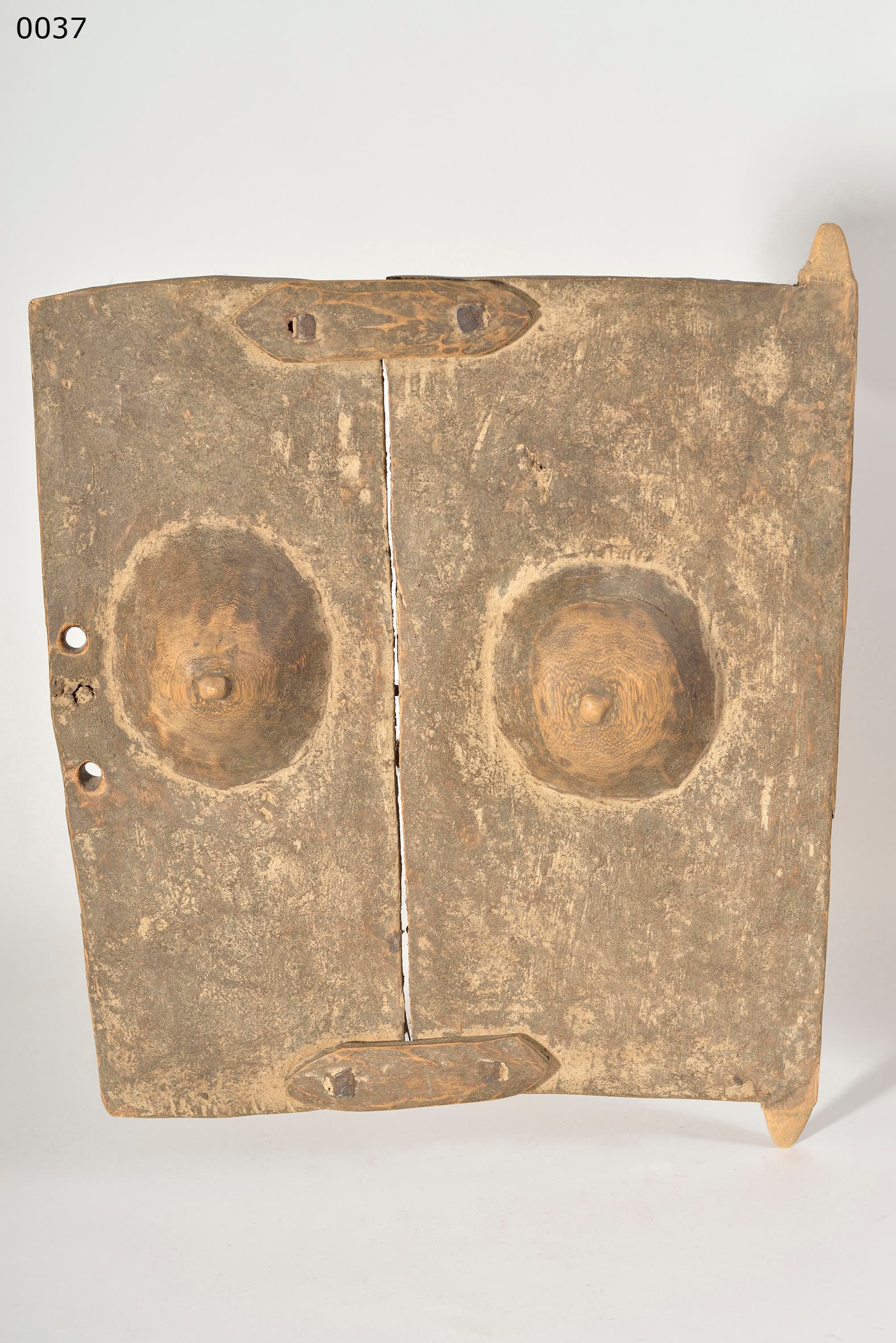
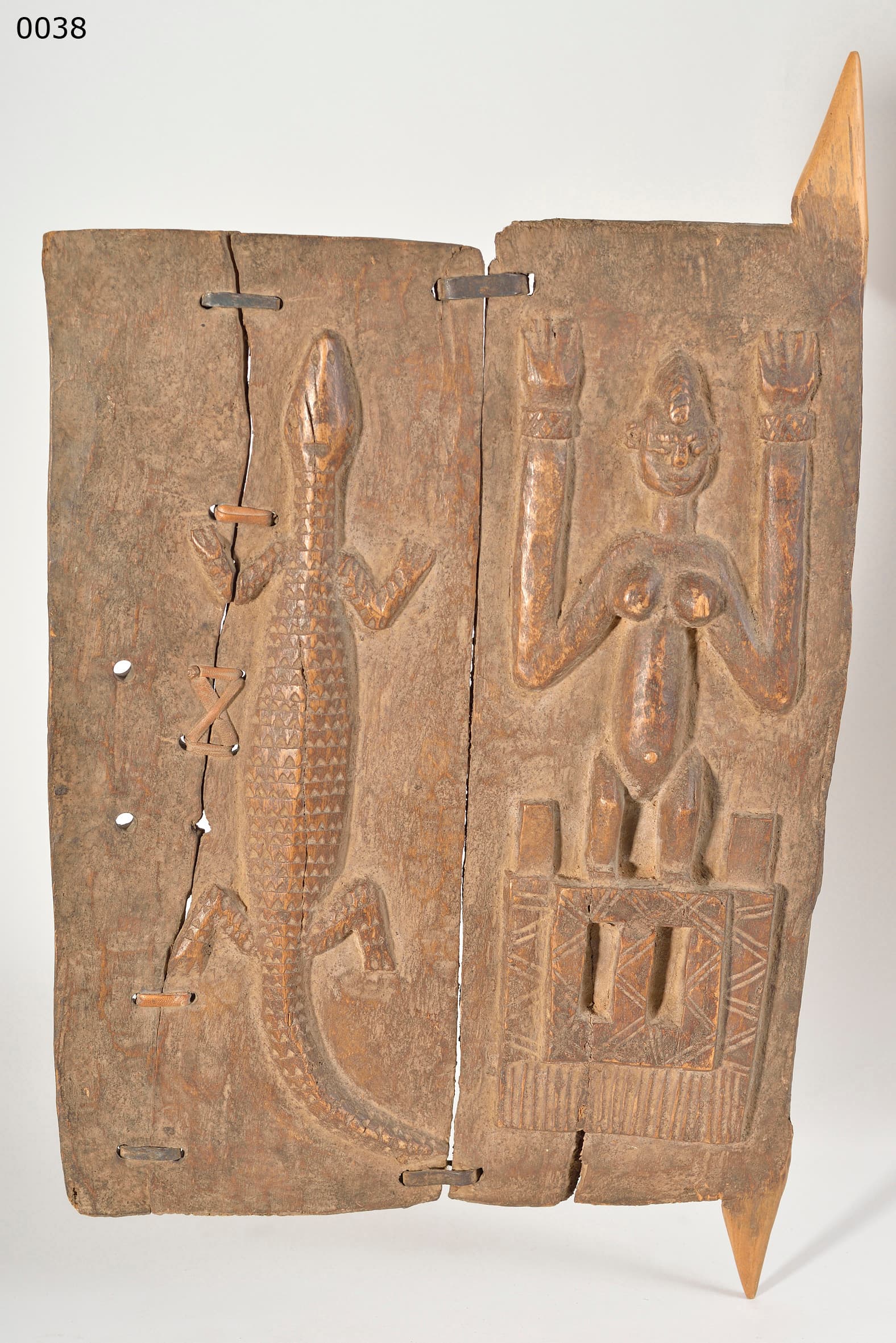
Dieses breite, geschwungene Eisengerät besteht aus einer gebogenen, U-förmigen horizontalen Stange, die in zwei nach unten zeigenden Endstücken endet und von einem kurzen vertikalen Pflock in der Mitte getragen wird. Es weist starke, terrestrische Oxidation und abblätternden Rost auf.
1. Ästhetischer Stil und regionale Eigenheiten
Während hölzerne Nackenstützen in ganz Afrika üblich sind, ist eine eiserne Nackenstütze ein äußerst seltenes und prestigeträchtiges Objekt. Die geschwungene, minimalistische Geometrie dieses Stücks lehnt sich stark an das uralte ästhetische Erbe der Tellem - der Vorgänger der Dogon - an. Die Ausführung in Eisen statt in Holz verwandelt ein häusliches Objekt in ein ewiges, unzerstörbares Monument. Sie spiegelt das gesellschaftliche Bedürfnis wider, den Status des Benutzers über das vergängliche Reich hinaus zu erheben und seine Identität in der heiligen, irdischen Beständigkeit des geschmiedeten Metalls zu verankern.
2. Rituelle Funktion und Traumdeutung
In der Dogon-Kultur und den umliegenden Kulturen dient das Anheben des Kopfes während des Schlafes zwei Hauptfunktionen: Es schützt die aufwendigen, statusbestimmenden Frisuren und isoliert den Kopf - den Sitz der Seele und des Intellekts - von den spirituellen Unreinheiten des Bodens. Aufgrund ihres Materials wurde diese Nackenstütze wahrscheinlich von einem hochrangigen Hogon oder Wahrsager verwendet. Das Eisen diente während des Schlafs als leitende Antenne, die prophetische Träume erleichterte und es dem Schläfer ermöglichte, direkte Kommunikation mit dem Nommo und den Ahnen zu empfangen.
3. Physische Patina und Altersnachweis
Die Datierung dieses Artefakts in das 16. Jahrhundert wird durch den fortgeschrittenen Zustand des metallurgischen Zerfalls gestützt. Eisen zerfällt auf natürliche Weise in Erz; um mehr als 400 Jahre zu überleben, muss das Metall entweder außergewöhnlich dick sein oder in einem besonderen Mikroklima (wie den trockenen, geschützten Höhlen des Bandiagara-Steilhangs) konserviert werden. Die Oberfläche ist vollständig blasig, tief entkernt und mit einer dicken Kruste aus Eisenoxid überzogen, was auf eine jahrhundertelange Alterung hindeutet. Es ist ein wahrer archäologischer Überlebenskünstler.
Zusammenfassung
Diese eiserne Nackenstütze aus dem 16. Jahrhundert ist ein äußerst seltenes Objekt, das eine häusliche Form zu einem unzerstörbaren Instrument der elitären Traumdeutung macht. Seine tiefe, blasige Oxidationskruste spricht für ein hohes Alter und legt seine historische Bedeutung nahe.
Dokumentation: Sammlung René Salanon, Künzi-Datenblatt vorhanden; publiziert in "DOGON".
KI-unterstützt erstellt aus Sammlungsgutachten, Objektfotografie und eigener Recherche, redaktionell geprüft. Fehler sind möglich — Hinweise darauf sind uns willkommen. Zum Verfahren →