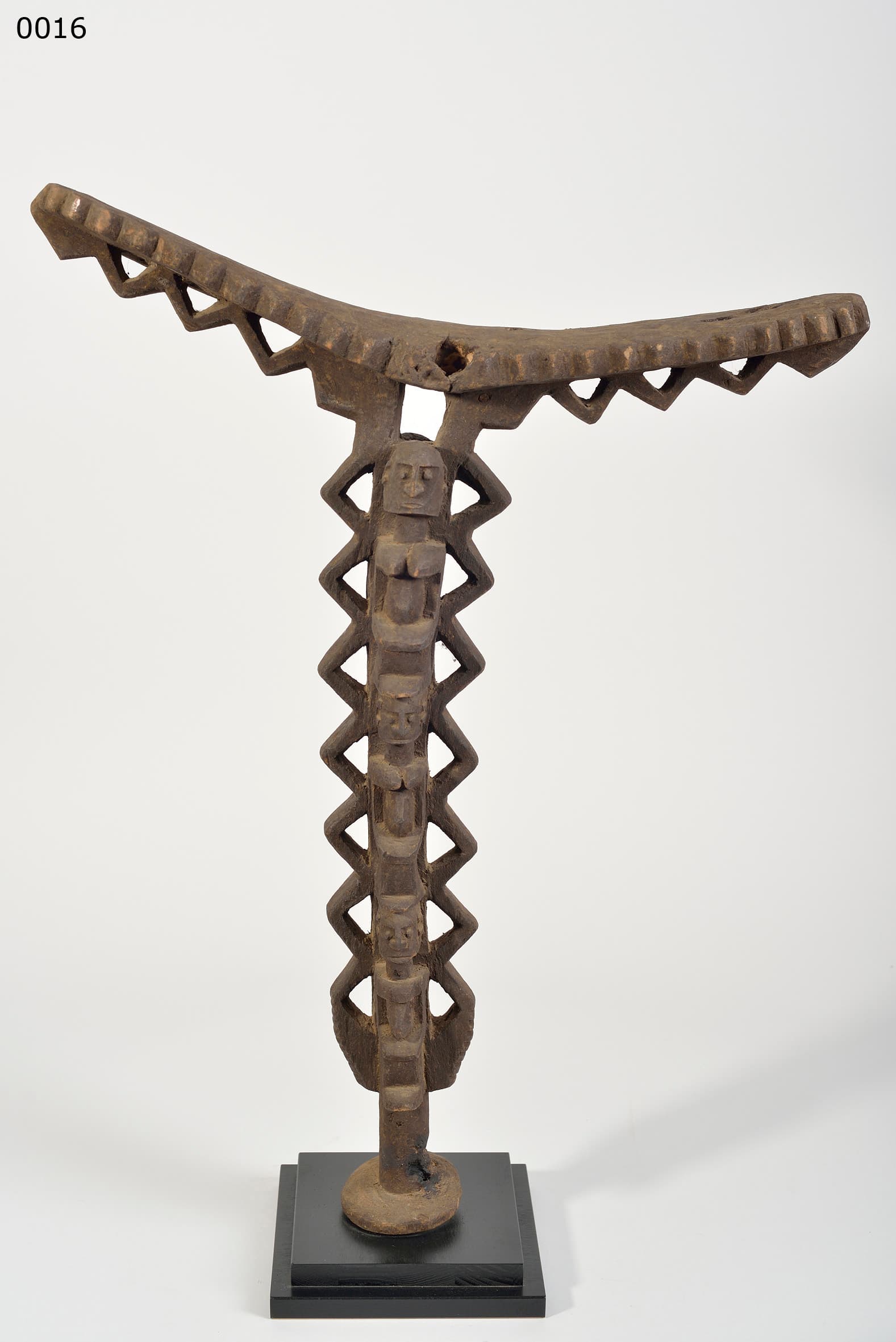
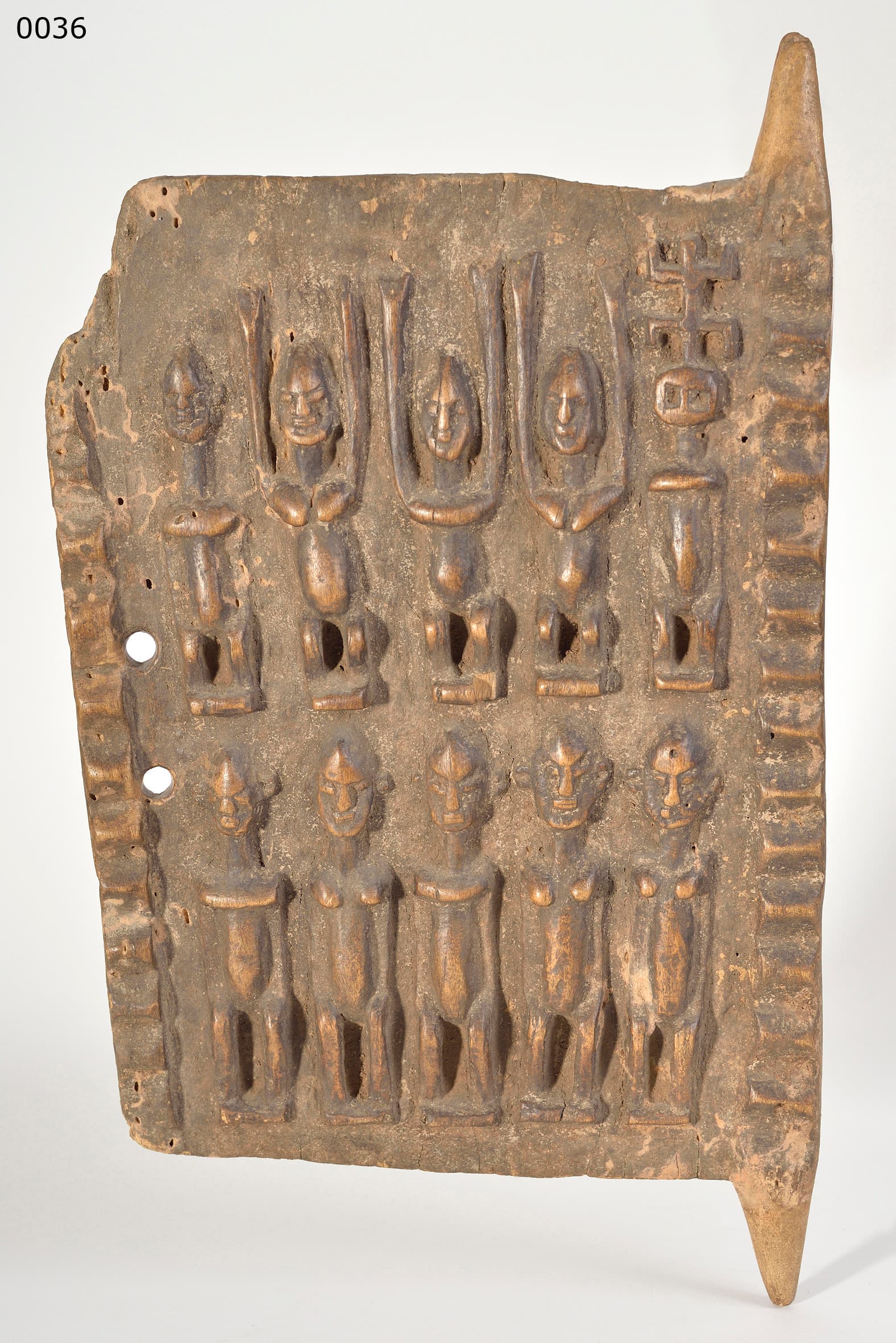
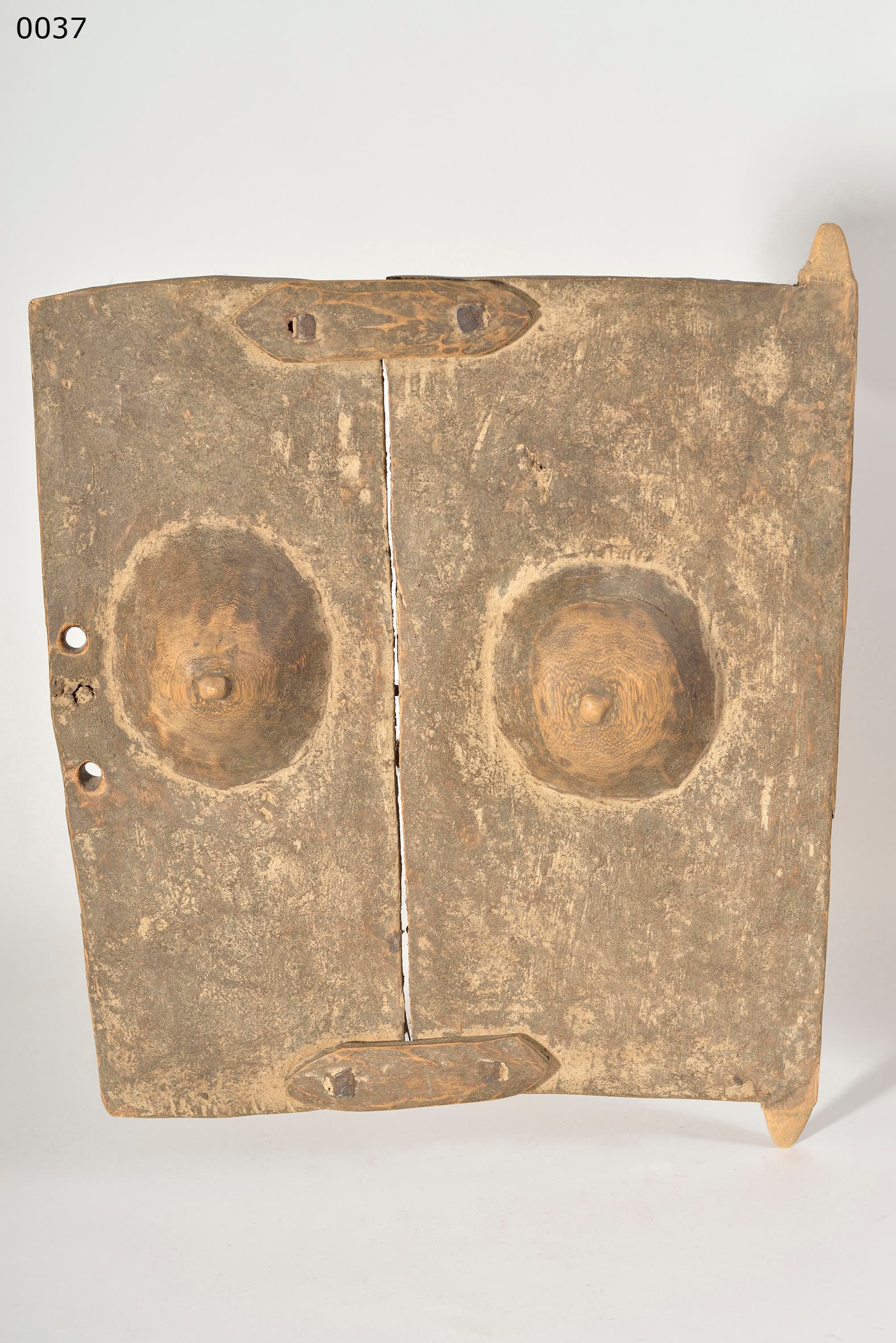
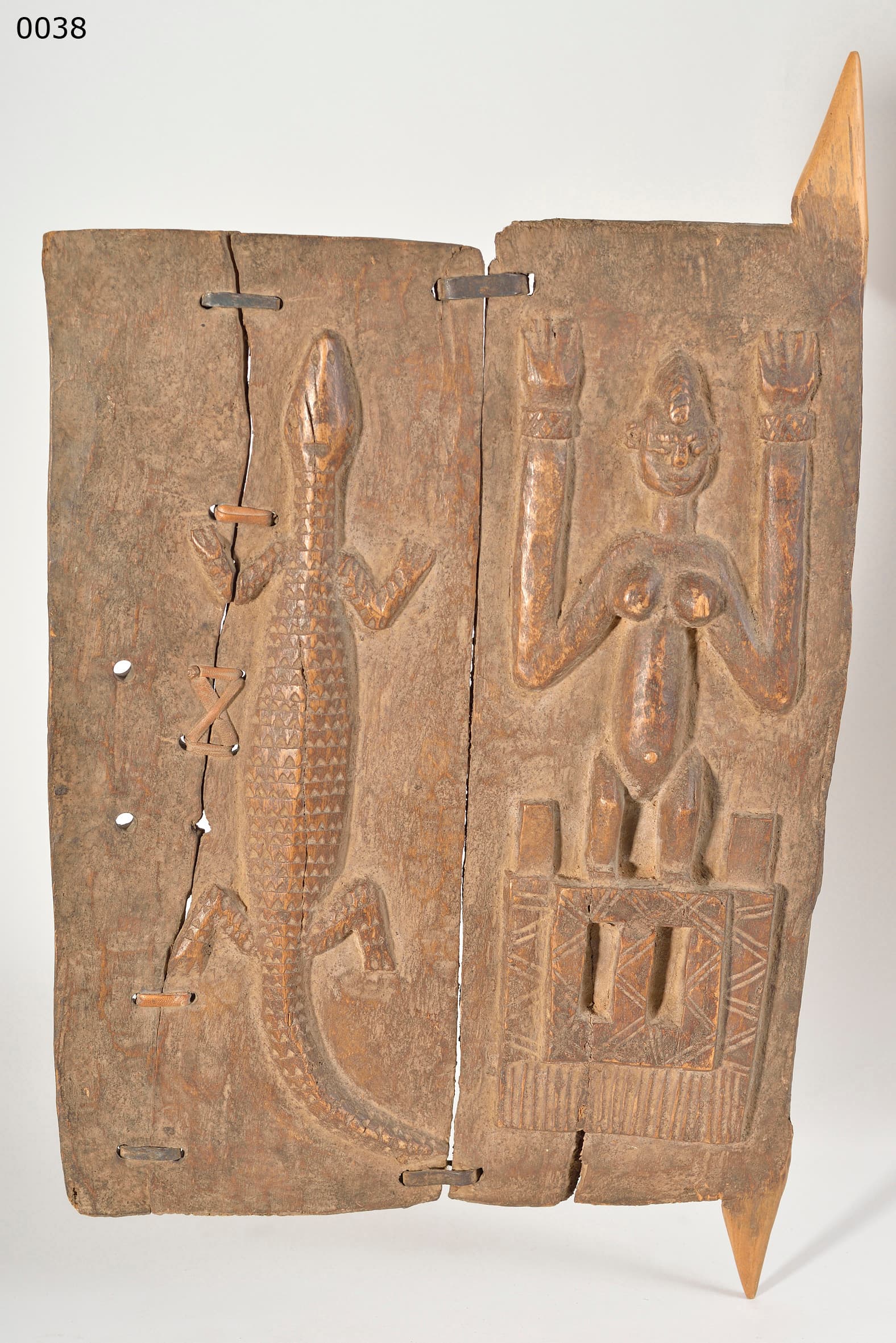
Diese komplexe Eisenfigur hat hochgezogene, U-förmige Arme und einen Unterkörper, der sich in einer fortlaufenden, serpentinenartigen Schleife auf den zentralen vertikalen Schaft zurückdreht. Eine stark strukturierte, abblätternde braune Oxidation verdeckt die ursprüngliche Metalloberfläche vollständig.
1. Ästhetischer Stil und regionale Charakteristika
Diese Skulptur ist eine eindringliche metallurgische Verkörperung der dualen Natur des Nommo. Die obere Hälfte zeigt die klassische Orans-Pose mit U-förmig erhobenen Armen, die den Himmel um Regen anflehen. Die untere Hälfte verzichtet jedoch völlig auf die menschliche Anatomie; die "Beine" winden sich um den zentralen Schaft wie eine Kletterranke oder eine sich verschlingende Schlange. Diese Verschmelzung von menschlichem Flehen und schlangenartiger Geschmeidigkeit manifestiert visuell die amphibische, formwandelnde Natur der Dogon-Schöpfergeister in einem einzigen, durchgehenden Stück Eisen.
2. Rituelle Funktion und Dynamik des Regenmachens
In den hochspezialisierten Regenmachritualen des Bandiagara Escarpment müssen die Werkzeuge sowohl den Himmel als auch die Erde ansprechen. Dieser Stab entspricht dieser doppelten Anforderung. Die erhobenen Arme fungieren als Antenne, um die Gewitterwolken anzuziehen, während der schlangenförmige Knoten an der Basis die Feuchtigkeit visuell und magisch an die Erde "bindet" und so verhindert, dass sie weggespült wird. Auf einem Familienaltar gepflanzt, war es ein dauerhaftes, beständiges Gebet für die landwirtschaftliche Fruchtbarkeit, die zum Überleben der Trockenzeit in der Sahelzone erforderlich ist.
3. Physische Patina und Altersnachweis
Eine Datierung dieses Stücks in das 19. Jahrhundert ist mit dem tiefgreifenden materiellen Verfall vereinbar. Das Eisen ist dick mit brüchigem, geschichtetem Rost überzogen, der bei schwerer Handhabung abzublättern droht. Dies deutet darauf hin, dass das Objekt über viele Generationen hinweg abwechselnd extremer Hitze, sintflutartigen saisonalen Regenfällen und dem Auftragen von rituellem Brei (sa) ausgesetzt war. Die Provenienz der Salanon-Sammlung spricht dafür, dass dieser rohe, stark strukturierte Zustand des Verfalls von den frühen Sammlern respektiert und bewahrt wurde.
Zusammenfassung
Diese Eisenfigur, die menschliches Flehen mit schlangenartiger Geometrie verbindet, verkörpert die duale, formwandelnde Natur des Nommo. Ihr dicker, brüchiger, atmosphärischer Rost stützt die Zuschreibung als ein im 19. Jahrhundert entstandenes Instrument der Dogon-Regenmacher.
Dokumentation: publiziert in "DOGON".
KI-unterstützt erstellt aus Sammlungsgutachten, Objektfotografie und eigener Recherche, redaktionell geprüft. Fehler sind möglich — Hinweise darauf sind uns willkommen. Zum Verfahren →