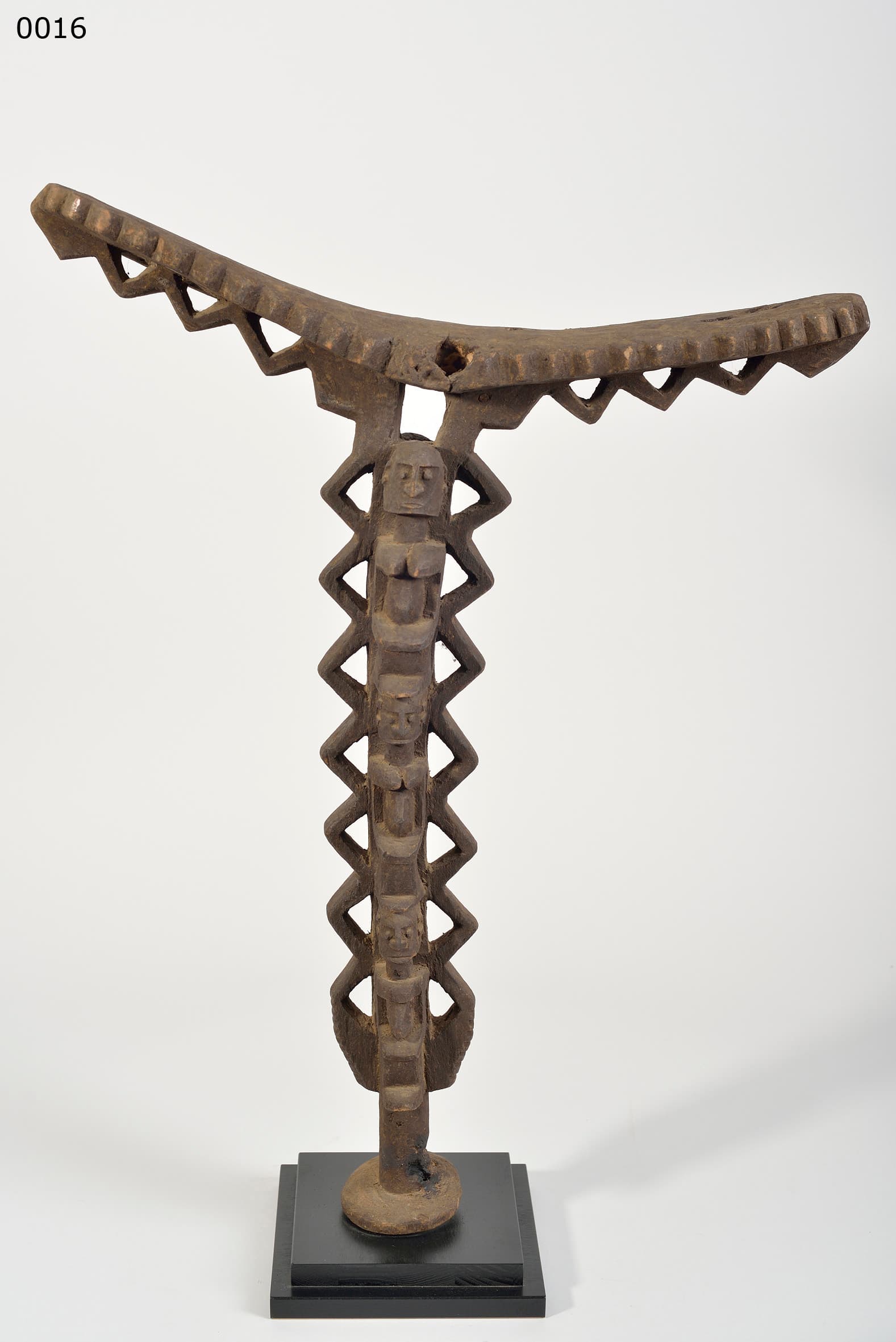
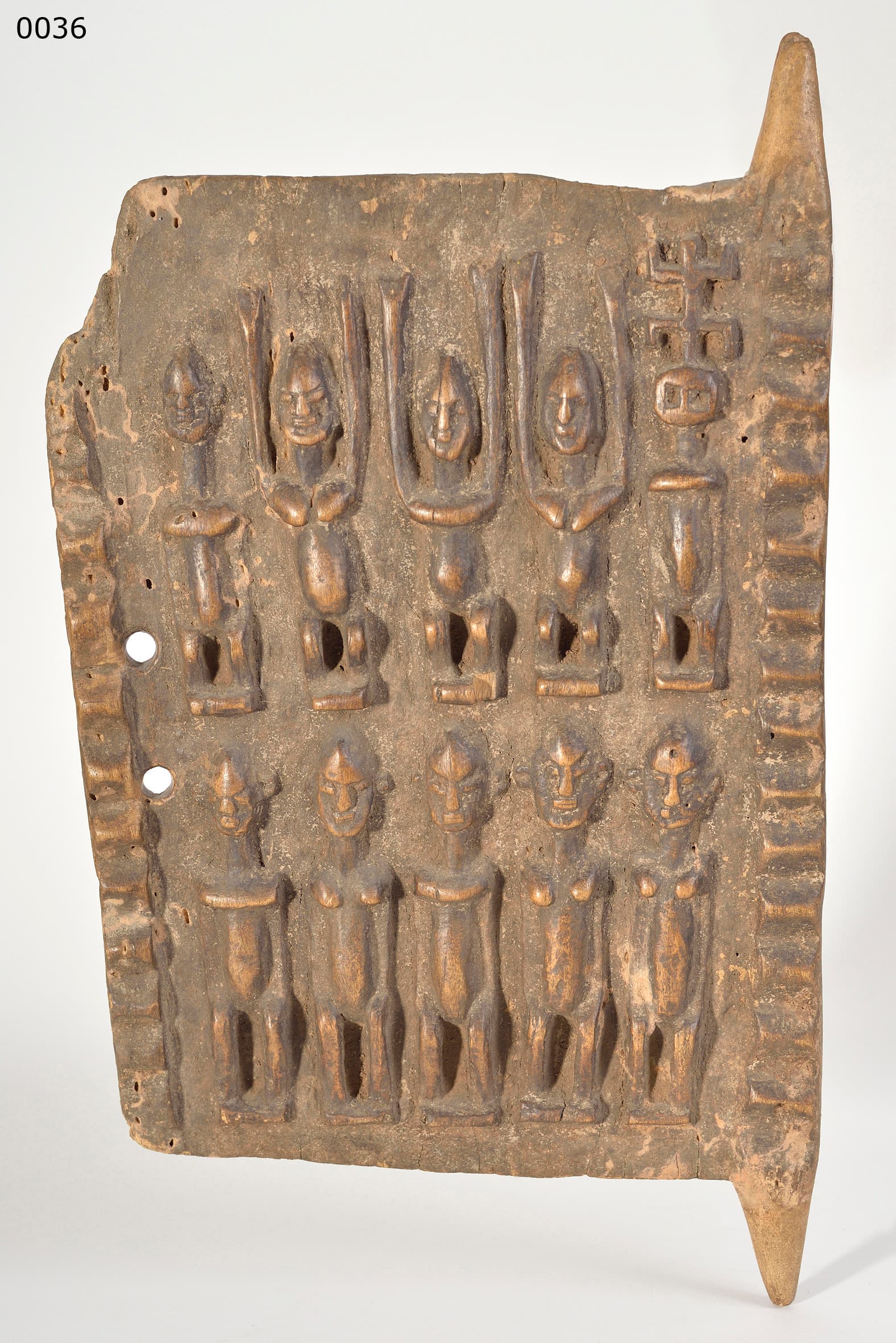
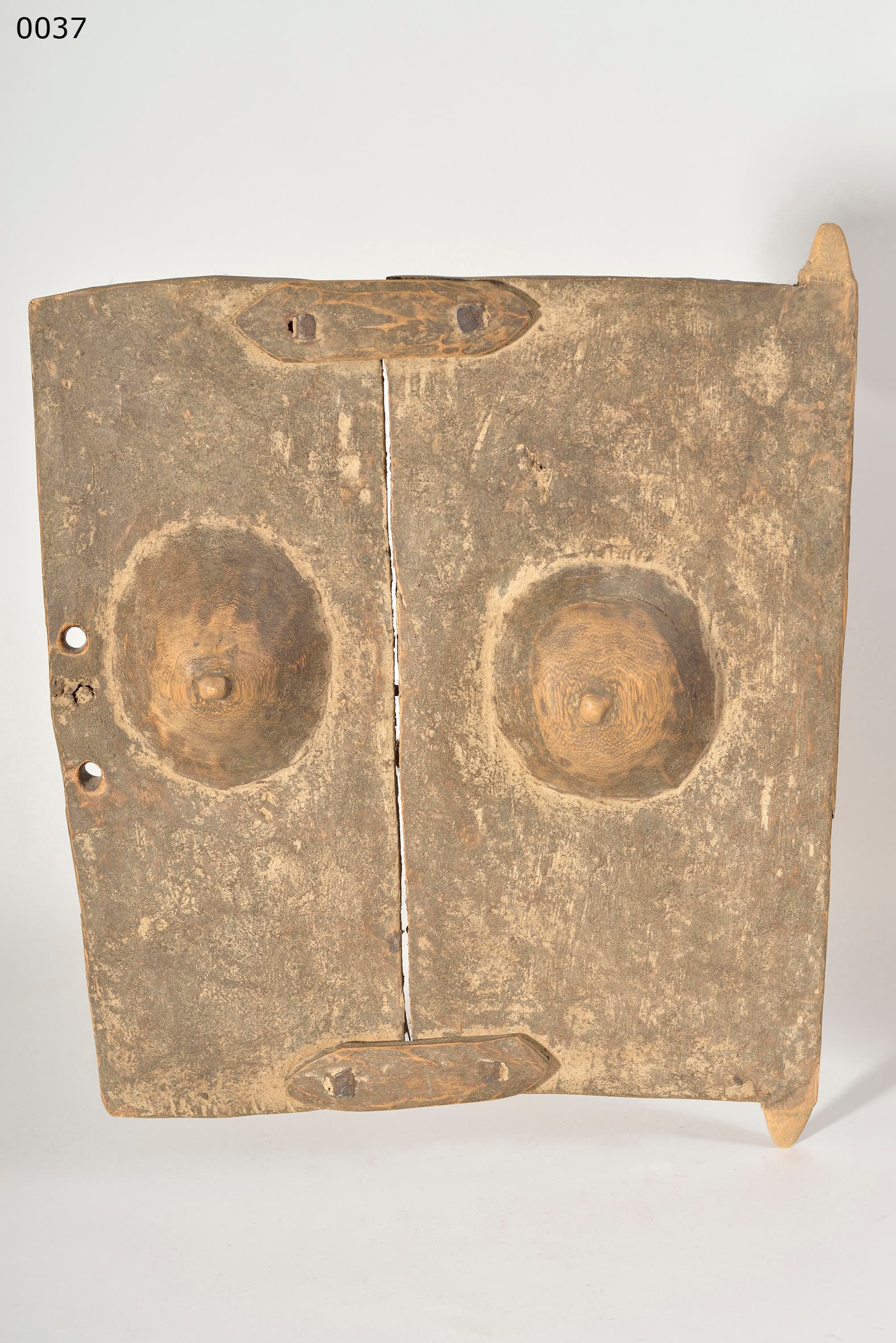
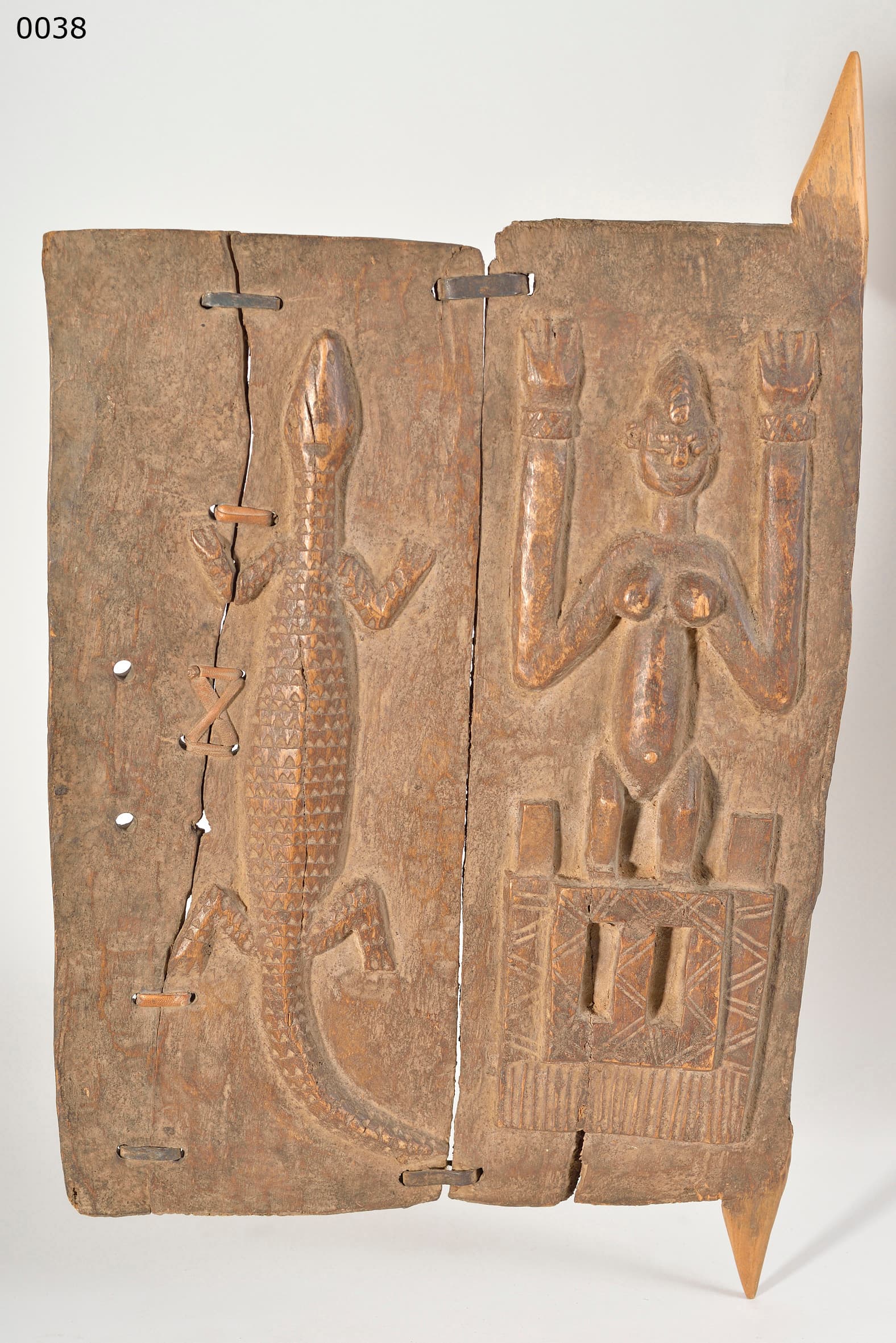
Das Gegenstück zu Artikel 983, einer von zwei hoch aufragenden Eisenstäben mit komplizierten, vielfigurigen Spitzen, auf denen ein abstrakter Mensch mit einem wellenförmigen, echsenartigen Tier interagiert, das sich an die zentrale Achse klammert, komplett mit aufgehängten konischen Glocken. Er weist eine trockene, tiefgründige und stark strukturierte Eisenoxidkruste auf.
1. Ästhetischer Stil und regionale Eigenheiten
Dieser Stab veranschaulicht die erzählerische Komplexität der Dogon-Schmiedekunst auf eindringliche Weise. Der Jemme (Schmied) hat das erstaunliche Kunststück vollbracht, ein artenübergreifendes Tableau auf einer einzigen Eisenachse zu schmieden. Die Szene zeigt eine menschliche Figur und eine riesige, wellenförmige Eidechse oder ein Krokodil, die sich dieselbe räumliche Ebene teilen. Im Dogon-Mythos ist das Krokodil der Wächter des Wassers und der Beschützer des Hogon, der eng mit dem Nommo verbunden ist. Diese Komposition veranschaulicht die tiefe, symbiotische Beziehung zwischen dem Menschen und der ursprünglichen Tierwelt, die in einer dauerhaften eisernen Umarmung dargestellt wird.
2. Rituelle Funktion und akustische Beschwörung
Aufgrund seiner beachtlichen Größe (63 cm) und seiner komplexen Ikonographie spricht vieles dafür, dass dieser Stab zur Ausrüstung hochrangiger Priester gehörte. Er hatte vermutlich die Funktion eines tragbaren, vertikalen Altars. Bei großen landwirtschaftlichen Festen (wie dem Bulu) schlug der Priester den Stab gegen die Erde. Die sich an den Stab klammernde Eidechse beschwor visuell den Schutz der Wassergeister, während das Läuten der aufgehängten Eisenglocken als akustischer Auslöser diente und die Kommunikationskanäle zwischen den irdischen Gläubigen und dem Reich der Ahnen öffnete.
3. Physische Patina und Altersnachweis
Die Tatsache, dass dieser Stab als Teil eines Paares mit dem Stück 983 überlebt hat - mit identischen Abmessungen - gilt als bemerkenswerte ethnographische Seltenheit. Beide Stücke weisen eine übereinstimmende Patina auf: eine trockene, stark strukturierte und brüchige Kruste aus tiefbraunem und orangefarbenem Rost. Dies legt nahe, dass sie in derselben Umgebung aufgestellt waren und über einen langen Zeitraum hinweg eine ähnliche Verwitterung erfuhren, was mit einer Datierung in das 19. Jahrhundert vereinbar ist. Ihre gemeinsame Herkunft aus der Sammlung von René Salanon stützt die Zuschreibung als Relikte der Dogon-Heiligtumsarchitektur.
Zusammenfassung
Dieser Stab, der eine komplexe mythologische Erzählung über die Dualität von Mensch und Reptil darstellt, gilt als ein bedeutendes Zeugnis des strukturellen und akustischen Designs der Dogon. Seine mit 983 abgestimmten Abmessungen und die übereinstimmende, schwere Rostpatina, die für eine Entstehung im 19. Jahrhundert spricht, legen eine Verwendung als zentrales Element eines Heiligtums nahe.
Dokumentation: publiziert in "DOGON".
KI-unterstützt erstellt aus Sammlungsgutachten, Objektfotografie und eigener Recherche, redaktionell geprüft. Fehler sind möglich — Hinweise darauf sind uns willkommen. Zum Verfahren →