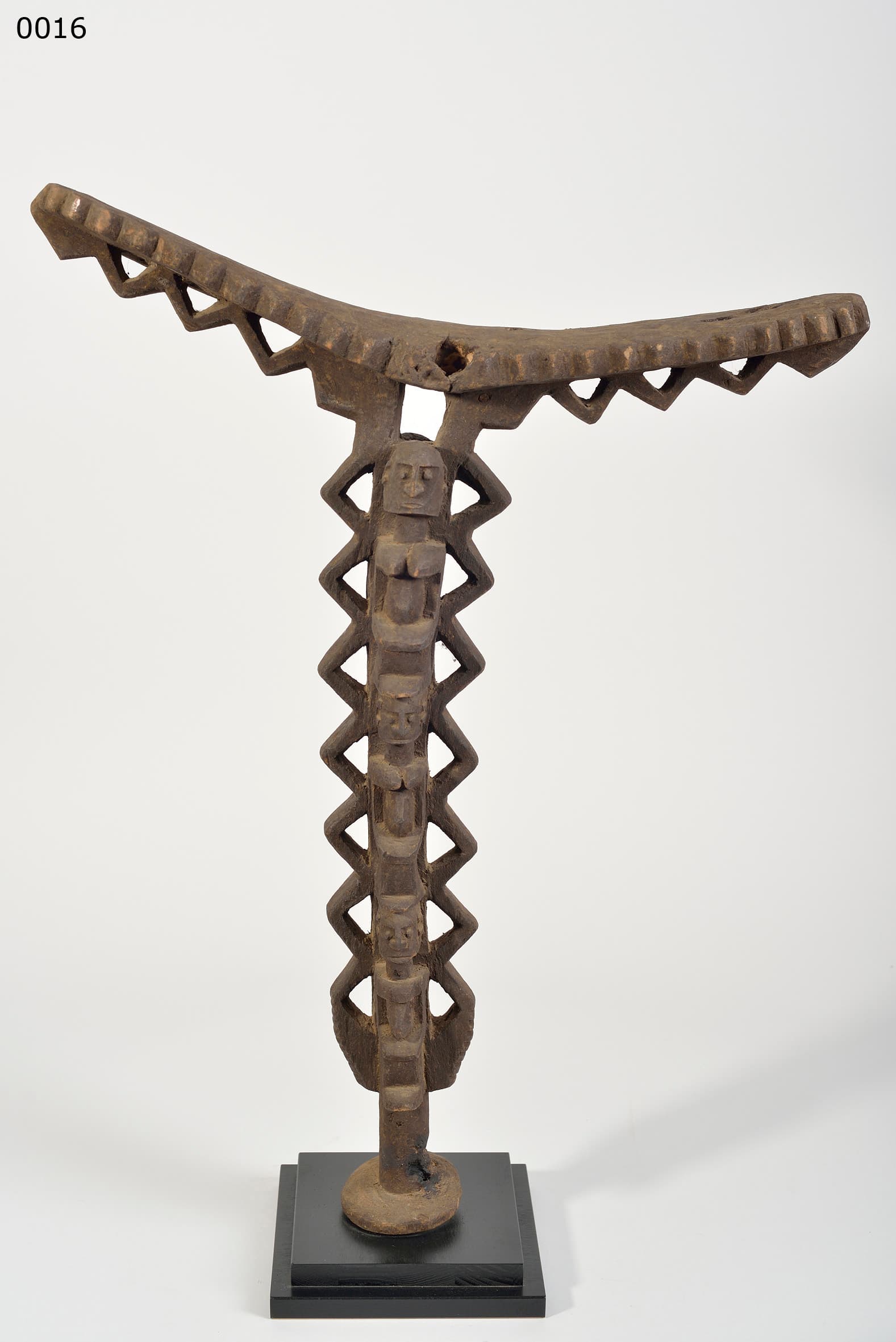
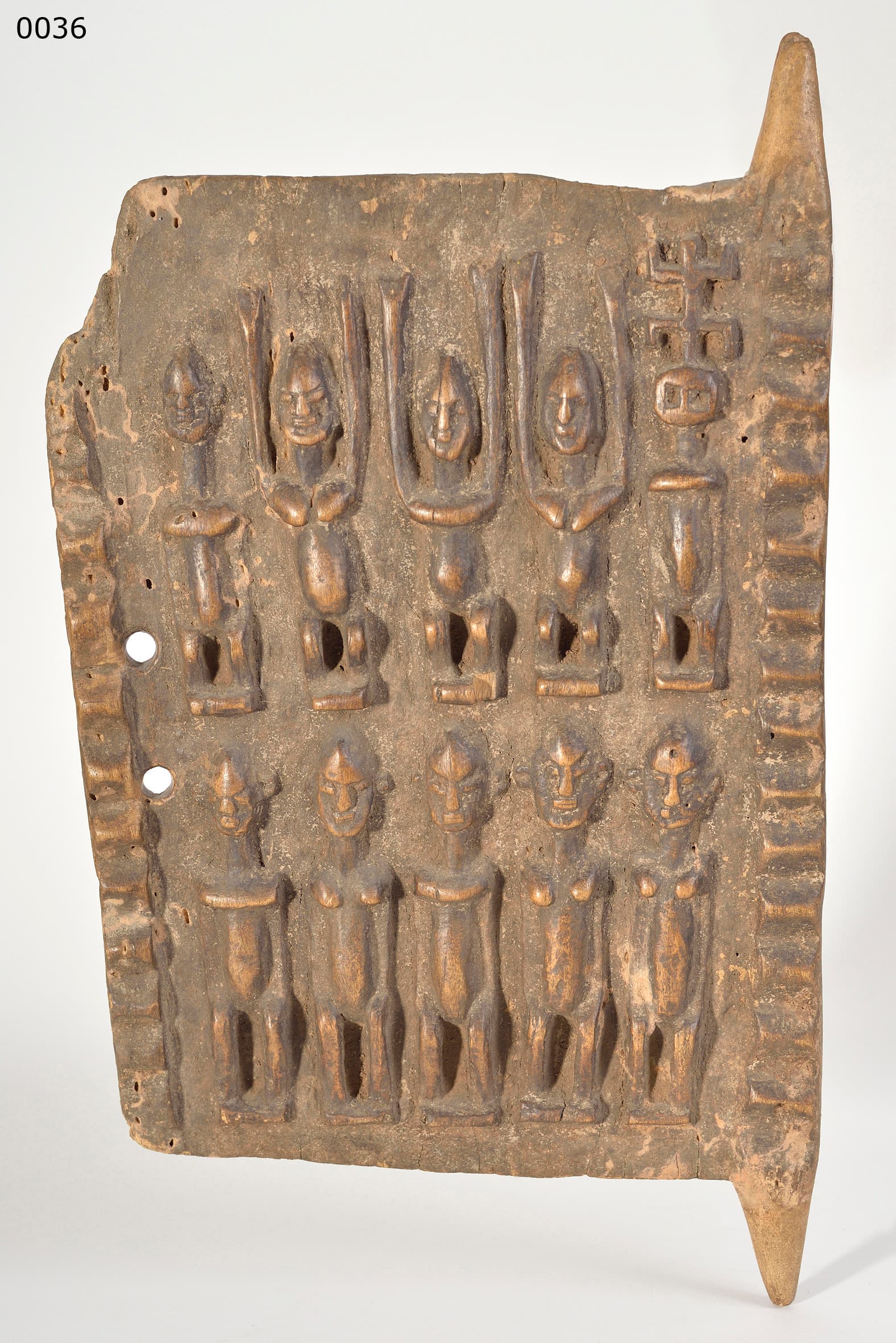
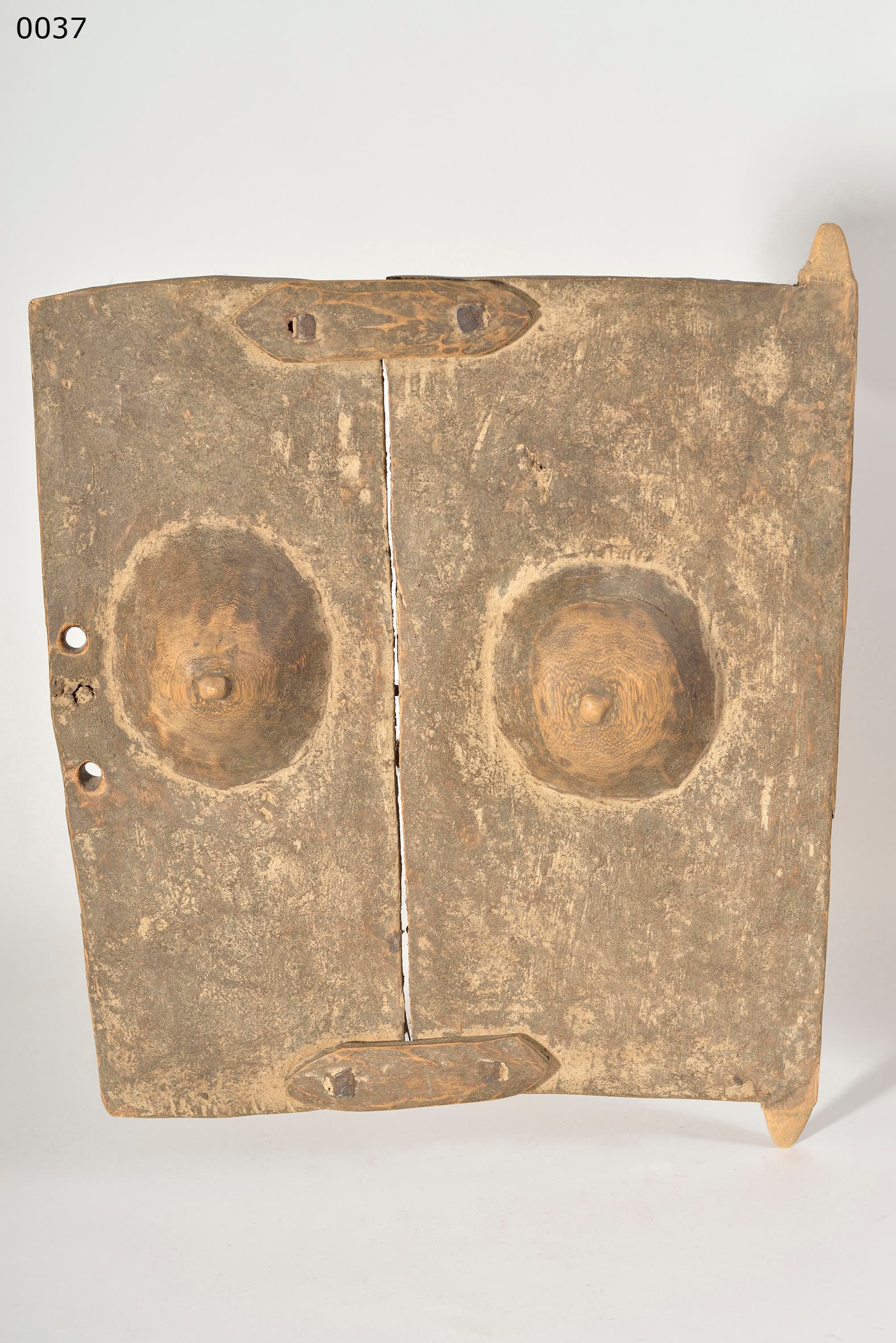
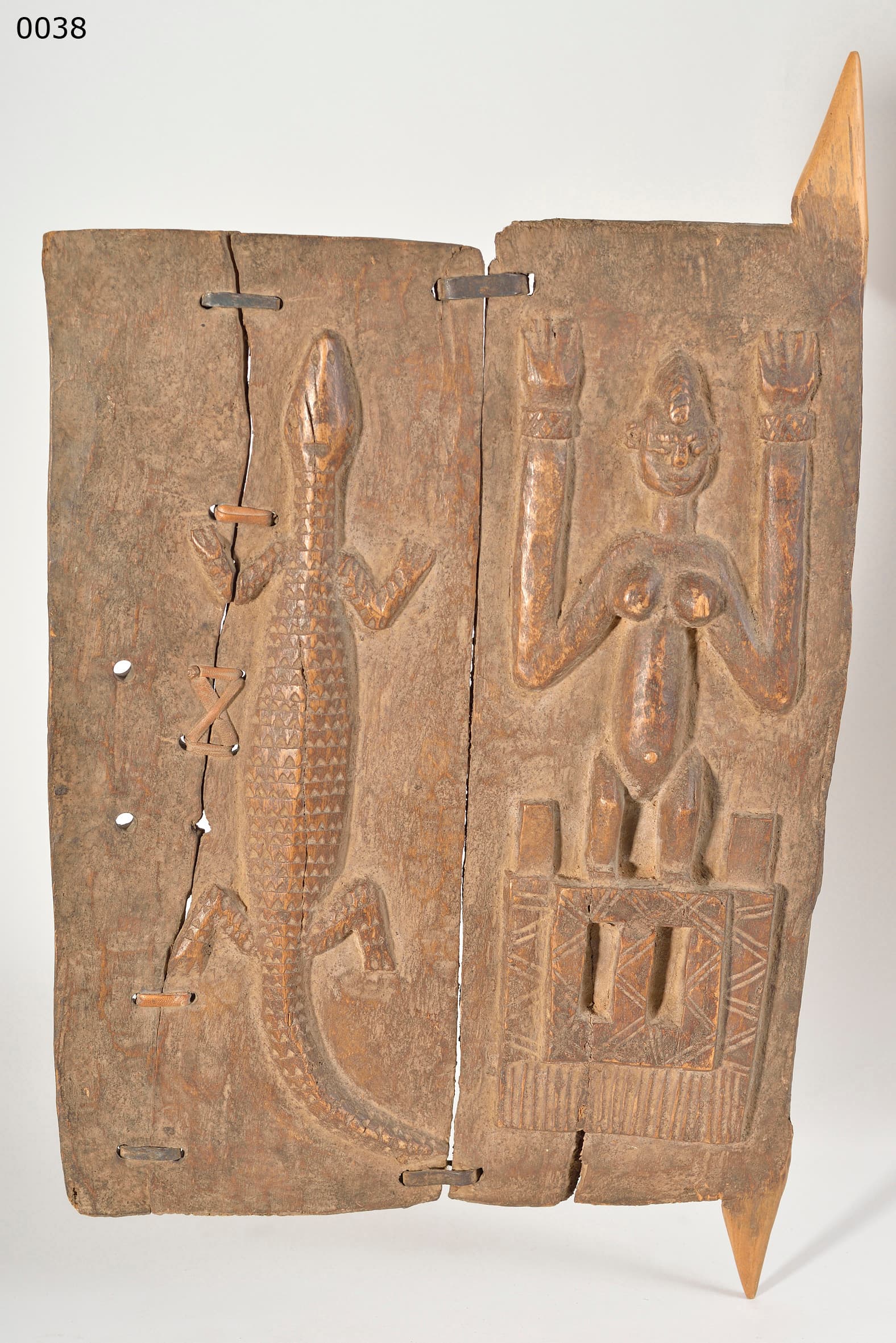
Dieser eiserne Stab hat einen auffälligen gedrehten Mittelteil und wird von einer minimalistischen Figur gekrönt, die an ihren nach unten gebogenen Armen drei hängende konische Glocken hält. Ein dunkler, stabiler Rost und Mikro-Lochfraß verdecken den ursprünglichen Eisenglanz vollständig.
1. Ästhetischer Stil und regionale Eigenheiten
Das charakteristische architektonische Merkmal dieses Stabs ist der Abschnitt des zentralen Schafts, der fest verdreht wurde, als das Eisen noch glühend war. Diese Torsionsschmiedearbeit ist nicht nur dekorativ, sondern stellt den Wirbelwind dar, eine kinetische Spirale aus Nyama (spiritueller Energie), die vom Himmel herabsteigt. Die minimalistische Figur an der Spitze hat nach unten gebogene Arme, die diese herabströmende Energie auffangen und sie über die gedrehte Säule direkt in die Erde des Schreins leiten. Es handelt sich um ein hochtechnisiertes Objekt, das den kosmischen Verkehr lenken soll.
2. Rituelle Funktion und akustische Architektur
Im Gegensatz zu stummen, passiven Statuen ist dieser Stab ein aktiver Teilnehmer am Dogon-Ritual. Die drei aufgehängten konischen Glocken stellen den akustischen Herzschlag der Binu-Religion dar. In der Stille des Heiligtums bringt die geringste Bewegung des Stabs - sei es durch den Wind oder die Hand des Hogon - die Glocken zum Klingen. Dieser Klang wird als buchstäbliche "Stimme" der Ahnen angesehen, die auf die Gebete der Lebenden antwortet, was den Stab zu einem interaktiven Werkzeug der göttlichen Kommunikation macht.
3. Physische Patina und Altersnachweis
Die Oberfläche dieses Stabs weist eine schöne, gleichmäßige Abnutzung auf, wie sie für Eisen aus dem 19. Jahrhundert charakteristisch ist, das vor schneller, feuchter Fäulnis auf der Erde geschützt war, aber der Luftfeuchtigkeit ausgesetzt war. Er ist mit mikroskopisch kleinen Löchern und einem dichten, dunkelbraunen Rost bedeckt, der tief in den Metallkern eingedrungen ist. Die Tatsache, dass die empfindlichen Ringe, die die Glocken halten, trotz dieser tiefen Oxidation überlebt haben, deutet auf eine sorgfältige, generationenlange Behandlung in einem Innenraum oder einem besonders geschützten sakralen Bereich hin.
Zusammenfassung
Dieser Stab, der durch Torsionsschmieden den Abstieg der kosmischen Energie visualisiert, ist ein wunderschön gestaltetes akustisches Instrument für den Dogon-Priester. Seine stabile, tief mikrofeine Oxidation bestätigt seine Geschichte als geschätztes, aktives Instrument der göttlichen Kommunikation im 19.
Dokumentation: Sammlung René Salanon, Künzi-Datenblatt vorhanden; publiziert in "DOGON".
KI-unterstützt erstellt aus Sammlungsgutachten, Objektfotografie und eigener Recherche, redaktionell geprüft. Fehler sind möglich — Hinweise darauf sind uns willkommen. Zum Verfahren →