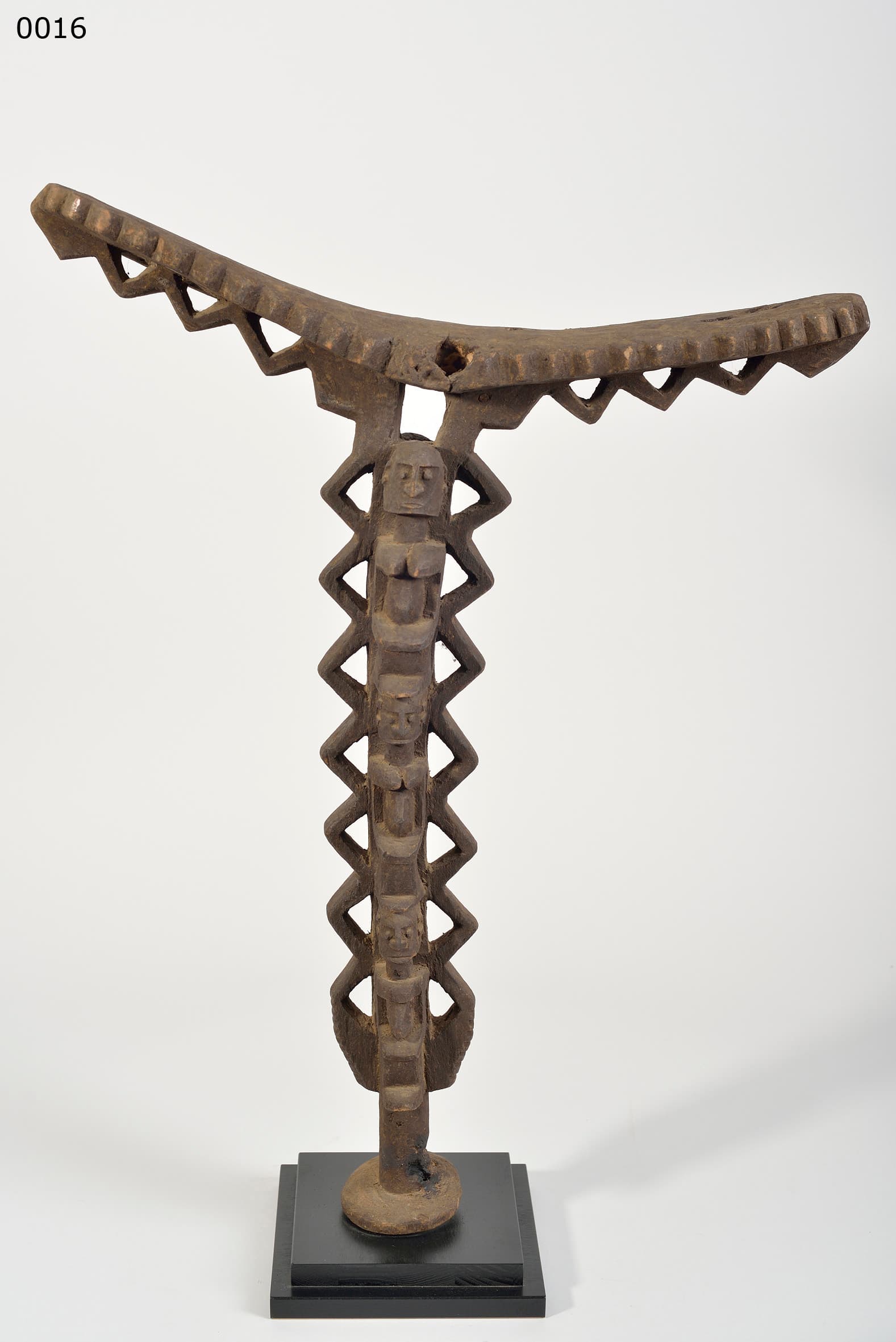
Dieses hohe Eisengerät hat eine dramatische dreizackige Form, bei der der zentrale Schaft zum Kopf wird und die beiden seitlichen Zinken sich nach oben biegen und in abstrakten, mehrfingrigen Händen enden. Das schwere, geradlinige Metall ist mit einer erdigen, dunkelbraunen Oxidationskruste überzogen.
1. Ästhetischer Stil und regionale Charakteristika
Dieses Stück entspricht der Gobo-Typologie (oder Gaba-Typologie) – einer spezifischen Klasse von Eisenhaken oder -stangen der Dogon, die mit dem Einfangen spiritueller Kräfte verbunden werden. Der Schmied hat den funktionalen Haken anthropomorphisiert, indem er den mittleren Zinken in einen stilisierten Kopf und die äußeren Haken in geschwungene Arme verwandelt hat, die in deutlichen, dreifingrigen Händen enden. Auf diese Weise entsteht ein massiver, zum Himmel gerichteter Dreizack. Die Reduzierung der Hände auf drei Ziffern ist eine in der Dogon-Kunst übliche numerologische Abstraktion, die häufig das männliche Prinzip symbolisiert.
2. Rituelle Funktion und Regenfang
Der Gobo ist im Wesentlichen ein Werkzeug der spirituellen Ernte. Fest in die Felder oder auf den Familienaltar gepflanzt, sollen die massiven, erhobenen Hände dem rituellen Kontext nach die Regenwolken auffangen und den Segen des Nommo auf die ausgedörrte Erde herabziehen. Es ist eine Geste des Flehens. In Zeiten schwerer Dürre weihten die Hogon den Gobo mit Opfern und aktivierten das Eisen als Schlinge, die die lebenswichtige Feuchtigkeit für das Überleben des Dorfes einfängt.
3. Physische Patina und Altersnachweis
Der physische Zustand des Eisens ist vereinbar mit einer Funktion als landwirtschaftliches Werkzeug im Freien oder in der Erde. Der lange untere Schaft weist eine dickere, sehr unregelmäßige Ansammlung von Schmutz und Rost auf, was nahelegt, dass er tief in den Boden getrieben wurde. Die oberen "Hände" sind zwar zu einem tiefen, dunklen Braun oxidiert, zeigen aber etwas mehr atmosphärische Verwitterung. Diese Zweizonen-Patinierung ist charakteristisch für einen Gobo-Haken, der den Elementen ausgesetzt war, und stützt eine zeitliche Einordnung in das 19. Jahrhundert.
Zusammenfassung
Diese Gobo-Figur zeigt eine Anthropomorphisierung eines funktionalen Hakens und dient als massive, dreizackartige Schlinge, die den Regen vom Himmel holen soll. Seine schwere, zweistufige Patina stützt die Zuschreibung als landwirtschaftliches und spirituelles Werkzeug, das stilistisch dem 19. Jahrhundert zugeordnet werden kann.
Dokumentation: Sammlung René Salanon, Künzi-Datenblatt vorhanden; publiziert in "DOGON".
KI-unterstützt erstellt aus Sammlungsgutachten, Objektfotografie und eigener Recherche, redaktionell geprüft. Fehler sind möglich — Hinweise darauf sind uns willkommen. Zum Verfahren →