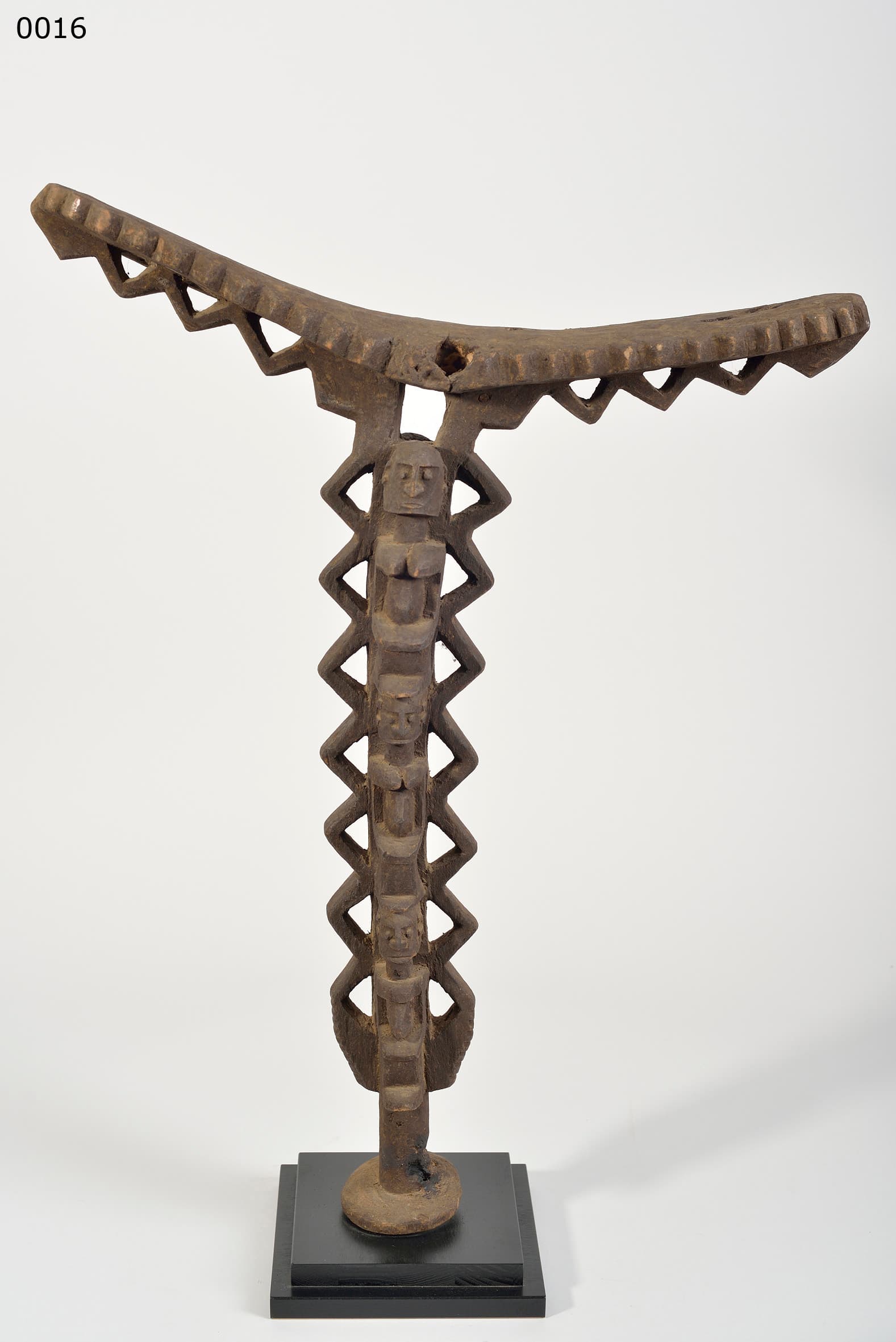
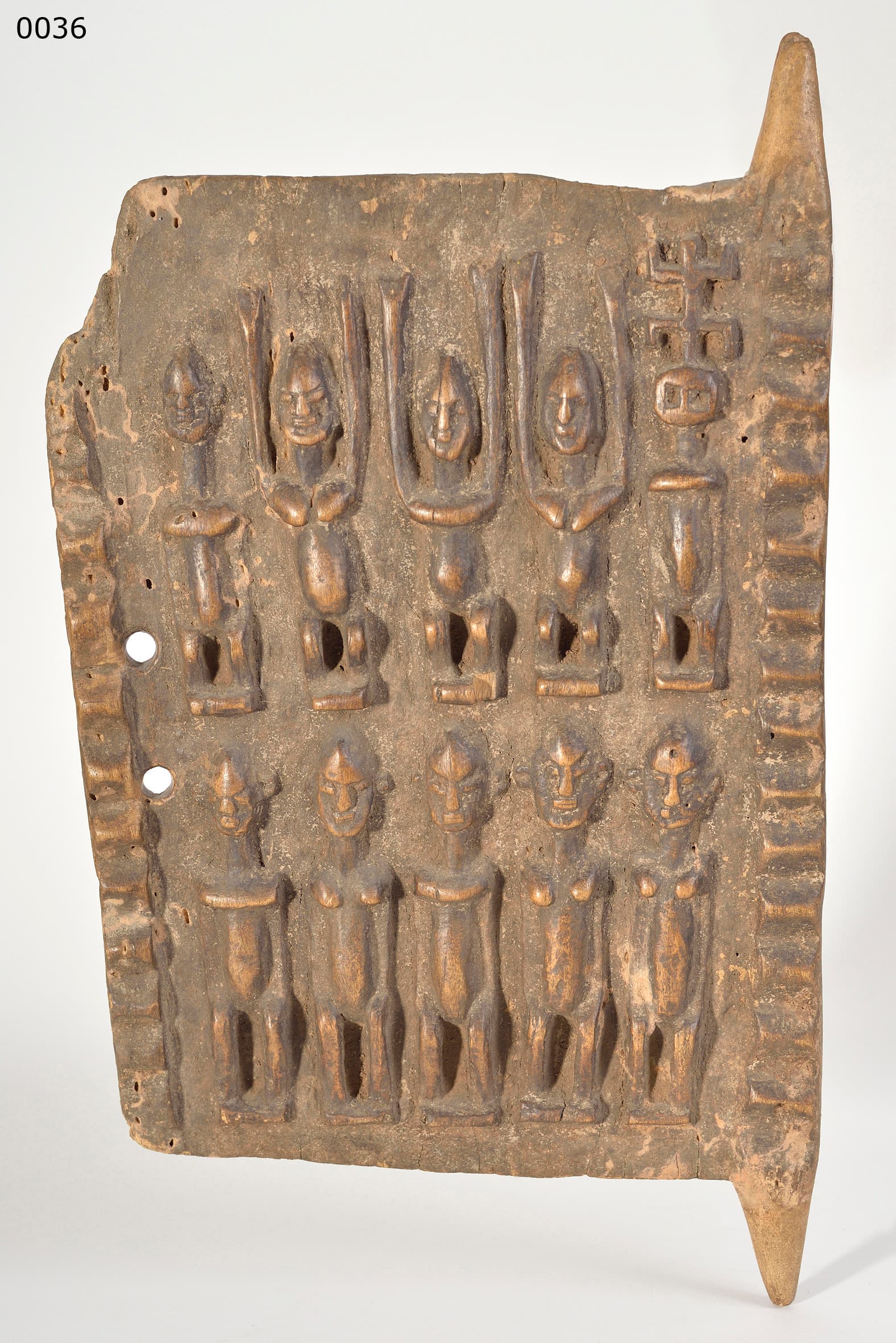
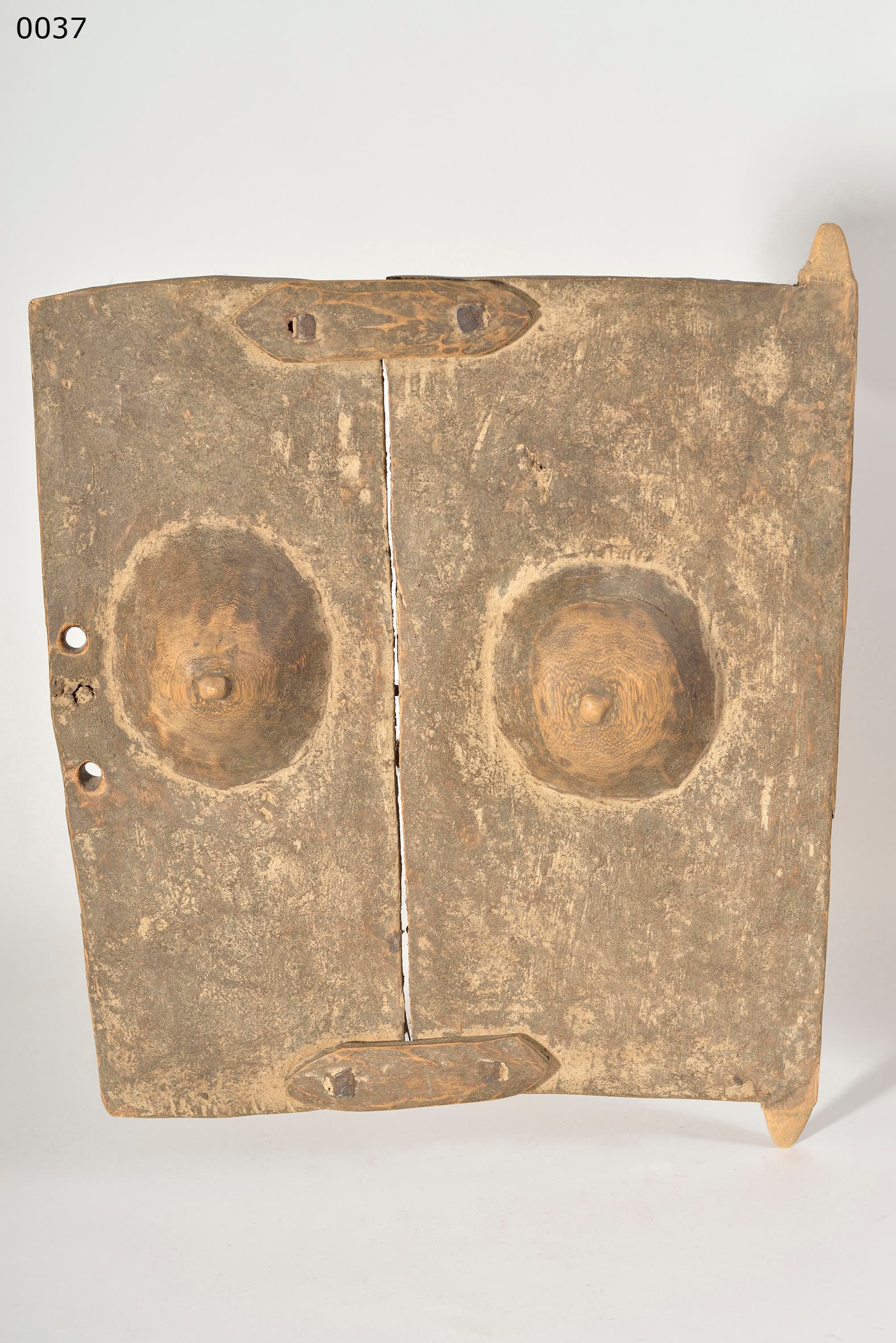
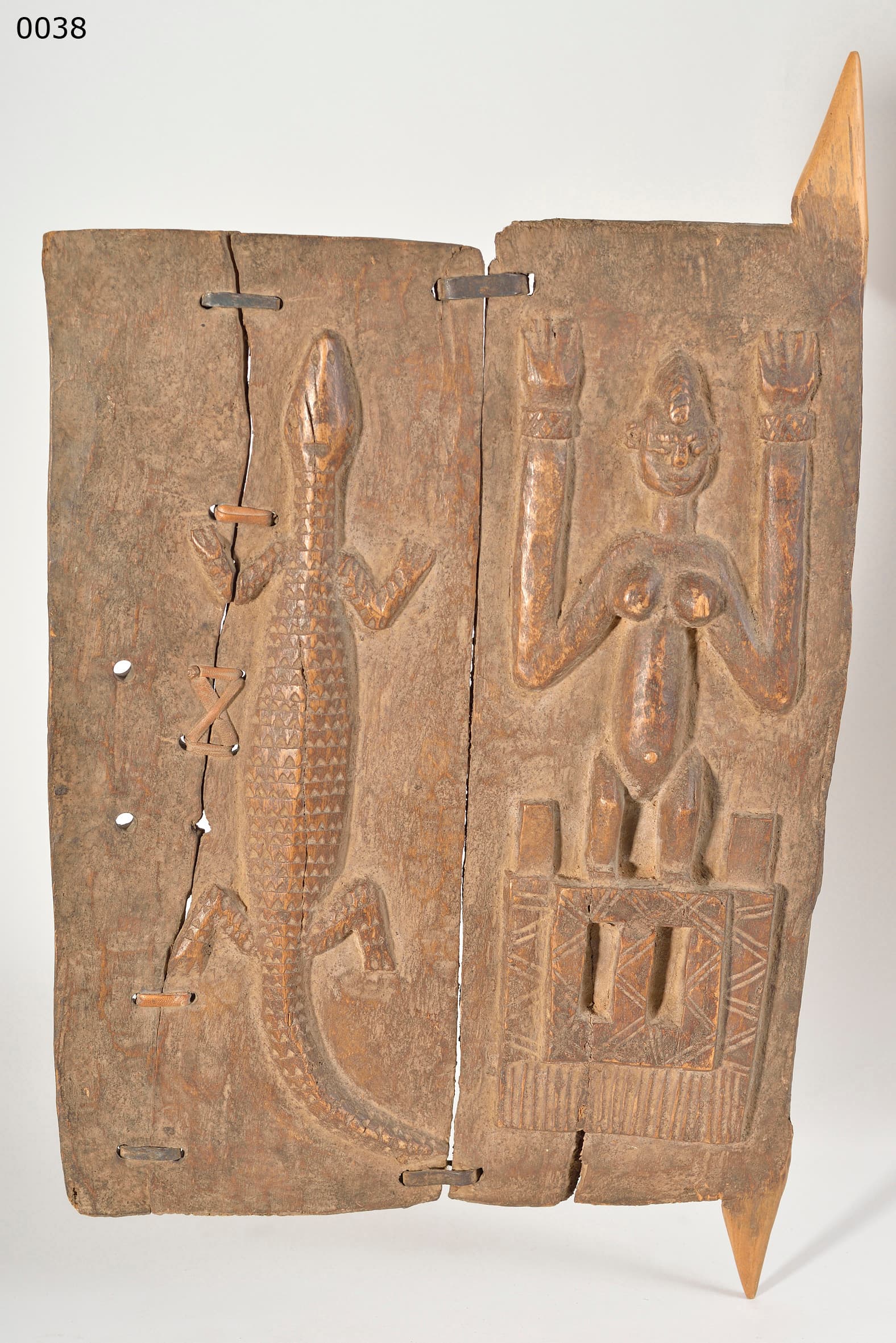
Carved from a single block of heavy wood, this 43 cm stool features a circular top and base connected by a central pillar, ringed by a stunning outer support structure of multiple standing female caryatid figures with pronounced breasts. The dense wood has acquired a rich, dark brown patina with deeply worn, smoothed seating surfaces.
1. Aesthetic style — caryatid architecture and the Nommo
Dogon stools are not mere furniture; they are complex, three-dimensional models of the universe. The flat, circular base represents the earth, while the top seat represents the sky (Amma). The central pillar is the axis mundi (the cosmic tree). The ring of beautifully carved female caryatid figures supporting the edge of the sky represents the Nommo, the primordial, amphibious creator twins. By carving the stool from a single, unbroken block of wood, the sculptor emphasizes the total interconnectedness and interdependence of the Dogon cosmos.
2. Ritual function — the hogon's throne and cosmic balance
Stools of this iconographic complexity are traditionally associated with the Hogon (the spiritual leader). In Dogon tradition, the Hogon is considered so sacred that his feet must never touch the raw earth, lest his spiritual power short-circuit and damage the crops. By sitting upon this caryatid stool, the priest physically positioned himself at the exact center of the universe, suspended between heaven and earth, surrounded by the supportive, life-giving power of the ancestral Nommo.
3. Physical patina — frictional polish and desiccation
The physical wear on the stool is consistent with use by an elite leader. The top surface of the seat has been polished to a high sheen by decades of bodily friction. Furthermore, the heads, breasts, and prominent angles of the supporting caryatid figures have been significantly softened and darkened from handling and ritual anointing. The base of the stool shows natural, early 20th-century desiccation cracks, suggesting it aged slowly in the arid Malian climate rather than being artificially distressed.
Summary
Carved from a single block of wood, this caryatid stool is a profound, three-dimensional map of the Dogon universe. Its deeply polished seating surface and handling-worn female figures support its attribution as a 20th-century Hogon's throne.
Written with AI assistance from the collection appraisal, object photography and our own research; editorially reviewed. Mistakes are possible — corrections are welcome. How we work →