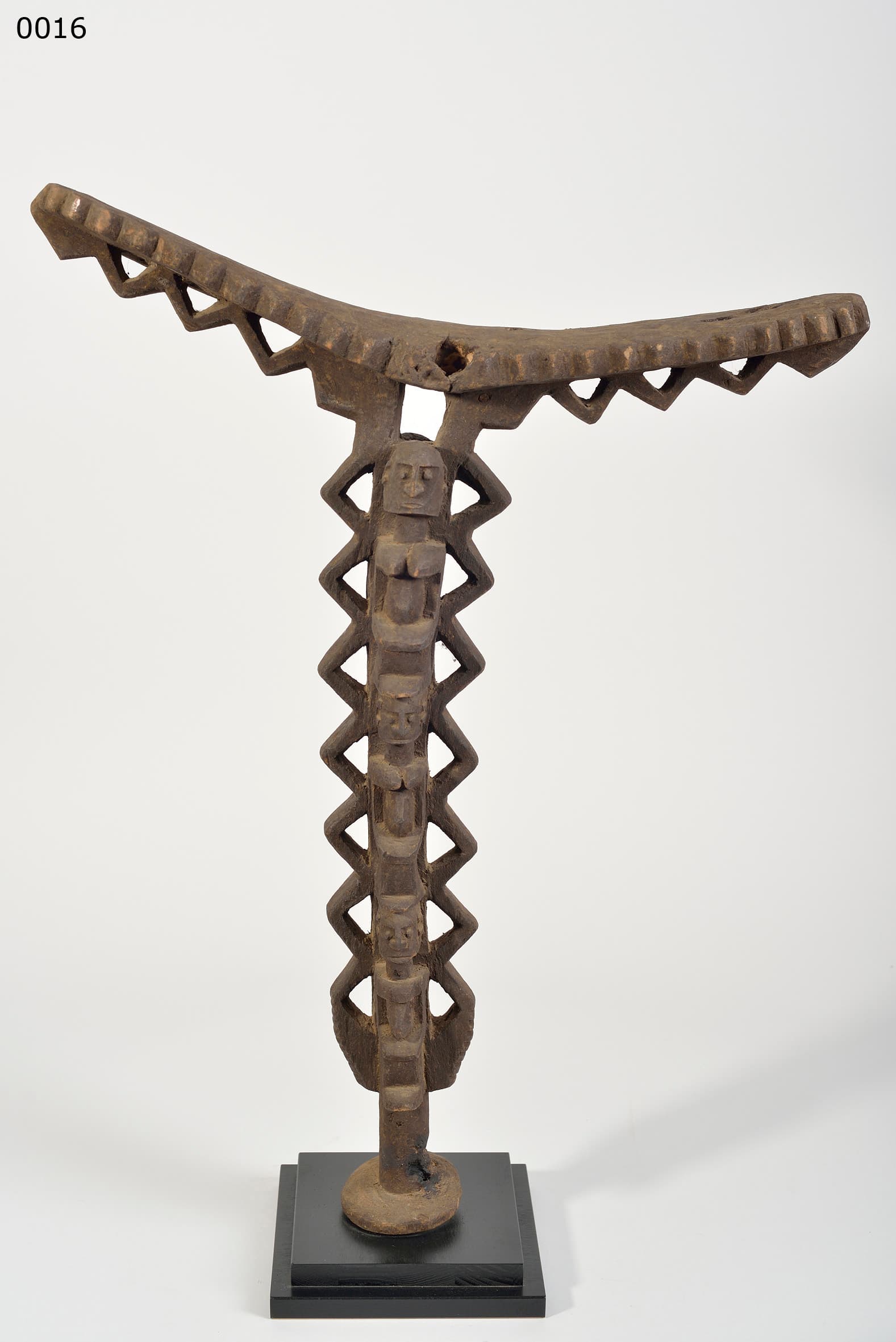
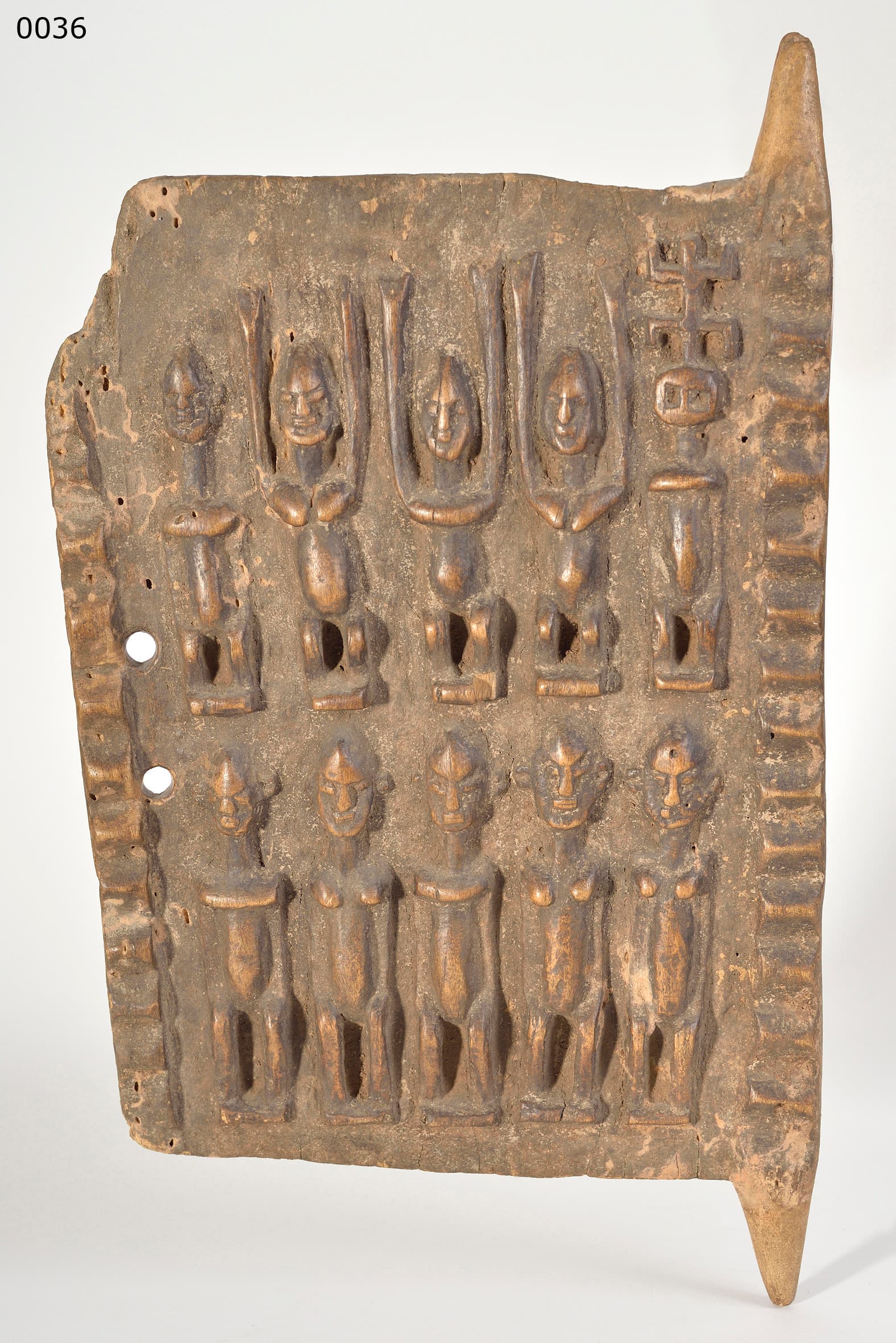
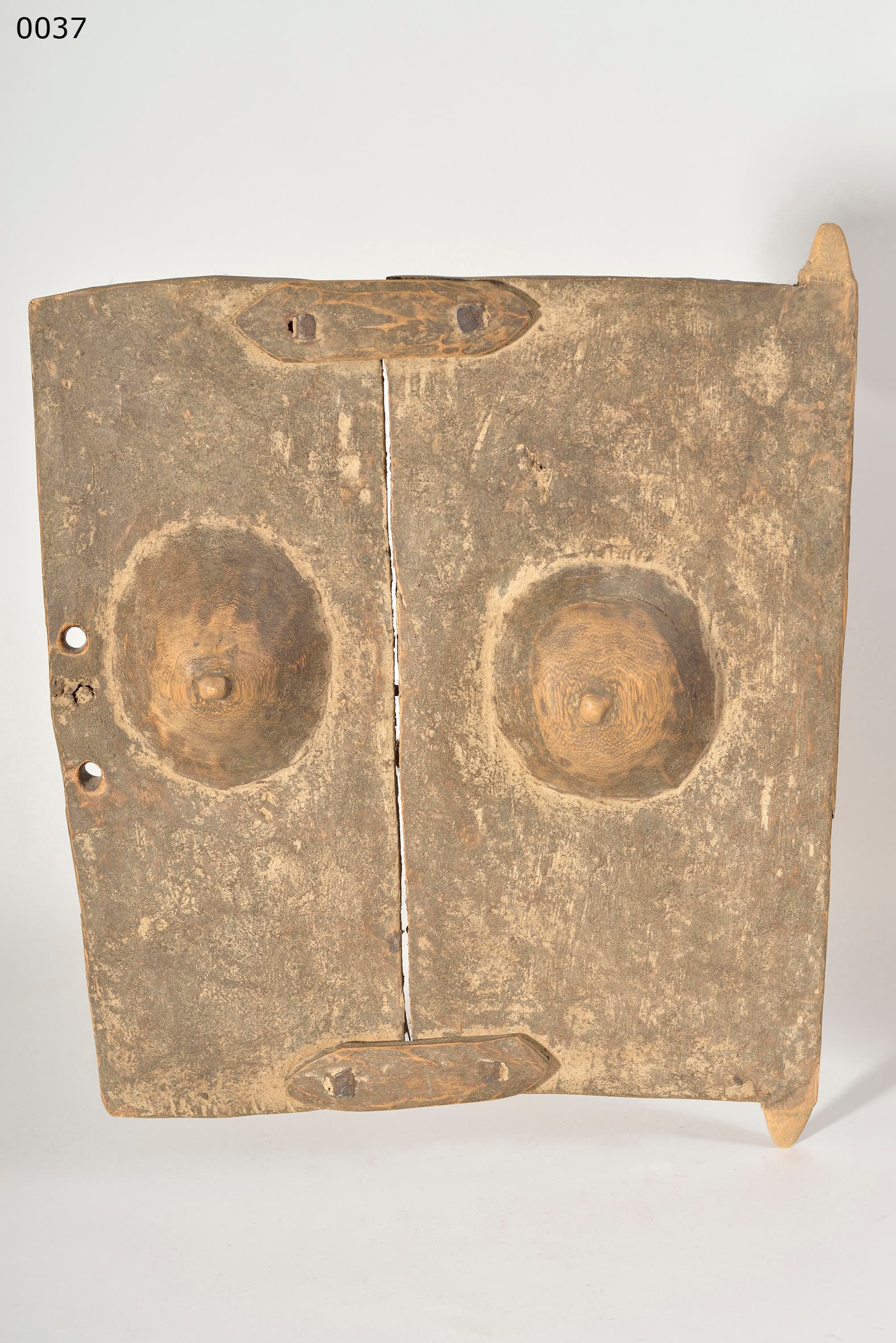
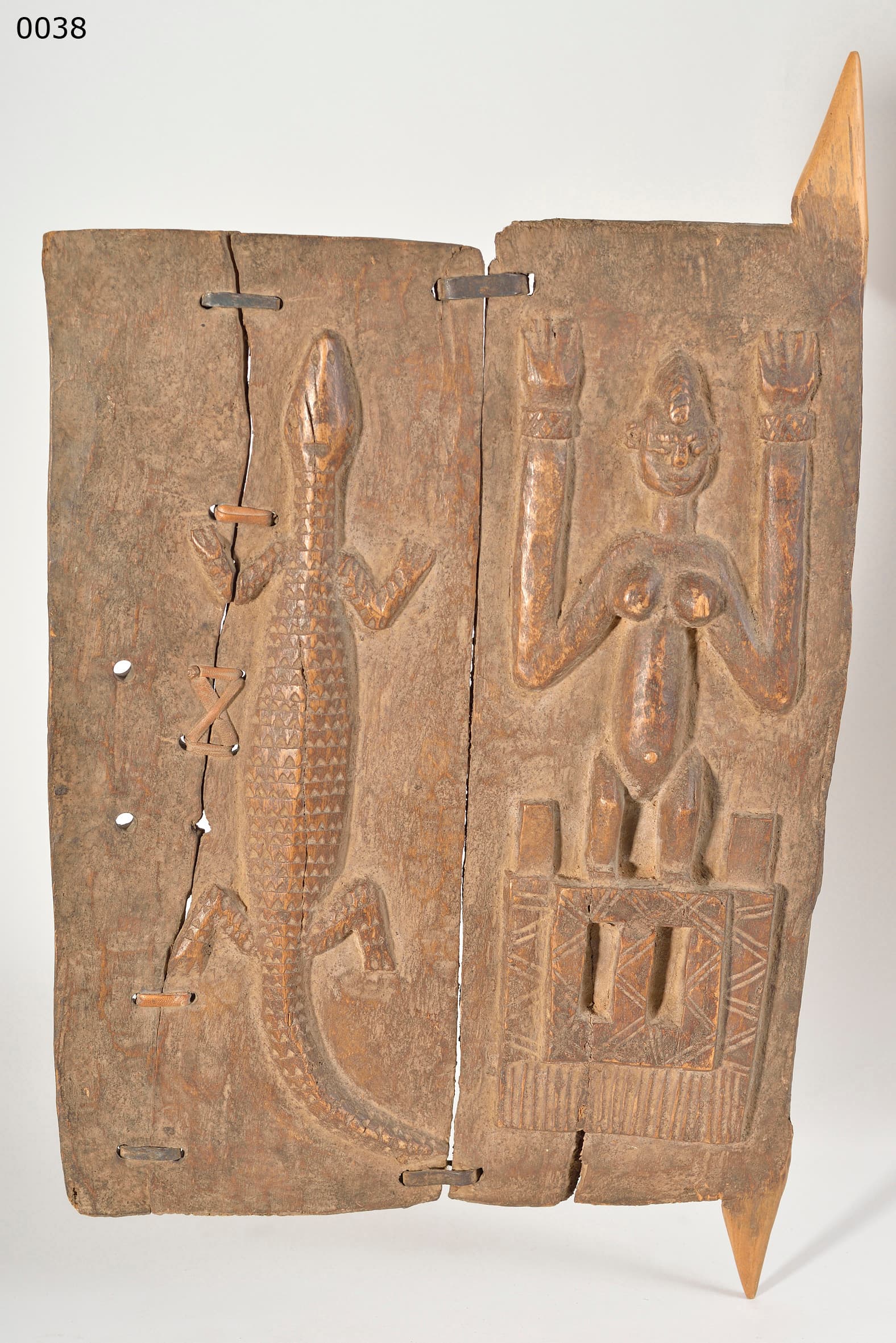
This highly eroded, elongated wooden figure features an intensely abstracted vertical form, with arms raised straight upward alongside the head. The surface is heavily degraded, displaying profound desiccation cracks and a pale, deeply weathered, driftwood-like patina.
1. Aesthetic style — the tellem-dogon stylistic continuum
This piece is consistent with the stylistic overlap between the ancient Tellem people and the Dogon who later inhabited the Bandiagara Escarpment. The radical verticality, the upward-reaching arms, and the almost complete subordination of anatomical realism to spiritual gesture are characteristic markers of this ancient tradition. The figure is likely a representation of a Nommo, the primordial, androgynous beings of Dogon mythology who descended from the sky. The sweeping, arrow-like upward thrust of the carving visually connects the earth to the celestial realm.
2. Ritual function — ancestral intercession and cave veneration
In Dogon animistic practice, figures with upraised arms — often referred to as Tellem-style figures — were active ritual conduits used to implore the heavens for rain and agricultural fertility. They were not kept in domestic shrines but were instead deposited in the high, inaccessible burial caves carved into the cliffs of the Bandiagara. In this sacred, elevated environment, surrounded by the bones of the ancestors, the figure acted as an eternal, silent supplicant, maintaining the crucial cosmic balance between the harsh Sahelian environment and the life-giving rain.
3. Physical patina — cellular wood desiccation and taphonomic aging
Attributed to the 18th century (or potentially earlier), the extreme weathering of this wood is consistent with long-term exposure in the dry microclimate of the Malian cliffs. The sculpture has undergone profound cellular collapse, resulting in deep, longitudinal fissures and a loss of all superficial carved details. The surface lacks any ritual oil or handling patina; instead, it exhibits the pale, ash-grey oxidation characteristic of wood that has been subjected to centuries of dry wind and extreme temperature fluctuations, suggesting a high degree of antiquity.
Summary
A haunting and structurally compelling artifact, this Dogon/Tellem-style figure reflects the deep mythological roots of the Bandiagara Escarpment. Its radical vertical abstraction and profound environmental weathering are consistent with the tradition of ancient Malian woodcarving.
Written with AI assistance from the collection appraisal, object photography and our own research; editorially reviewed. Mistakes are possible — corrections are welcome. How we work →