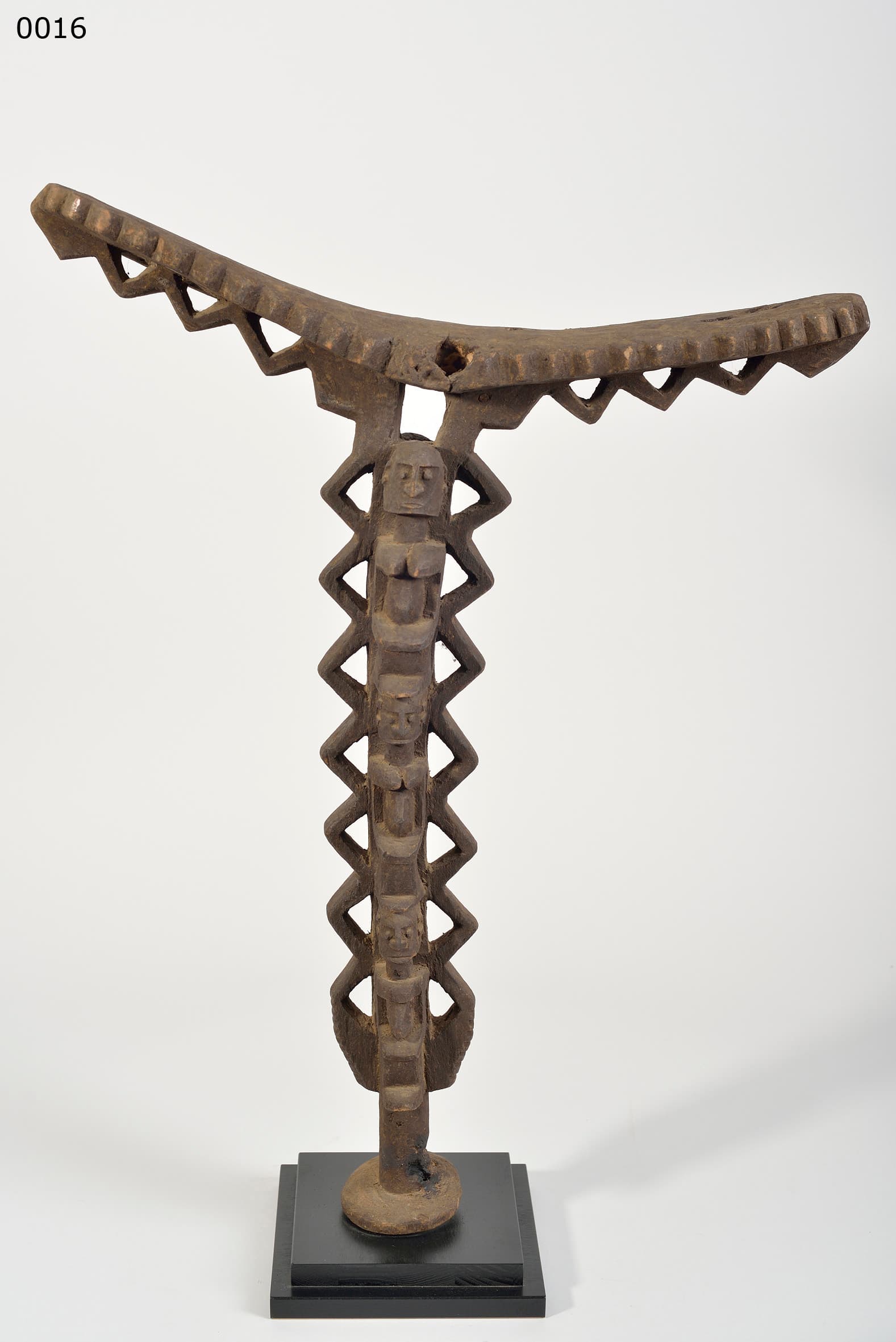
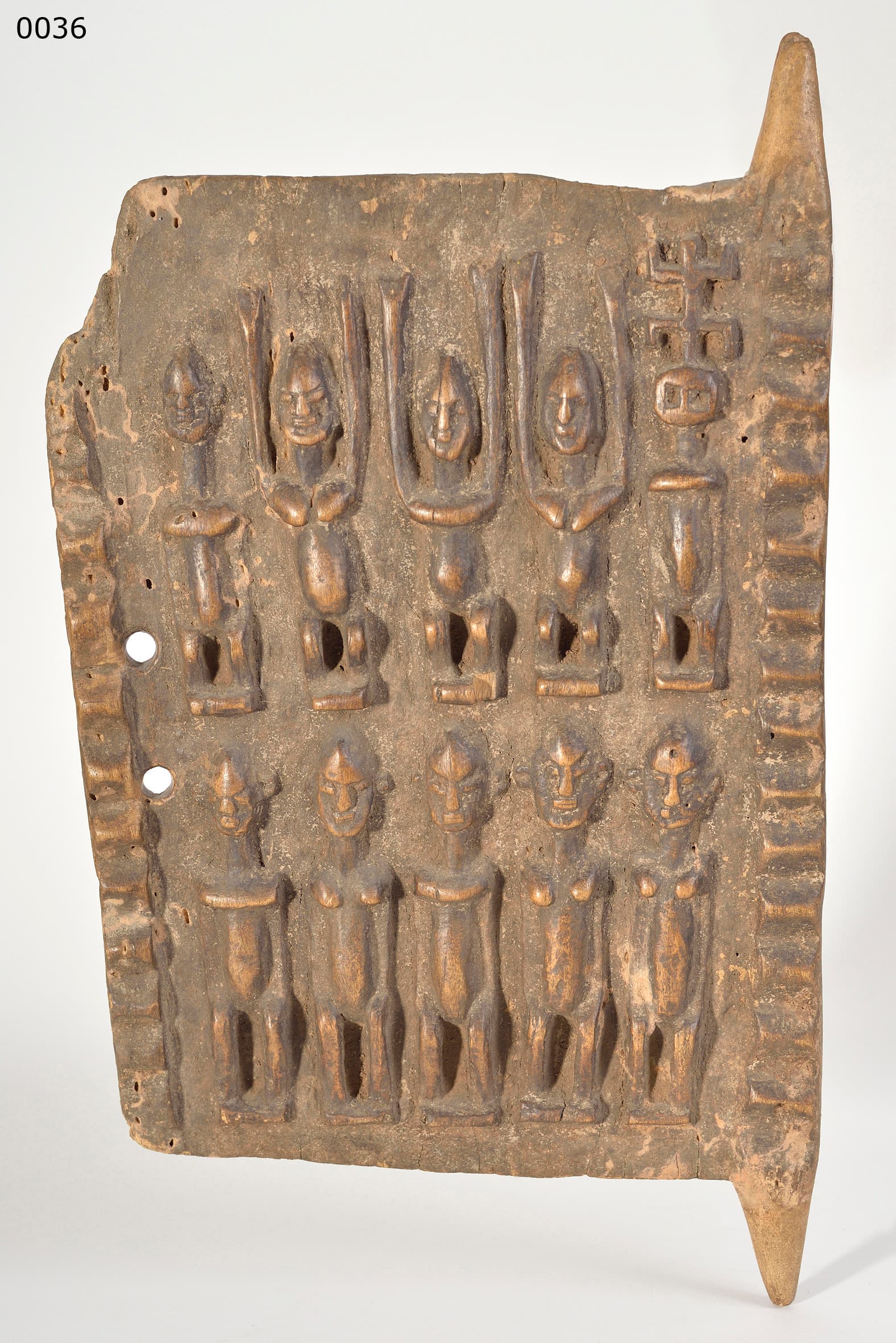
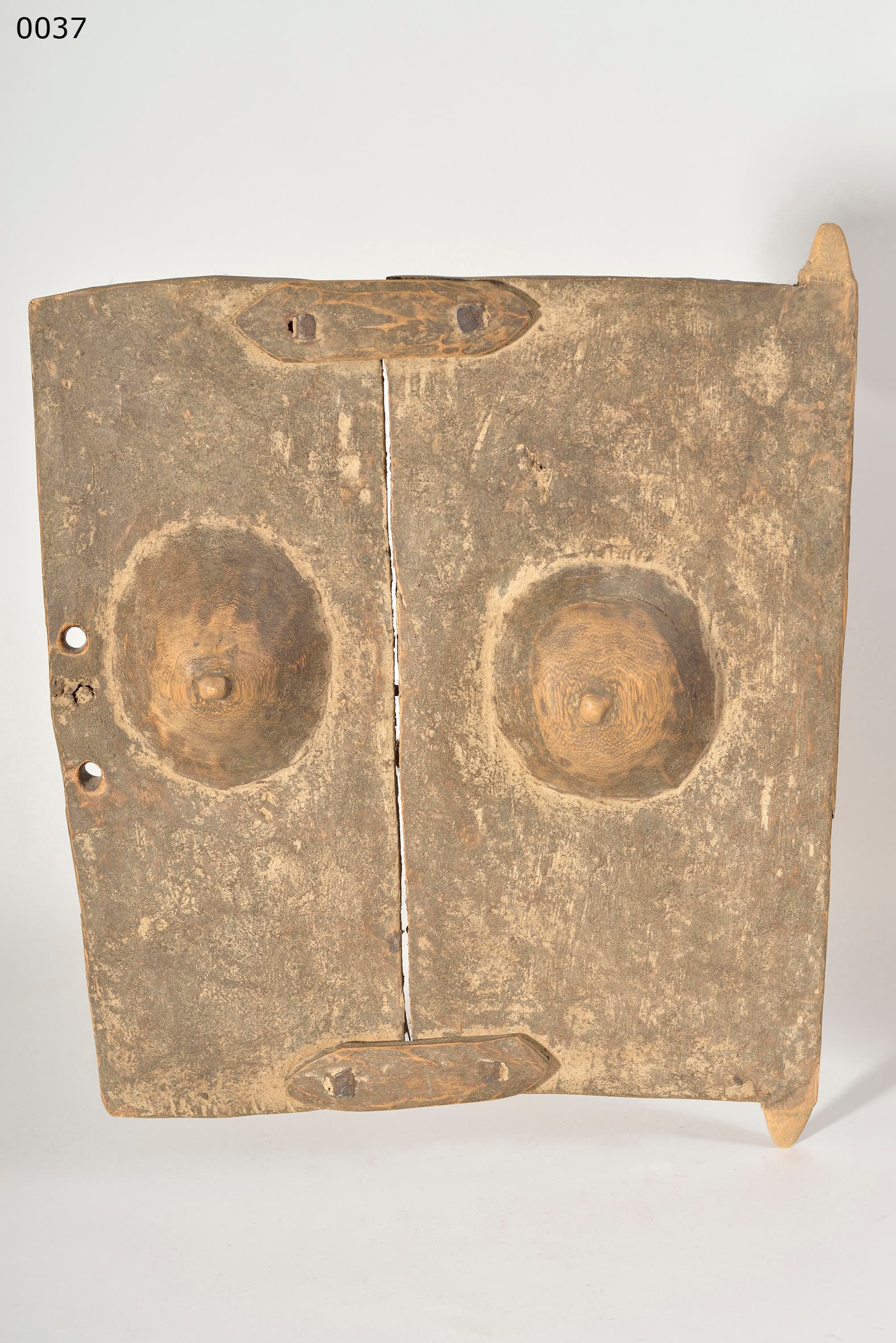
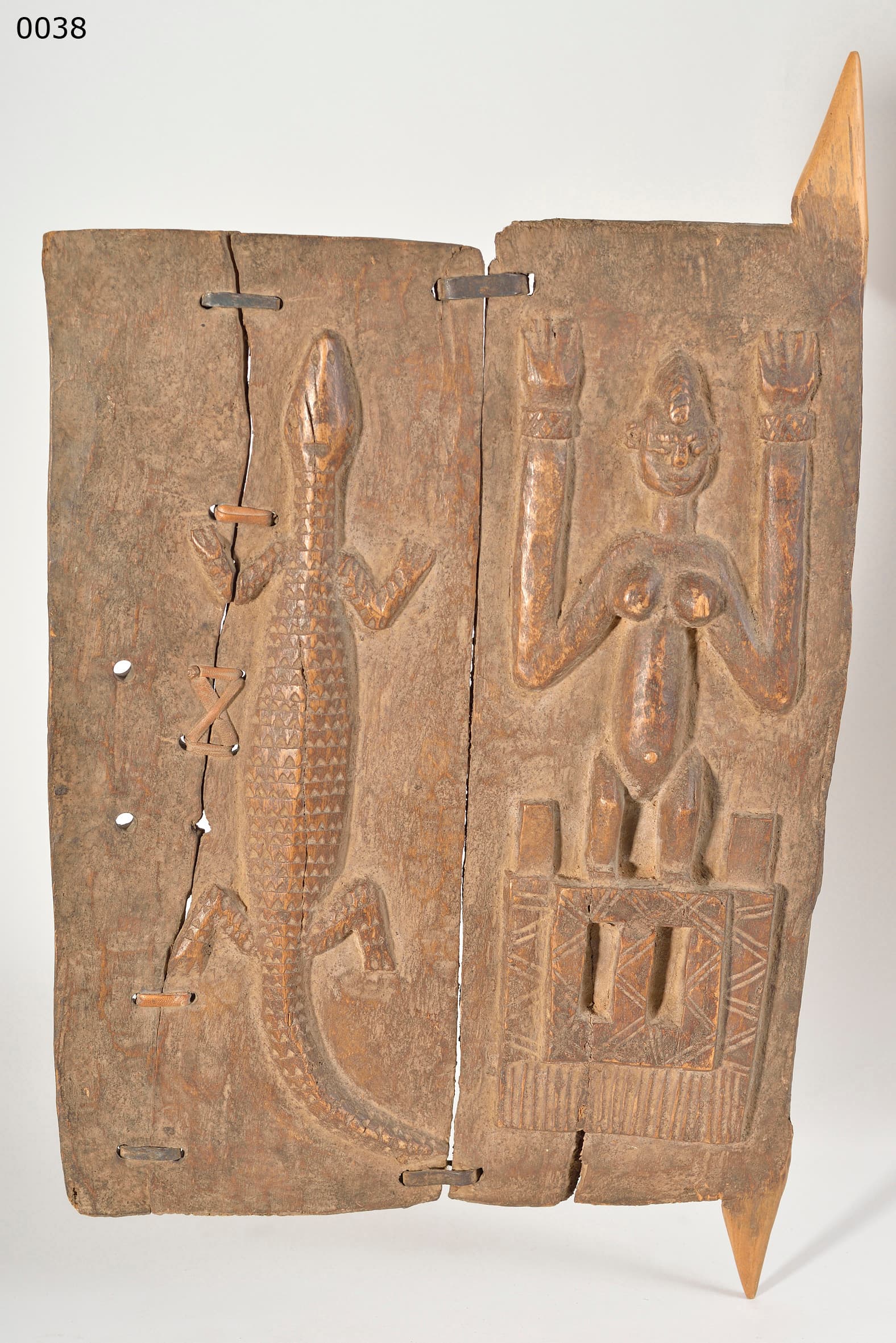
A small circular wooden altar (18th–19th C., 21 cm) from the Dogon of Mali — supported by abstract deeply eroded caryatid figures connecting the top and bottom disks, the entire surface cloaked in a tremendously thick crusty layer of dried sacrificial matter whose deep craquelure may suggest a greater age than previously assumed.
1. Imago mundi in miniature
Like its larger counterparts, this Dogon altar represents the cosmos.
- Disk-Caryatid-Disk: The top and bottom disks symbolize the sky and earth, separated by the supporting figures. Often interpreted as primordial Nommo ancestors in the literature shaped by Marcel Griaule—though later critically questioned by Walter E.A. van Beek—this is the cosmological diagram held in a hand-held form.
- Personal Shrine Object: At 21 cm the altar is too small to be a Hogon's seat — it was a private or family-scale focal point for daily spiritual connection.
2. The practice of sacrificial feeding
Altars of this type are "fed" to maintain the fragile balance between the living and the spiritual realms.
- Physical Prayer: Continuous application of millet porridge, animal blood, and organic matter is itself a form of prayer.
- Requests of the Ancestors: Offerings ask for rain, agricultural success, and protection from the ancestors who reside in the parallel realm.
3. Extreme encrustation
The defining feature for the chronological assessment of this piece is its thickly layered sacrificial patina.
- Generations of Buildup: The crust has accumulated through intensive, cross-generational ritual use during the 18th and 19th centuries. Such a degree of material degradation does not develop within a few decades.
- Wood Transformed: The layering merges organically with the massive drying cracks of the wood beneath — consistent with intensive ritual use and the historical presence of this work within traditional Dogon religion.
Summary
Encapsulating the Dogon universe in a highly concentrated form, this small altar is a powerful artifact of West African religious devotion. Its extraordinarily thick sacrificial crust and structural desiccation are consistent with an extended period of ritual use, supporting an attribution to the 18th or 19th century.
Written with AI assistance from the collection appraisal, object photography and our own research; editorially reviewed. Mistakes are possible — corrections are welcome. How we work →