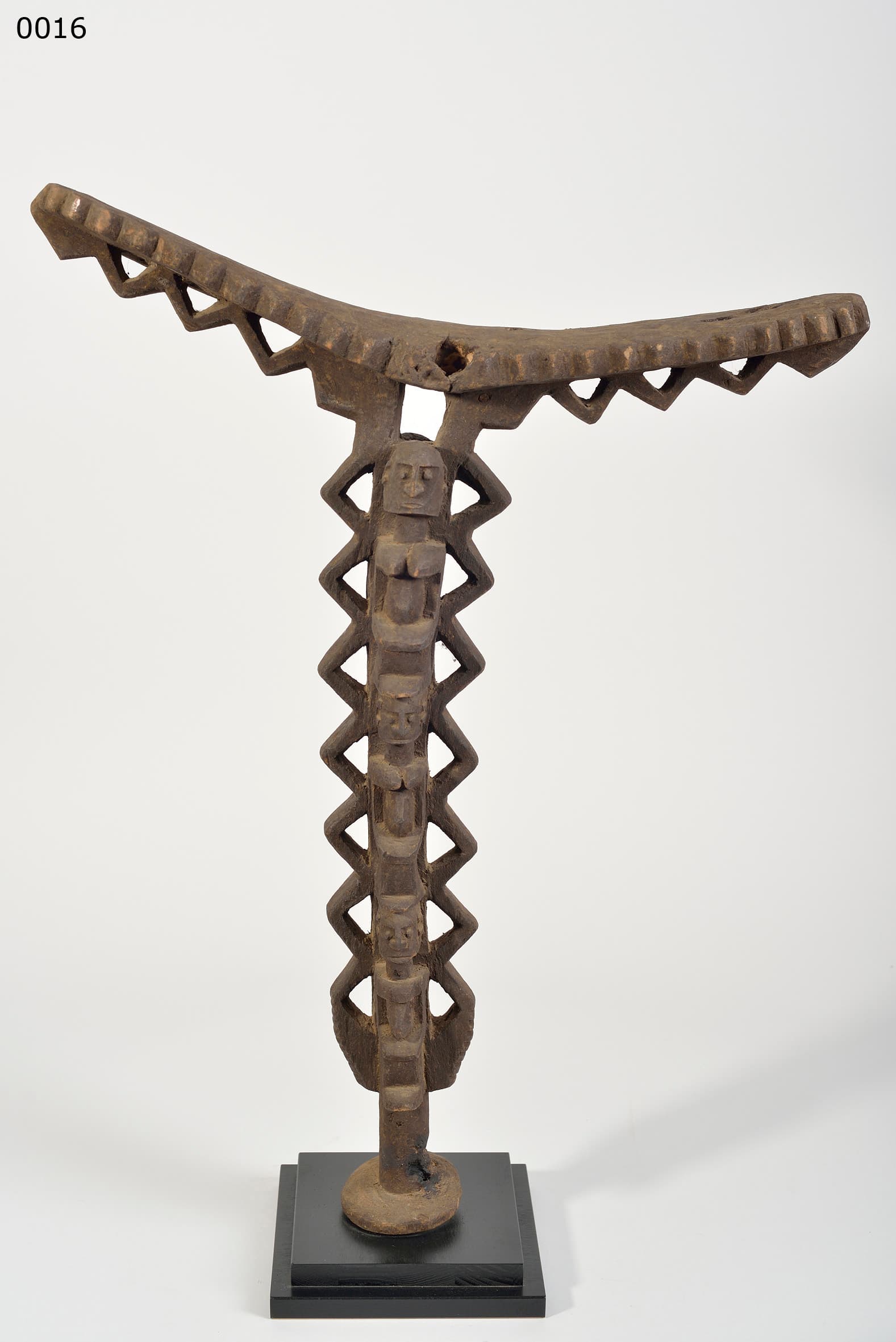
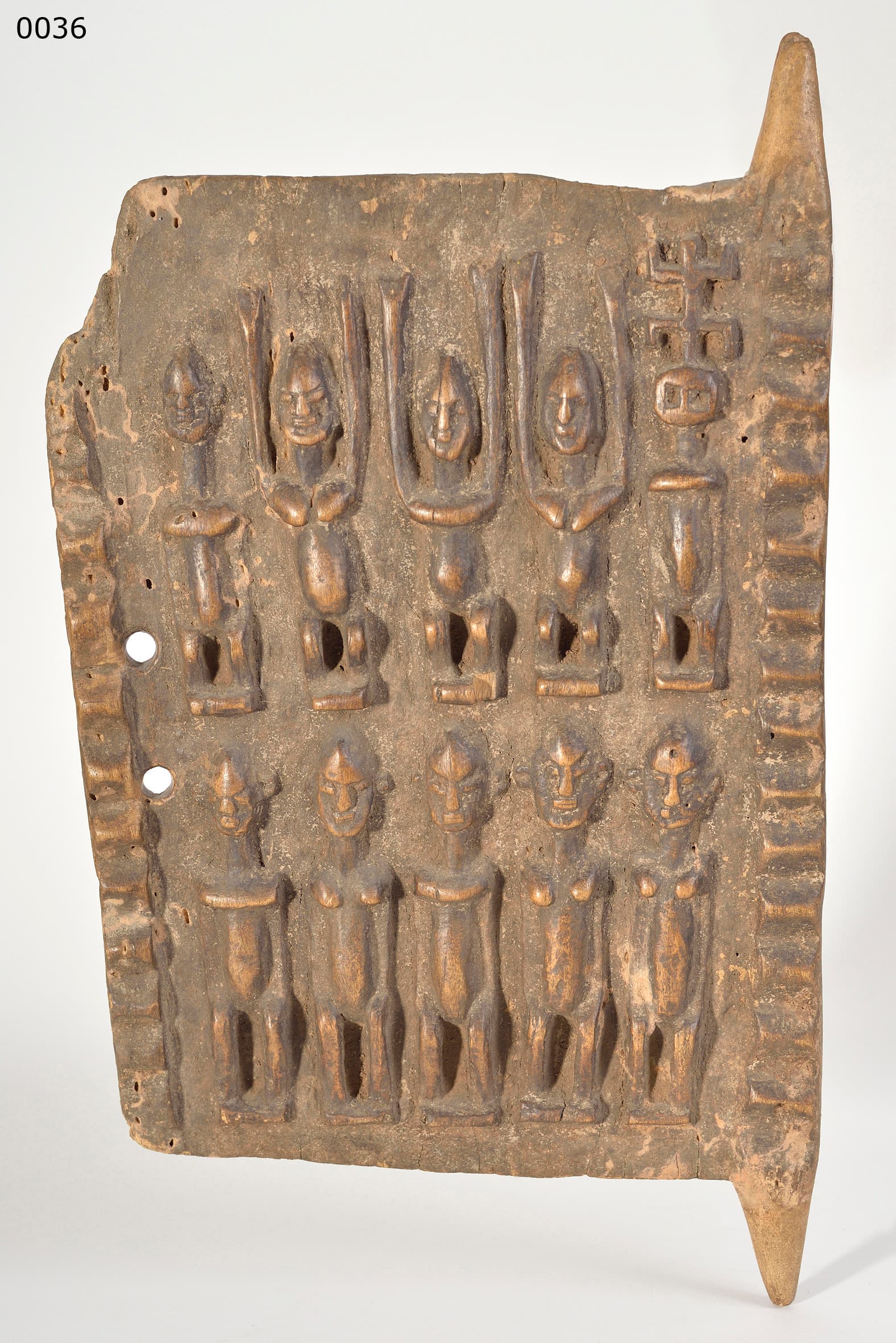
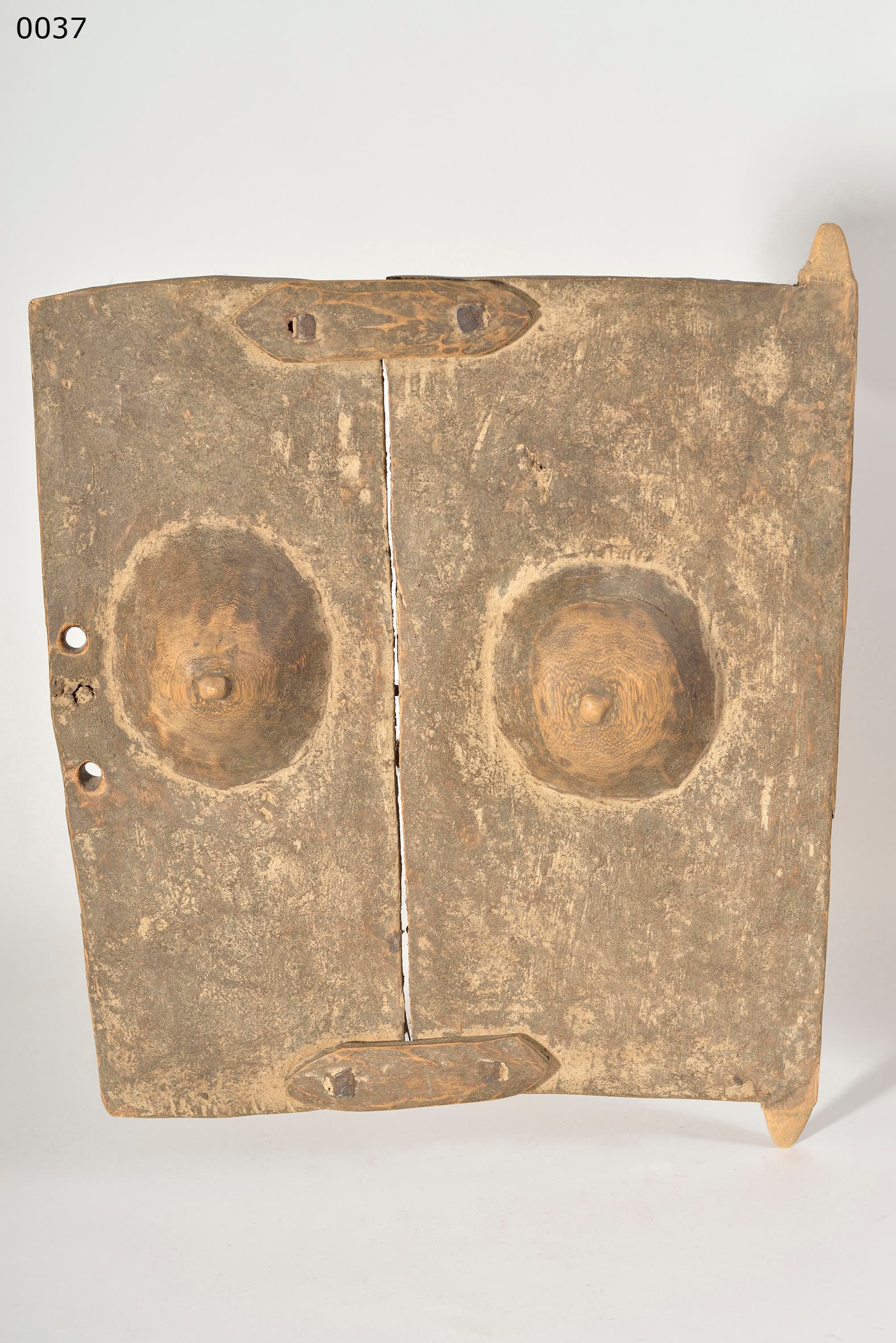
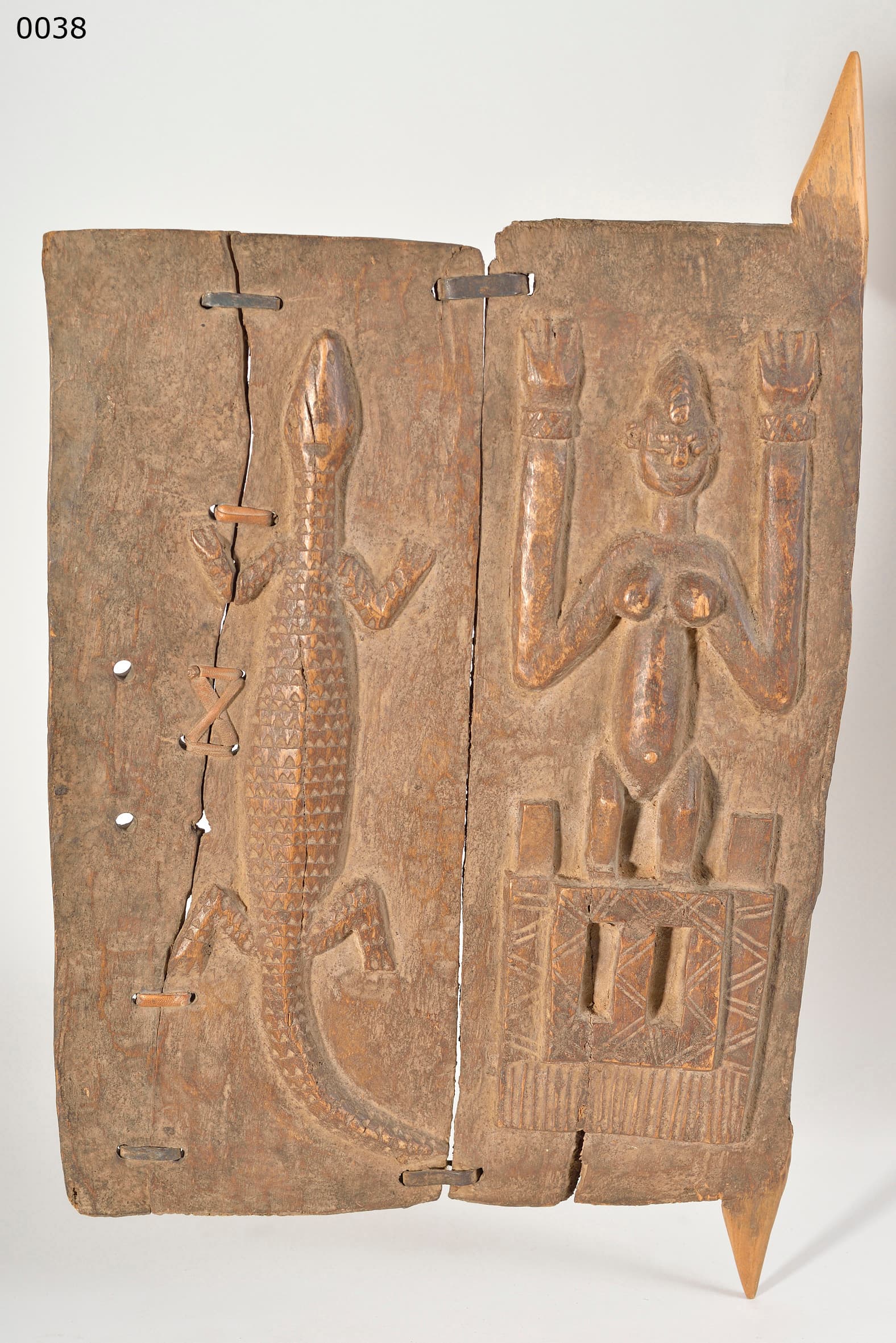
Ein kleiner kreisförmiger Holzaltar (18.–19. Jh., 21 cm) der Dogon aus Mali - getragen von abstrakten, tief erodierten Karyatidenfiguren, die die obere und untere Scheibe miteinander verbinden. Die gesamte Oberfläche ist von einer enorm dicken Krustenschicht aus getrocknetem Opfergut bedeckt, deren tiefes Craquelé ein höheres Alter nahelegt als ursprünglich angenommen.
1. Imago Mundi in Miniatur
Wie seine größeren Gegenstücke stellt auch dieser Dogon-Altar den Kosmos dar.
- Scheibe-Karyatide-Scheibe: Die obere und die untere Scheibe symbolisieren den Himmel und die Erde, getrennt durch die Trägerfiguren. Diese werden in der von Marcel Griaule geprägten – und von Walter E.A. van Beek später kritisch hinterfragten – Literatur oft als primordiale Nommo-Ahnen interpretiert; das kosmologische Diagramm, das hier in einer handlichen Form gehalten wird.
- Persönliches Heiligtumsobjekt: Mit 21 cm ist der Altar zu klein, um der Sitz eines Hogon zu sein - er war ein privater oder familiärer Brennpunkt für die tägliche spirituelle Verbindung.
2. Die Praxis der Opferspeisung
Altäre dieser Art werden "gefüttert", um das fragile Gleichgewicht zwischen dem lebenden und dem spirituellen Bereich aufrechtzuerhalten.
- Physikalisches Gebet: Das kontinuierliche Auftragen von Hirsebrei, Tierblut und organischer Materie ist selbst eine Form des Gebets.
- Bitten der Ahnen: Die Opfergaben bitten um Regen, landwirtschaftlichen Erfolg und Schutz durch die Ahnen, die im Parallelreich wohnen.
3. Extreme Verkrustung
Das ausschlaggebende Merkmal für die chronologische Neubewertung dieses Stücks ist seine dickschichtige Opferpatina.
- Generationenübergreifender Aufbau: Die Kruste dürfte sich durch intensiven, generationenübergreifenden rituellen Gebrauch gebildet haben, was mit einer Datierung ins 18. oder 19. Jahrhundert vereinbar ist. Ein derartiger Grad an materieller Alterung spricht gegen eine Entstehung in jüngerer Zeit.
- Holz verwandelt: Die Schichtung verbindet sich organisch mit den massiven Trocknungsrissen des darunterliegenden Holzes - was für eine intensive rituelle Nutzung und ein hohes Alter dieses Werkes innerhalb der traditionellen Dogon-Religion spricht.
Zusammenfassung
Dieser kleine Altar, der das Universum der Dogon in einer hochkonzentrierten Form verkörpert, ist ein eindringliches Artefakt westafrikanischer religiöser Hingabe. Seine außerordentlich dicke Opferkruste und die strukturelle Austrocknung sprechen für eine lang anhaltende rituelle Nutzung und stützen eine Einordnung des Objekts in das 18. oder 19. Jahrhundert.
KI-unterstützt erstellt aus Sammlungsgutachten, Objektfotografie und eigener Recherche, redaktionell geprüft. Fehler sind möglich — Hinweise darauf sind uns willkommen. Zum Verfahren →