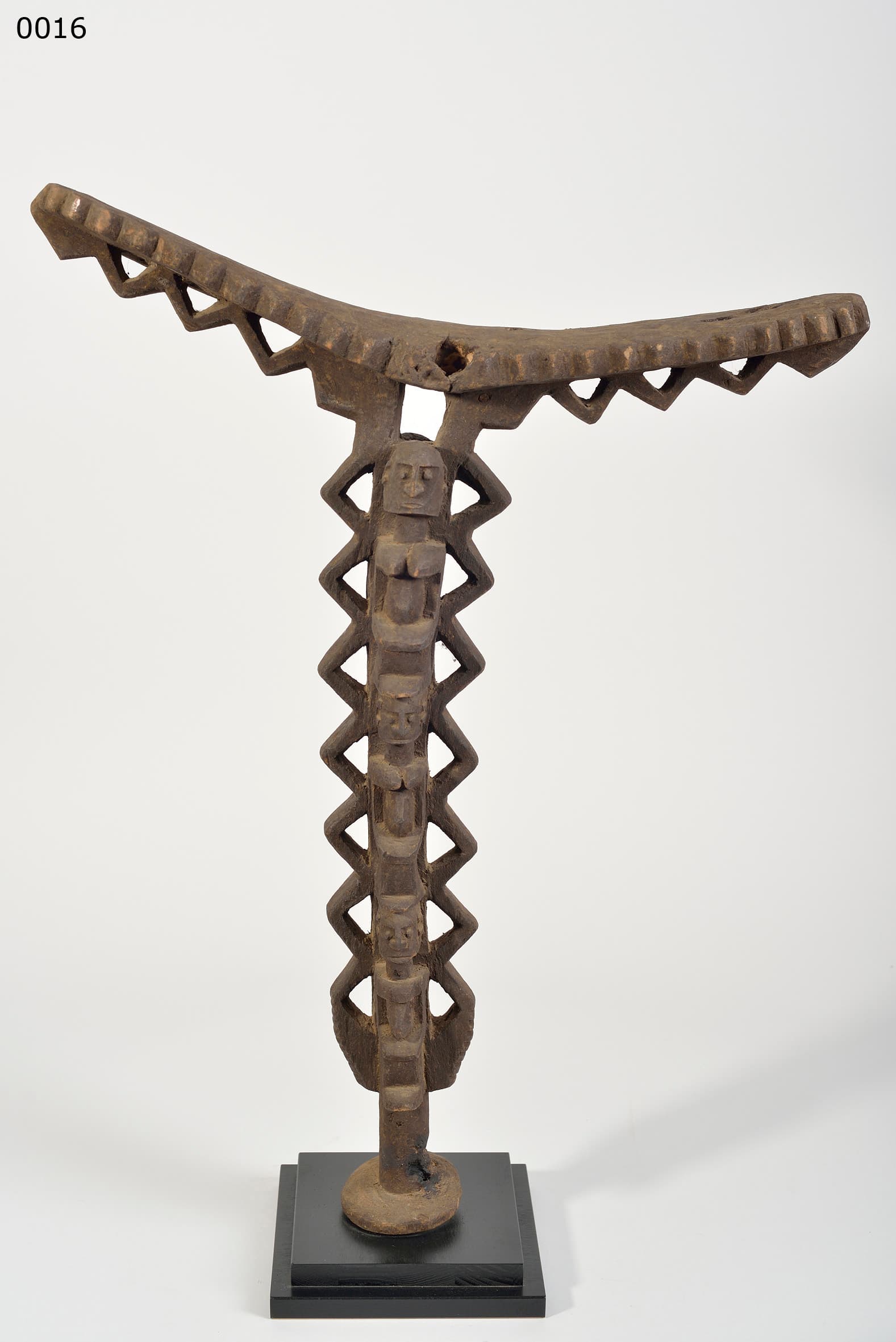
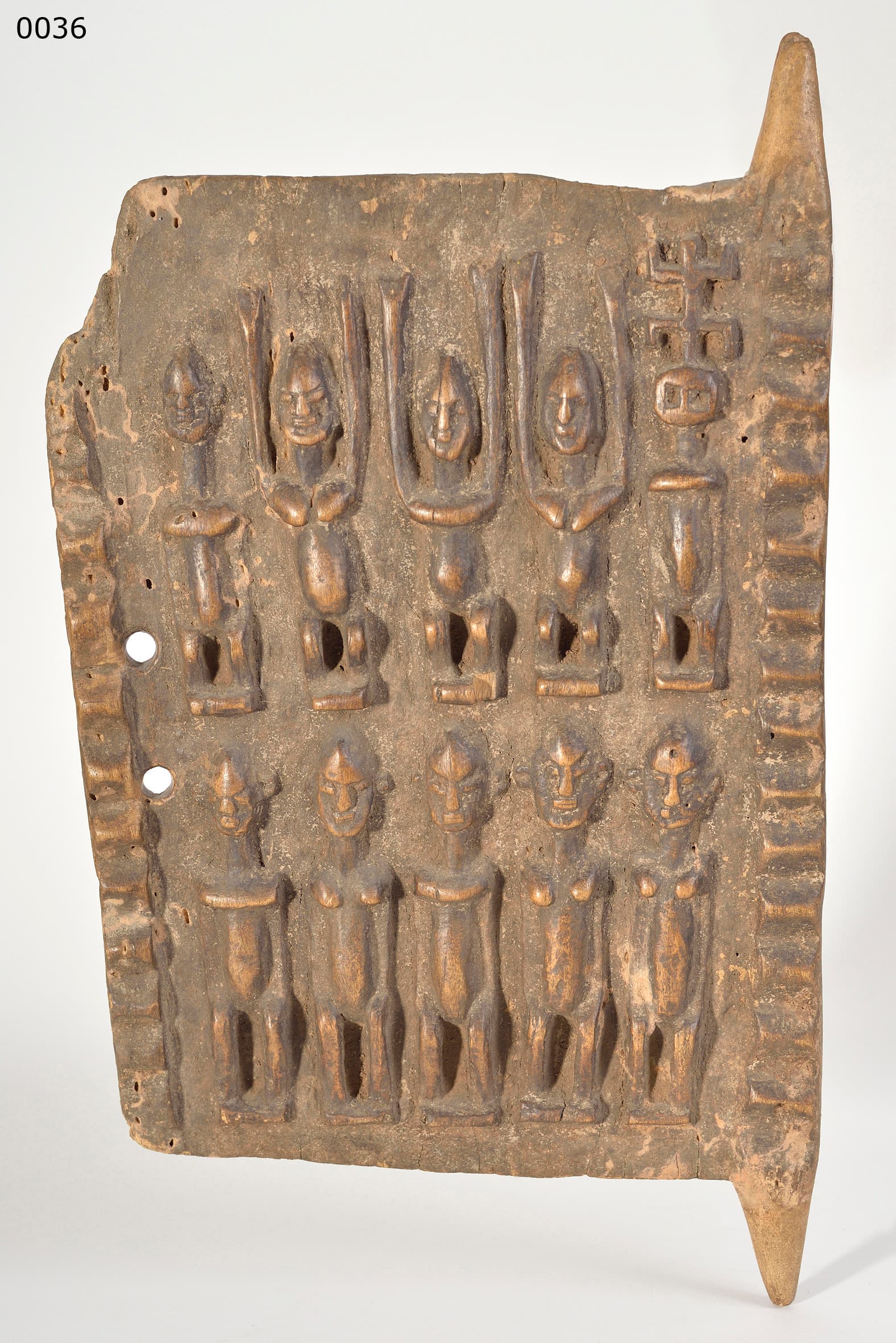
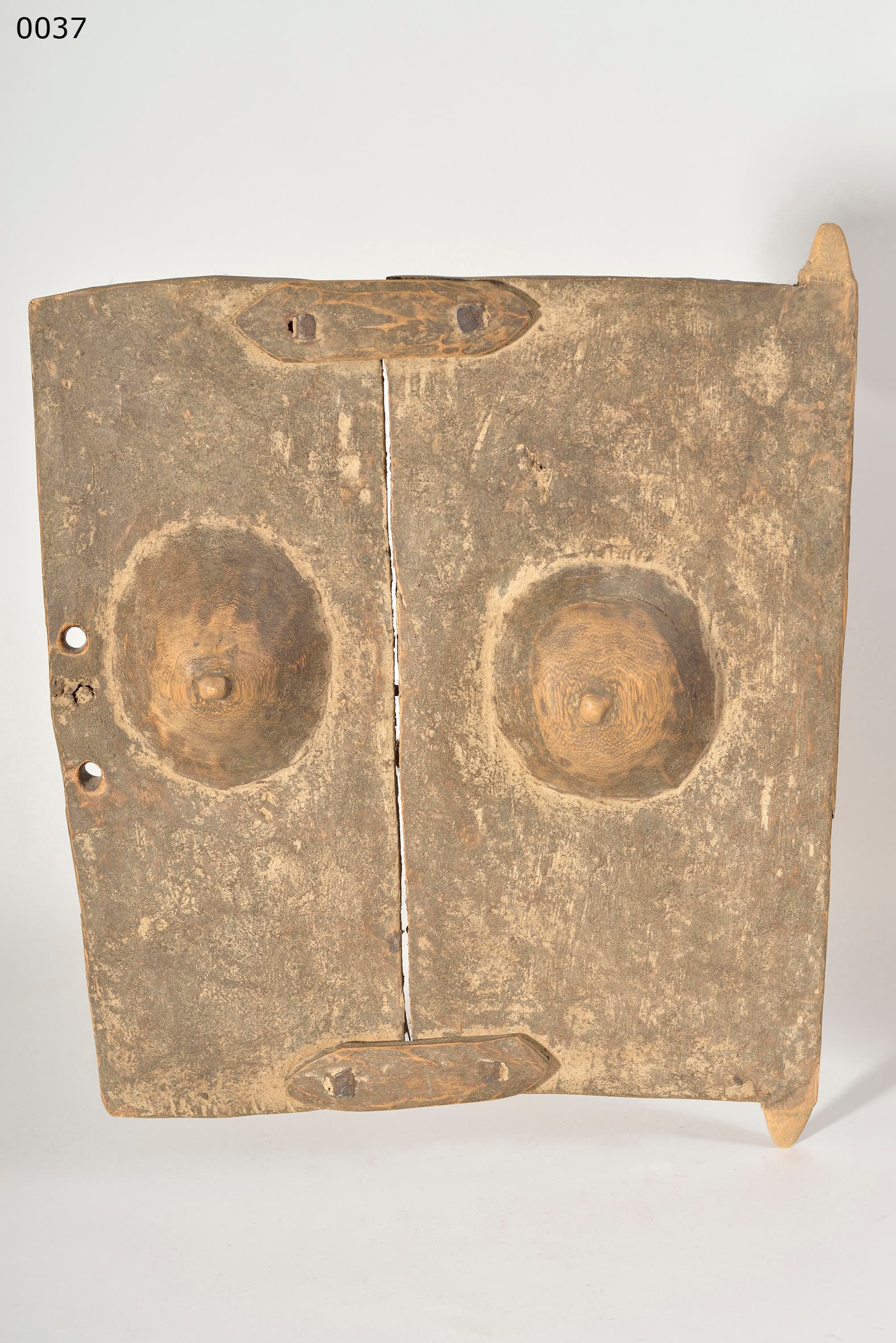
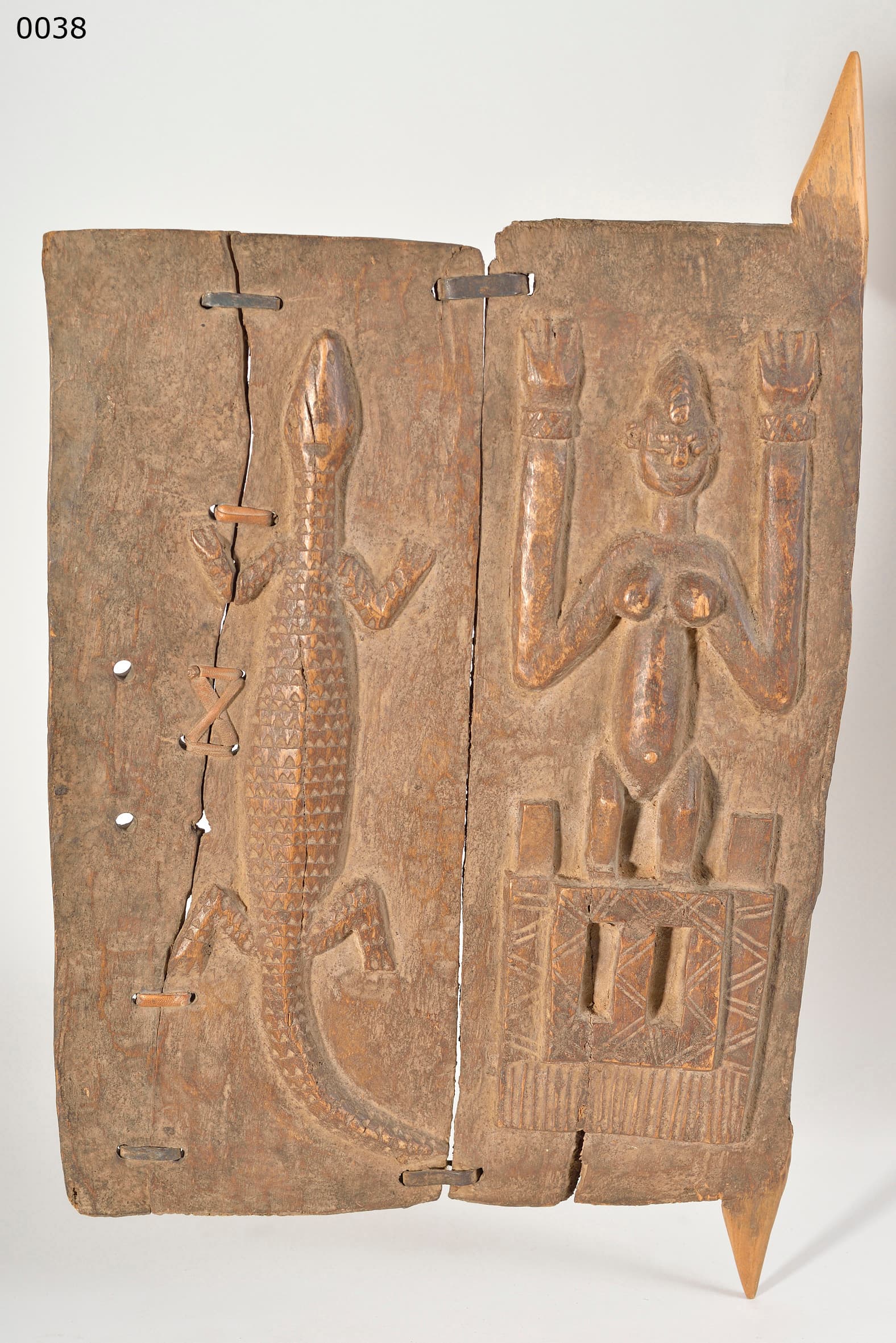
A remarkably dense blocky 19th-century Dogon neckrest (18 cm) from Mali — a saddle-shaped top integrated seamlessly into a solid U-shaped base, broad flanks intricately incised with circles and crosses, the wood carrying a deeply aged oxidized patina.
1. Sturdy utilitarian compactness
Unlike the soaring typologies of other Malian neckrests, this example prioritizes absolute stability and robust portability.
- Stool-Like Structure: The compact form suggests a neckrest built for rigorous travel or heavy daily use, not for display.
- Elevated by Decoration: The deep incising of crosses, circles, and linear borders across the flanks elevates the piece from a utility block to an intimately decorated elite possession.
2. Iconography of the cosmos
The geometric symbols incised into the sides are not random ornament.
- Crosses as Cardinal Directions: In Dogon cosmology, crosses denote the four directions and the cosmic crossroads.
- Circles as Primordial Egg: Circles can represent the sun or the primordial egg of Amma. Resting the head on this block structurally aligns the sleeper's mind with the foundational architecture of the Dogon universe.
3. Deep 19th-century oxidation
The wood has aged to a dry crusted deeply oxidized state typical of Sahelian utilitarian survivors.
- Softened Motif Peaks: The high points of the carved geometric motifs have been smoothed by decades of tactile handling.
- Natural Grain Checking: Deep natural cracking across the grain confirms immense age and genuine ethnographic use.
Summary
Combining unyielding structural solidity with intricate cosmic iconography, this compact Dogon neckrest is a testament to the beauty of everyday African objects. Its deep 19th-century oxidation and worn geometry make it a superb collector's piece.
Written with AI assistance from the collection appraisal, object photography and our own research; editorially reviewed. Mistakes are possible — corrections are welcome. How we work →