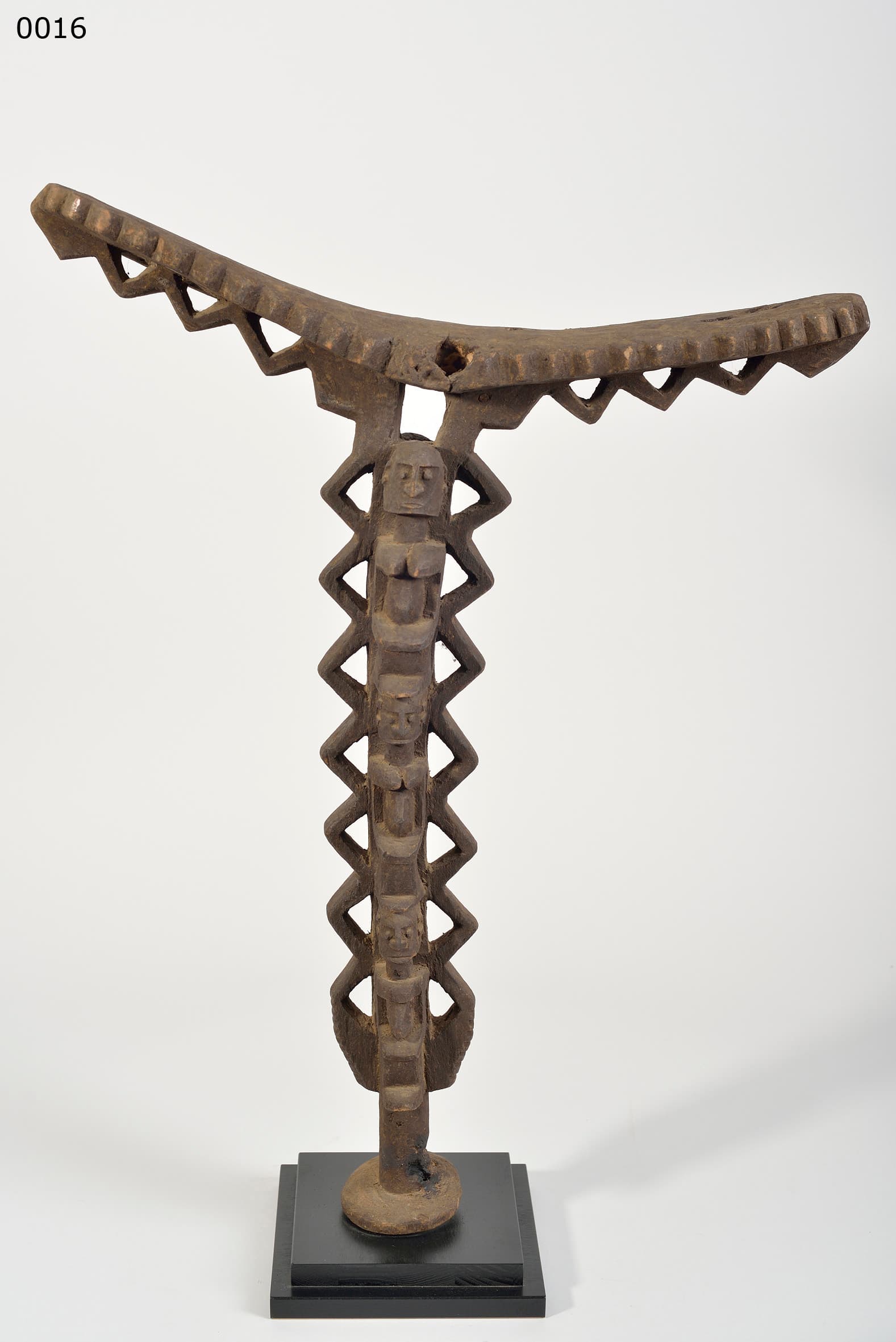
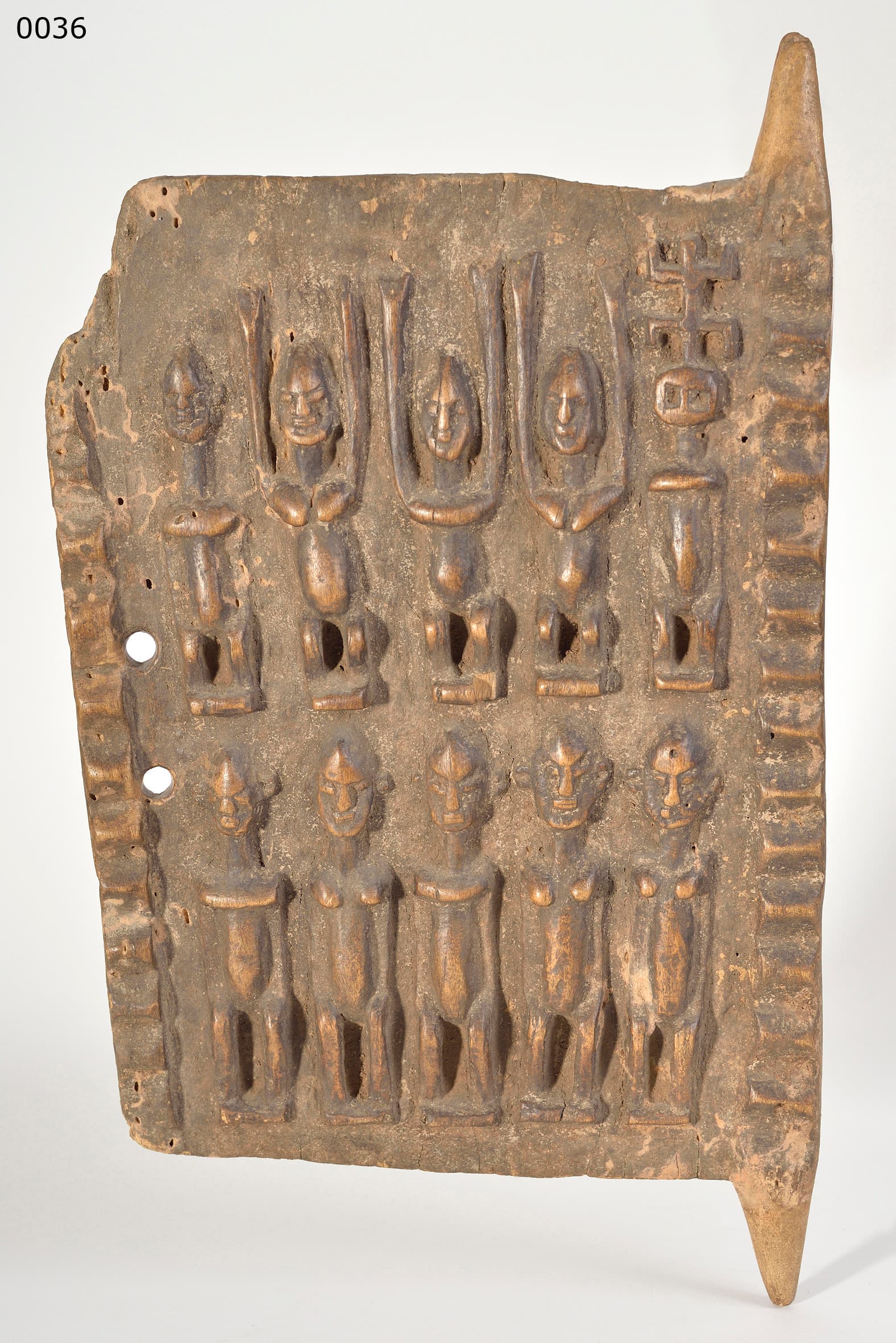
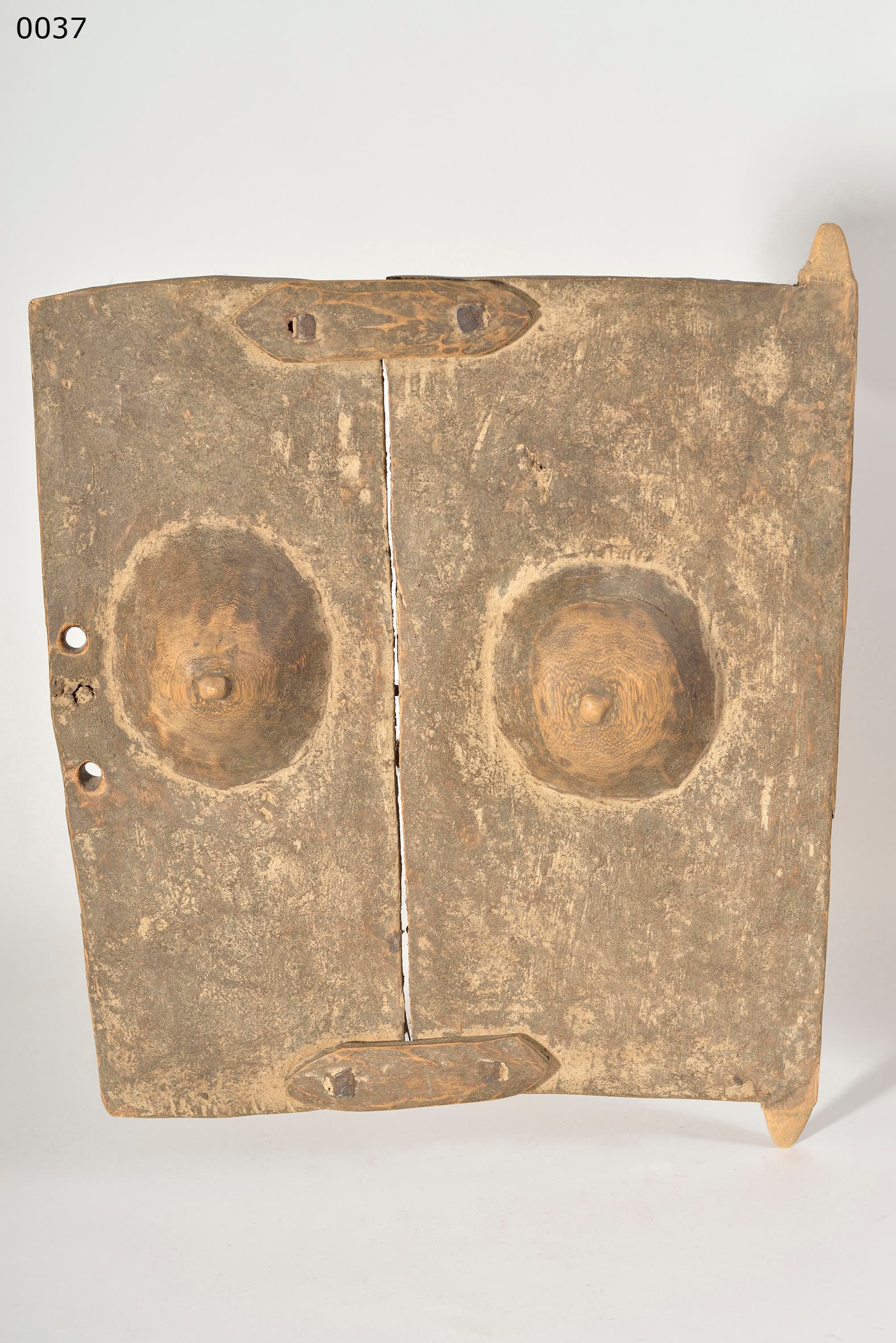
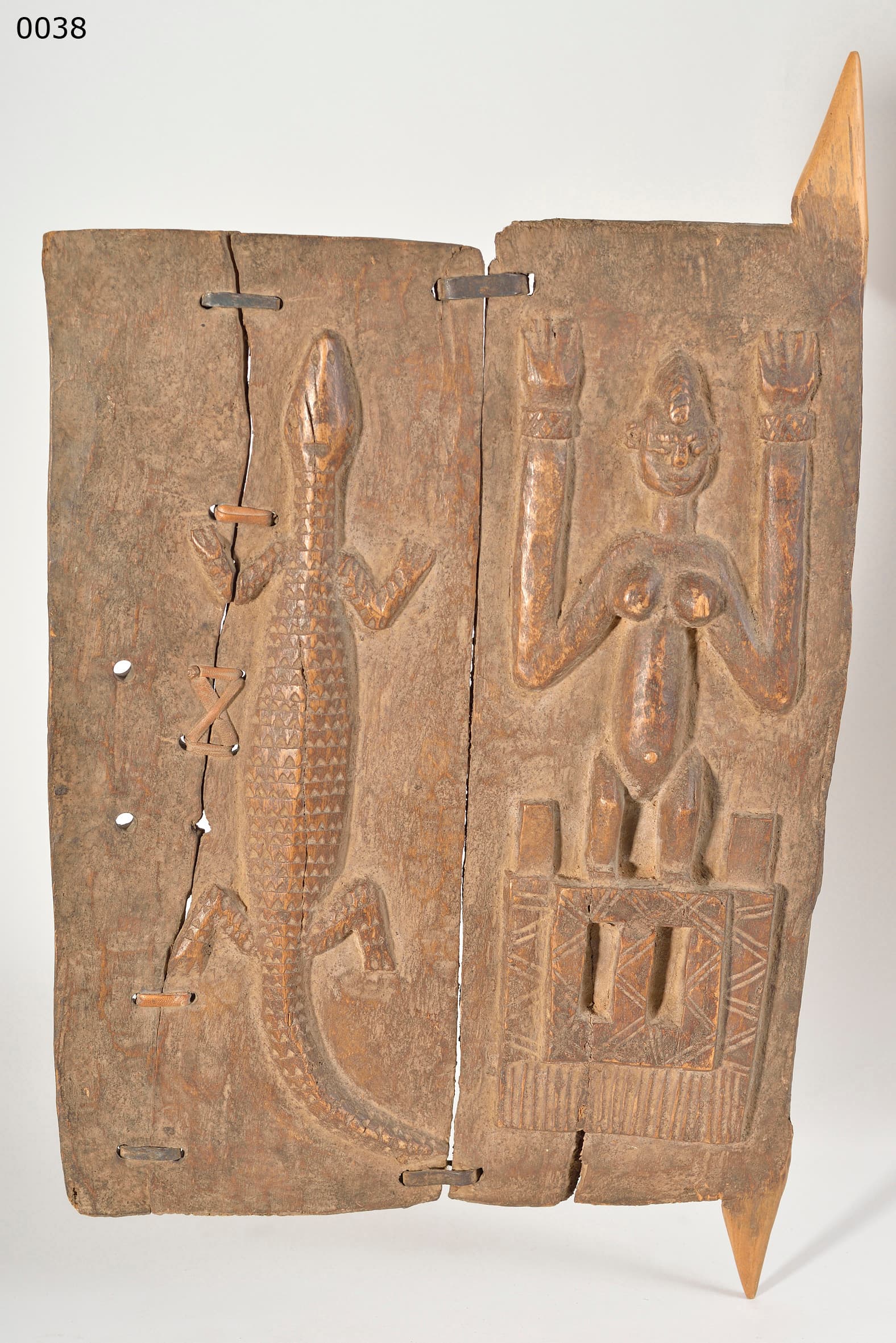
Eine bemerkenswert dichte, blockige Dogon-Nackenstütze (18 cm) aus Mali aus dem 19. Jahrhundert - eine sattelförmige Platte, die nahtlos in einen massiven U-förmigen Sockel integriert ist, breite Flanken, die mit Kreisen und Kreuzen aufwändig eingeschnitten sind, das Holz trägt eine tief gealterte, oxidierte Patina.
1. Robuste, utilitaristische Kompaktheit
Im Gegensatz zu den hoch aufragenden Typologien anderer malischer Nackenstützen legt dieses Exemplar Wert auf absolute Stabilität und robuste Tragbarkeit.
- Werkzeugähnliche Struktur: Die kompakte Form deutet auf eine Nackenstütze hin, die für den harten Reise- oder Alltagsgebrauch und nicht zum Ausstellen gebaut wurde.
- Durch Dekoration aufgewertet: Die tiefe Einkerbung von Kreuzen, Kreisen und linearen Rändern an den Flanken erhebt das Stück von einem Gebrauchsgegenstand zu einem detailliert verzierten Elitenbesitz.
2. Ikonographie des Kosmos
Die in die Seiten eingeritzten geometrischen Symbole sind kein zufälliges Ornament.
- Kreuze als Kardinalrichtungen: In der Dogon-Kosmologie bezeichnen Kreuze die vier Richtungen und die kosmischen Kreuzungen.
- Kreise als Ur-Ei: Kreise können die Sonne oder das Ur-Ei der Amma darstellen. Wenn der Kopf auf diesem Block ruht, wird der Geist des Schläfers strukturell mit der grundlegenden Architektur des Dogon-Universums in Einklang gebracht.
3. Tiefe Oxidation aus dem 19. Jahrhundert
Das Holz ist in einem trockenen, verkrusteten und stark oxidierten Zustand gealtert, der typisch für die Überreste von Gebrauchsgegenständen aus dem Sahel ist.
- Abgeschwächte Motivspitzen: Die hohen Punkte der geschnitzten geometrischen Motive wurden durch jahrzehntelange taktile Handhabung geglättet.
- Natürliche Maserung Checking: Tiefe natürliche Rissbildung über die Maserung bestätigt immense Alter und echte ethnographische Verwendung.
Zusammenfassung
Diese kompakte Dogon-Nackenstütze, die unnachgiebige strukturelle Solidität mit komplizierter kosmischer Ikonographie verbindet, ist ein Zeugnis für die Schönheit afrikanischer Alltagsgegenstände. Die tiefe Oxidation aus dem 19. Jahrhundert und die abgenutzte Geometrie machen sie zu einem ausgezeichneten Sammlerstück.
KI-unterstützt erstellt aus Sammlungsgutachten, Objektfotografie und eigener Recherche, redaktionell geprüft. Fehler sind möglich — Hinweise darauf sind uns willkommen. Zum Verfahren →