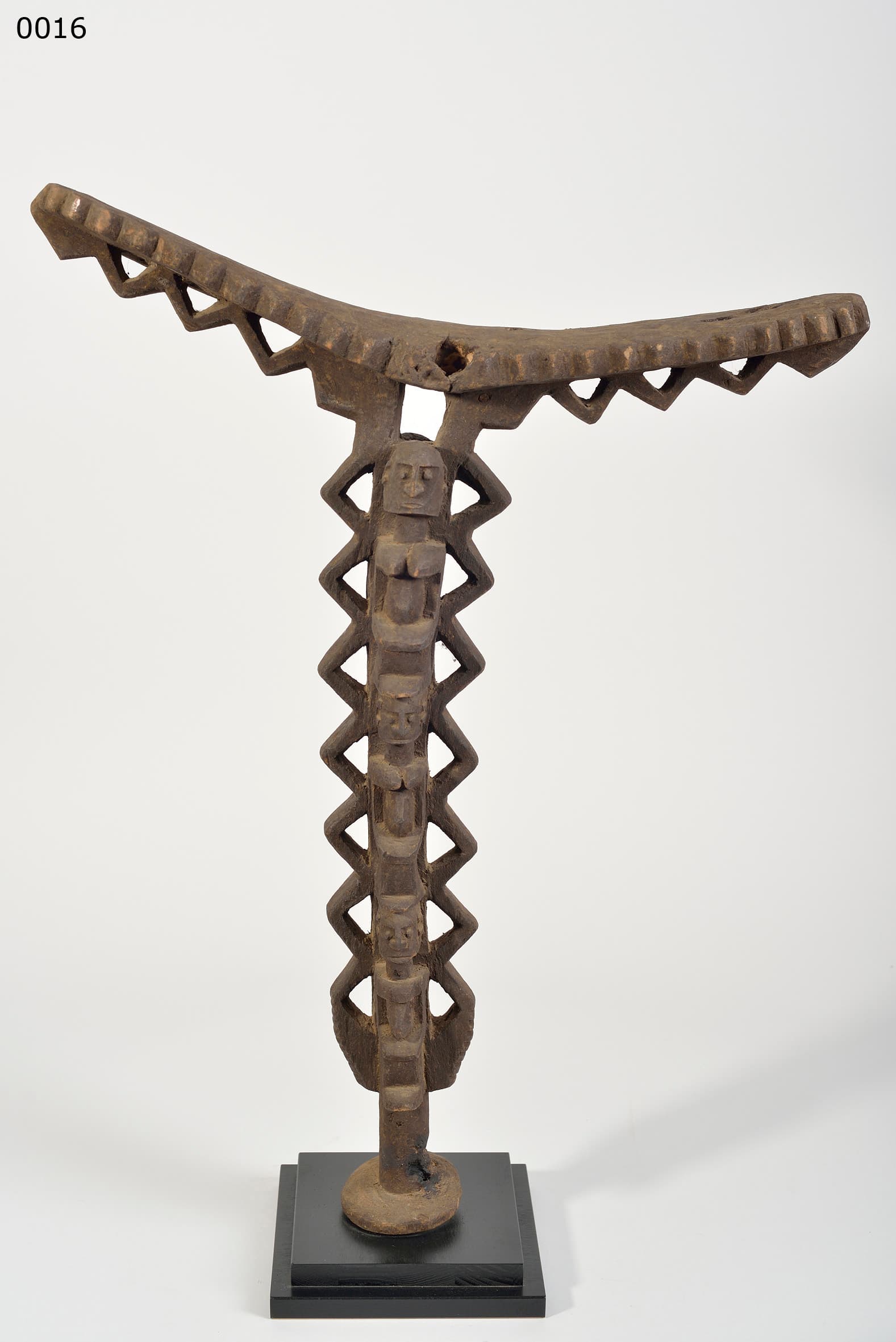
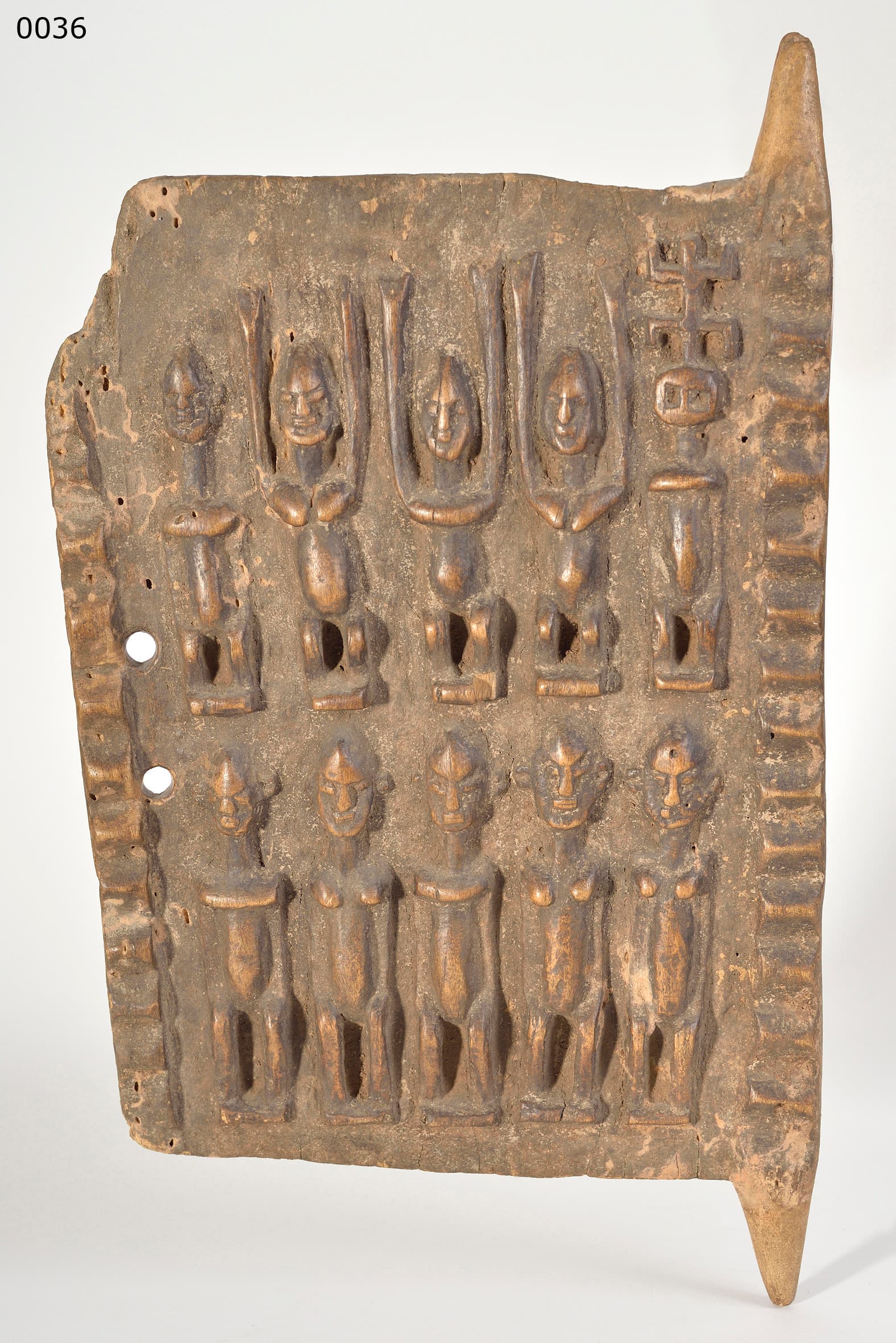
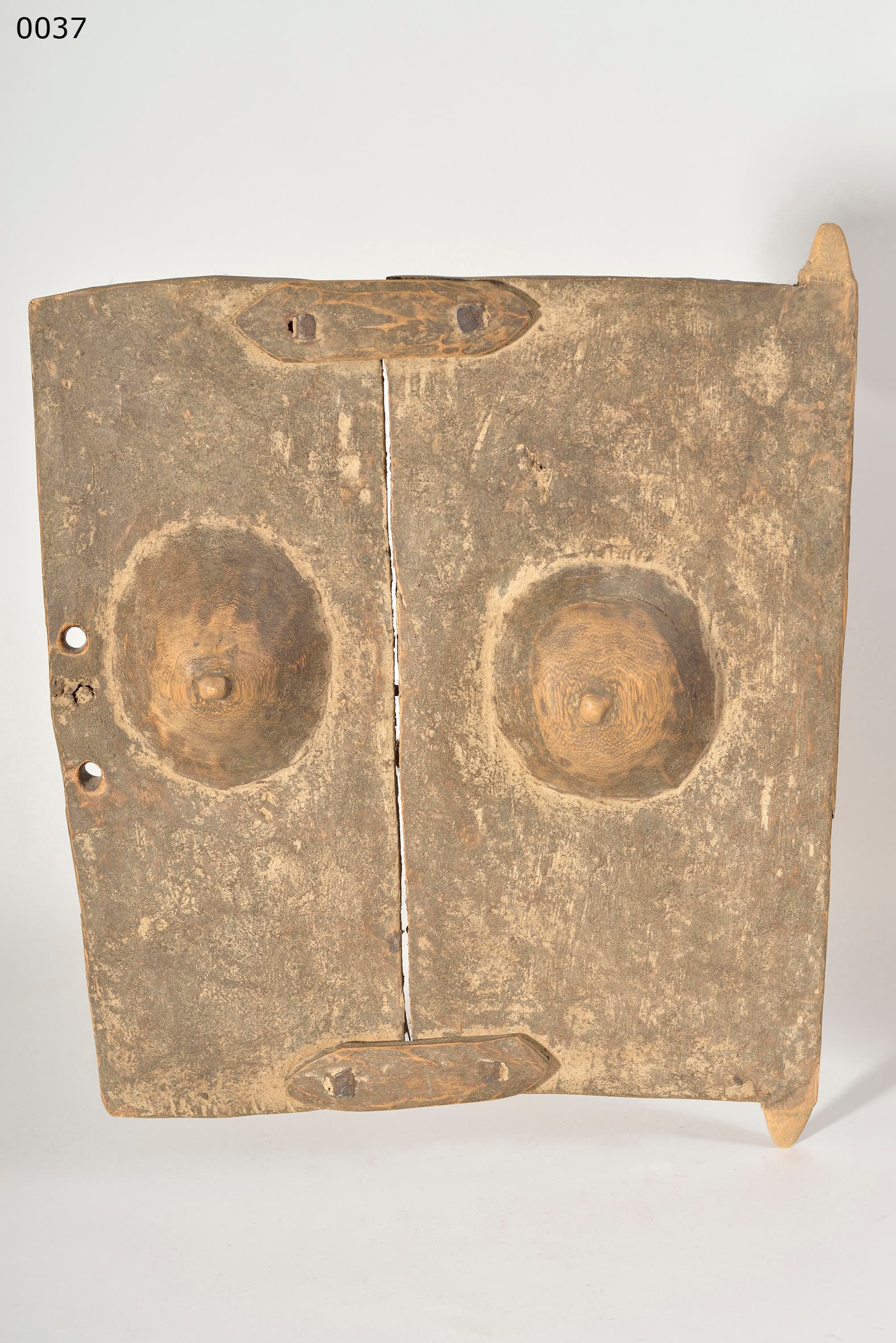
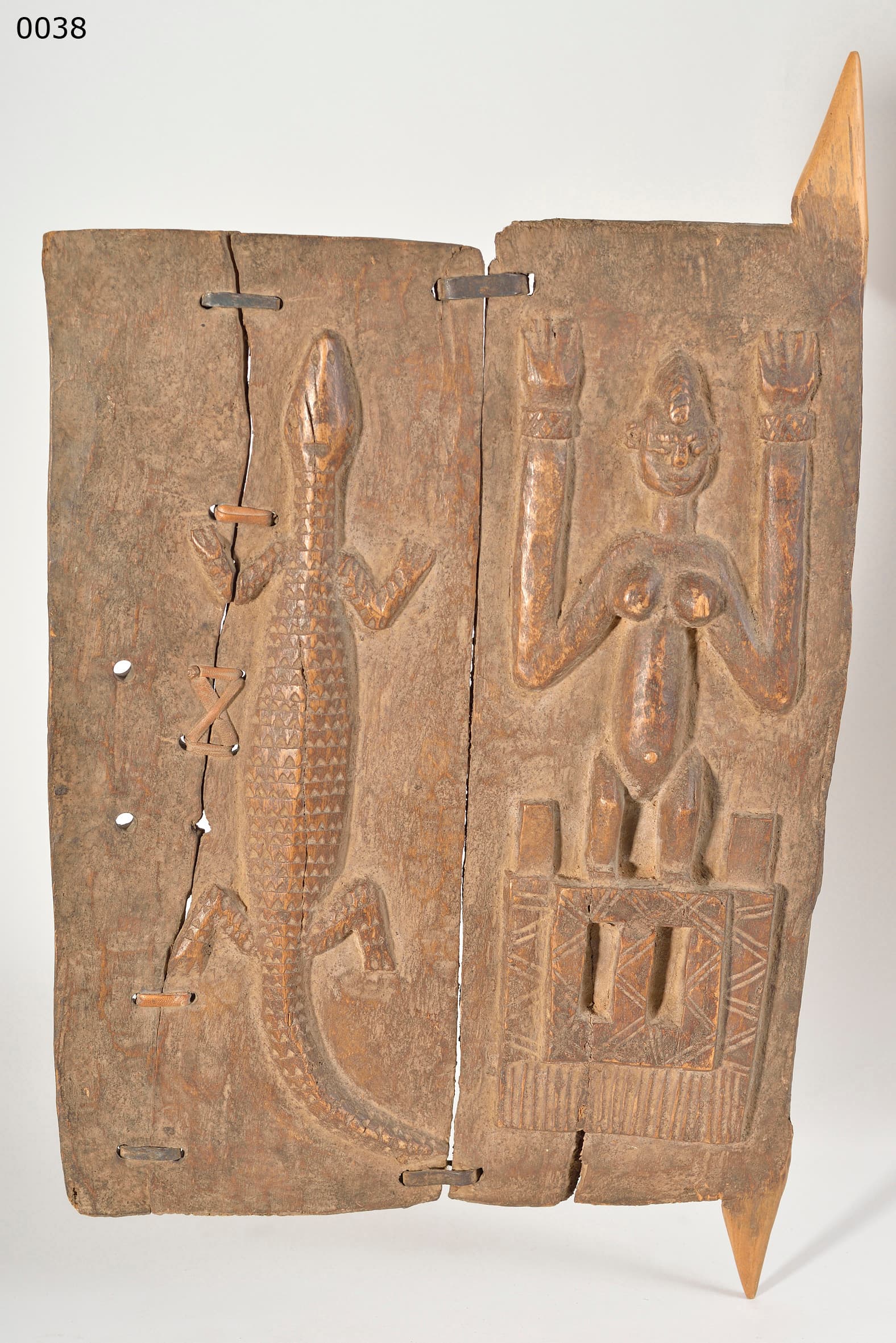
A complex Dogon multi-figure sculpture (1st half 20th C., 79 cm) from Mali — carved from a single massive block, depicting two elongated highly stylized figures seated on a structural base with hands positioned over a traditional wooden xylophone (balafon), exhibiting a heavy dark deeply crusted sacrificial patina with significant desiccation cracks.
1. Narrative cubism and the musical frieze
While Dogon art is famous for its solitary standing figures, this piece demonstrates a masterful capacity for complex narrative composition.
- Cohesive Cubist Block: The artist brilliantly integrates two figures and a musical instrument into a cohesive cubist block — the figures retain classic Dogon hallmarks (helmet-like heads, arrow-shaped noses, tubular elongated torsos).
- Rhythmic Parallel Alignment: The rigid parallel alignment of the two musicians leaning over the balafon creates a powerful sense of rhythmic tension — capturing the physical action of making music within a strictly controlled architectural framework.
2. The griot caste and the dama festival
In West African society, musicians (griots) belong to a highly specialized powerful endogamous caste — keepers of oral history and intermediaries who communicate with the spirit world through rhythm.
- Master-Musician Honors: This sculpture was likely a prestige object or shrine anchor honoring a lineage of master musicians.
- Dama Soul Guidance: The balafon is specifically used during the Dama — the spectacular Dogon funerary festival. The music produced by these instruments is required to safely guide the souls of the deceased out of the village and into the ancestral realm.
3. Cave curation and sacrificial encrustation
The physical surface is a spectacular record of early-20th-century Dogon shrine life.
- Bandiagara Desiccation: Severe stabilized fissures running through the base and the figures' torsos are typical of the Bandiagara escarpment caves.
- Active Altar Transformation: The dark highly textured crust indicates direct offerings of millet porridge and animal blood — additive magic transforming the carving from a mere representation of musicians into an active spiritually charged altar.
Summary
This rare narrative carving captures the rhythmic heartbeat of Dogon ceremonial life. Its complex multi-figure composition and thick sacrificial patina, consistent with ritual use, make it a significant example of Malian art.
Written with AI assistance from the collection appraisal, object photography and our own research; editorially reviewed. Mistakes are possible — corrections are welcome. How we work →