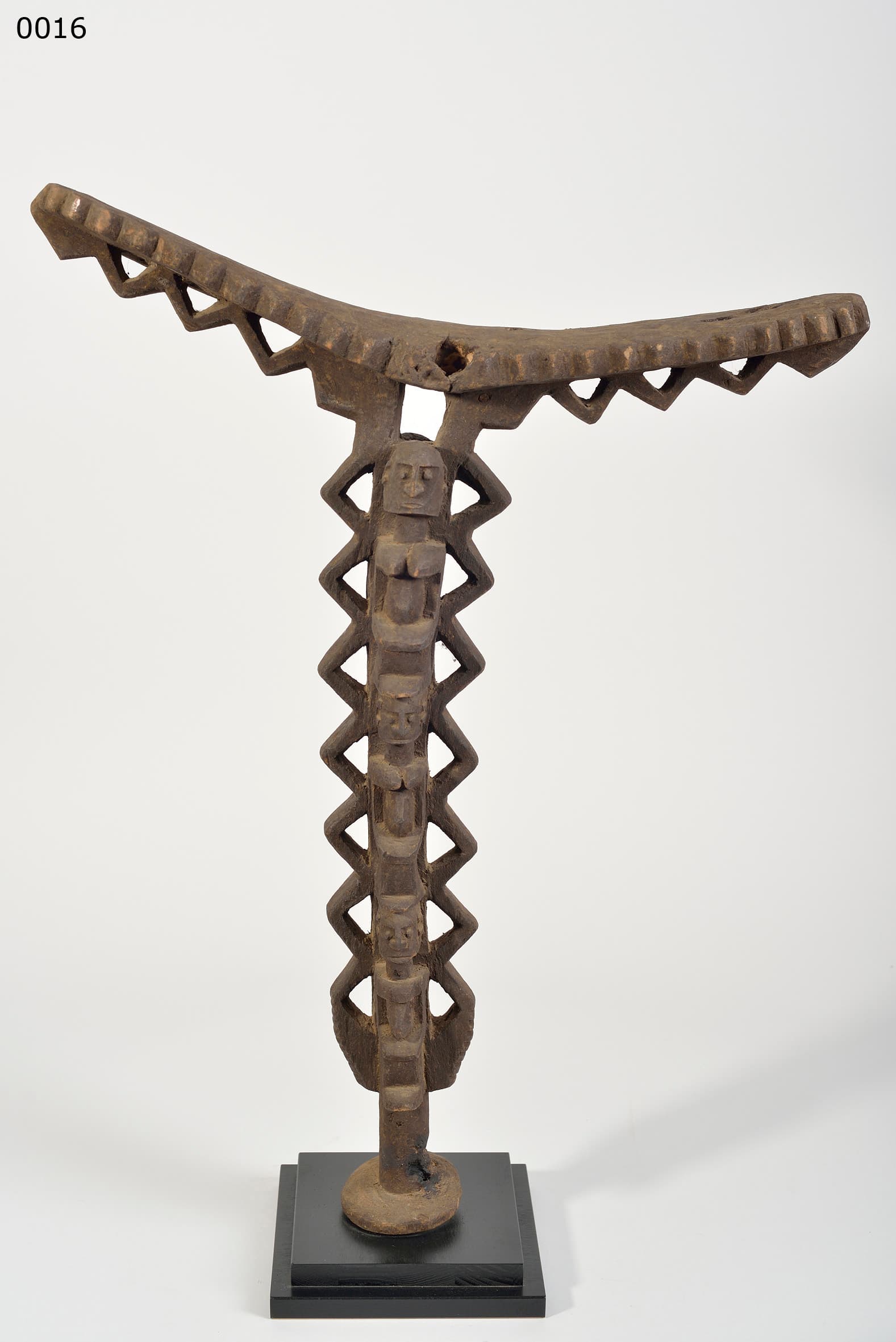
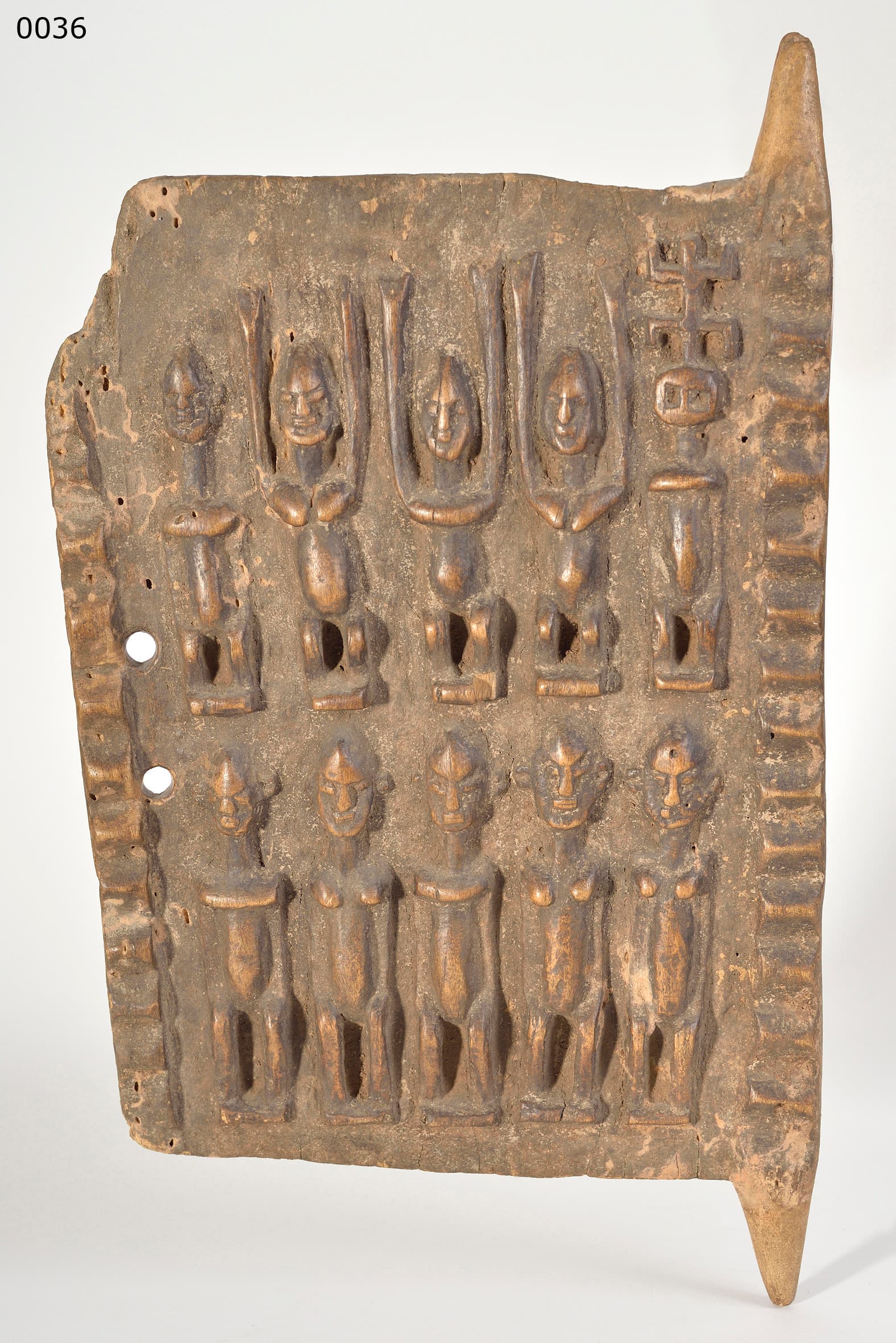
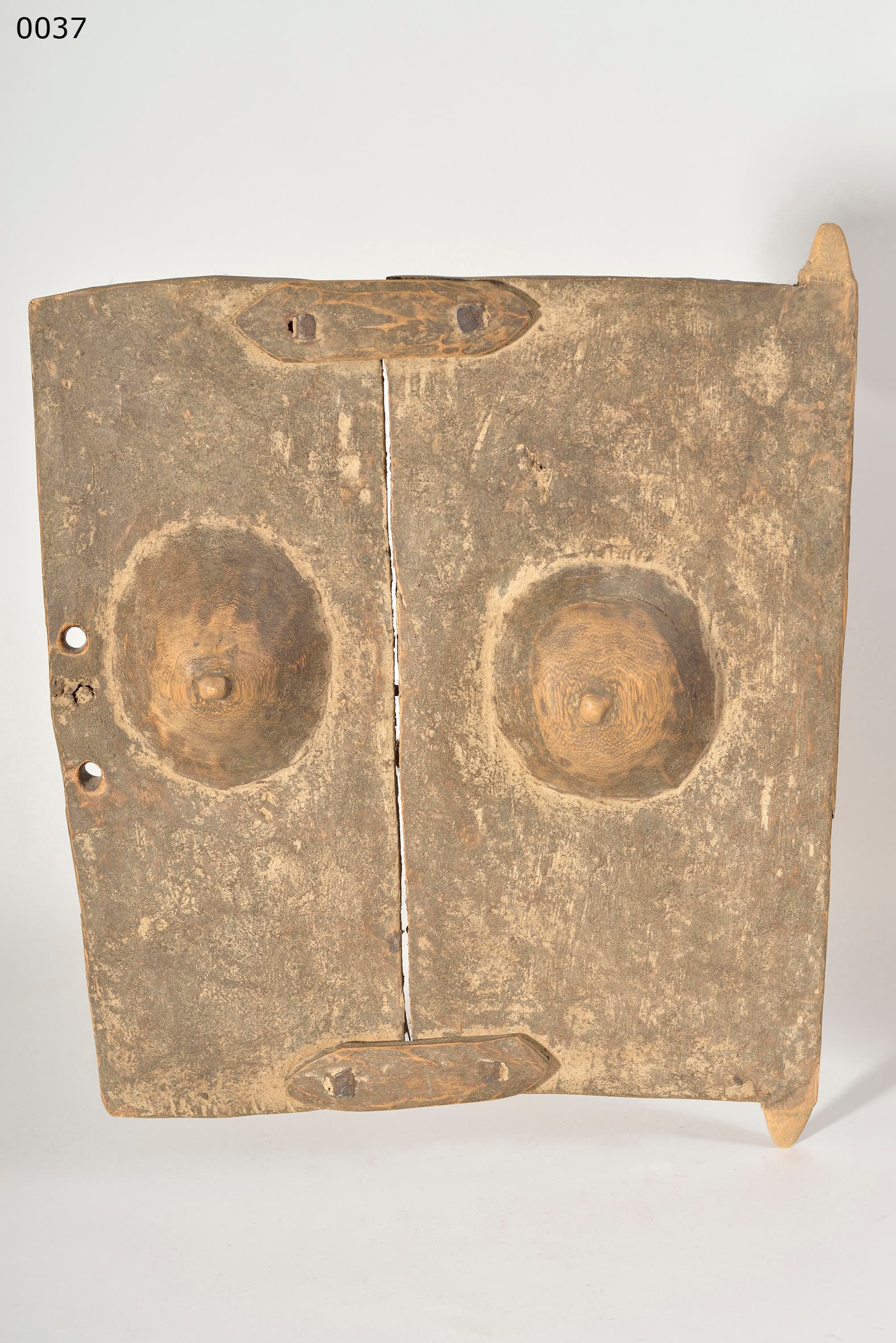
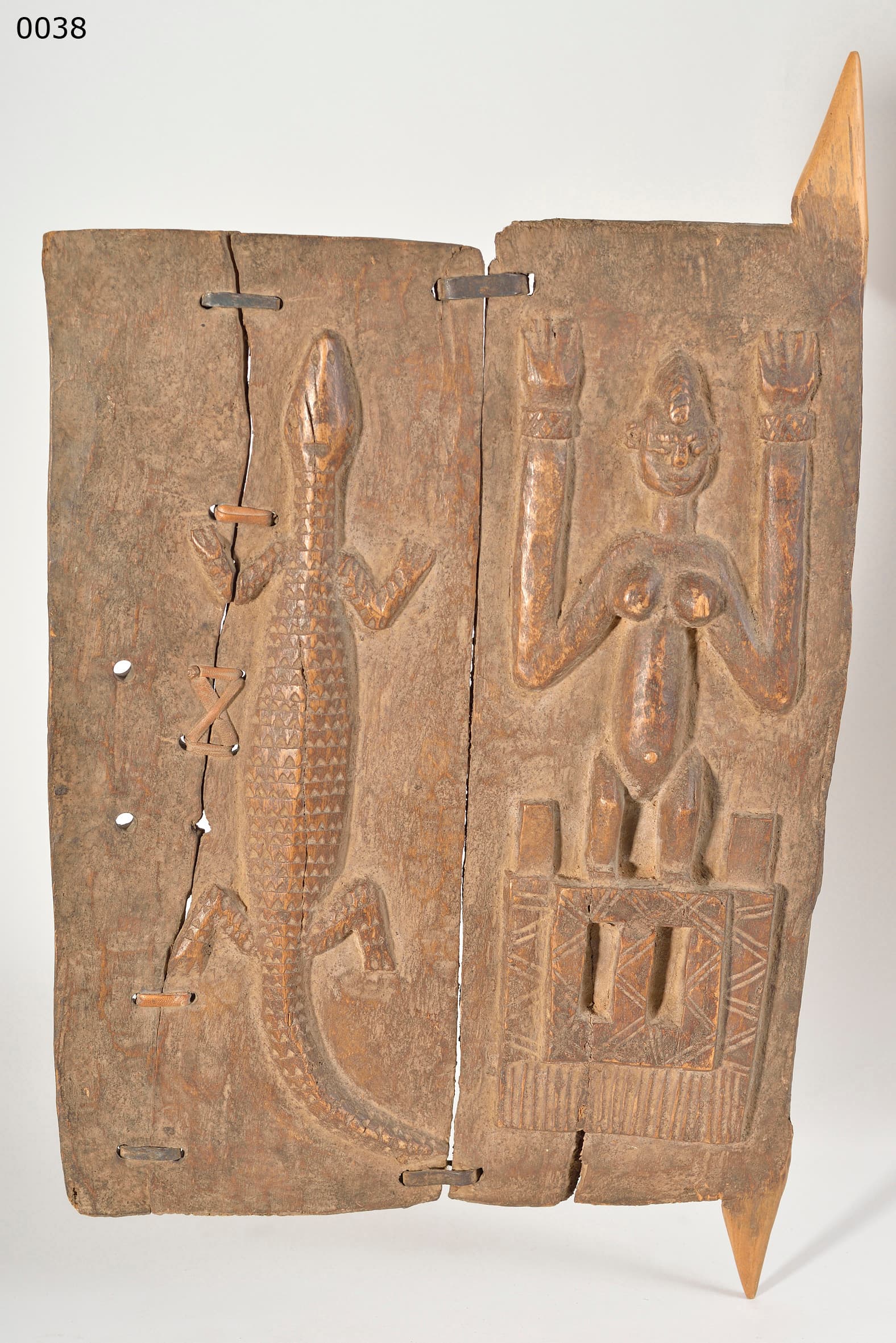
Eine komplexe mehrfigurige Dogon-Skulptur (1. Hälfte 20. Jh., 79 cm) aus Mali - aus einem einzigen massiven Block geschnitzt, der zwei langgestreckte, stark stilisierte Figuren darstellt, die auf einem strukturellen Sockel sitzen und mit den Händen ein traditionelles hölzernes Xylophon (Balafon) halten. Die Skulptur weist eine schwere, dunkle, tief verkrustete Opferpatina mit deutlichen Austrocknungsrissen auf.
1. Erzählender Kubismus und der musikalische Fries
Während die Dogon-Kunst für ihre solitär stehenden Figuren bekannt ist, zeigt dieses Stück eine ausgeprägte Fähigkeit zur komplexen narrativen Komposition.
- Zusammenhängender kubistischer Block: Der Bildhauer integriert zwei Figuren und ein Musikinstrument in einen zusammenhängenden kubistischen Block - die Figuren weisen klassische Dogon-Merkmale auf (helmartige Köpfe, pfeilförmige Nasen, röhrenförmige, langgestreckte Torsi).
- Rhythmische parallele Ausrichtung: Die starre parallele Ausrichtung der beiden Musiker, die sich über das Balafon beugen, erzeugt ein starkes Gefühl von rhythmischer Spannung - sie fängt die körperliche Aktion des Musizierens in einem streng kontrollierten architektonischen Rahmen ein.
2. Die Griot-Kaste und das Dama-Festival
In der westafrikanischen Gesellschaft gehören Musiker (Griots) einer hochspezialisierten, mächtigen endogamen Kaste an - Bewahrer der mündlich überlieferten Geschichte und Vermittler, die durch Rhythmus mit der Geisterwelt kommunizieren.
- Ehrung von Meistermusikern: Diese Skulptur war wahrscheinlich ein Prestigeobjekt oder ein Schreinanker zu Ehren eines Stammbaums von Meistermusikern.
- Dama Seelenführung: Das Balafon wird speziell während des Dama verwendet - dem spektakulären Begräbnisfest der Dogon. Die von diesen Instrumenten erzeugte Musik wird benötigt, um die Seelen der Verstorbenen sicher aus dem Dorf in das Reich der Ahnen zu geleiten.
3. Höhlenpflege und Opferverkrustung
Die physische Oberfläche verweist auf das dogonische Schreinleben des frühen 20. Jahrhunderts.
- Bandiagara-Trockenlegung: Starke stabilisierte Risse, die sich durch den Sockel und die Torsi der Figuren ziehen, sind typisch für die Höhlen des Bandiagara-Steilhangs.
- Aktive Altarumwandlung: Die dunkle, stark strukturierte Kruste deutet auf direkte Opfergaben von Hirsebrei und Tierblut hin - additive Magie, die die Schnitzerei von einer bloßen Darstellung von Musikern in einen aktiven, spirituell aufgeladenen Altar verwandelt.
Zusammenfassung
Diese seltene narrative Schnitzerei veranschaulicht das zeremonielle Leben der Dogon. Die komplexe, vielfigurige Komposition und die dicke Opferpatina machen sie zu einem bedeutenden Zeugnis der malischen Kunstgeschichte.
KI-unterstützt erstellt aus Sammlungsgutachten, Objektfotografie und eigener Recherche, redaktionell geprüft. Fehler sind möglich — Hinweise darauf sind uns willkommen. Zum Verfahren →