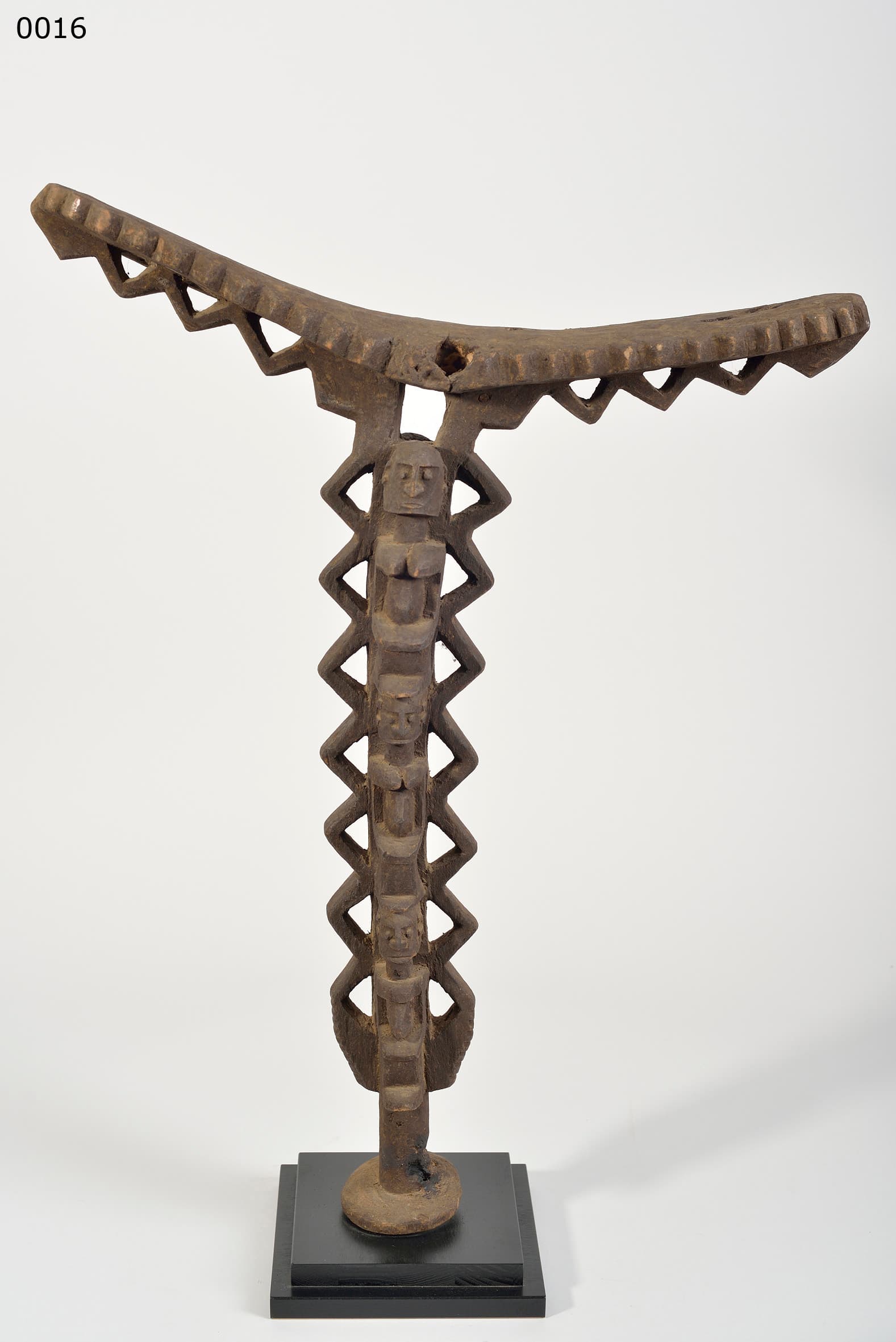
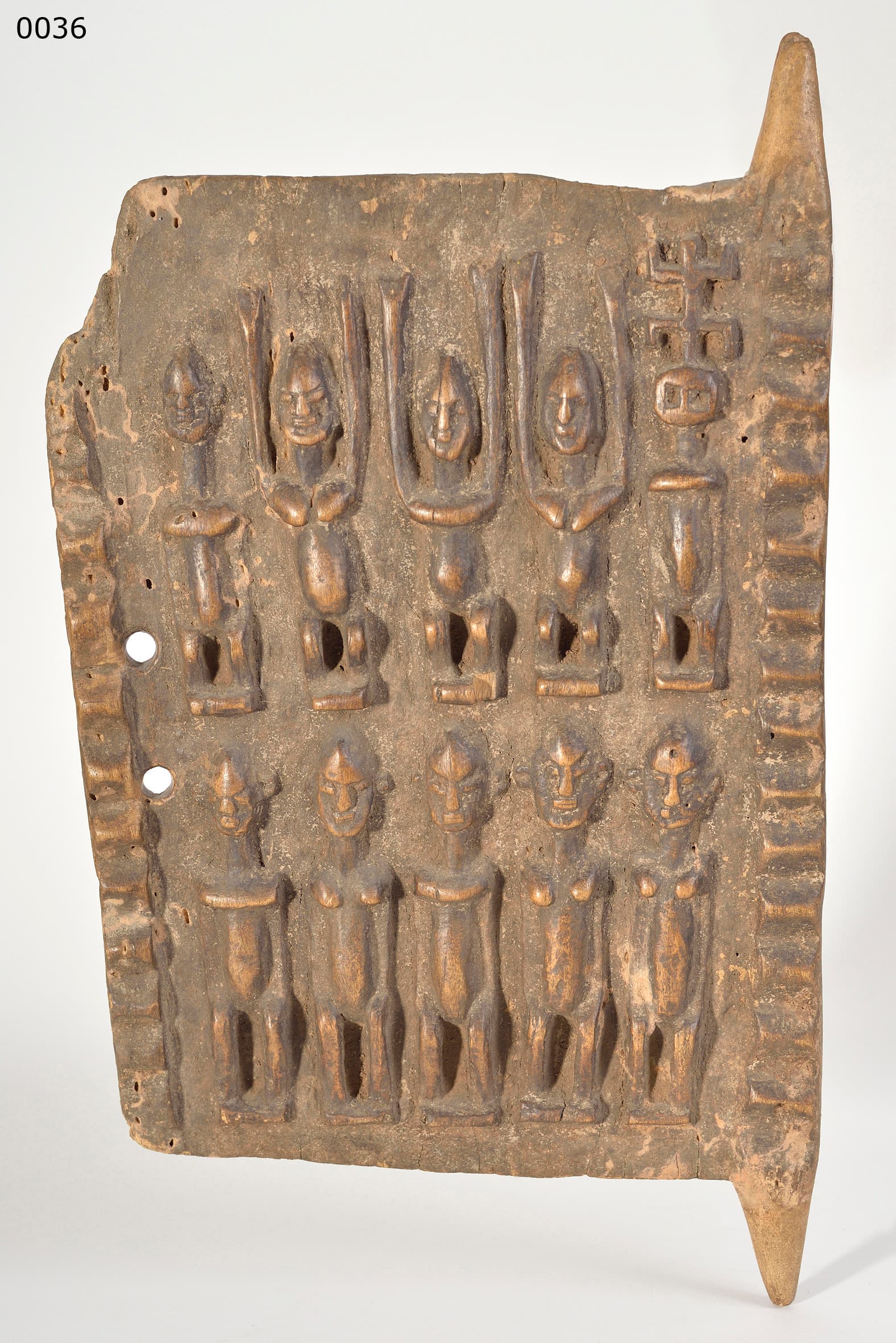
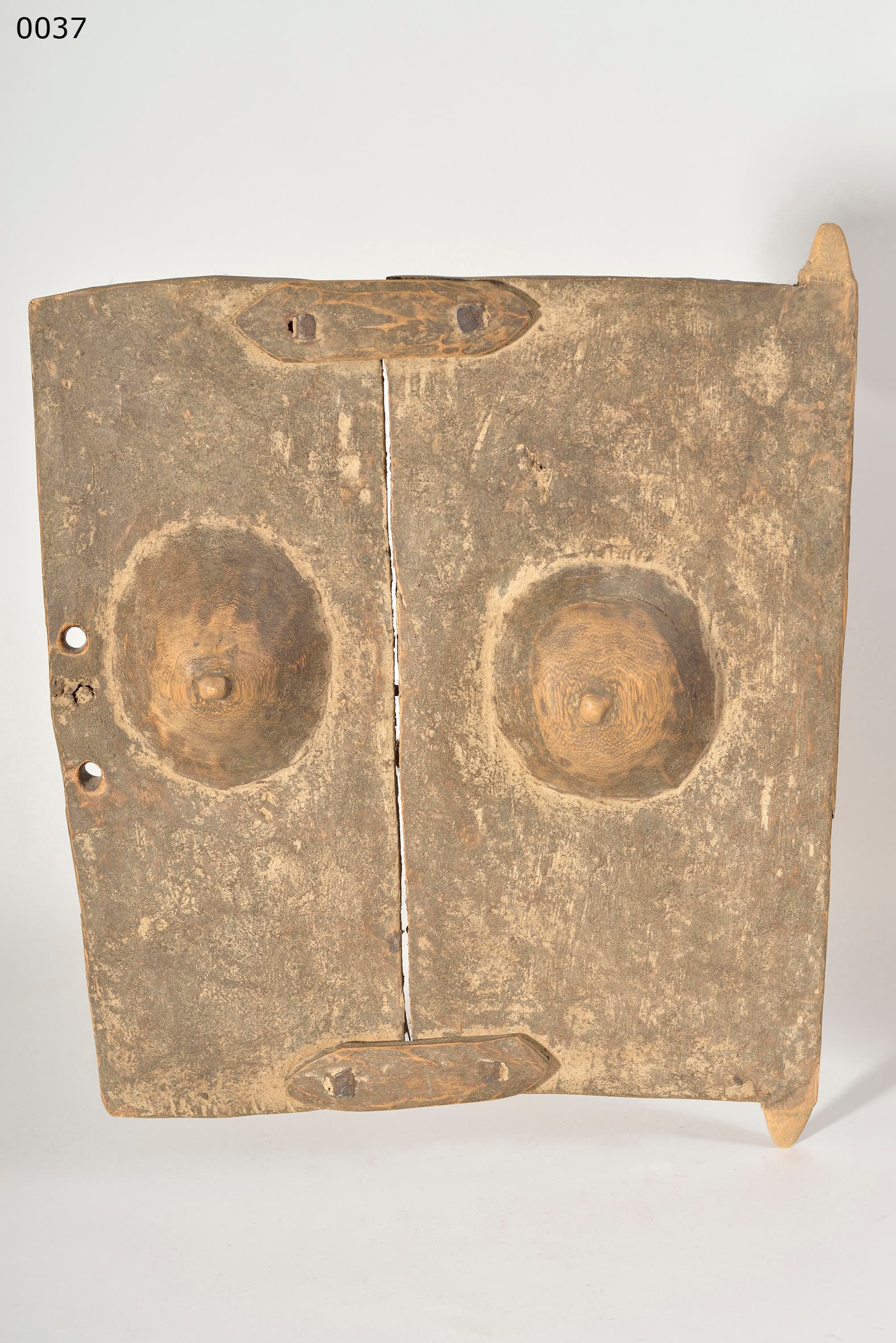
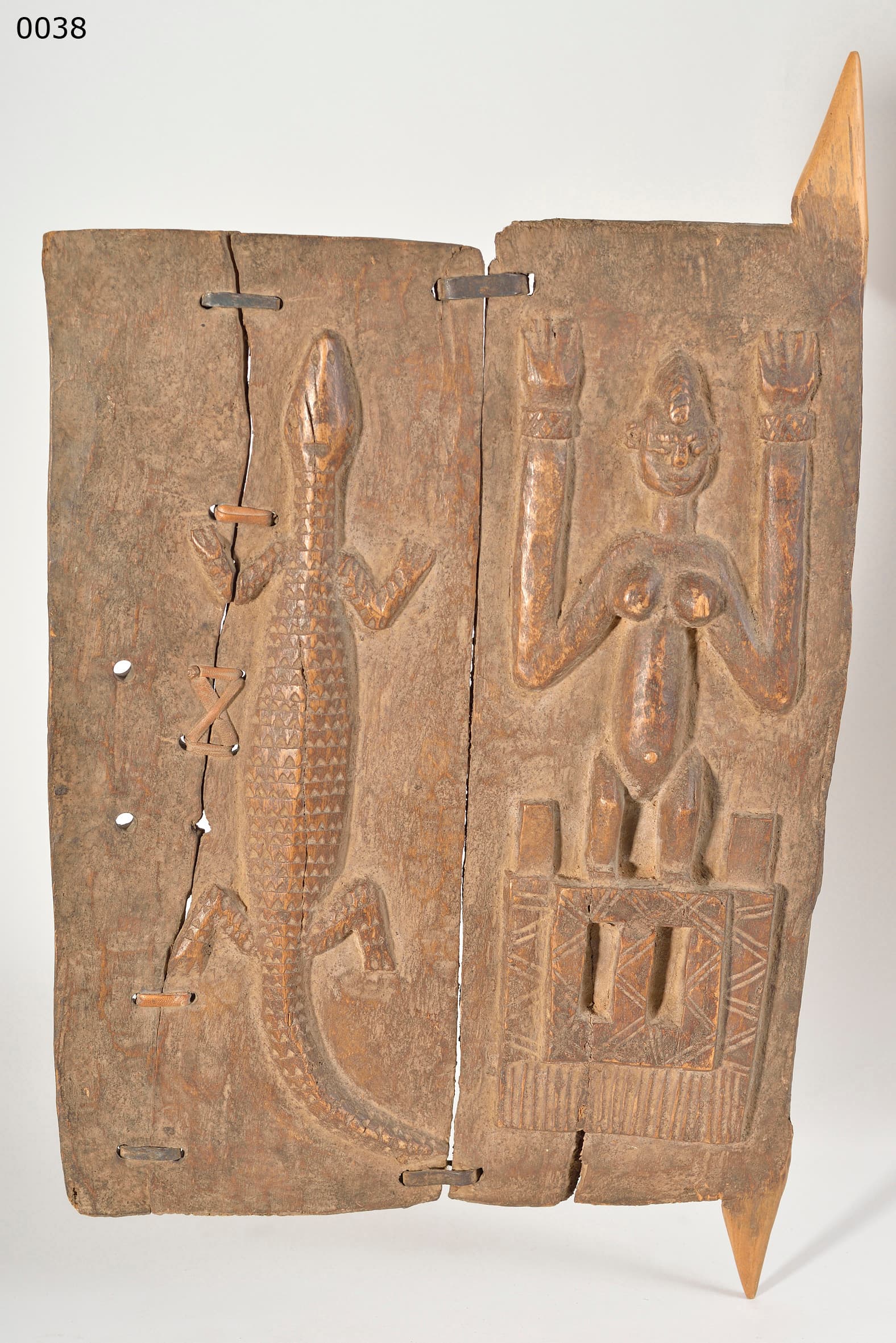
Two elongated bronze figures mounted on tall, ringed cylindrical bases, characterized by dramatic, angular facial features, slender, stylized limbs, and a rough, highly oxidized green and brown surface.
1. Aesthetic style and regional traits
The extreme elongation of these figures is characteristic of Dogon and ancient Tellem artistic traditions. This verticality emphasizes the connection between the earthly ground and the spiritual heavens. The ringed, pedestal-like bases elevate the figures both physically and metaphorically, transforming them into lightning rods that visually conduct prayer upward through their attenuated bodies — a sculptural metaphor for the ancestral mediation Dogon cosmology required.
2. Ritual function as shrine anchors
These figures are understood to have functioned as focal points within a binu shrine. The tall bases allowed them to be securely planted deep into the earthen altars. Once installed, they acted as spiritual anchors for the ancestors, receiving prayers, millet porridge, and sacrificial blood on behalf of the lineage. Their installed permanence — driven into the altar floor — distinguished them from portable household figures and signaled the gravity of the shrine with which they are associated.
3. Physical patina and indications of age
The figures display a thick, crusted, and mottled green-brown patina that obscures much of the fine casting detail. This severe degradation is typical of extended burial or long-term exposure on outdoor, weather-beaten altars in the harsh, dry climate of the Malian Sahel. The crust adheres in irregular plates rather than flaking off as a uniform coating, which is consistent with a multi-decade altar tenure rather than artificial chemical patination.
Summary
A notable example of Dogon metallurgical abstraction, utilizing extreme verticality to bridge the earthly and spiritual planes. Their heavy earthen and oxidized patinas are consistent with stationary use as sacred altar installations.
Written with AI assistance from the collection appraisal, object photography and our own research; editorially reviewed. Mistakes are possible — corrections are welcome. How we work →