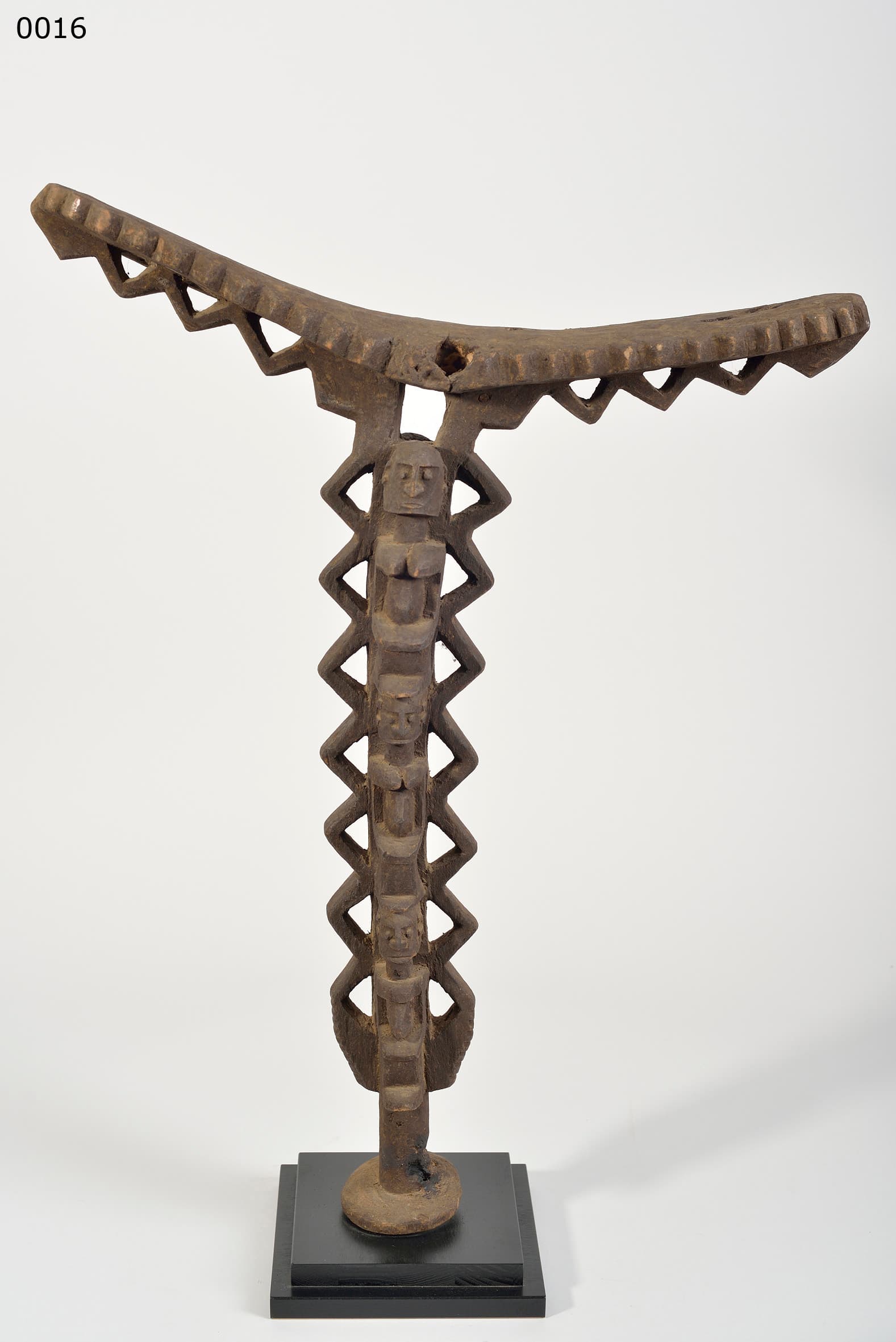
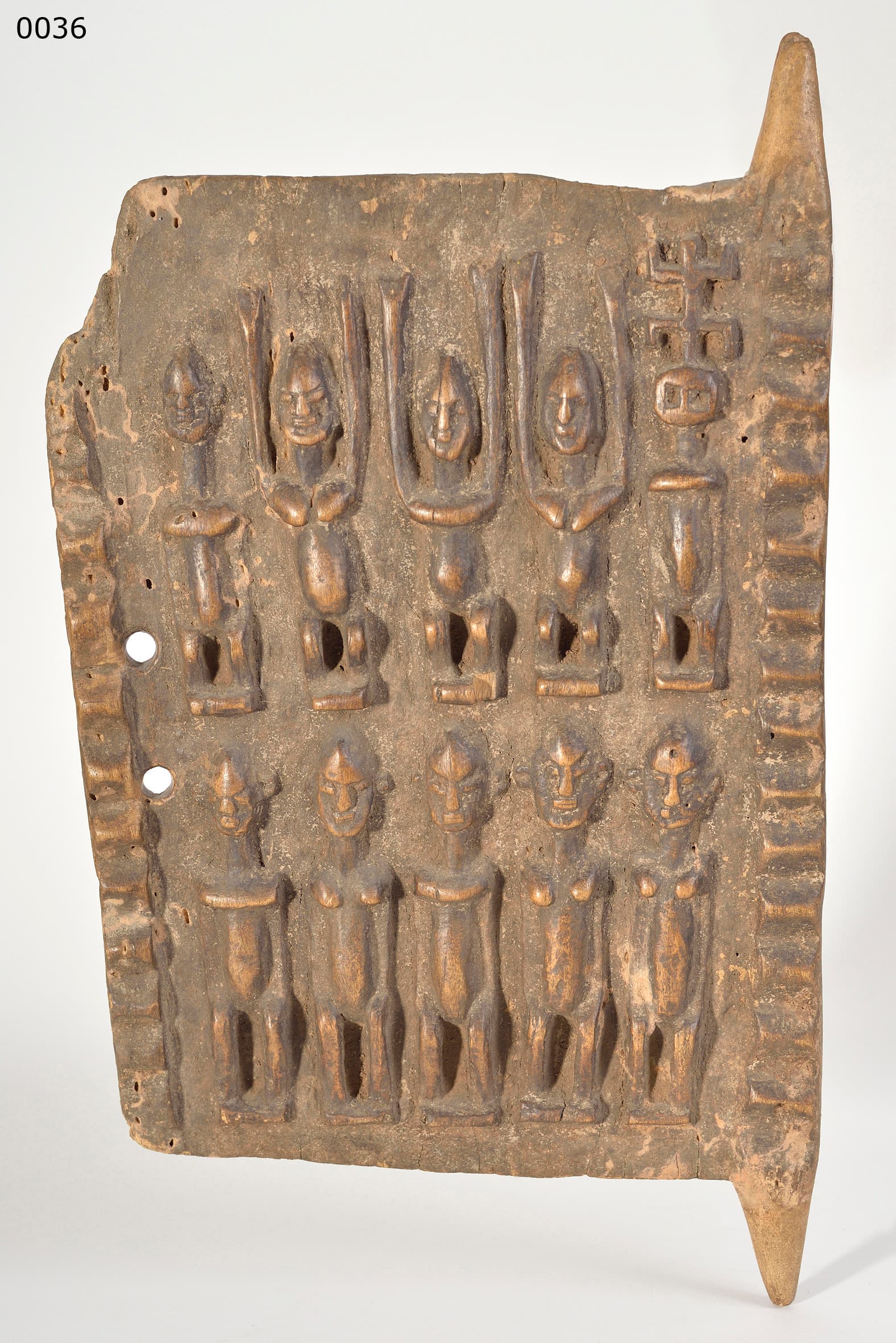
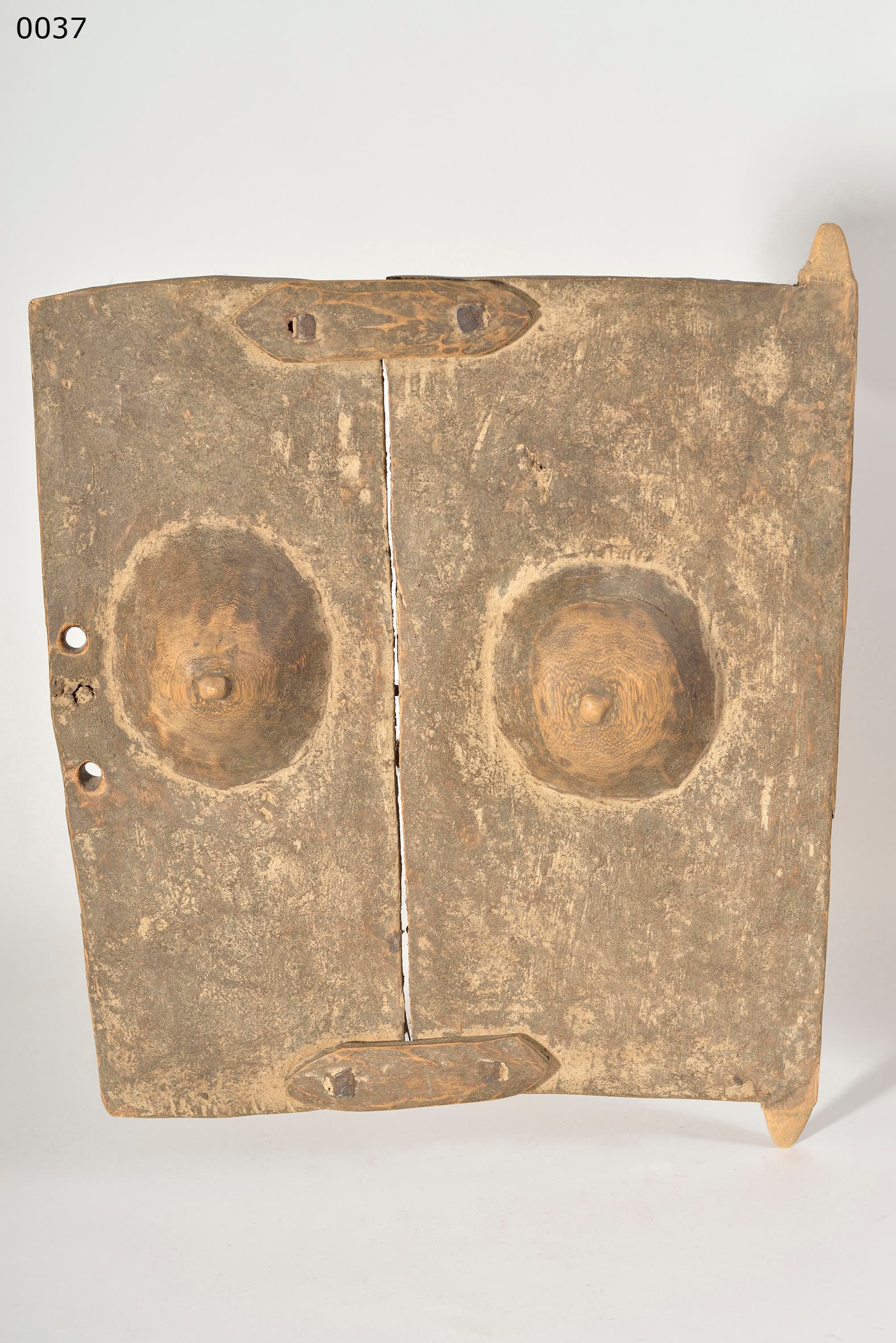
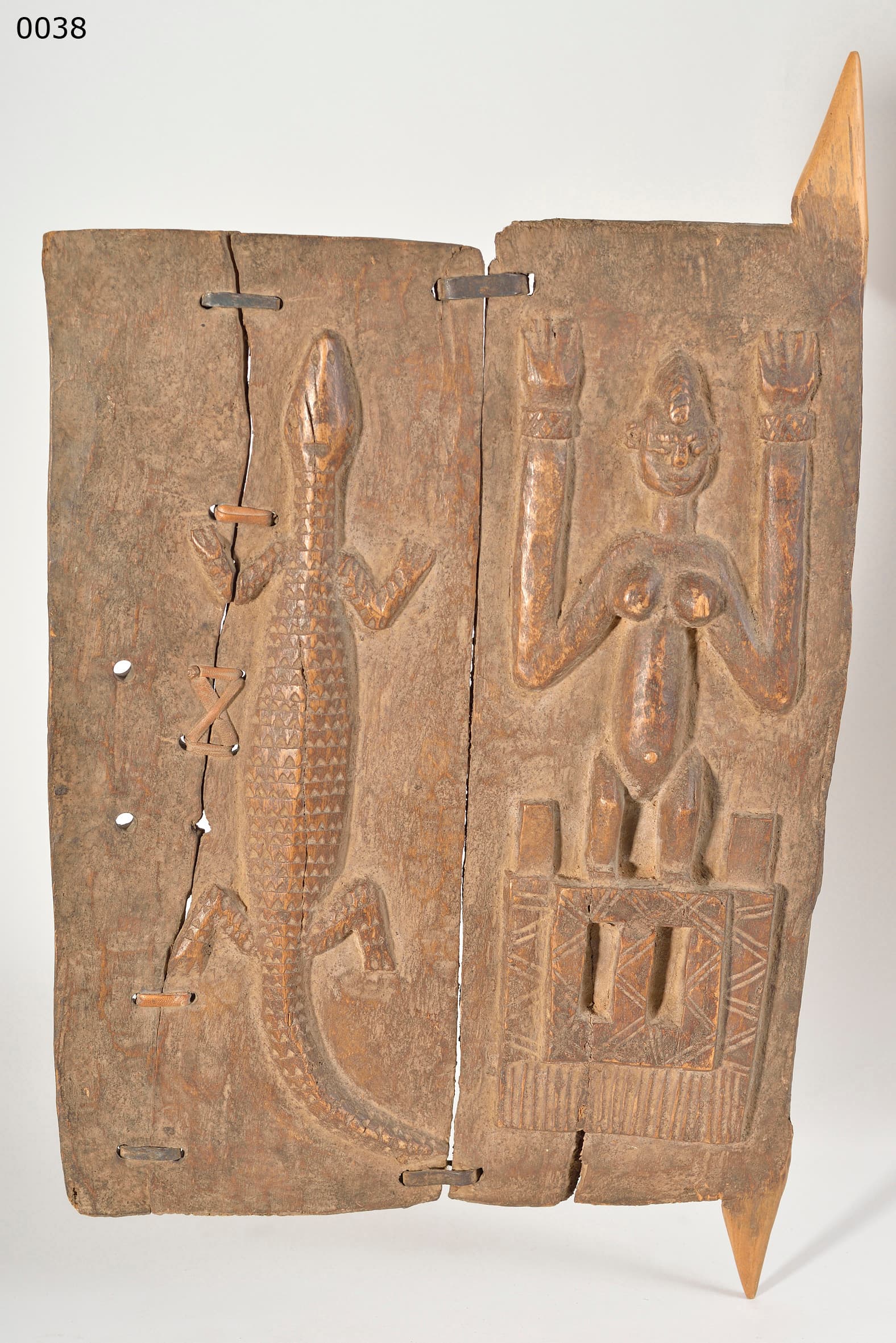
Zwei langgestreckte Bronzefiguren auf hohen, ringförmigen zylindrischen Sockeln, die sich durch dramatische, kantige Gesichtszüge, schlanke, stilisierte Gliedmaßen und eine unglaublich raue, stark oxidierte grüne und braune Oberfläche auszeichnen.
1. Ästhetischer Stil und regionale Charakteristika
Die extreme Streckung dieser Figuren ist ein klassisches Merkmal der künstlerischen Traditionen der Dogon und der alten Tellem. Diese Vertikalität ist beabsichtigt, um die Verbindung zwischen dem irdischen Boden und dem spirituellen Himmel zu betonen. Die ringförmigen, sockelartigen Sockel heben die Figuren sowohl physisch als auch metaphorisch an und verwandeln sie in Blitzableiter, die das Gebet durch ihre gedämpften Körper visuell nach oben leiten - eine skulpturale Metapher für die von der Dogon-Kosmologie geforderte Vermittlung der Ahnen.
2. Rituelle Funktion als Schrein-Anker
Diese Figuren fungierten als Brennpunkte innerhalb eines Binu-Schreins. Die hohen Sockel erlaubten es, sie tief in die irdenen Altäre einzupflanzen. Einmal aufgestellt, fungierten sie als spirituelle Anker für die Ahnen und nahmen Gebete, Hirsebrei und Opferblut im Namen der Ahnenreihe entgegen. Ihre feste Verankerung - in den Boden des Altars getrieben - unterschied sie von tragbaren Haushaltsfiguren und signalisierte die Schwere des Schreins, in dem sie standen.
3. Physische Patina und Altersnachweis
Die Figuren weisen eine dicke, verkrustete und gesprenkelte grün-braune Patina auf, die viele der feinen Gussdetails verdeckt. Dieser starke Verfall ist typisch für eine lange Vergrabung oder einen langen Aufenthalt auf verwitterten Altären im Freien in dem rauen, trockenen Klima der malischen Sahelzone. Die Kruste haftet in unregelmäßigen Platten und blättert nicht als einheitlicher Überzug ab, was eher die chemische Signatur einer jahrzehntelangen Altarbestattung ist als eine künstliche chemische Patinierung.
Zusammenfassung
Ein hervorragendes Beispiel für die metallurgische Abstraktion der Dogon, die mit ihrer extremen Vertikalität eine Brücke zwischen der irdischen und der spirituellen Ebene schlagen. Die schweren irdenen und oxidierten Patinas bestätigen ihre authentische, stationäre Verwendung als heilige Altaranlagen.
KI-unterstützt erstellt aus Sammlungsgutachten, Objektfotografie und eigener Recherche, redaktionell geprüft. Fehler sind möglich — Hinweise darauf sind uns willkommen. Zum Verfahren →