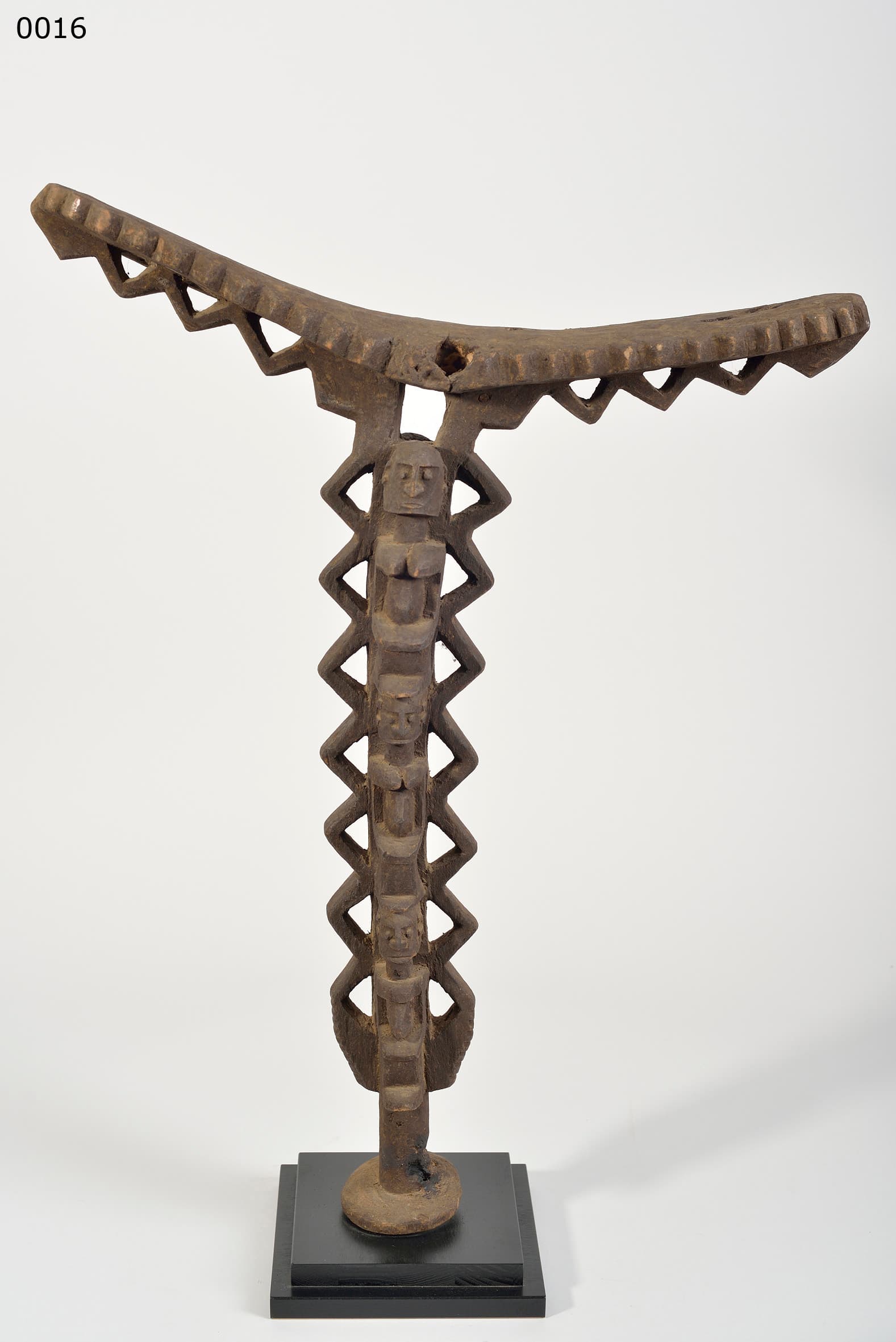
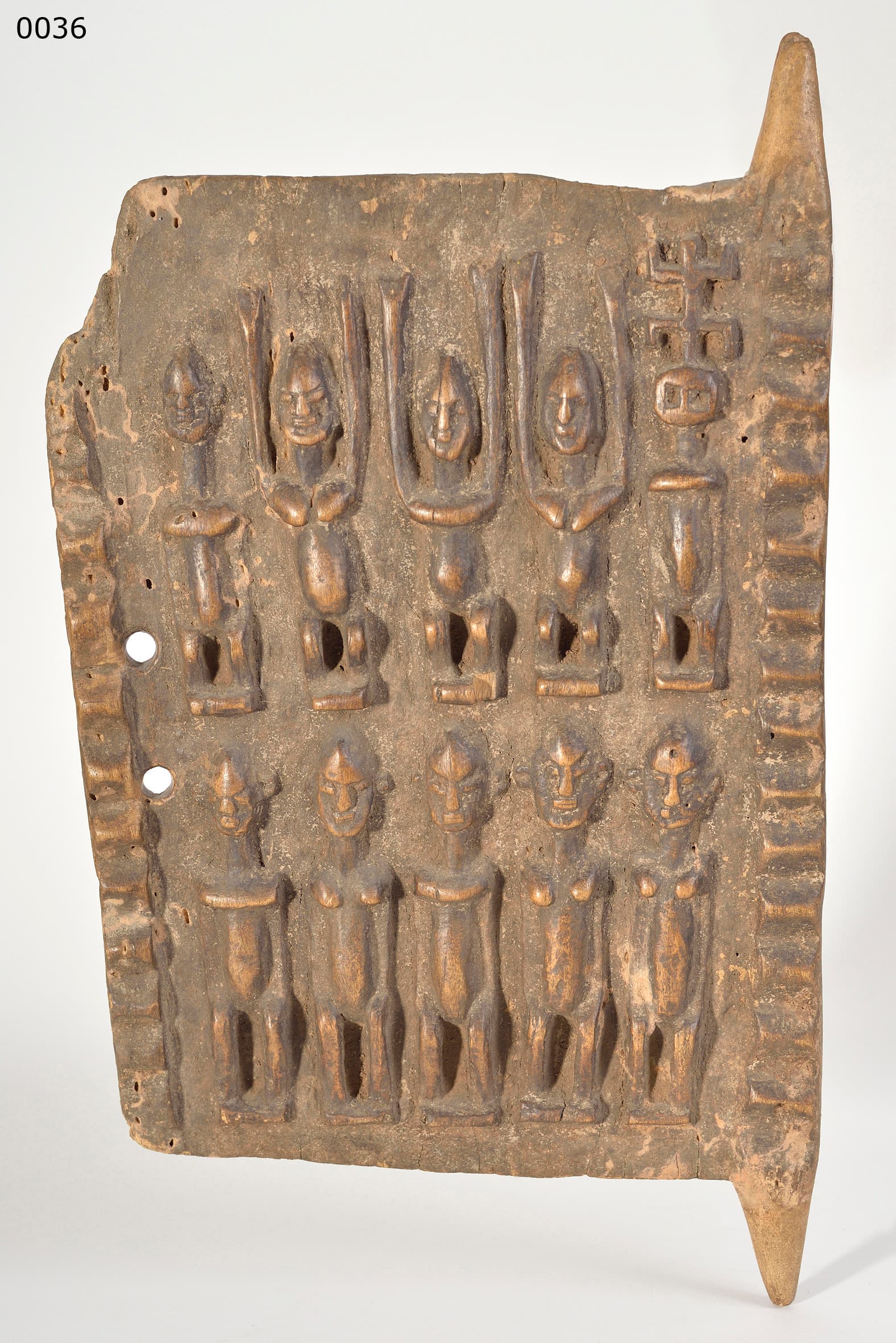
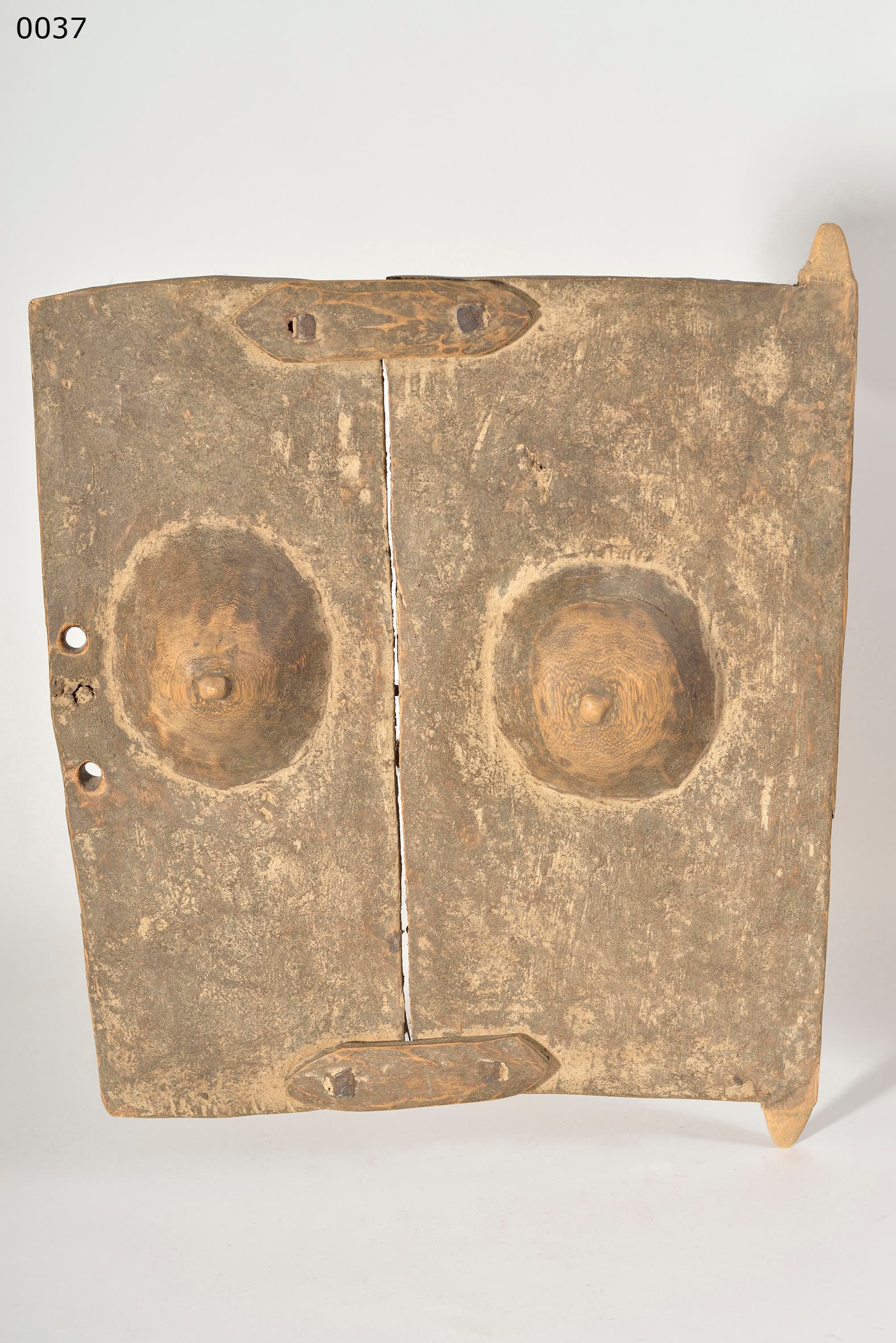
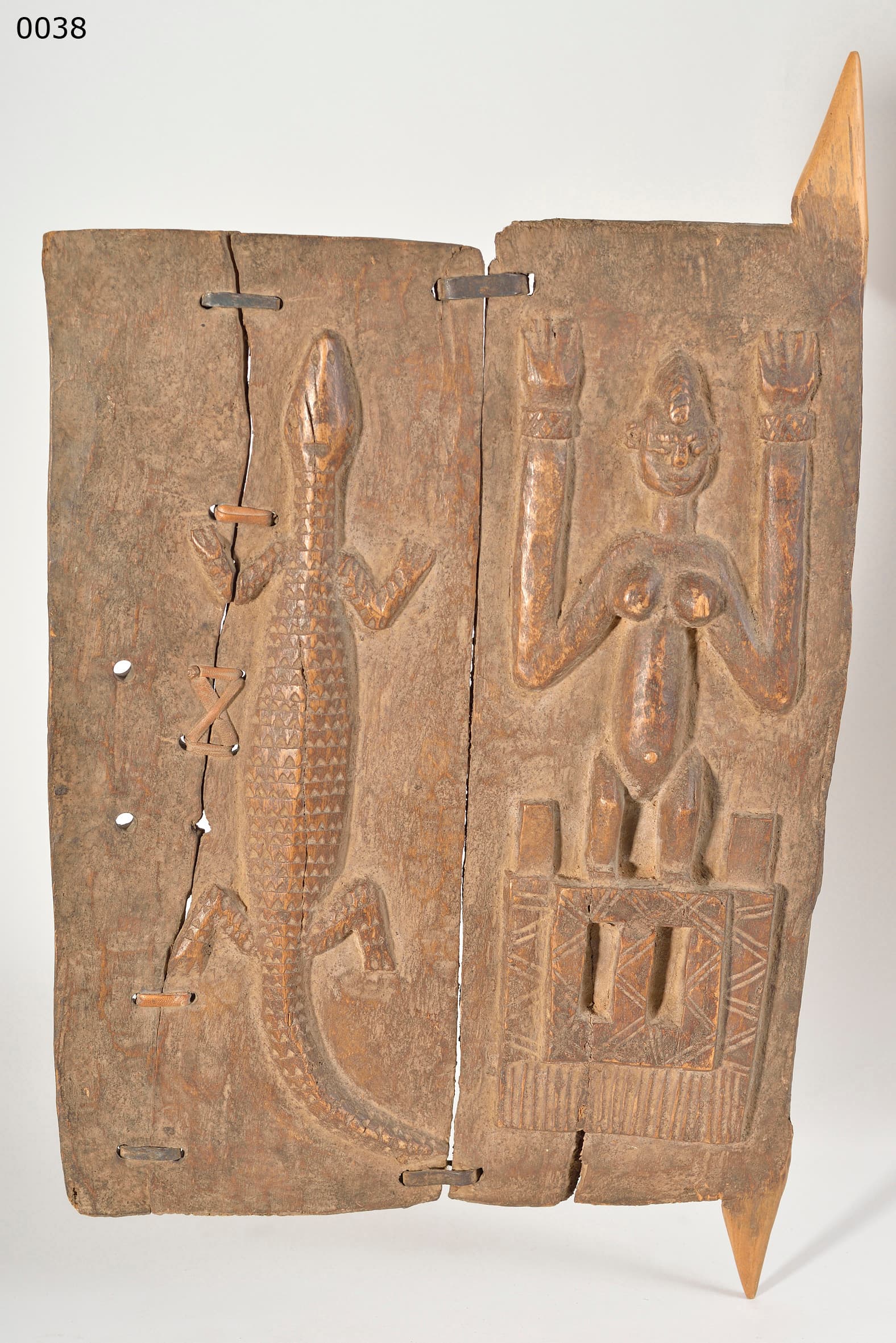
A nearly two-meter solid wooden log (1st half 20th C., 187 cm) from the Dogon of Mali — deeply carved alternating steps terminating in a naturally forked Y-shaped top.
1. Functional minimalism
The Dogon granary ladder is one of the most iconic pieces of utilitarian African art, heavily collected by modernists for its pure, raw minimalism.
- The Carving: Using only an adze, the Dogon sculptor carves steps deep into a single massive log. The alternating, jagged steps require a specific, practiced rhythm to climb.
2. Architectural cosmology
For the Dogon, every element of architecture reflects their mythology.
- Connecting Earth and Sky: Granaries are built high into the cliffs of the Bandiagara Escarpment. The ladder is the physical bridge between earth (the human realm) and the granary roof (the sky, the realm of the ancestors).
- The Y-Shape: The forked top is not merely structural; it mirrors the raised-arm posture of the Nommo ancestor figures praying for rain (compare the Tellem power figure at collection Nr. 69).
Summary
This Dogon ladder is a triumph of functional, organic design. A vital architectural tool that transcends its daily use, it is a soaring 187 cm physical link between the harsh Sahelian earth and the Dogon cosmos.
Written with AI assistance from the collection appraisal, object photography and our own research; editorially reviewed. Mistakes are possible — corrections are welcome. How we work →