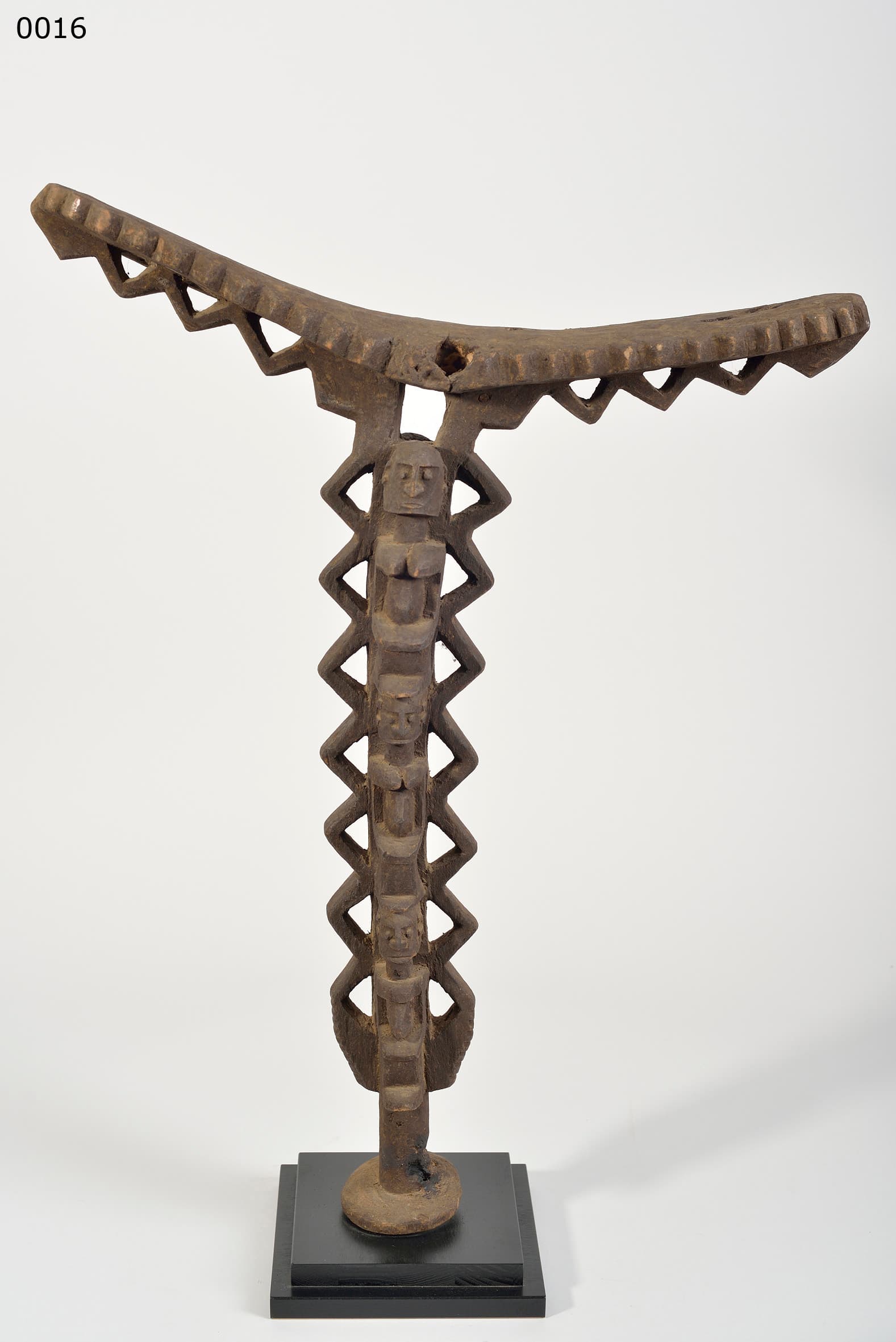
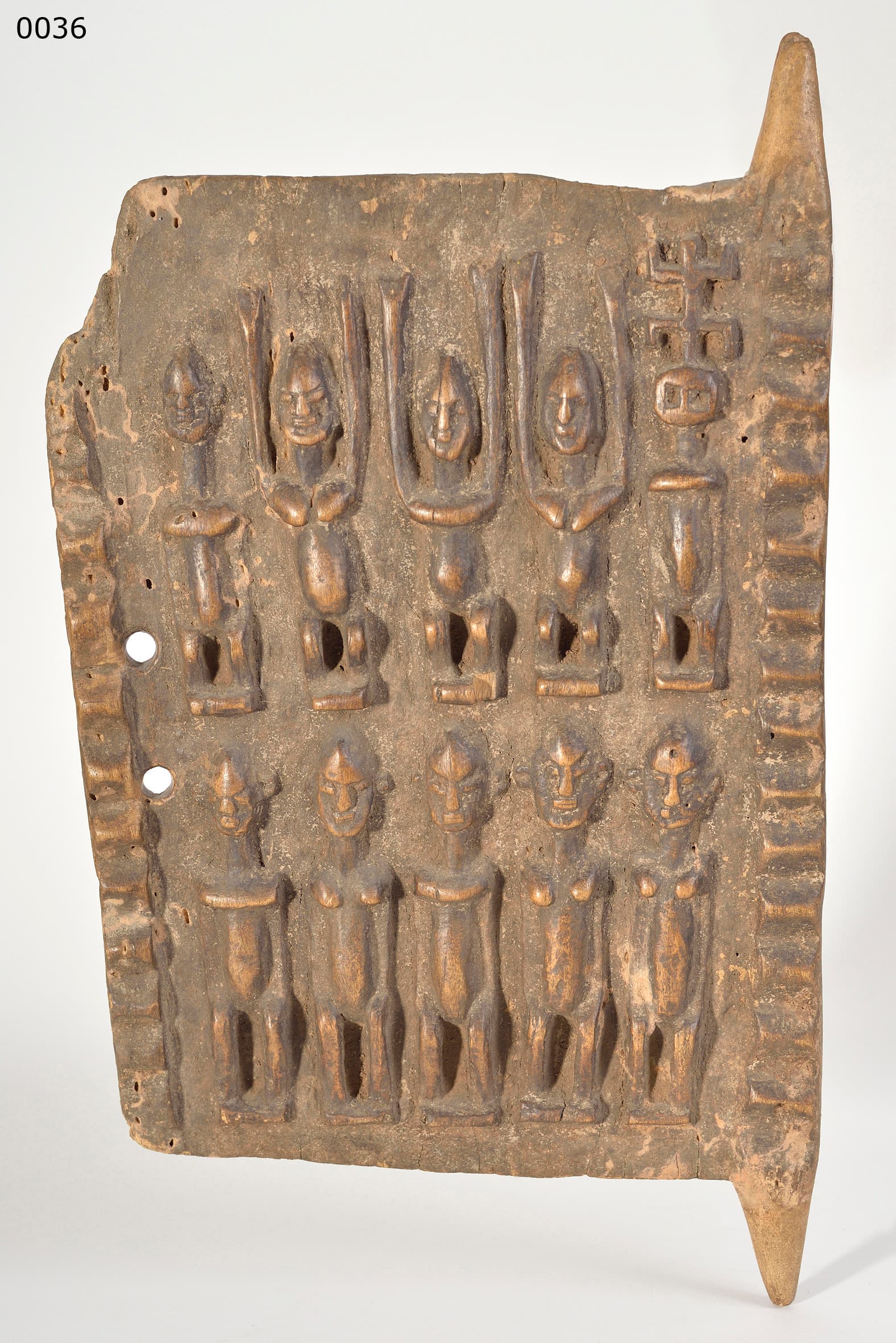
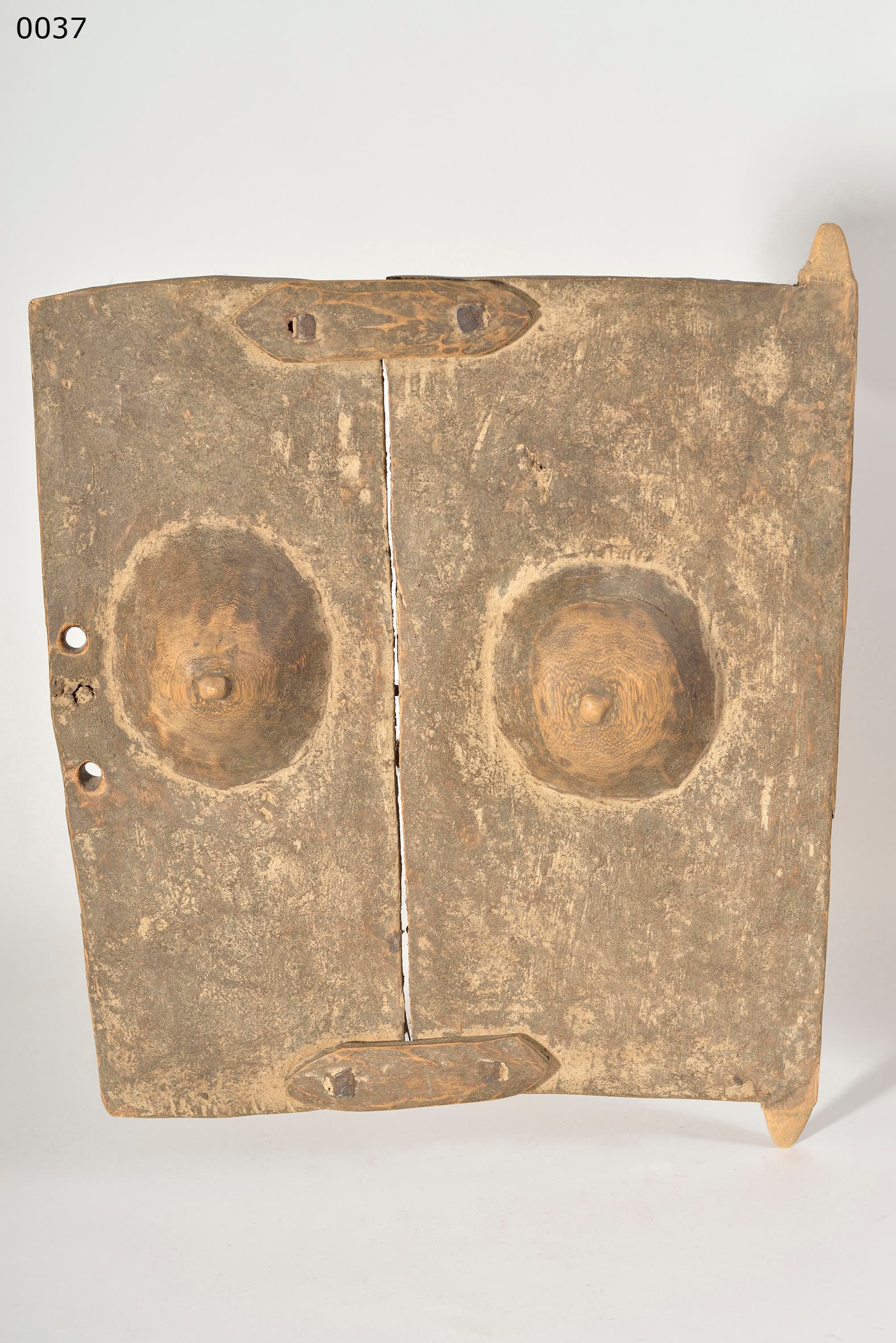
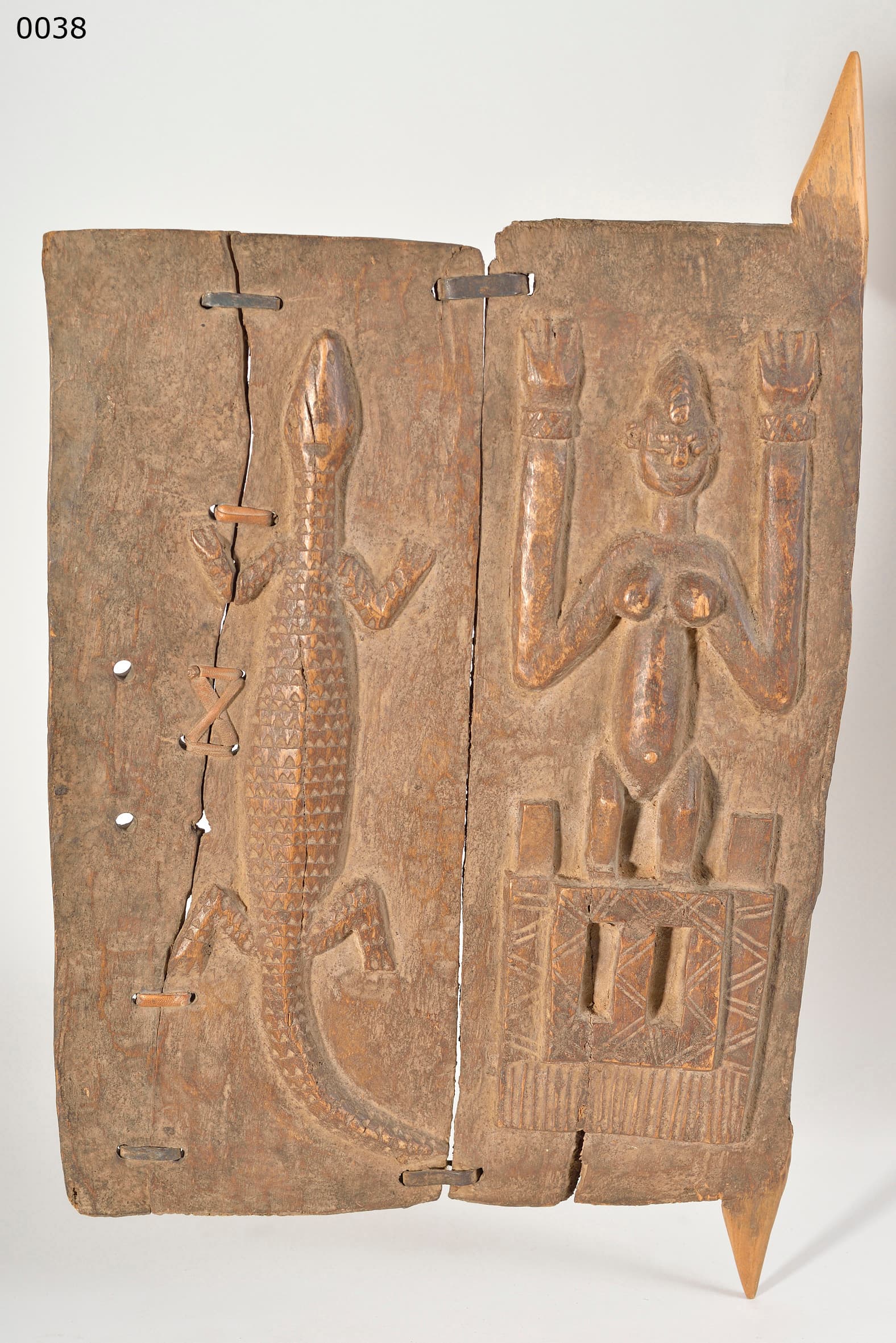
Ein fast zwei Meter langer massiver Holzklotz (1. Hälfte 20. Jh., 187 cm) von den Dogon aus Mali - tief geschnitzte, abwechselnde Stufen, die in einer natürlich gegabelten Y-förmigen Spitze enden.
1. Funktionaler Minimalismus
Die Getreidespeicherleiter der Dogon ist eines der ikonischsten Stücke afrikanischer Gebrauchskunst, das von Modernisten wegen seines reinen, rohen Minimalismus gesammelt wird.
- Die Schnitzerei: Der Dogon-Bildhauer schnitzt die Stufen tief in einen einzigen massiven Baumstamm, wobei er nur einen Dechsel benutzt. Die abwechselnden, gezackten Stufen erfordern einen bestimmten, geübten Rhythmus, um sie zu erklimmen.
2. Architektonische Kosmologie
Bei den Dogon spiegelt jedes Element der Architektur ihre Mythologie wider.
- Verbindung von Erde und Himmel: Die Kornspeicher werden hoch in die Klippen des Bandiagara-Steilhangs gebaut. Die Leiter ist die physische Brücke zwischen der Erde (dem Reich der Menschen) und dem Dach des Kornspeichers (dem Himmel, dem Reich der Ahnen).
- Die Y-Form: Die gegabelte Spitze ist nicht nur strukturell; sie spiegelt die Haltung der erhobenen Arme der Nommo-Ahnenfiguren wider, die um Regen beten (vgl. die Tellem-Kraftfigur in Sammlung Nr. 69).
Zusammenfassung
Diese Dogon-Leiter ist ein Triumph des funktionalen, organischen Designs. Sie ist ein lebenswichtiges architektonisches Werkzeug, das über seinen täglichen Gebrauch hinausgeht und eine 187 cm hohe physische Verbindung zwischen der rauen Erde der Sahelzone und dem Kosmos der Dogon darstellt.
KI-unterstützt erstellt aus Sammlungsgutachten, Objektfotografie und eigener Recherche, redaktionell geprüft. Fehler sind möglich — Hinweise darauf sind uns willkommen. Zum Verfahren →