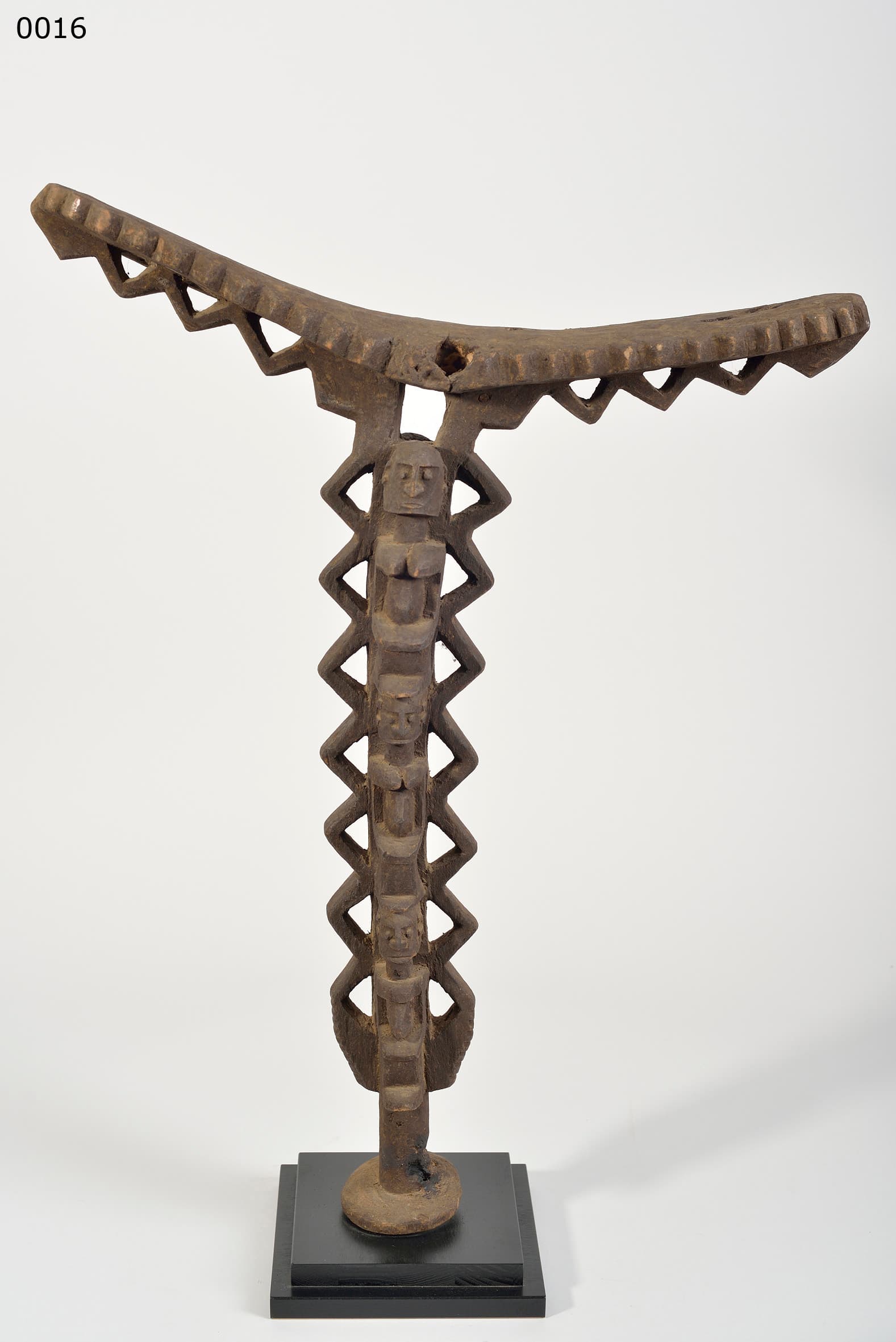
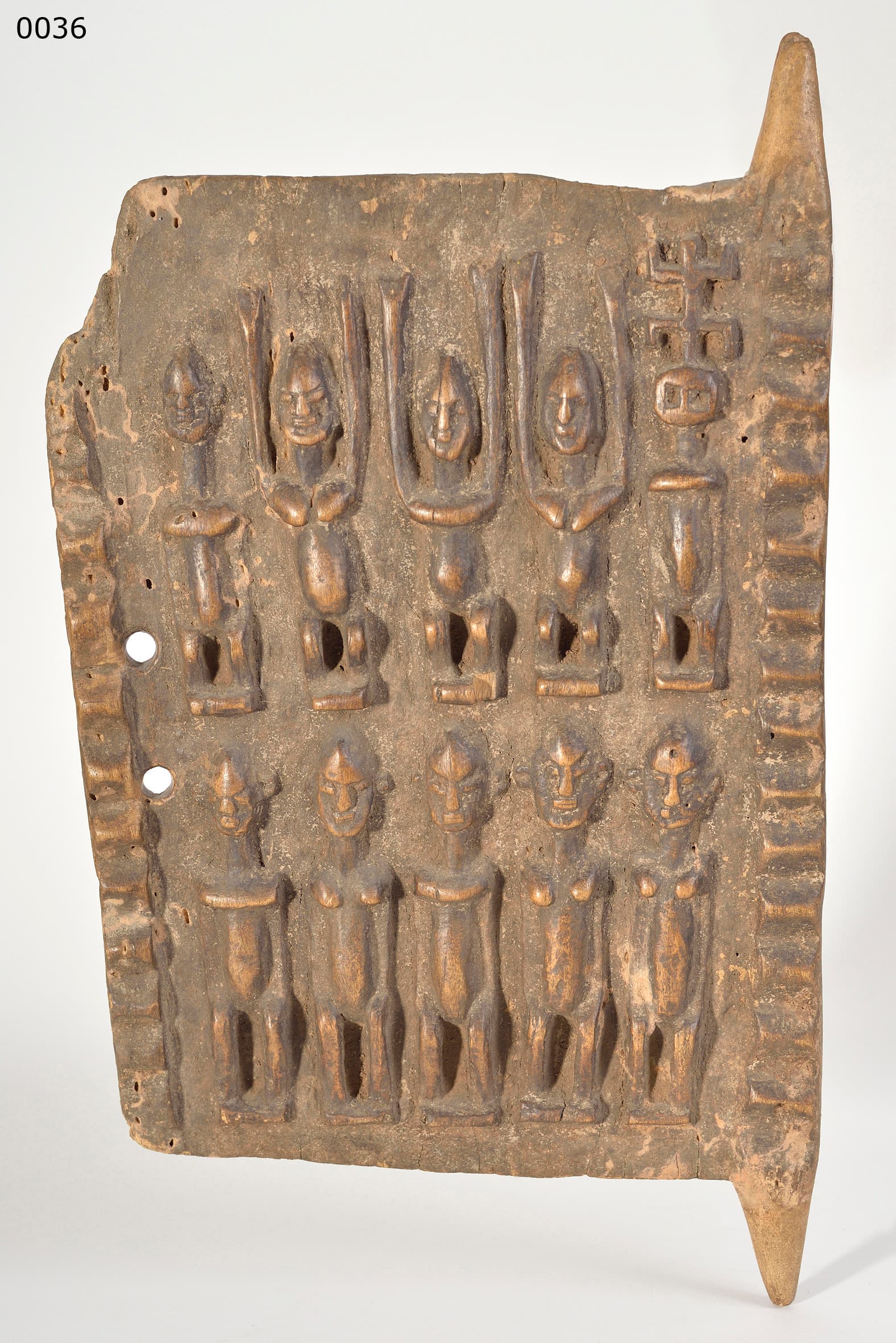
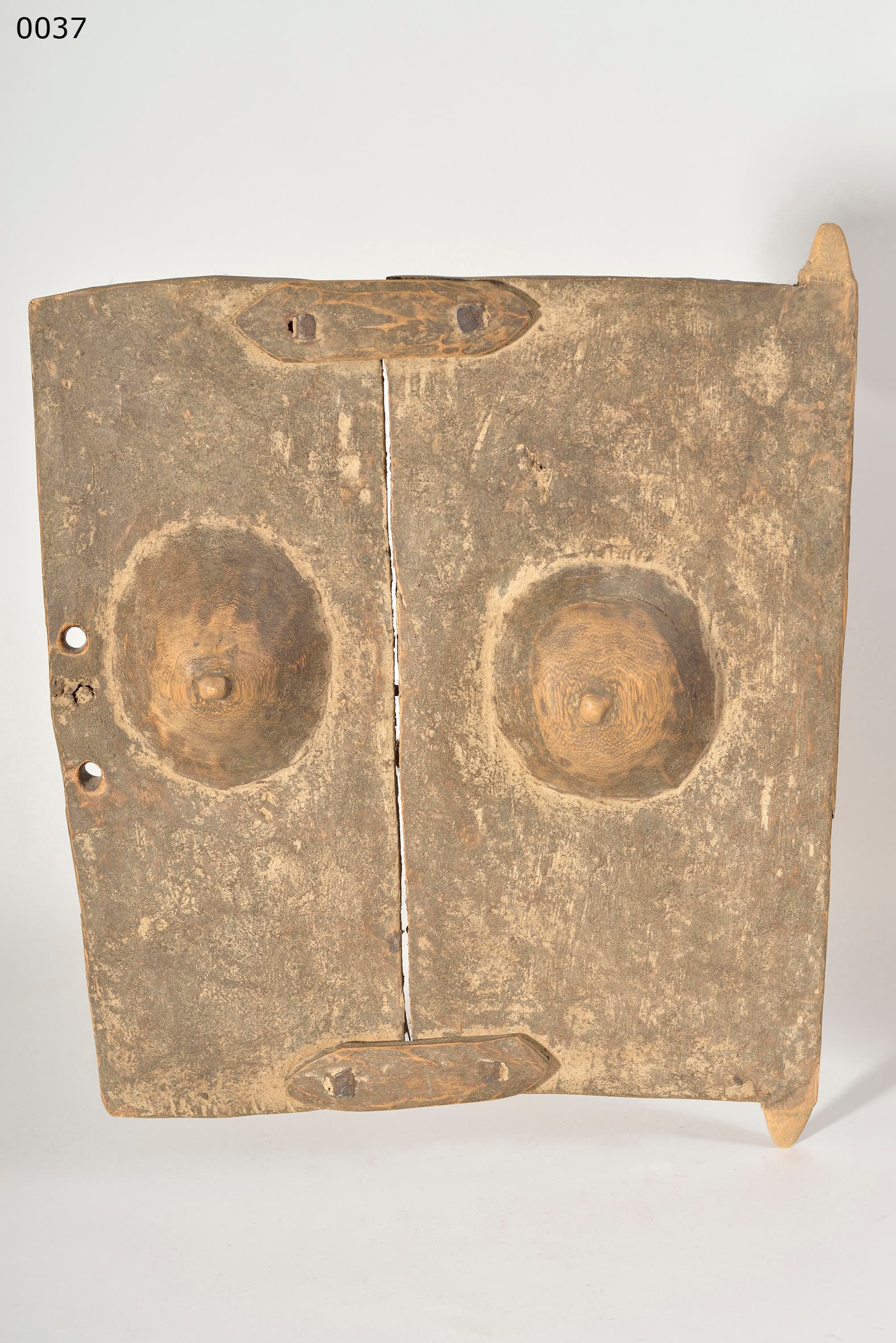
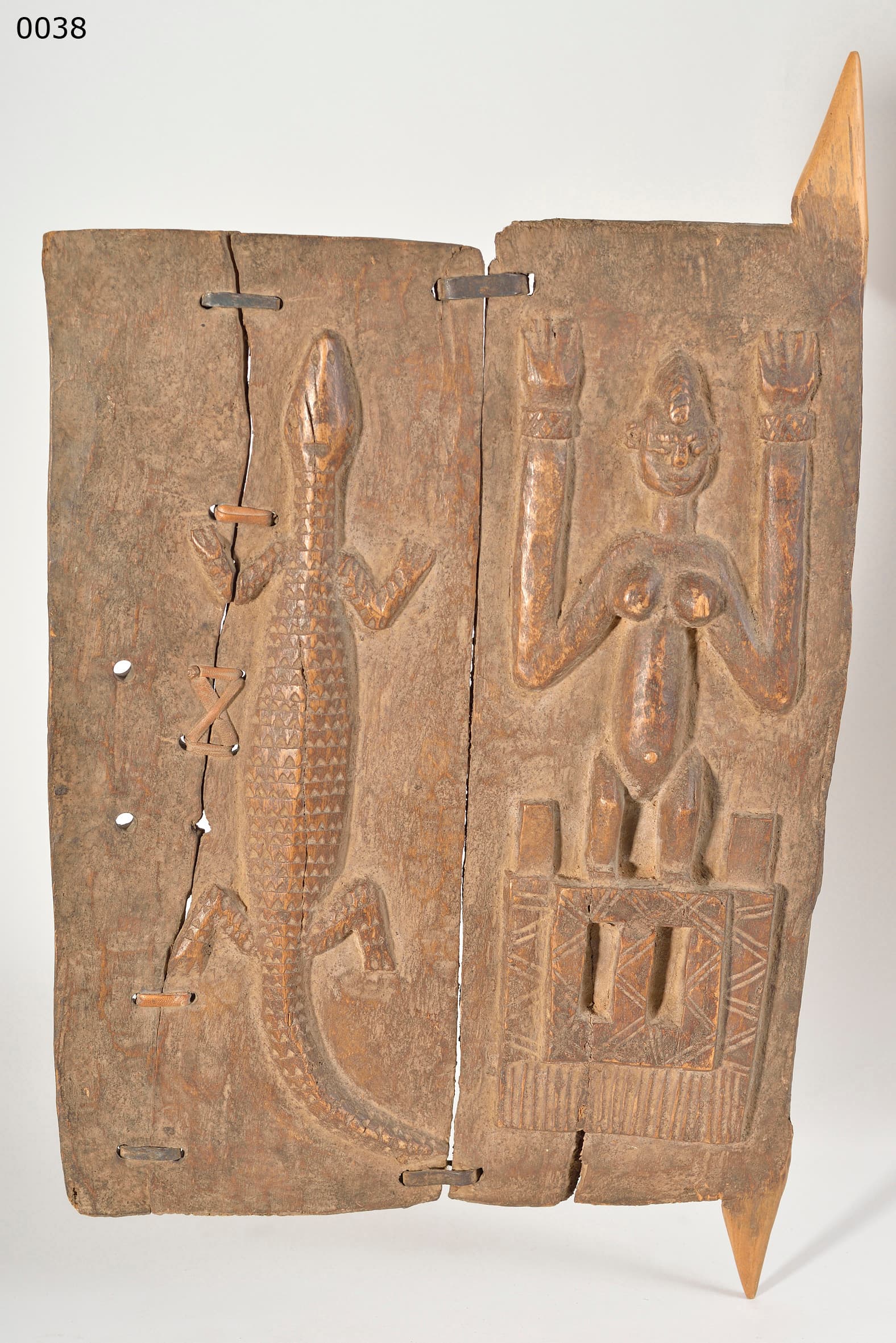
A massive solid wooden log (attributed to the first half of the 20th century, 188 cm) from the Dogon of Mali — deeply adzed alternating footholds terminating in a natural Y-shaped fork. Companion to collection Nr. 79.
1. Sculptural utility
This example is consistent with classic Dogon granary ladders, displaying a functional minimalism.
- The Rhythm of Ascent: The alternating steps force the climber into a specific rhythmic gait to ascend to the granary or the flat roof of the house. The heavy notched wood was carved using a traditional adze, leaving faceted tool marks that modernists highly prized.
2. The cosmic bridge
- The Nommo Posture: The Y-shaped fork at the top functionally rests against the mud architecture, but conceptually mirrors the raised arms of the Nommo (the ancestral spirits) praying for rain. The ladder is traditionally conceived as a physical axis connecting the earthly compound to the sky.
Summary
This Dogon ladder is an imposing piece of architectural sculpture. At 188 cm, its brutalist notched form embodies the harsh vertical reality of life on the Bandiagara Escarpment.
Written with AI assistance from the collection appraisal, object photography and our own research; editorially reviewed. Mistakes are possible — corrections are welcome. How we work →