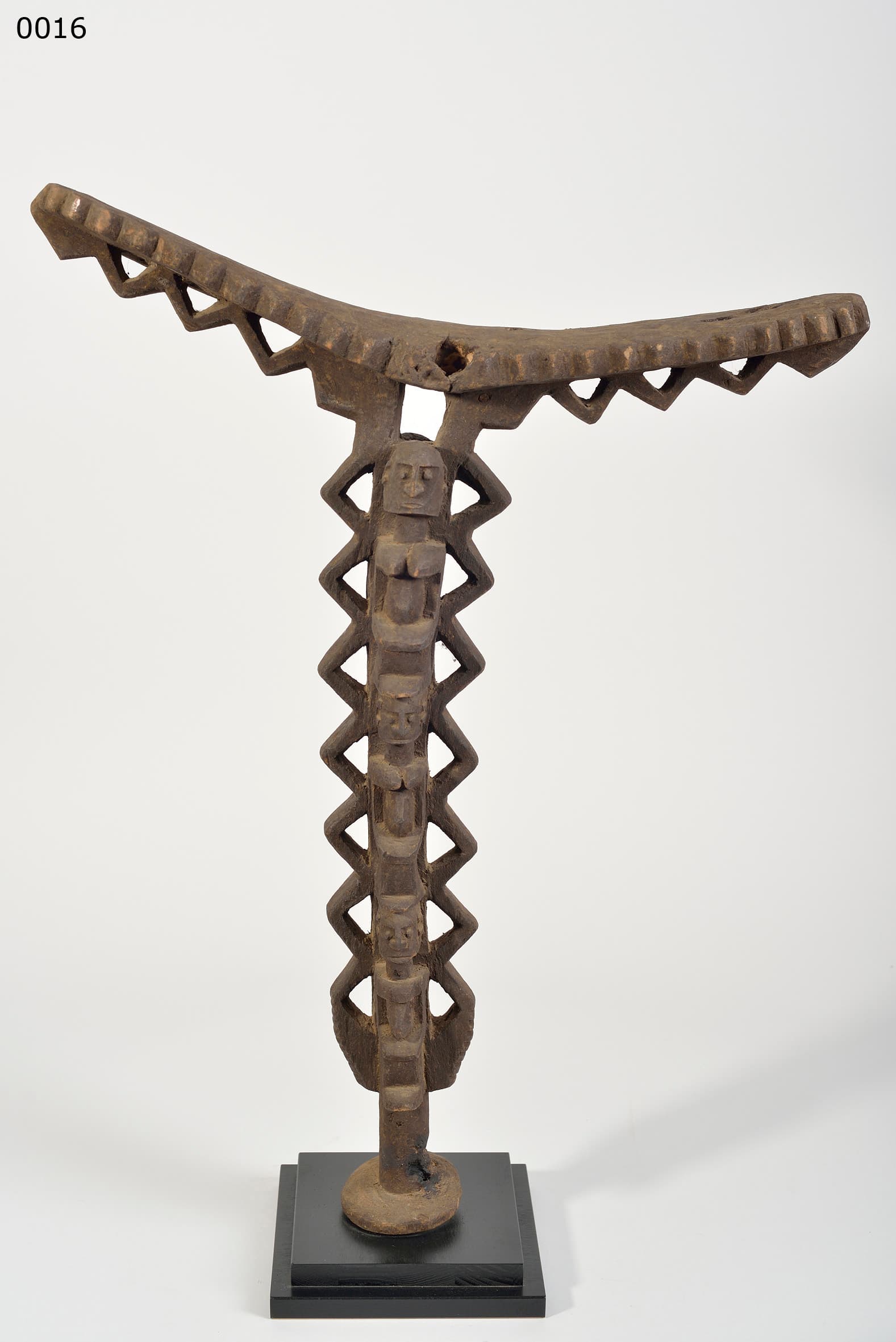
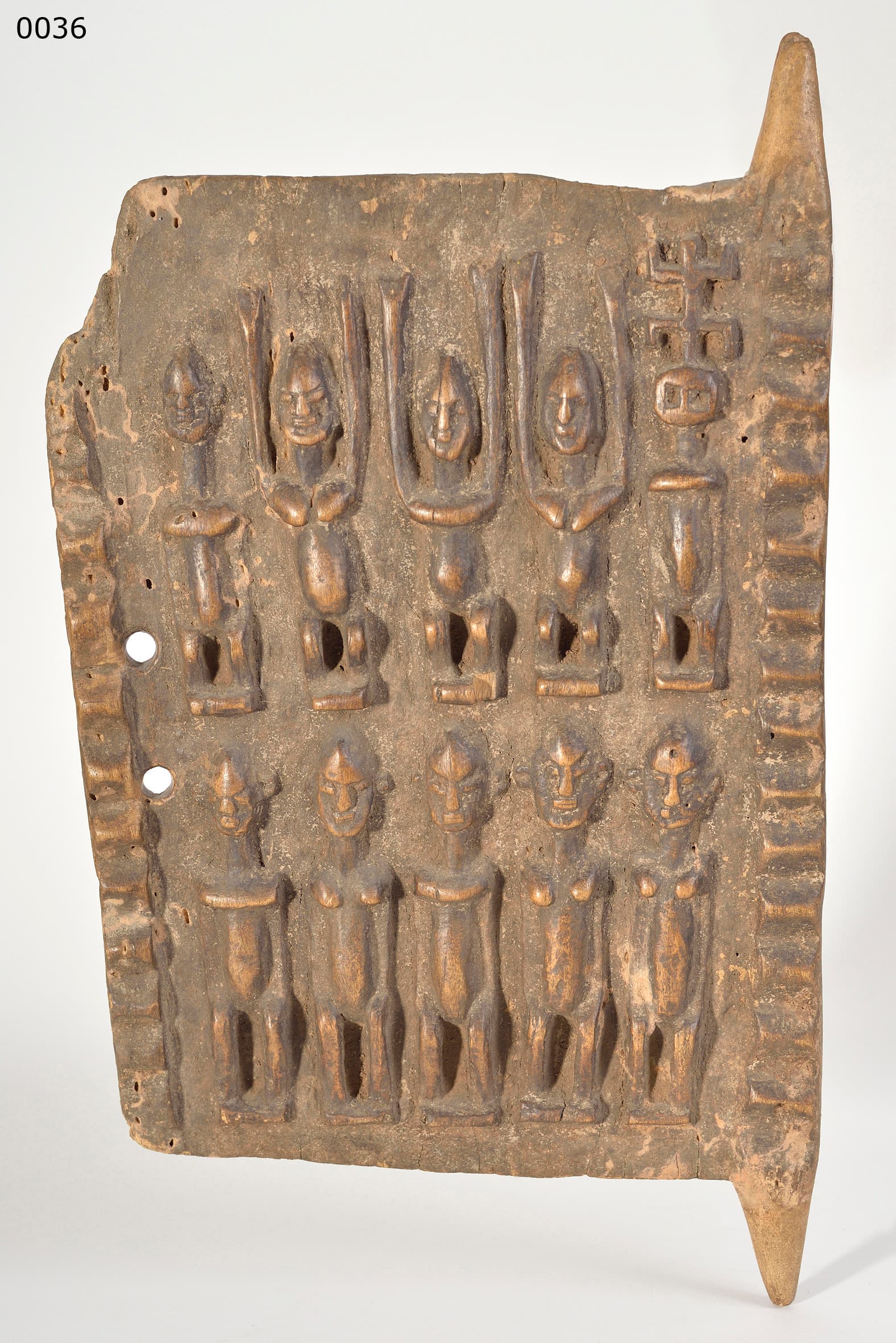
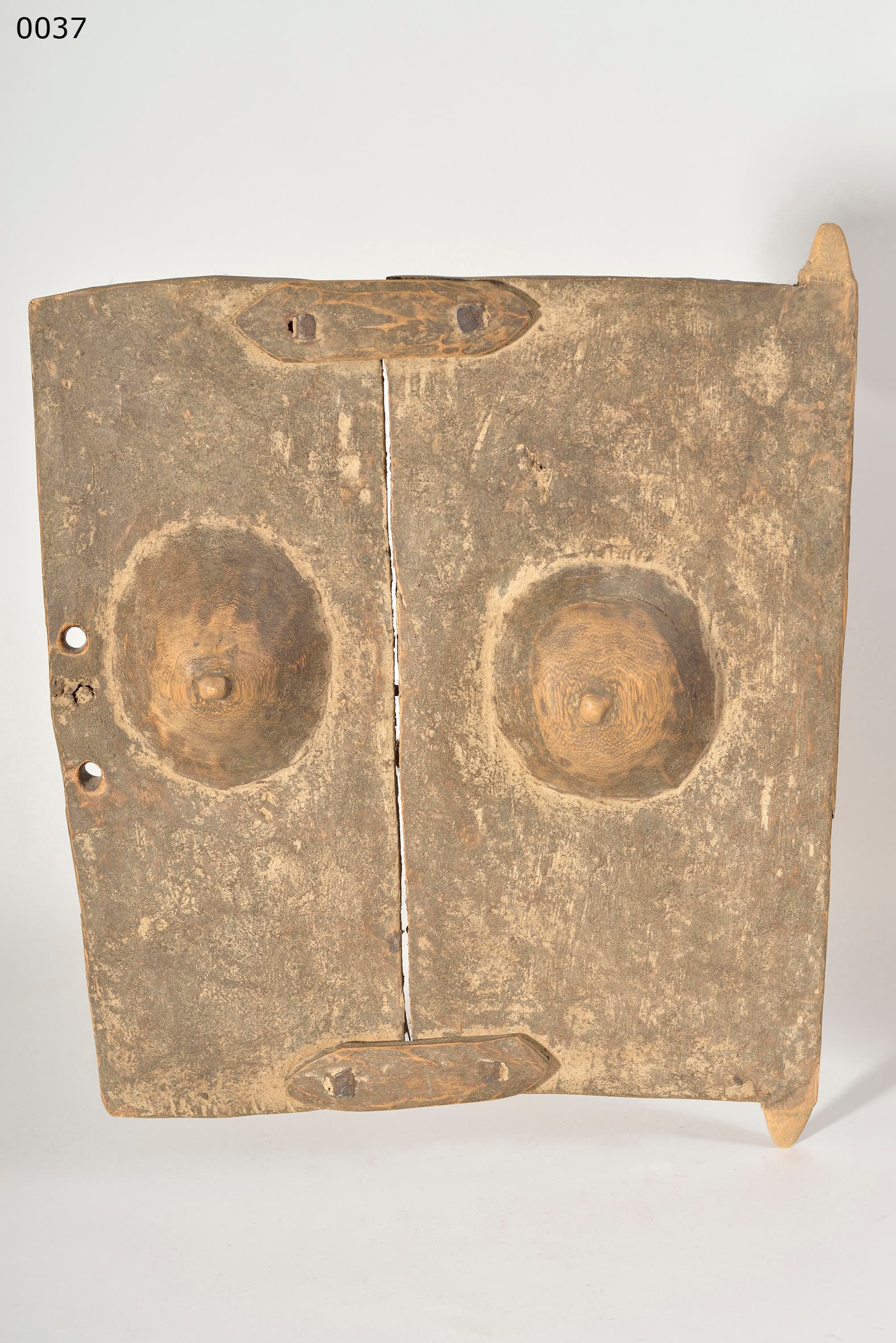
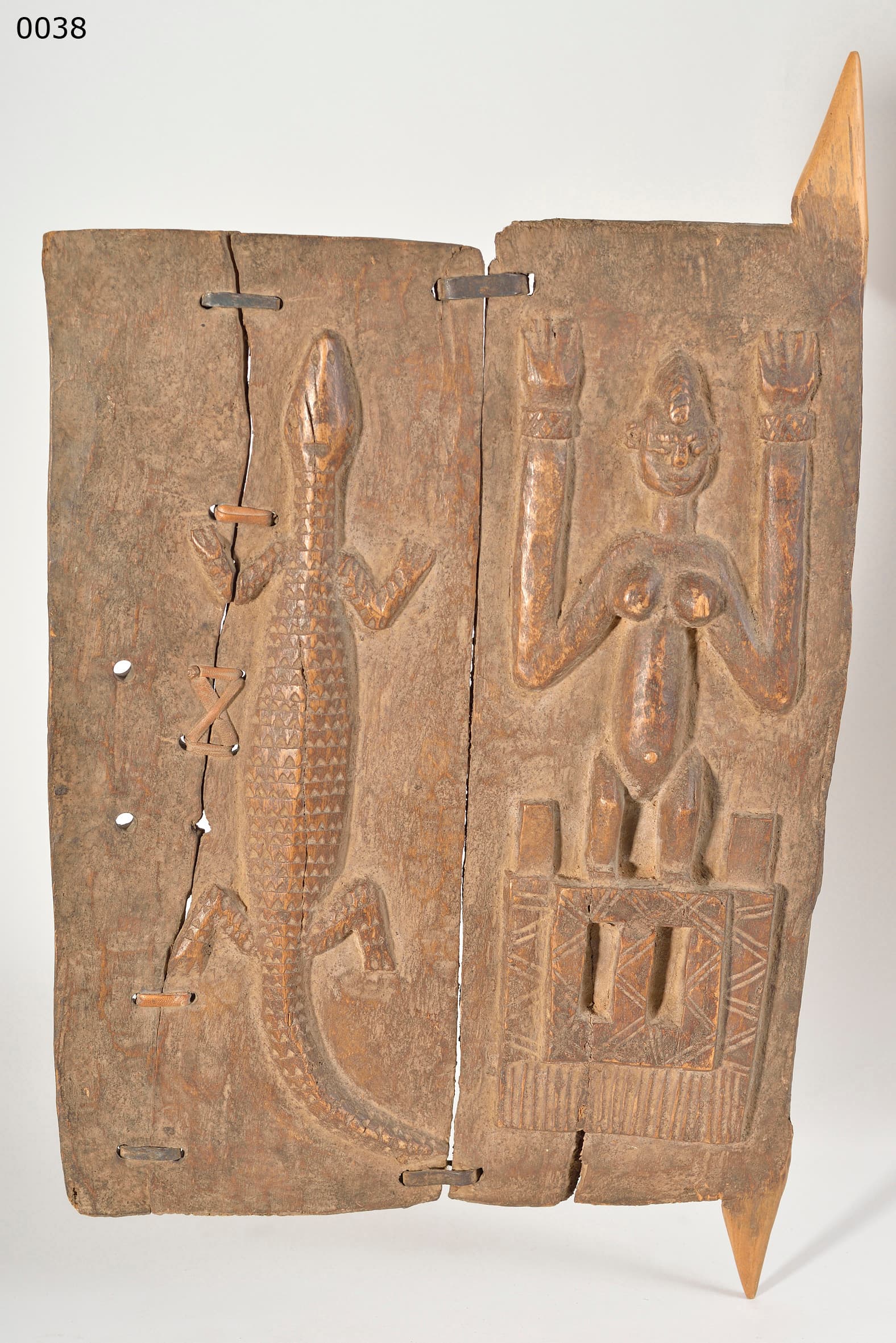
Dieser hohe Eisenstab zeichnet sich durch einen Mittelteil aus, der zu einer engen, wellenförmigen M-Spirale geschmiedet ist und nach oben in einen schrägen, keilförmigen horizontalen Abschluss übergeht, der an einen Vogel- oder Reptilienkopf erinnert. Eine dicke, stabile Kruste aus dunkler Oxidation verdeckt das darunter liegende Metall.
1. Ästhetischer Stil und regionale Eigenheiten
Diese Skulptur ist eine brillante Demonstration der Fähigkeit eines Schmieds, das visuelle Gewicht von Eisen zu manipulieren. Der zentrale Schaft geht plötzlich in eine enge, komprimierte Zickzack- oder "M"-Form über, bevor er sich nach oben fortsetzt. Diese visuelle Unterbrechung wirkt wie eine gewundene Feder, die dem starren Eisen eine immense, aufgestaute Bewegungsenergie verleiht. Der scharfe, abgewinkelte Abschluss an der Spitze ahmt einen markanten Schnabel oder eine Schnauze nach, löst die visuelle Spannung der Spirale und lenkt die Kraft des Objekts scharf nach vorne in den Raum.
2. Rituelle Funktion und Serpentine als Regenmacher
Im visuellen Lexikon des Bandiagara Escarpment werden enge, wellenförmige Zickzacklinien fast durchgängig mit der Bewegung von Schlangen, dem Aufblitzen von Blitzen und dem Fließen von Wasser assoziiert - alles Bereiche der Nommo (ursprüngliche Schöpfergeister). Fest in den Erdhügel eines Binu-Schreins eingepflanzt, wirkte diese Altarfigur wie ein esoterischer Blitzableiter. Man glaubte, dass der "gewundene" Mittelteil die Gebete der Hogon verstärkte und sie durch den animalischen Kopf in den Himmel schoss, um den für das Überleben des Dorfes notwendigen Regen zu sichern.
3. Physische Patina und Altersnachweis
Die Oberfläche dieser 17 cm großen Eisenfigur weist eine hervorragende, sehr stabile Oxidationsschicht aus dem 19. Jahrhundert auf. Der dunkle, erdbraune Rost ist gleichmäßig mit dem Eisenkern verschmolzen und rundet die scharfen Schmiedespuren ab, ohne die Integrität der zarten zentralen Spule zu beeinträchtigen. Wie bei den anderen Objekten dieser Dogon-Eisenserie bietet ihre Dokumentation und Veröffentlichung in der maßgeblichen "DOGON"-Literatur eine unumstößliche Aufbewahrungskette, die sie von einem anonymen Eisenwerkzeug zu einem kanonischen Stück der afrikanischen Kunstgeschichte macht.
Zusammenfassung
Diese eiserne Tierfigur nutzt einen eng gewundenen Zickzack, um kinetische Energie zu komprimieren und freizusetzen, und ist eine eindrucksvolle Manifestation der Dogon-Theologie des Regenmachens. Ihre stabile, gleichmäßige Oxidation und ihr veröffentlichter ethnografischer Status bestätigen ihre Identität als ein elitärer Binu-Schreinanker aus dem 19. Jahrhundert.
KI-unterstützt erstellt aus Sammlungsgutachten, Objektfotografie und eigener Recherche, redaktionell geprüft. Fehler sind möglich — Hinweise darauf sind uns willkommen. Zum Verfahren →