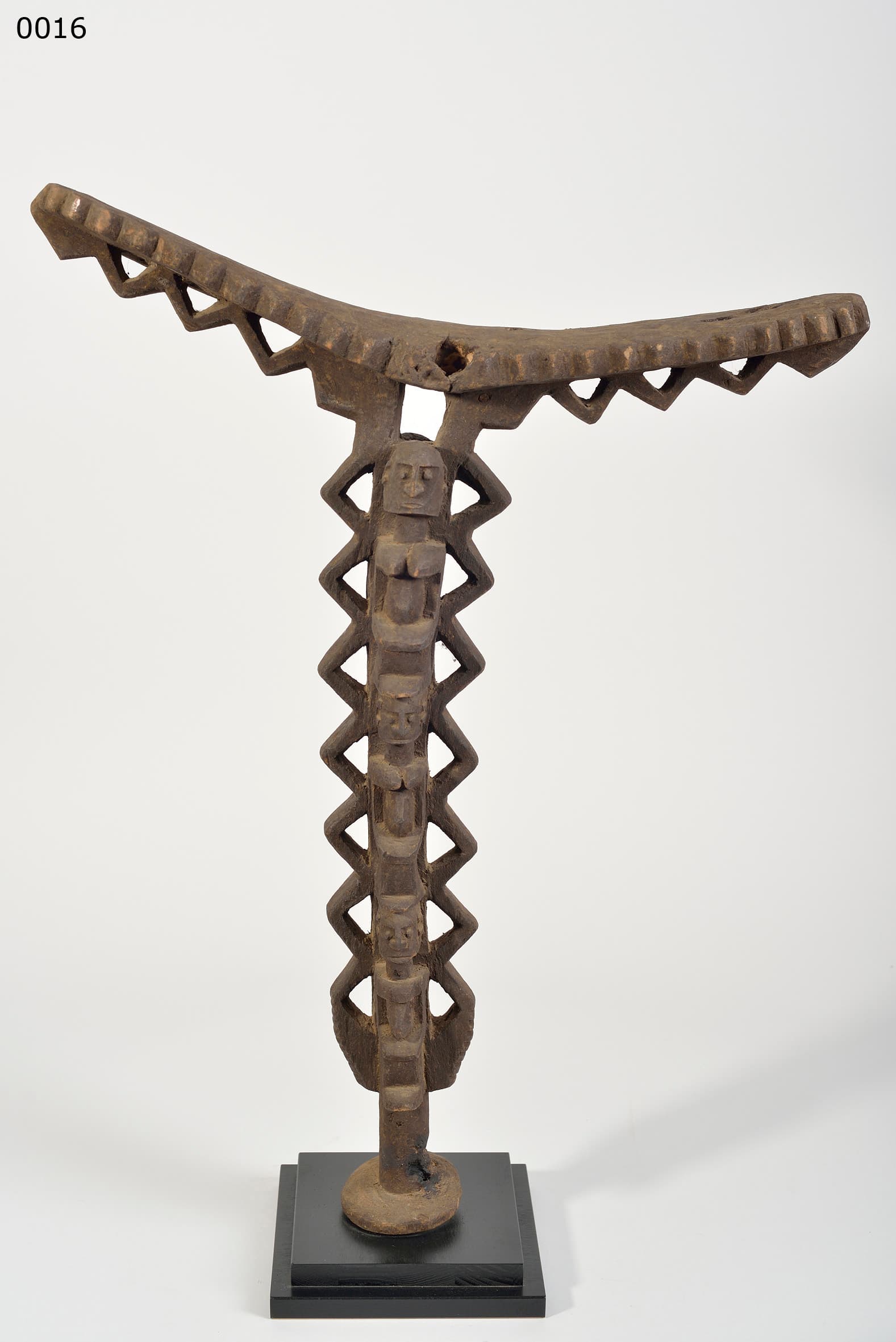
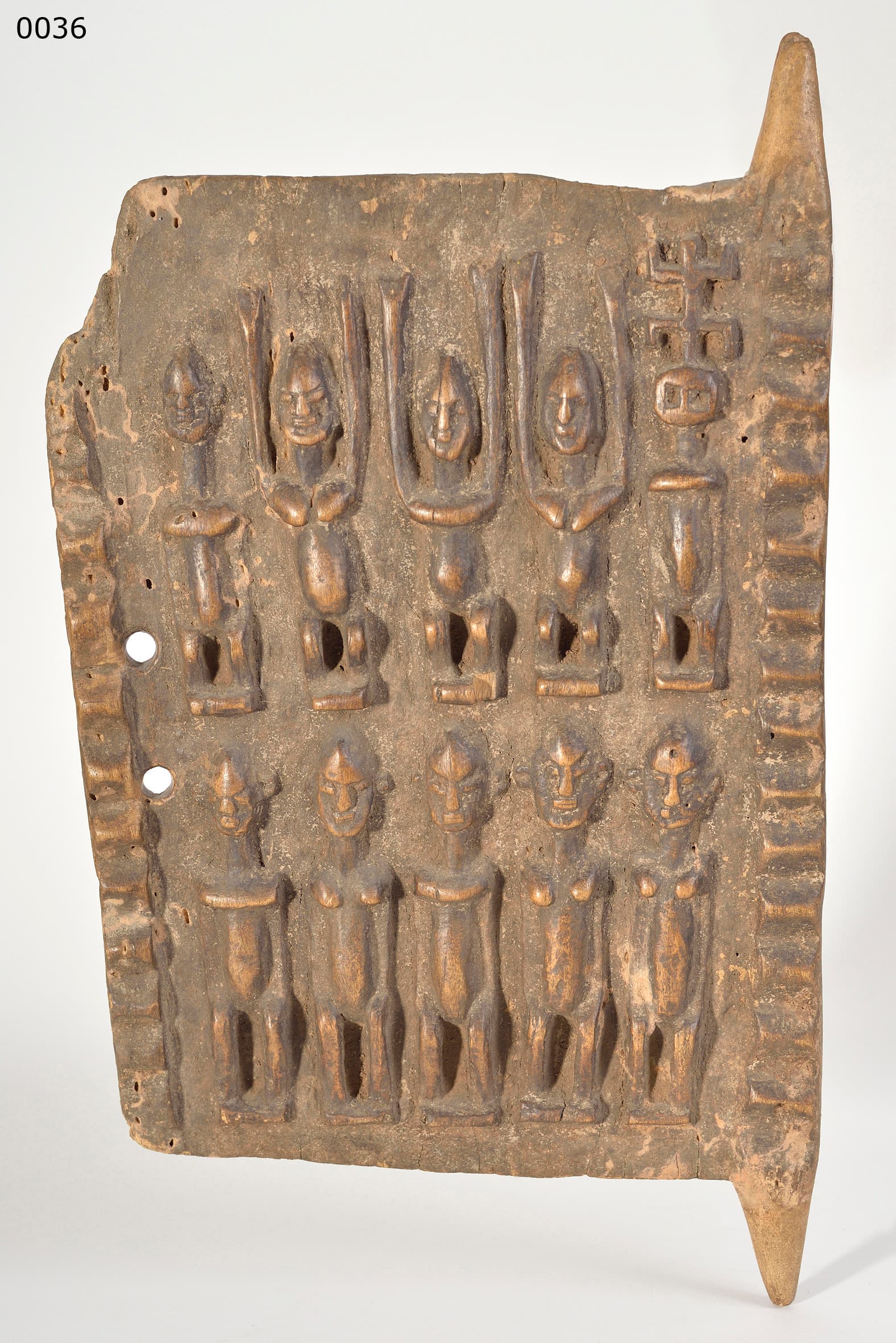
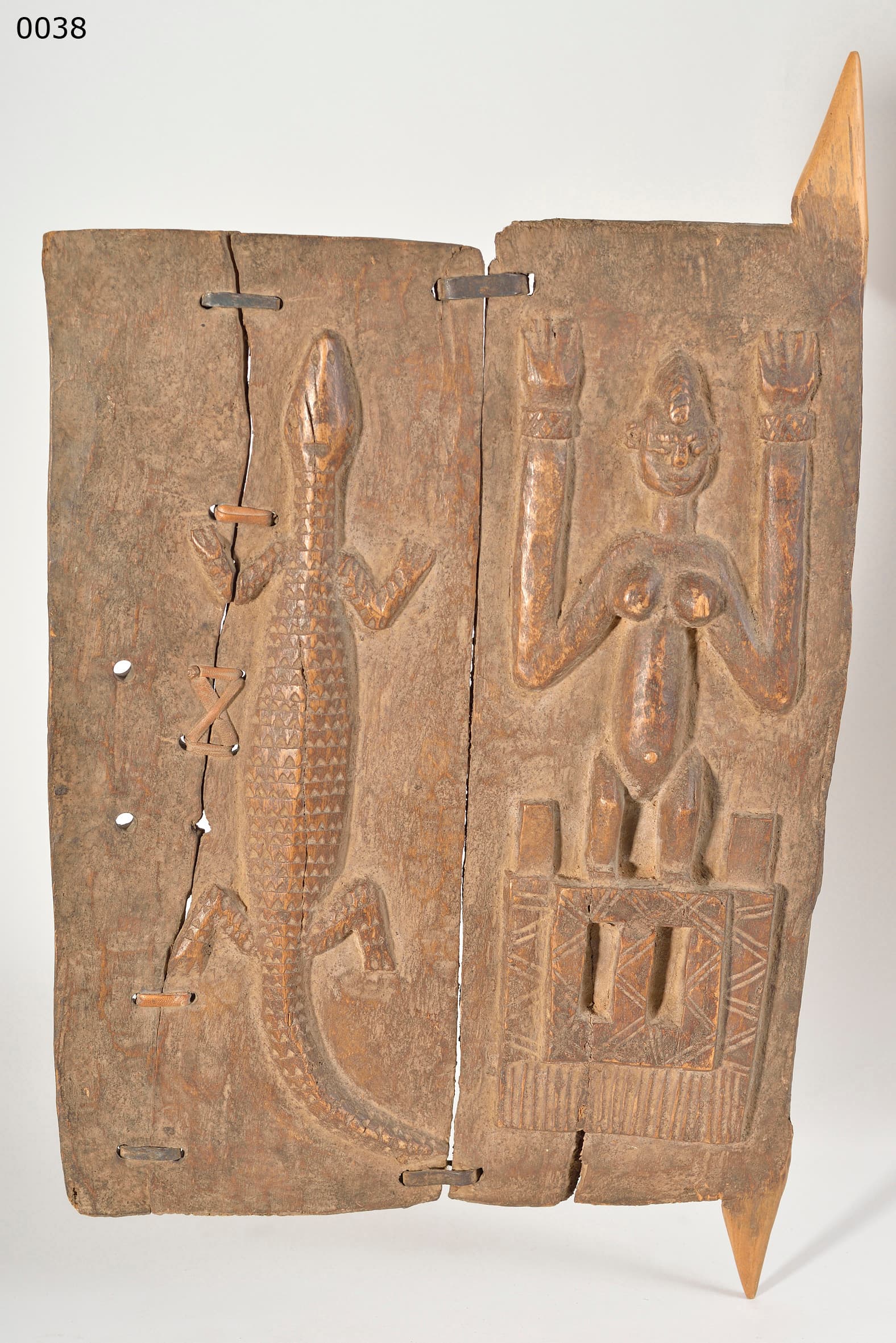
Ein Dogon-Hocker-Altar (48 cm) aus Mali, der dem 18. bis 19. Jahrhundert zugeschrieben wird – ein runder Sockel und eine Sitzfläche, die durch einen Ring aus abstrakten, stark stilisierten Karyatidenfiguren verbunden sind, die starr mit den Armen an den Seiten stehen und von einer dicken, brüchigen Verkrustung aus Opfersubstanz umhüllt sind. Tiefe Trocknungsrisse und eine stark erodierte Oberfläche weisen auf sein beträchtliches Alter hin.
1. Kosmologische Architektur
Der Dogon-Hocker ist eines der konzeptionell dichtesten Objekte der afrikanischen Kunst – ein lokalisiertes Modell des Universums.
- Imago Mundi: Die oberen und unteren Scheiben stellen den Himmel und die Erde dar; die Karyatidenpfosten, die sie verbinden, symbolisieren die Nommo, Urwesen, die der Welt Ordnung verliehen. Diese von Marcel Griaule dokumentierte Sirius-Kosmologie und Nommo-Schöpfungsmythologie wurde 1991 von Walter E.A. van Beek kritisch revidiert, was die bis heute andauernde Debatte prägt, ob Griaules Material authentische Esoterik oder eine Ko-Konstruktion mit seinem Informanten Ogotemmêli war.
- Sitzer an der Achse: Das Design manifestiert physisch die kosmische Verbundenheit und platziert jeden, der darauf sitzt, genau im Zentrum des spirituellen und physischen Universums.
2. Die Autorität des Hogon
Diese symbolischen Hocker werden typischerweise mit dem Hogon in Verbindung gebracht, dem obersten religiösen und politischen Führer einer Dogon-Gemeinschaft.
- Sitz der Macht: Der Hocker ist nicht nur ein Möbelstück, sondern auch der offizielle Sitz, von dem aus der Hogon Urteile fällt und Riten vollzieht.
- Aktiver Altar: In Krisenzeiten oder bei landwirtschaftlichen Riten wird der Hocker zum Mittelpunkt für Opfergaben, die an die Ahnen und die Erde gerichtet werden – so wird das Möbel zu einem aktiven Kanal für göttliches Eingreifen.
3. Tiefe Inkrustierung und Herkunft aus dem 18. bis 19. Jahrhundert
Die physische Beschaffenheit des Holzes liefert Hinweise auf ein beträchtliches Alter und das rituelle Leben des Stücks.
- Geschichtete Libationen: Eine dicke, ungleichmäßige Verkrustung aus Hirsebrei und Tierblut hat sich in das Holz eingebrannt und eine spröde, historisch tiefe Kruste gebildet. Der deutliche Substanzverlust an der Basis und die stark verwitterten Gesichtszüge der Karyatiden sprechen für einen langanhaltenden natürlichen Zerfallsprozess in den trockenen Felsheiligtümern der Bandiagara-Klippen.
- Unersetzliche Stratigrafie: Diese sedimentäre Aufzeichnung spricht für eine langfristige Verwendung in Gemeinschaftsritualen – eine solche Patinierung lässt sich kaum künstlich beschleunigen. Diese bemerkenswerten Erhaltungsbedingungen werfen auch ein Licht auf die von Rogier Bedaux untersuchte Tellem-Dogon-Kontinuität, bei der die Langlebigkeit der Objekte in den Klippen zentrale historische Verbindungen aufzeigt.
Zusammenfassung
Dieser Dogon-Hocker, der gleichzeitig als kosmisches Diagramm, als Sitz der Macht und als aktiver Altar dient, ist ein bedeutendes Artefakt des religiösen Lebens in Westafrika. Sein hohes Alter, das durch massive Verwitterungsspuren nahegelegt wird, und seine dicke Opferkruste machen ihn zu einem eindrucksvollen Zeugnis, das dem 18. bis 19. Jahrhundert zugeschrieben werden kann.
KI-unterstützt erstellt aus Sammlungsgutachten, Objektfotografie und eigener Recherche, redaktionell geprüft. Fehler sind möglich — Hinweise darauf sind uns willkommen. Zum Verfahren →