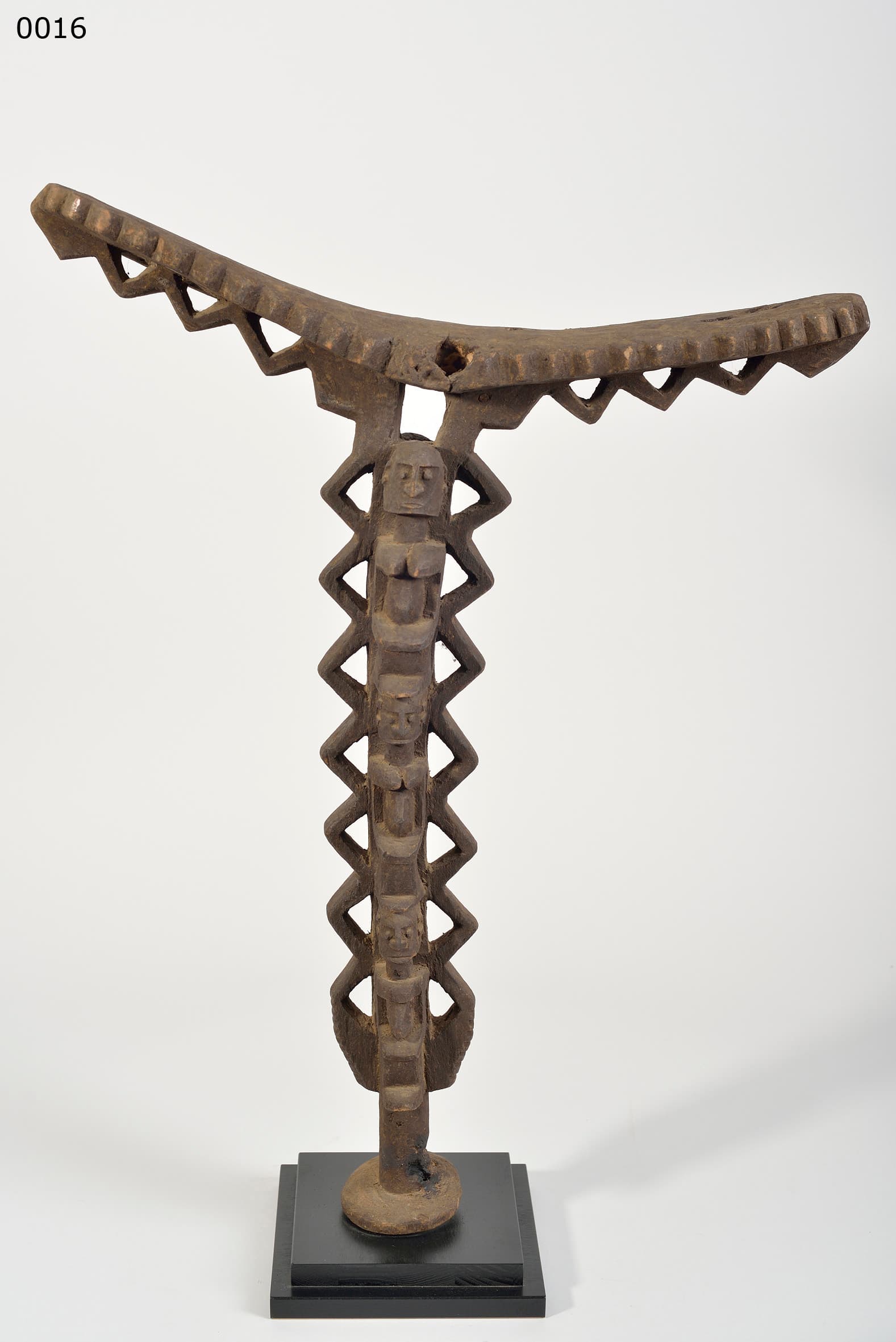
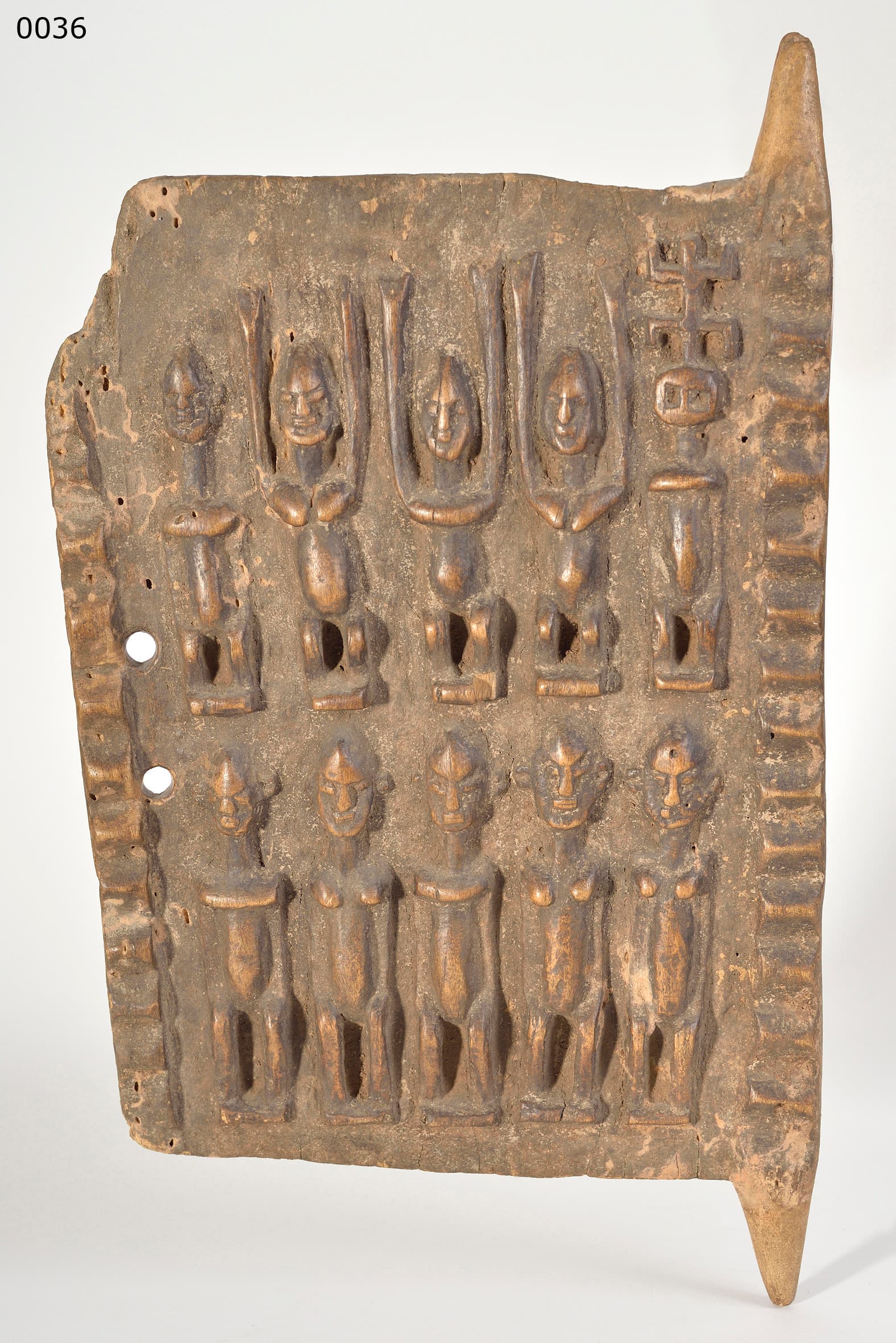
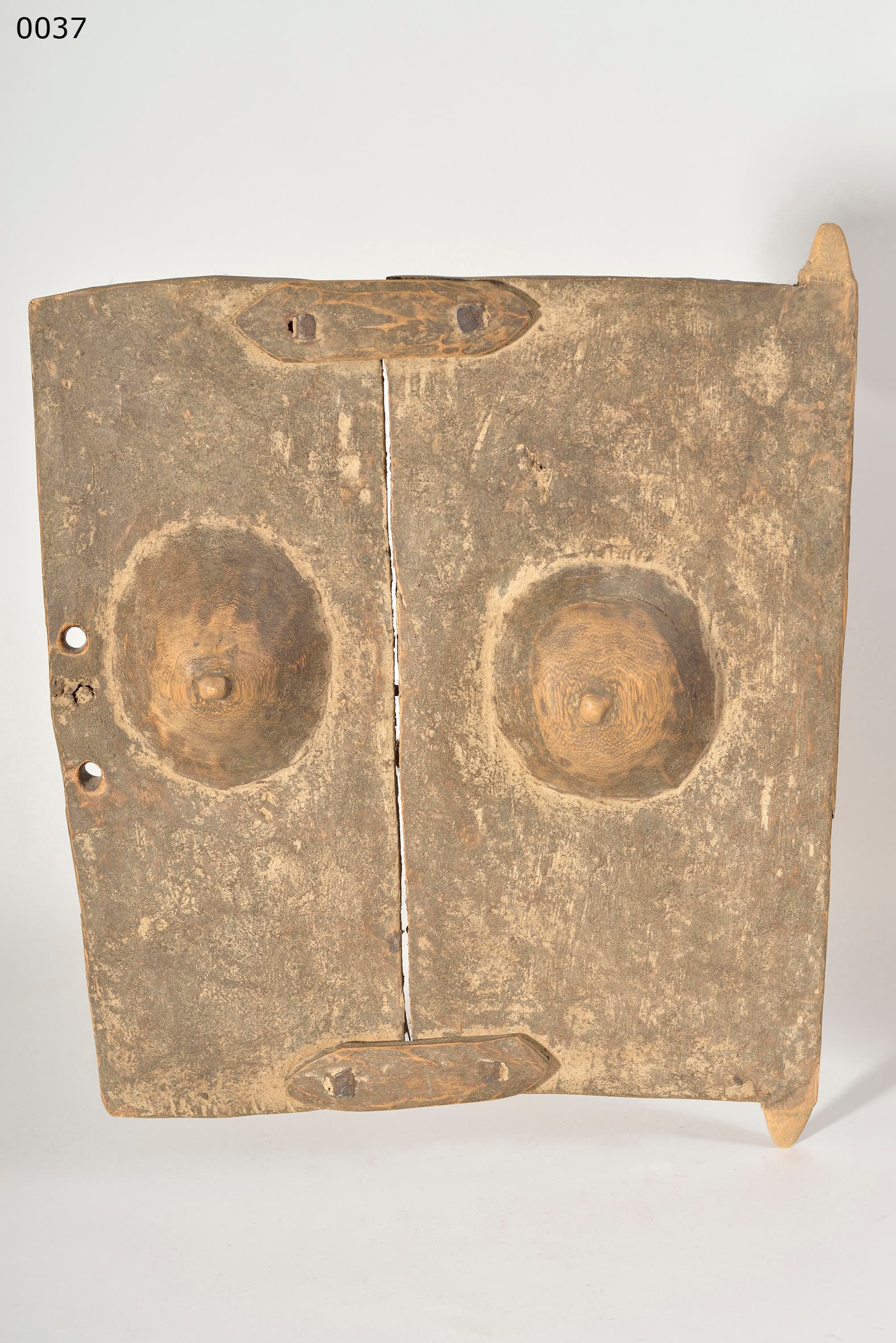
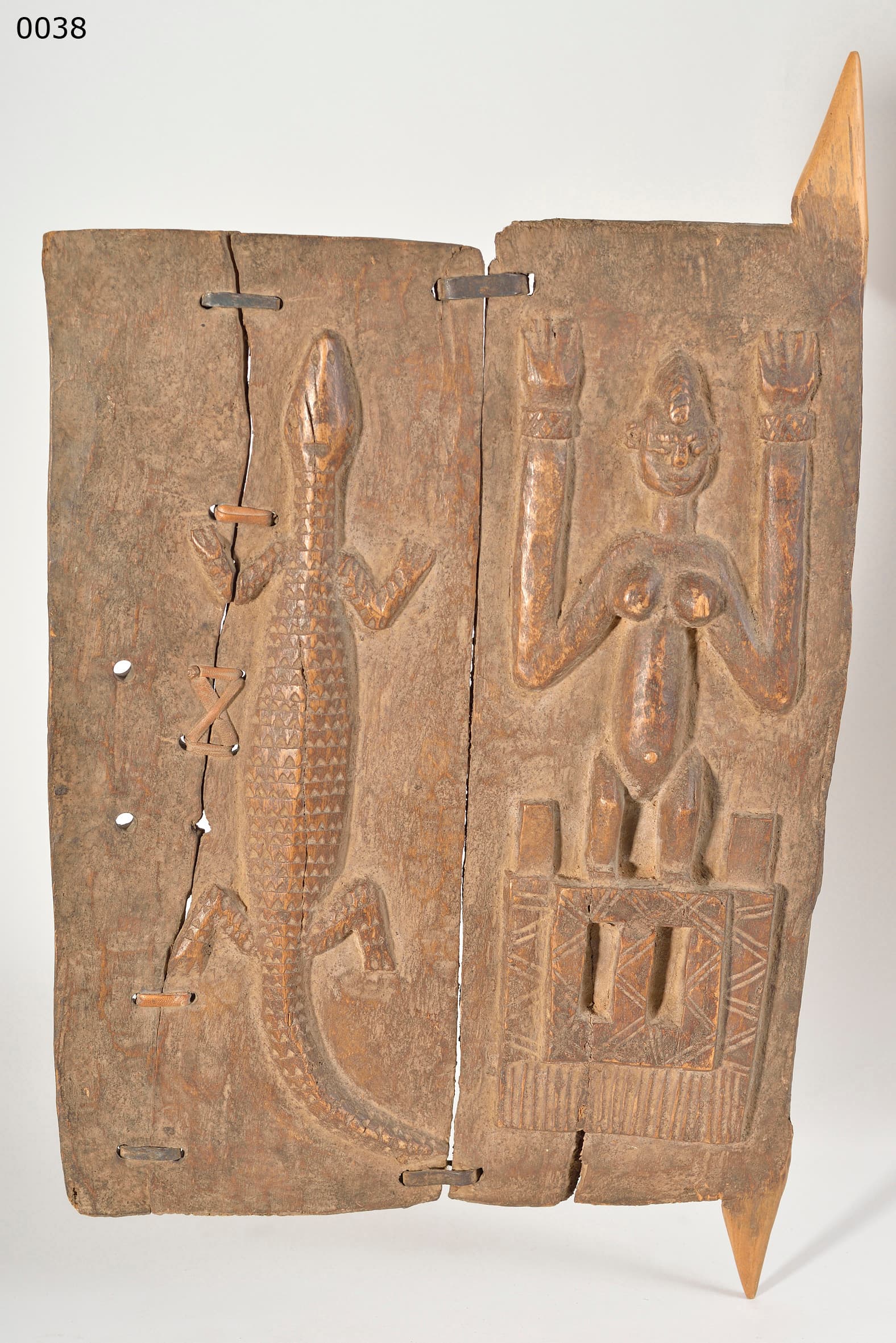
Eine abstrakte, vertikal ausgerichtete Holzfigur (18.–19. Jh., 31 cm) von den Dogon aus Mali - stark stilisierter, helmartiger Kopf, überlängter zylindrischer Hals und im Zickzack verlaufende, geometrische Arme, die mit dem kubistischen Torso verbunden sind. Das stark degradierte, schwammige Holz zeigt tiefe Austrocknung, Insektenschäden und extreme historische Verwitterung, die einer Entstehung im 20. Jahrhundert deutlich widersprechen.
1. Tellem und frühe Dogon-Ästhetik
Die strenge Abstraktion und die hochgezogene Zickzack-Armhaltung ordnen das Objekt in das archaische Spektrum ein und erinnern stark an den antiken Tellem-Stil, der die späteren Dogon-Schnitzer prägte. Wie Hélène Leloup und Rogier Bedaux in ihren Forschungen darlegten, sind derart reduzierte Werke oft Relikte älterer Kulte.
- Ohne Naturalismus: Die Figur ist auf reine architektonische Geometrie mit rudimentären, blockhaften Gesichtszügen reduziert.
- Zeitlos statt sterblich: Die Strenge projiziert eher die unzerstörbare Natur des Geistes der Ahnen als ihr irdisches, vergängliches Ebenbild.
2. Fürbitte beim Göttlichen
Figuren mit dieser spezifischen Armhaltung werden weithin als Gebetsgesten gedeutet.
- Imploring Amma: Erhobene oder stark angewinkelte Arme bitten den Schöpfergott Amma um Regen - die entscheidende Ressource der Bandiagara-Umgebung.
- Platzierung in Heiligtümern: Solche Figuren lebten über Generationen in Familienschreinen oder den trockenen Höhlen der Bandiagara-Klippen und fungierten als ewige Fürsprecher im Namen der lebenden Gemeinschaft.
3. Tiefgreifende Umweltzerstörung
Der physische Zustand des Holzes deutet auf extremes Alter und tiefe rituelle Nutzung hin.
- Zellularer Zerfall: Die tiefe Austrocknung und die von Alterspatina überzogene Holzoberfläche verraten jahrhundertelange Klimawechsel. Teils noch erahnbare krustige Auflagen deuten auf wiederholte rituelle Libationen (wie Hirsebrei oder tierische Opfergaben) hin, die im Laufe der Zeit mit dem Holz verschmolzen und durch Umwelteinflüsse abgetragen wurden.
- Keine aufpolierte Oberfläche: Das Fehlen einer glänzenden Patina bestätigt, dass es sich bei der Figur um ein ungestörtes sakrales Objekt handelt und nicht um ein Objekt, das häufig berührt wurde - eine authentische Konservierung aus dem 18. oder 19. Jahrhundert.
Zusammenfassung
In Anlehnung an die alte Ästhetik des Tellem ist diese Ahnenfigur der Dogon eine beeindruckende Studie minimalistischer religiöser Kunst. Die tiefgreifende Verwitterung durch die Umwelt und die kraftvolle, betende Haltung machen sie zu einer sehr begehrten Antiquität mit Museumswert.
KI-unterstützt erstellt aus Sammlungsgutachten, Objektfotografie und eigener Recherche, redaktionell geprüft. Fehler sind möglich — Hinweise darauf sind uns willkommen. Zum Verfahren →