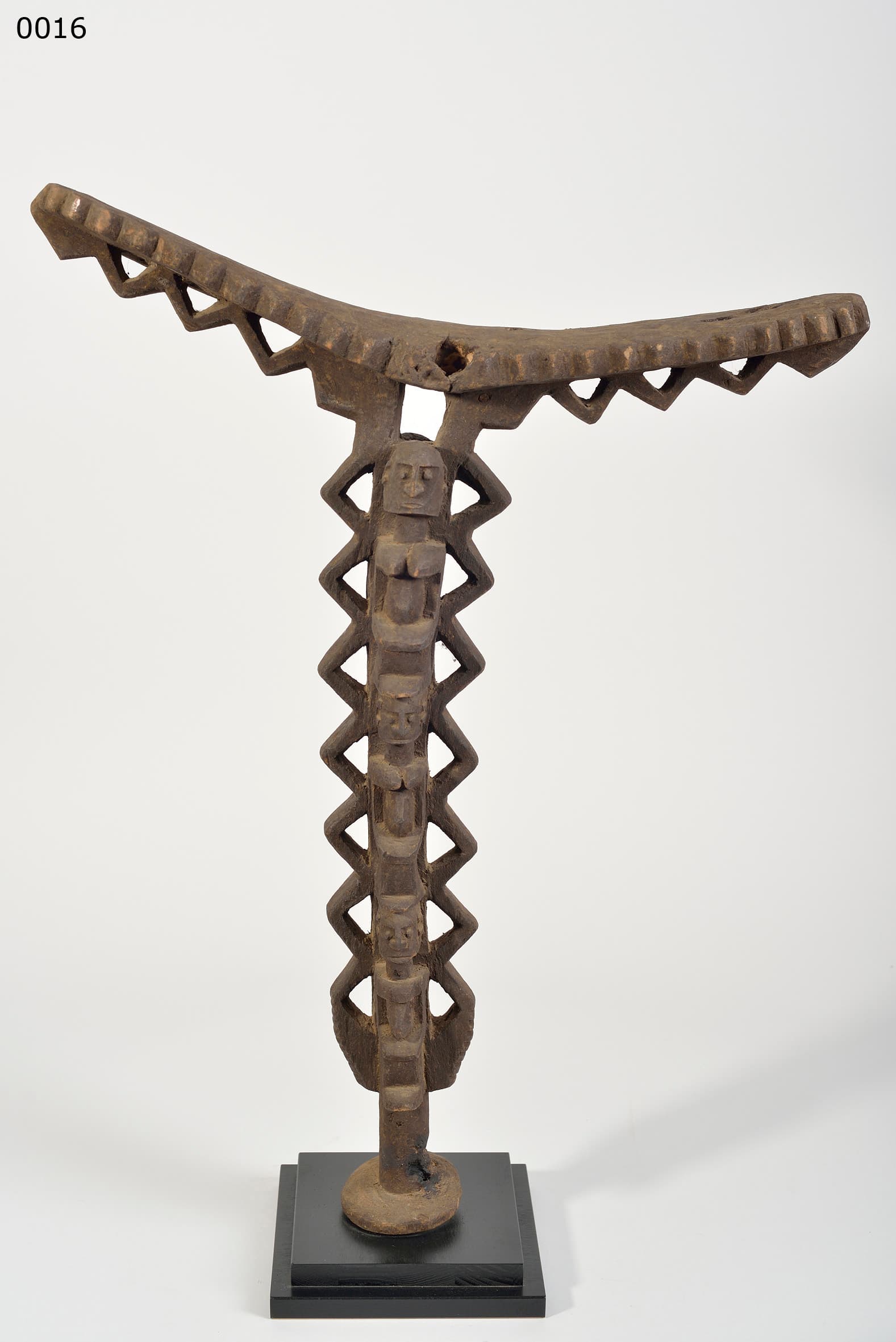
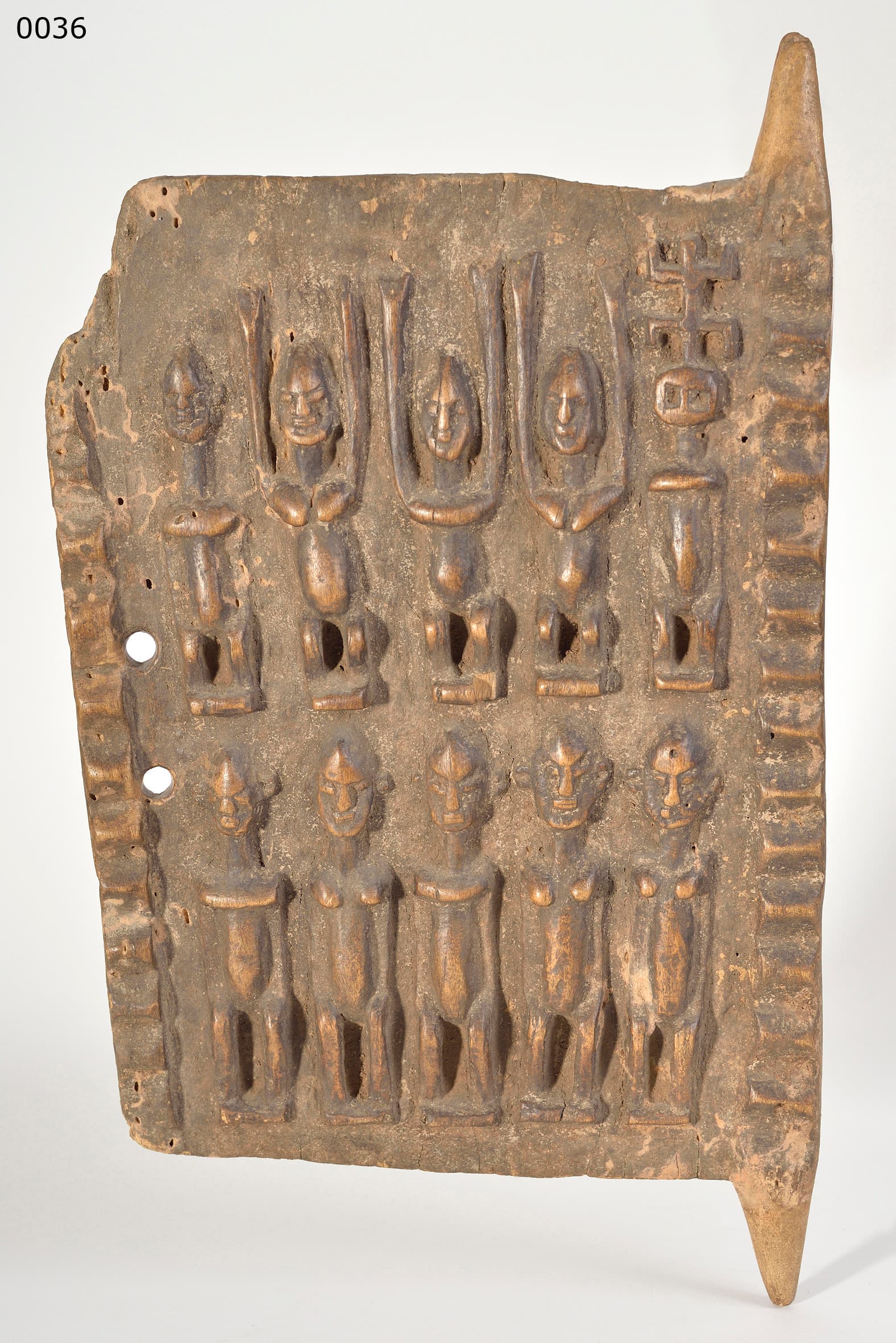
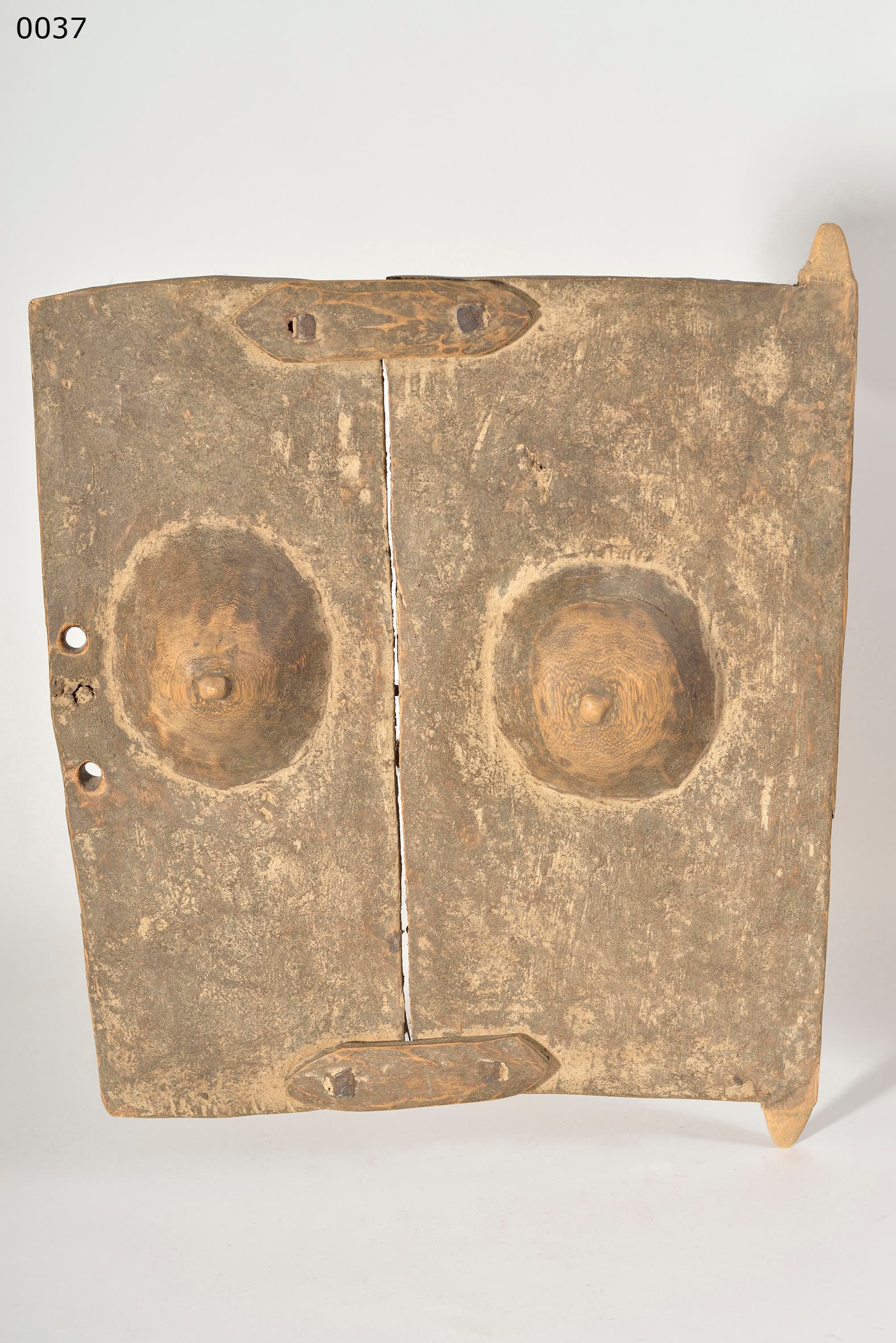
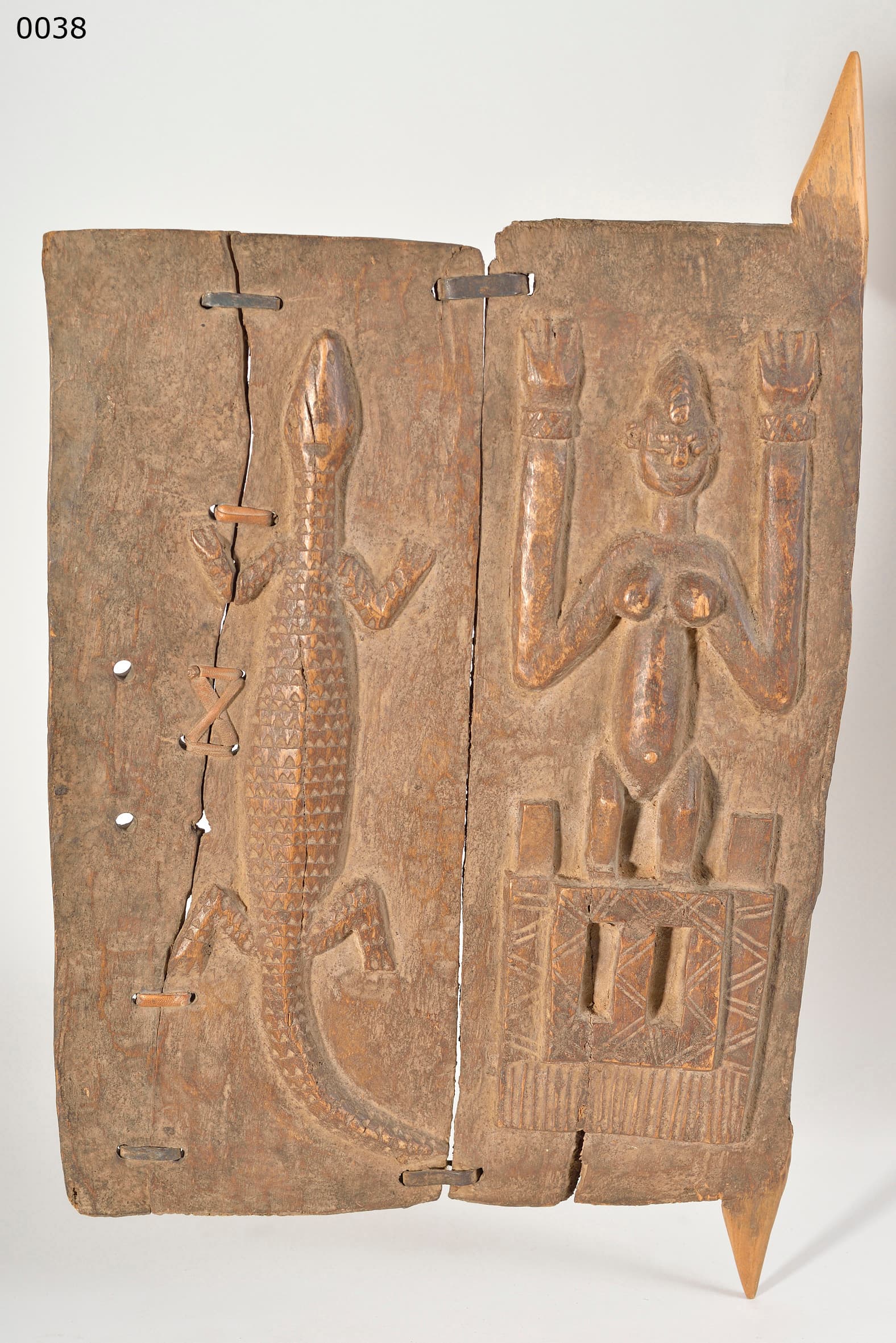
Eine elegante Dogon-Nackenstütze (29 cm) aus Mali aus dem 19. Jahrhundert - eine geschwungene Kopfstütze, die in nach unten gerichteten stilisierten Tierköpfen endet und auf zwei dynamisch abgewinkelten, im Zickzack geschnitzten Beinen ruht. Das Holz trägt eine tiefe, oxidierte, leicht krustige Patina.
1. Dynamische architektonische Geometrie
In Abweichung von den einfachen vertikalen Säulen verwendete dieser Schnitzer abgewinkelte, zickzackförmige Beine, um eine äußerst dynamische, federartige Komposition zu schaffen.
- Strukturelles Storytelling: Die geschnitzten Zickzacklinien stellen häufig den Abstieg des Nommo oder den Fluss des lebensspendenden Wassers dar.
- Kosmologie in Geometrie: Die Einbettung dieser Erzählungen in die Struktur verwandelt eine einfache Kopfstütze in ein Stück architektonischen Mythos - die Nackenstütze trägt die Kosmologie in jeder Linie.
2. Zoomorpher Schutz während des Schlafs
Die Enden der geschwungenen Plattform sind in Form von stilisierten Tierköpfen geschnitzt, wahrscheinlich Pferde oder mythische Bestien.
- Schlaf als Verwundbarkeit: Im Glauben der Dogon ist der Schlaf ein Zustand, in dem der Geist den Körper verlässt.
- Wachsame Wächter: Die zoomorphen Endstücke fungieren als apotropäische Wächter, die den heiligen Kopf - den Sitz von Nyama - während der Nacht beschützen.
3. patinierung aus dem 19. Jahrhundert
Die Abnutzung der Oberfläche bestätigt die Datierung auf das 19.
- Geschliffene Kontaktzonen: Verdunkelte Bereiche entlang der zentralen Vertiefung der Plattform sind das Ergebnis von jahrzehntelangem Kontakt mit menschlichen Haut- und Haarölen.
- Kruste in den Vertiefungen: Die vertieften geometrischen Schnitzereien behalten eine trockene oxidierte Kruste - authentische kontinuierliche Nutzung in der rauen malischen Klima, frei von modernen Lacke.
Zusammenfassung
Diese Dogon-Nackenstütze, die kinetisches architektonisches Design mit zoomorphem Wächteramt verbindet, ist ein hervorragendes Beispiel für funktionale westafrikanische Kunst. Ihre reichhaltige Patina und ihre strukturelle Komplexität machen sie zu einem sehr begehrten Artefakt des 19.
KI-unterstützt erstellt aus Sammlungsgutachten, Objektfotografie und eigener Recherche, redaktionell geprüft. Fehler sind möglich — Hinweise darauf sind uns willkommen. Zum Verfahren →