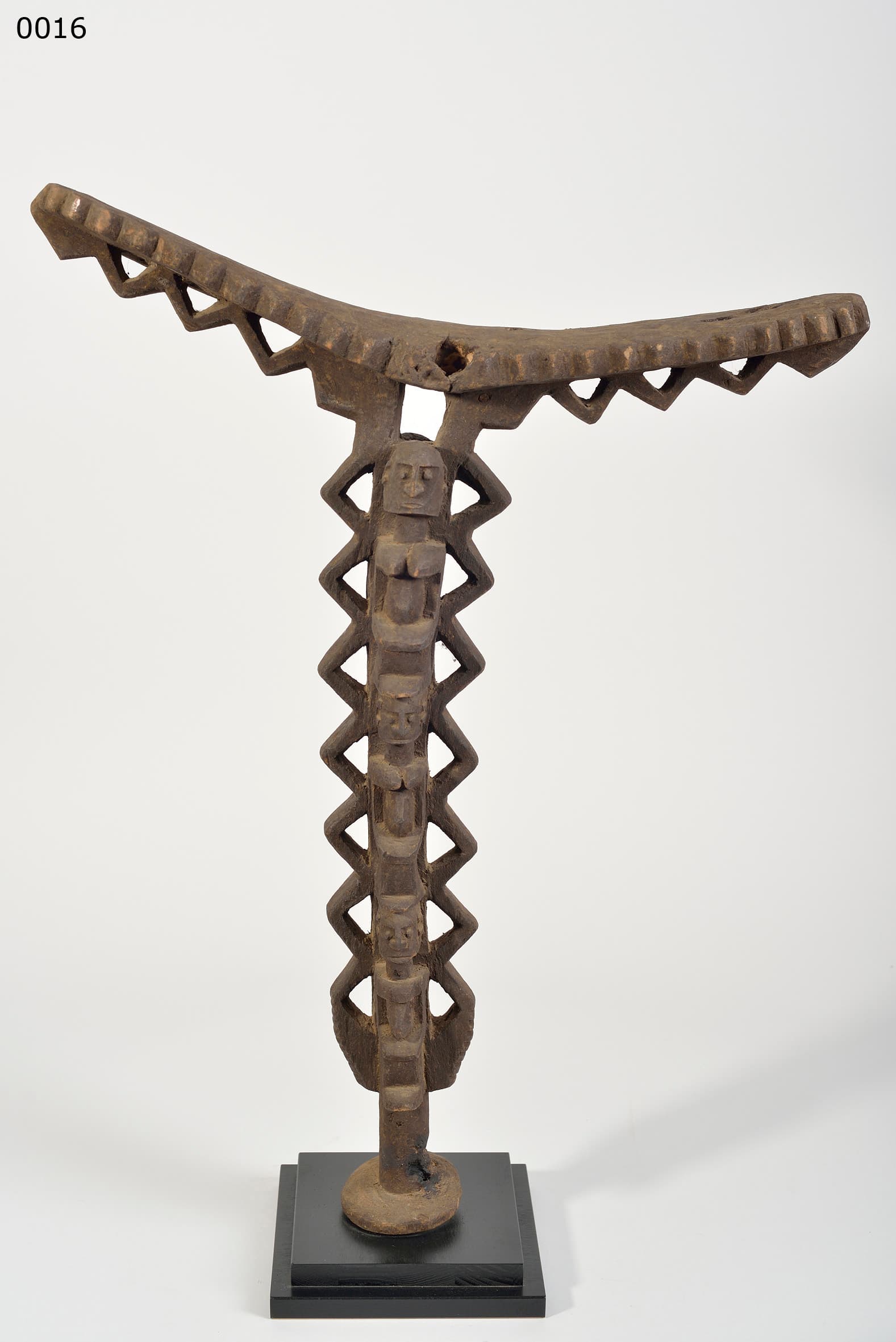
Eine komplexe Dogon-Gräber-Nackenstütze (24 cm) aus Mali – eine geschwungene, mit einem feinen Kerbschnittmuster versehene obere Plattform, die in abstrakten Tierköpfen endet, gestützt von einer zentralen Säule, die von zwei abgewinkelten Stützen in Form von stilisierten absteigenden Pferden flankiert wird. Die ausgeprägte duale Patina – oben durch jahrelange Nutzung zu Lebzeiten glatt und speckig gerieben, an der Basis jedoch rau und verkrustet – deutet auf eine Entstehung im 18. bis 19. Jahrhundert hin. Das Holz ist bemerkenswert trocken, strukturell geprüft und stark abgenutzt. Publiziert in Leloup, "Dogon" (S. 22)
1. Die Pferdekaryatiden
Diese Nackenstütze zeigt eine anspruchsvolle strukturelle Schnitzerei, die das Pferd – ein bedeutendes Prestigesymbol der Dogon – als tragende Karyatiden verwendet.
- Form und Funktion verschmelzen: Die stilisierten, nach unten gerichteten Pferde bieten architektonische Stabilität. Während Marcel Griaule das Pferd esoterisch als erstes Tier der Schöpfungsarche deutete, liest die moderne Forschung nach Walter E.A. van Beeks Restudie (1991) das Motiv pragmatischer als reines Statussymbol.
- Rangausstrahlung: Die Pferdekaryatiden projizieren visuell den hohen sozialen Rang, den immensen Reichtum und die geistige Mobilität des Besitzers – der Status des Schläfers ist in den Stützen seiner Kopfstütze verschlüsselt.
2. Grablegung und Status
Dieses als männliche Nackenstütze bezeichnete Objekt begleitete eine elitäre Person in die trockenen Felsengrabhöhlen der Bandiagara-Klippen.
- Hogon oder Senior Elder: Das Kaliber der Schnitzerei und die Pferdesymbolik deuten auf das Grab eines obersten geistigen Führers hin.
- Ewige Reittiere für die Seele: Die Pferde unterstützen die Reise des Geistes aus dem irdischen Bereich in die Domäne der Ahnen. Zugleich verweist die kontinuierliche Nutzung solcher Nackenstützen als Grabbeigaben auf die von Rogier Bedaux untersuchte Tellem-Dogon-Kontroverse und zeigt eine starke kulturelle Adaption an ältere Bestattungstraditionen der Region.
3. Kanonischer Status und Taphonomie
Die extreme Austrocknung des Holzes passt perfekt zu den Umweltbedingungen in den Dogon-Grabhöhlen.
- Blasse kreidige Oxidation: Tiefe Längsrisse, trockene Oxidation sowie dicke Verkrustungen durch Fledermaus-Guano und rituelle Libationen an der Basis sind die Kennzeichen eines längeren Aufenthalts in der Höhle.
- Dokumentierte Provenienz: Die Veröffentlichung in Leloups Dogon (S. 22) unterstreicht die Bedeutung dieses Stücks und stützt die Zuschreibung sowie die Datierung ins 18. bis 19. Jahrhundert.
Zusammenfassung
Als bemerkenswerte Synthese aus strukturellem Einfallsreichtum und elitärer Pferdesymbolik gilt diese dogonische Nackenstütze als herausragendes Zeugnis dieser Schnitzkunst. Ihre charakteristisch verwitterte Oberfläche und die dokumentierte Veröffentlichungsgeschichte machen sie zu einer bedeutenden afrikanischen Antiquität des 18. bis 19. Jahrhunderts.
KI-unterstützt erstellt aus Sammlungsgutachten, Objektfotografie und eigener Recherche, redaktionell geprüft. Fehler sind möglich — Hinweise darauf sind uns willkommen. Zum Verfahren →