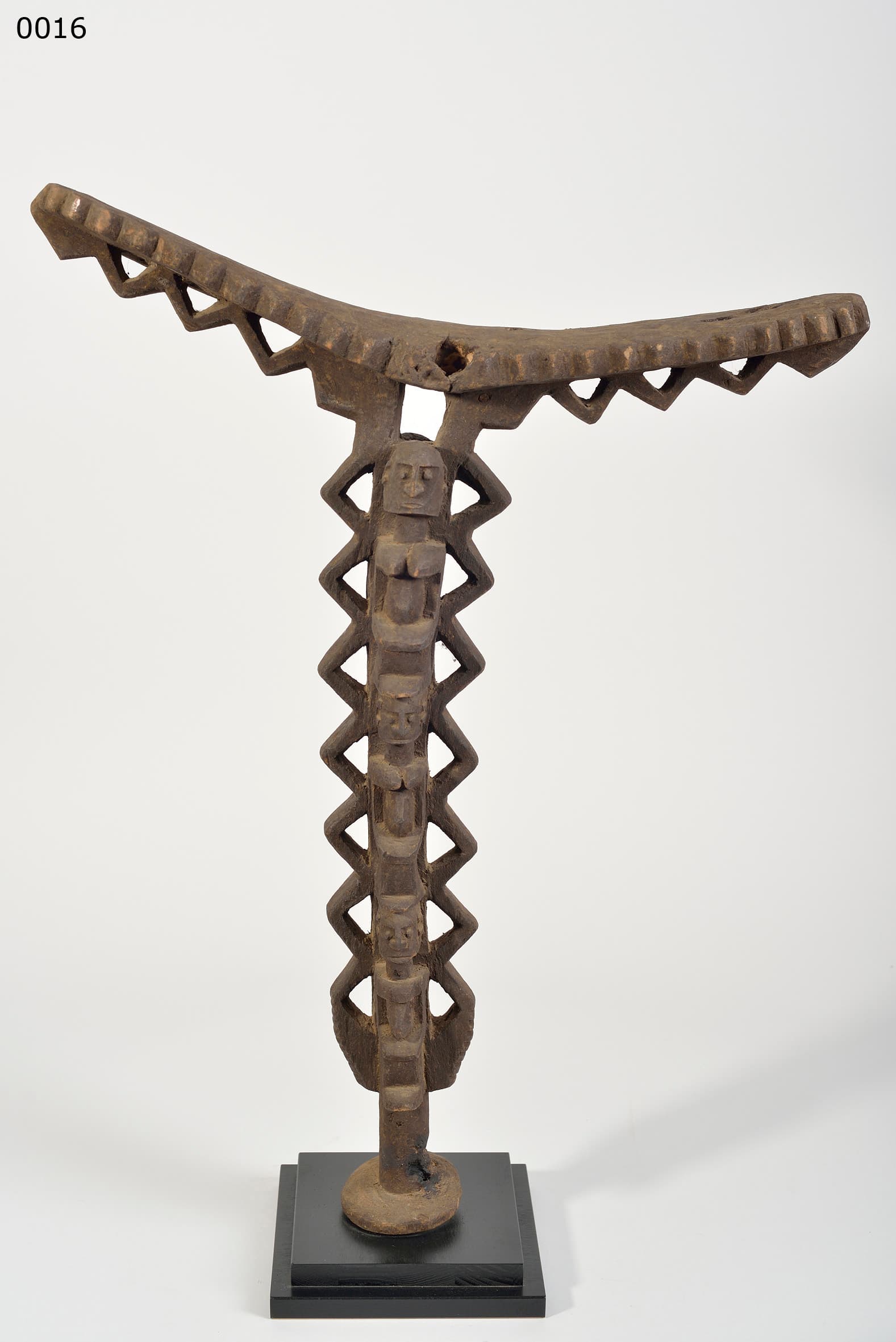
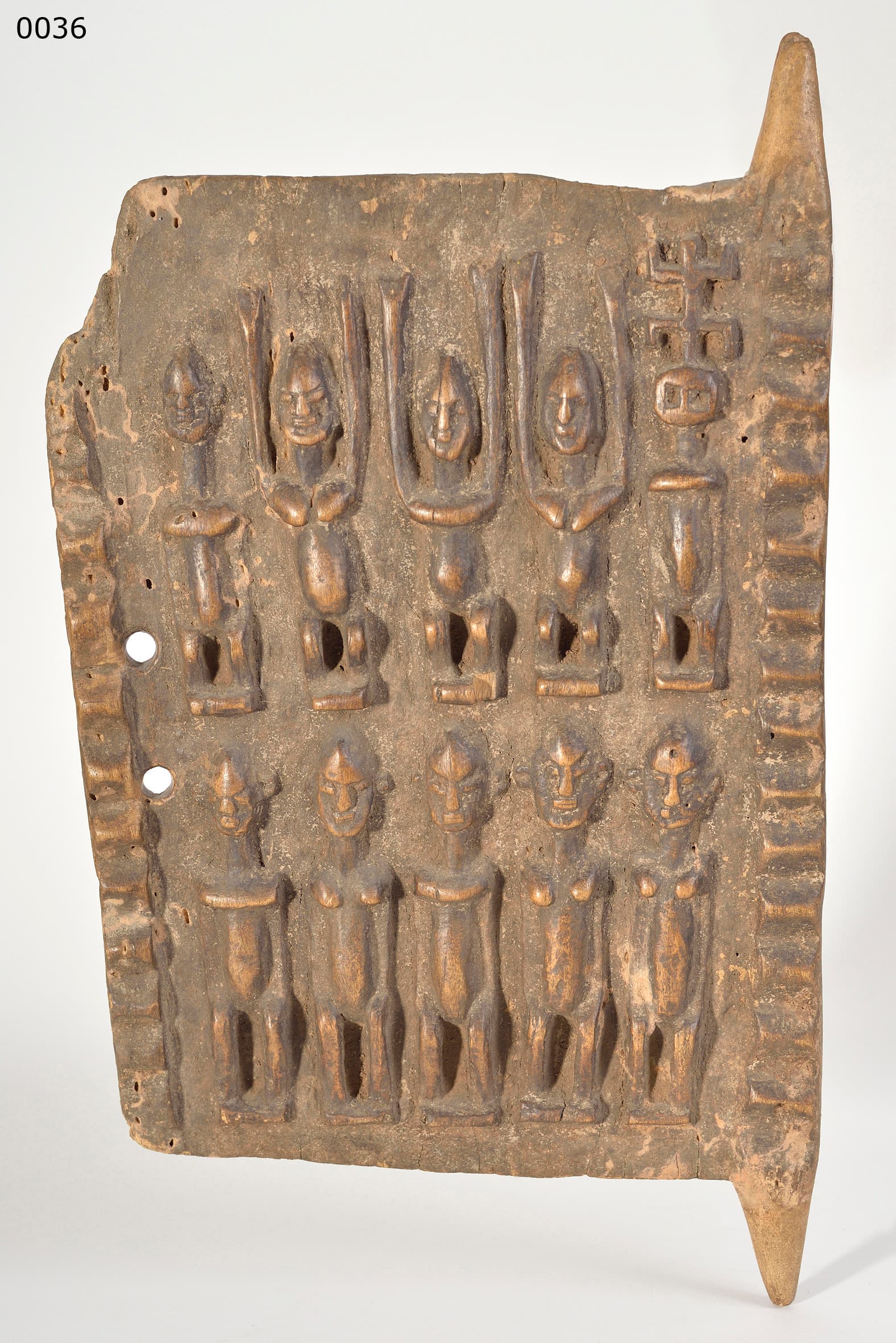
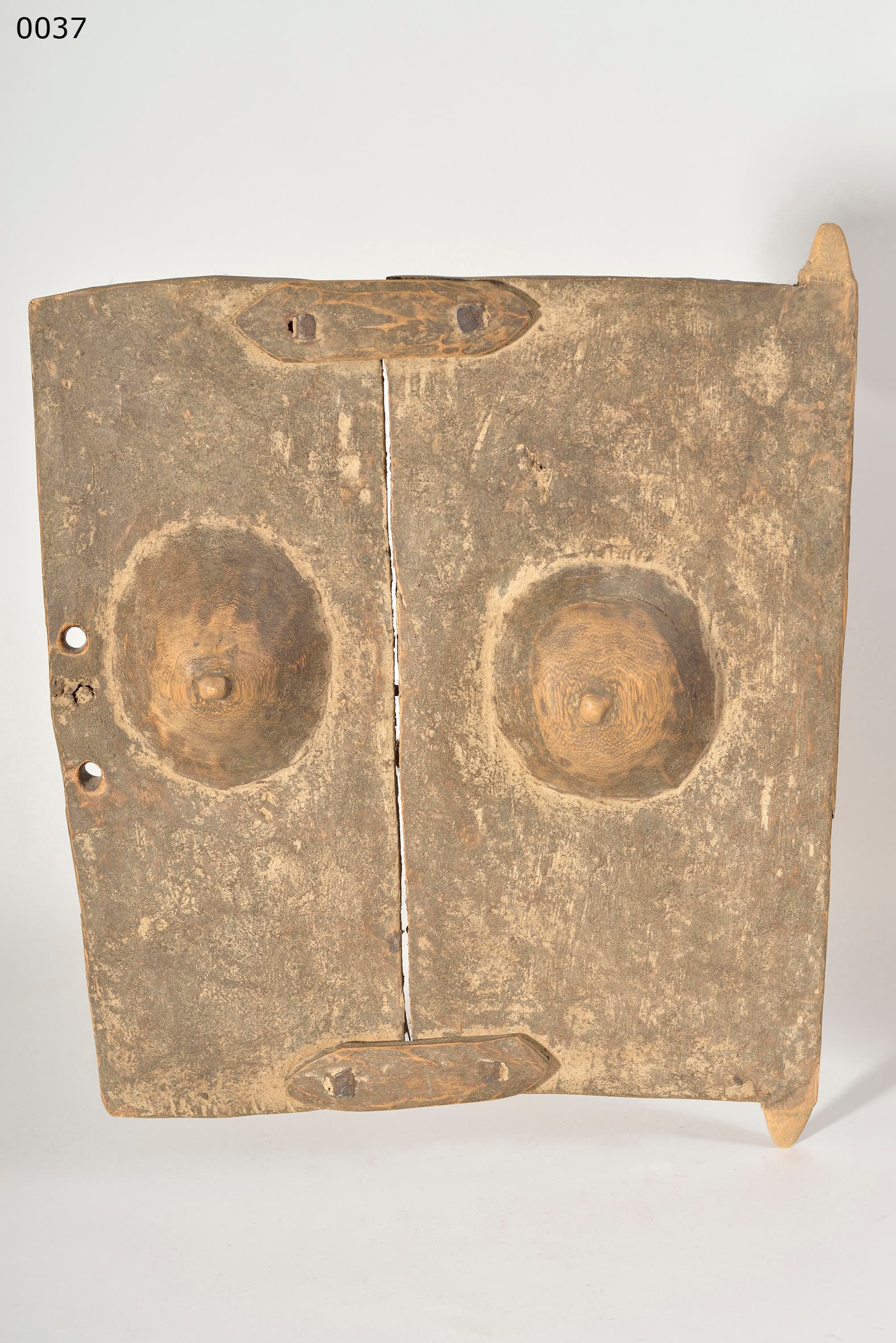
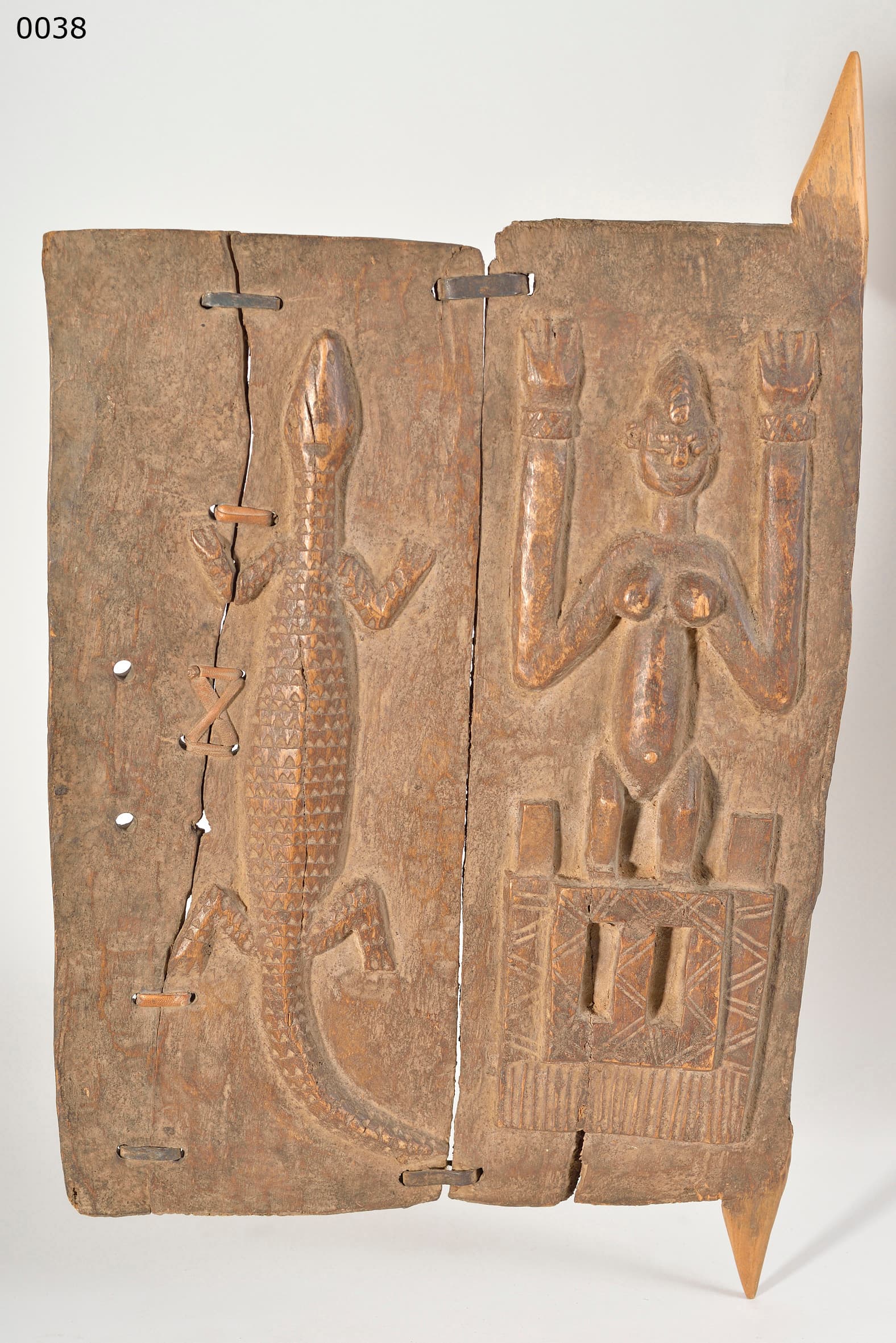
Ein langer Y-förmiger Dogon-Architekturpfosten (1. Hälfte 20. Jh., 77 cm) aus Mali - eine stark stilisierte anthropomorphe Hochrelieffigur, die direkt in den zentralen Schaft geschnitzt ist, charakterisiert durch einen spitzen Bart und eine starre Geometrie, das Holz extrem trocken, blass und stark verwittert mit erheblichen altersbedingten Erosionen an der Basis und den Enden.
1. Architektonische Integration und Togu Na-Symbolik
Die Kunst der Dogon ist im Wesentlichen architektonisch und untrennbar mit der baulichen Umgebung des Dorfes verbunden.
- Togu Na Stützpfeiler: Dieses Stück ist ein klassischer Stützpfeiler für ein Togu Na (das Versammlungshaus der Männer) oder einen Ahnenschrein - durch die Verwendung von Hochrelief-Schnitzereien wird der Ahne buchstäblich in die strukturelle Unterstützung des Gebäudes integriert.
- Monumental in begrenztem Holz: Die vereinfachte, eckige Form der Figur wird durch die schmalen Abmessungen des Holzes diktiert - sie zeigt die Fähigkeit des Schnitzers, die monumentale Präsenz innerhalb eines streng begrenzten architektonischen Rahmens zu maximieren.
2. Unterstützung der Gemeinschaft
Das Togu Na ist das physische, politische und rechtliche Herz des Dorflebens der Dogon.
- Aktiver Ahne: Pfosten mit geschnitzten Ahnenfiguren stützen buchstäblich und symbolisch das schwere Dach, unter dem die Ältesten debattieren, regieren und Urteile fällen.
- Gerichtliches Gewicht: Der in den Pfosten geschnitzte Vorfahr wird als aktiv anwesend betrachtet - er sorgt für wahrheitsgemäße Rede, leitet gerichtliche Entscheidungen und erinnert die Lebenden daran, dass die Vorfahren das Gewicht des Dorfes tragen.
3. Elementare Erosion und Termiten-Interaktion
Der ausgeprägte physische Zustand verweist auf die Funktionsgeschichte.
- Schäden durch unterirdische Termiten: Der untere Teil weist eine starke unregelmäßige Degradation auf, die durch das tiefe Eingraben im sandigen malischen Boden und die jahrzehntelange Interaktion mit unterirdischen Termiten verursacht wurde.
- Sonnengebleichter oberer Teil: Umgekehrt weist der obere Teil extreme Wind- und Sonnenbleiche auf, da er den rauen sahelischen Elementen ausgesetzt ist - das Fehlen kommerzieller Oberflächen spricht dafür, dass es sich um ein authentisches, aktiv genutztes Architekturfragment handelt.
Zusammenfassung
Dieser Dogon-Pfosten, der sowohl als struktureller Pfeiler als auch als spiritueller Anker fungiert, verkörpert die tiefe Integration von Kunst in das tägliche Leben der Sahelzone. Seine starke Verwitterung durch die Umwelt spricht für seine funktionale architektonische Geschichte.
KI-unterstützt erstellt aus Sammlungsgutachten, Objektfotografie und eigener Recherche, redaktionell geprüft. Fehler sind möglich — Hinweise darauf sind uns willkommen. Zum Verfahren →