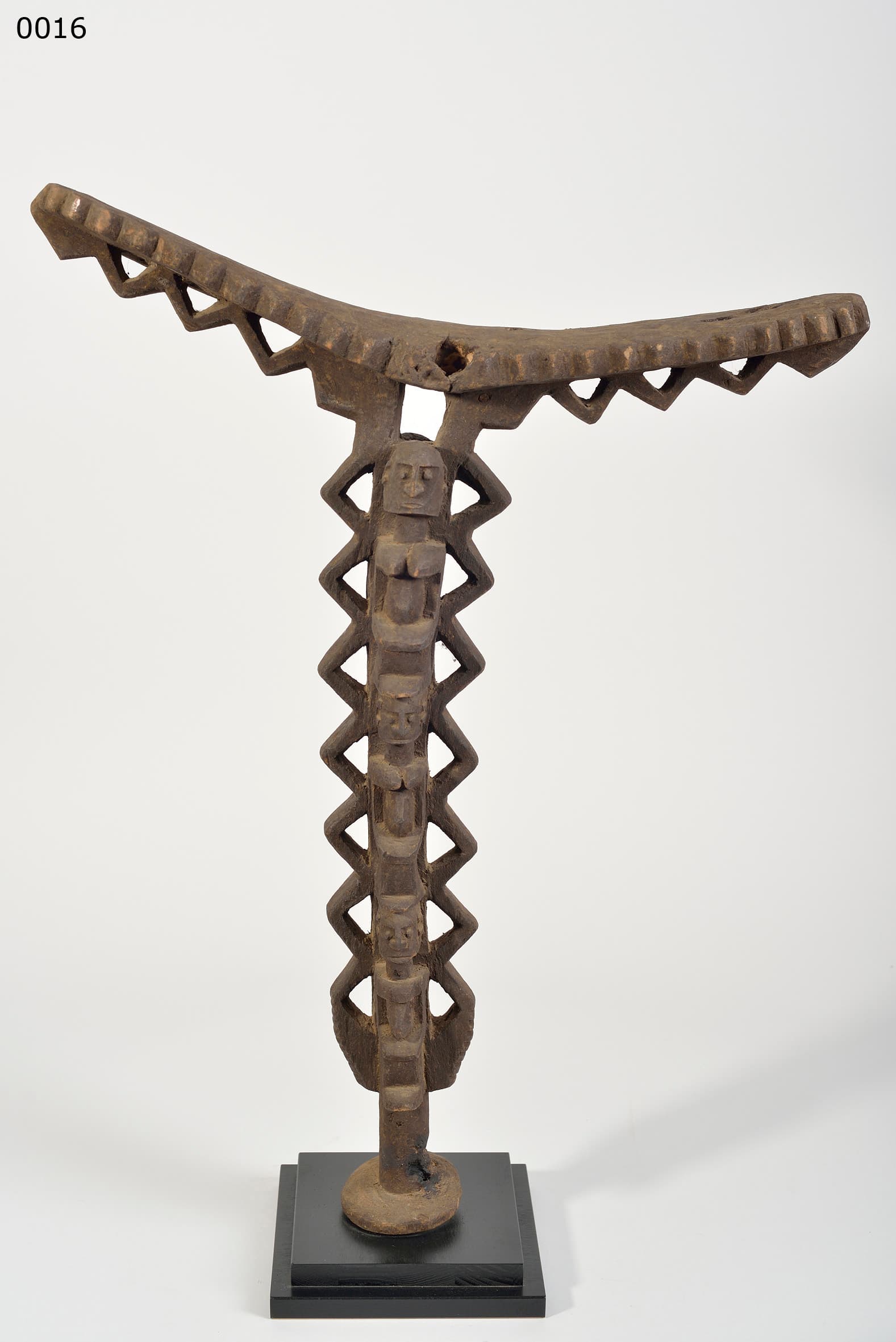
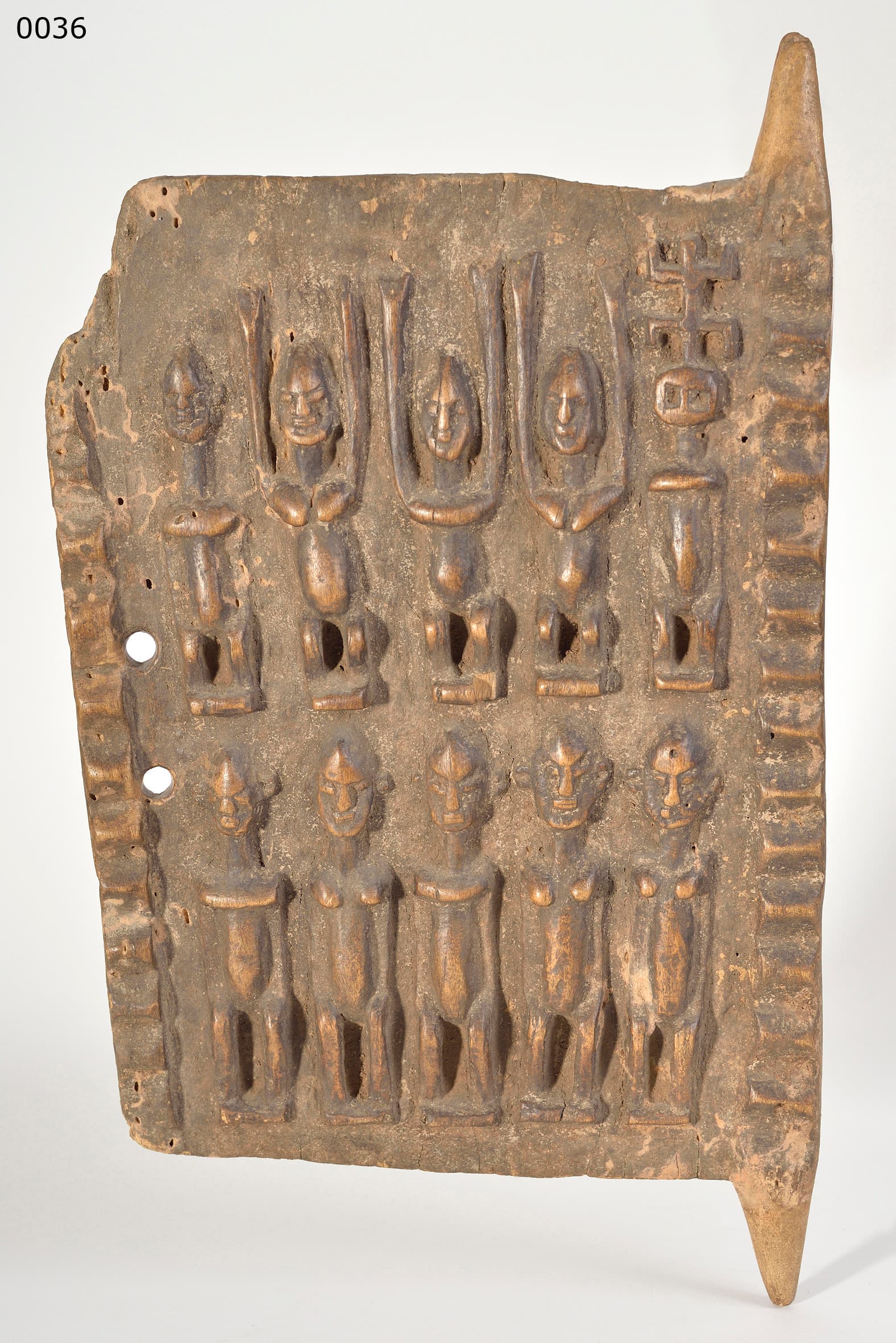
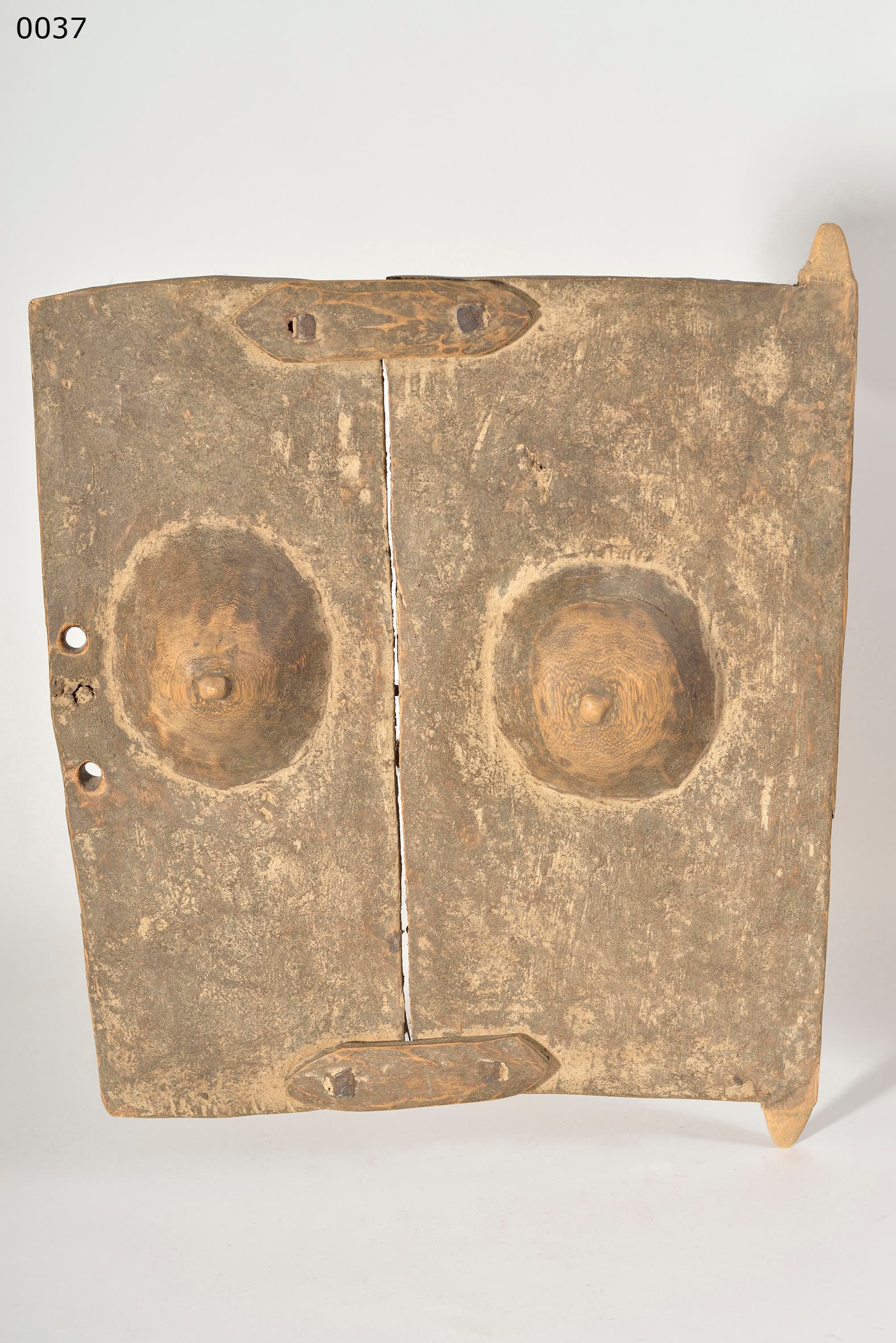
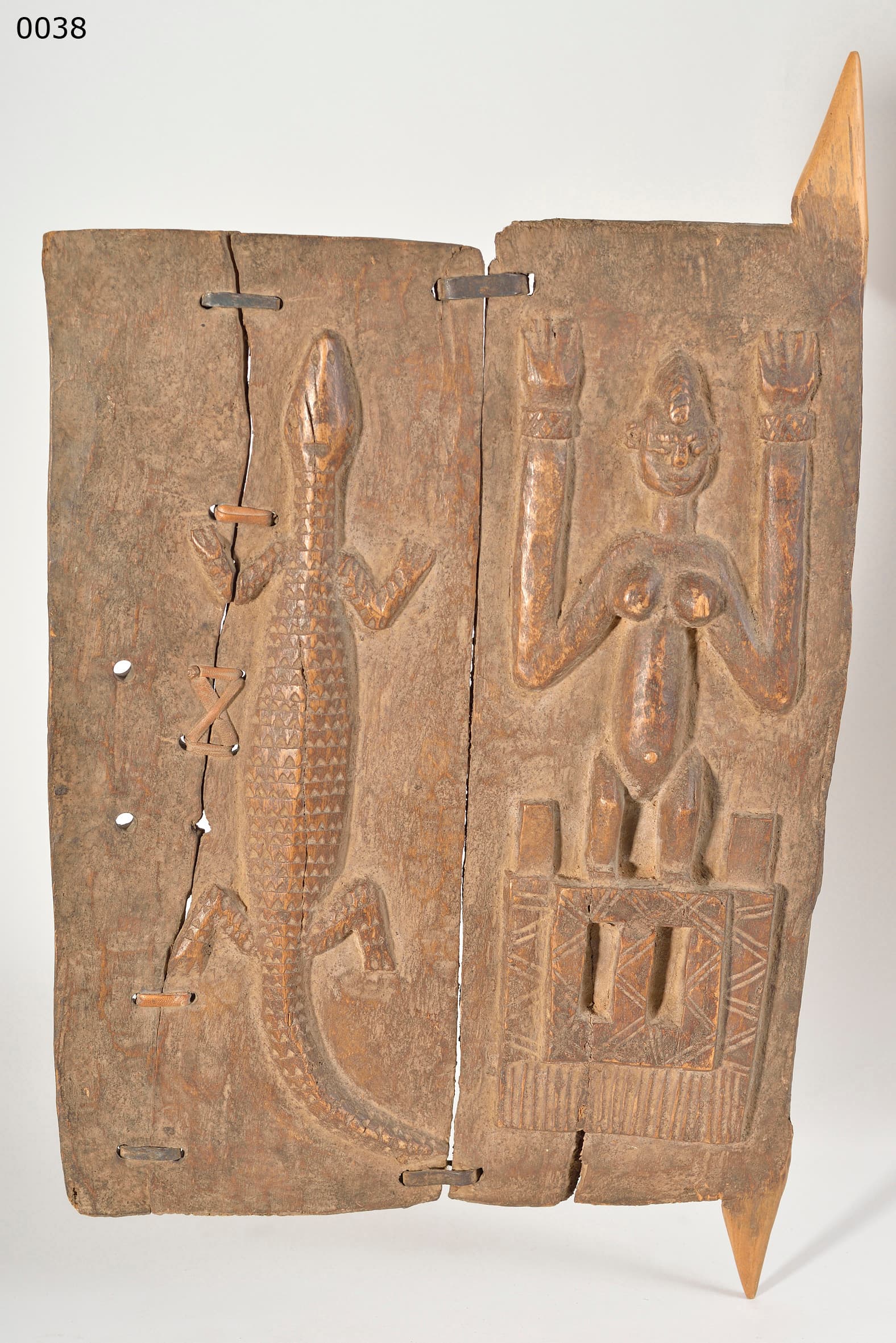
Ein scharf geschwungener Dogon Domolo Schulterstab (1. Hälfte 20. Jh., 64 cm) aus Mali - ein hakenförmiger Holzstab mit einem stilisierten, länglichen Tier- oder Menschenkopf, der in den Haken geschnitzt ist, mit ausgeprägten geometrischen Zick-Zack-Motiven, die entlang des äußeren Rückens verlaufen. Das Holz ist extrem dicht und poliert und trägt eine dunkle, ölige, stark bearbeitete Patina. Veröffentlicht in DOGON S. 67 und begleitet von einem Künzi-Datenblatt
1. Utilitaristischer Kubismus und die Domolo-Form
Der Domolo (oder rituelle Diebeshaken) ist ein einzigartiges Werkzeug der Dogon, das Nützlichkeit und hohe Bildhauerkunst miteinander verbindet.
- Schulteraufliegender Krummstab: Funktionell wie ein Krummstab geformt, um auf der Schulter zu ruhen oder Zweige aufzuhängen, ist seine Ästhetik aggressiv kubistisch.
- Zick-Zack-Kosmologie: Das in die Wirbelsäule geschnitzte Zick-Zack-Motiv ist ein klassisches Dogon-Symbol - es steht oft für Wasser, den Abstieg der Nommo (Urahnen) vom Himmel oder den Weg der Schlange.
2. Der Yau Masker und ritueller Diebstahl
In der Gesellschaft der Dogon ist der Domolo eng mit den Yau (rituellen Dieben) verbunden, die sich während der Dama-Begräbniszeremonien maskieren.
- Sanktioniertes Chaos: Die Yau spielen eine wichtige, sanktionierte Rolle - sie streifen durch das Dorf und "stehlen" Vieh oder Nahrung, um die maskierten Tänzer zu füttern, und schaffen so ein chaotisches Gleichgewicht zur strengen Ordnung des dogonischen Lebens.
- Elite-Prestige-Stab: Alternativ wurden solche hochdekorierten Stäbe von den Ältesten als Prestigeobjekte über der Schulter getragen - sie signalisierten ihren Status als erfolgreiche Bauern, Eingeweihte der Awa (Maskengesellschaft) und Bewahrer der Dorftradition.
3. Provenienz und ausgeprägte Patinierung
Diese Domolo ist aufgrund ihrer Publikationsgeschichte ein für Sammler bedeutendes Objekt.
- Dokumentation: Dokumentiert in der Literatur (DOGON S. 67) und im Besitz eines Künzi-Factsheets, was die Zuschreibung stützt.
- Gebrauchspatina: Eine ausgeprägte Handhabungspatina – ein tief gesättigter, dunkler, öliger Glanz, der auf den langjährigen Gebrauch durch menschliche Hände sowie auf das Auftragen von Sheabutter oder Öl über Jahrzehnte hindeutet.
Zusammenfassung
Dieser Domolo-Stab zeigt eine charakteristische Ausführung des geometrischen Designs der Dogon auf einem rituellen Gerät. Seine dokumentierte Herkunft und seine ausgeprägte Patina machen ihn zu einem bemerkenswerten Beispiel unter den ethnografischen Sammlerstücken.
KI-unterstützt erstellt aus Sammlungsgutachten, Objektfotografie und eigener Recherche, redaktionell geprüft. Fehler sind möglich — Hinweise darauf sind uns willkommen. Zum Verfahren →