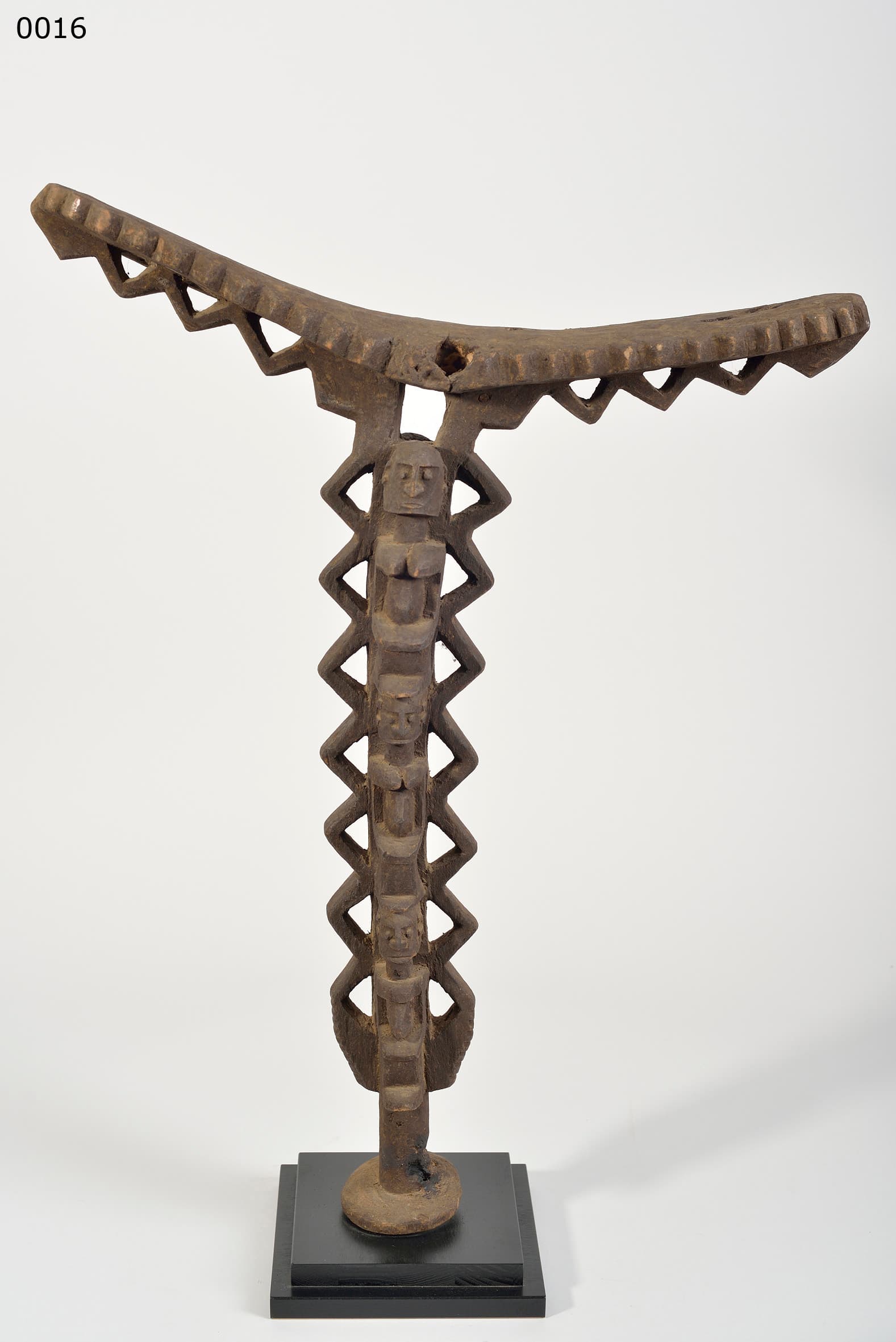
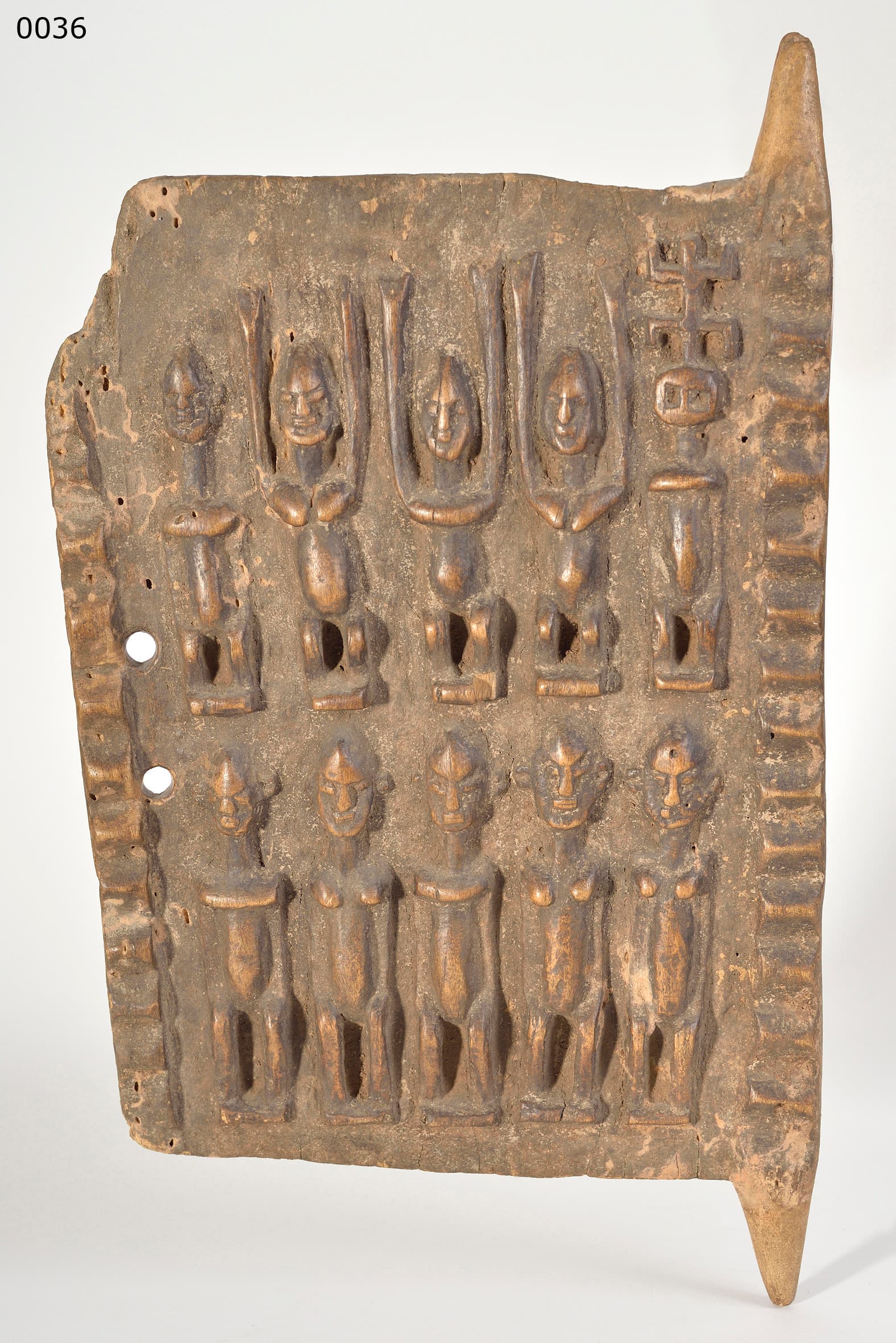
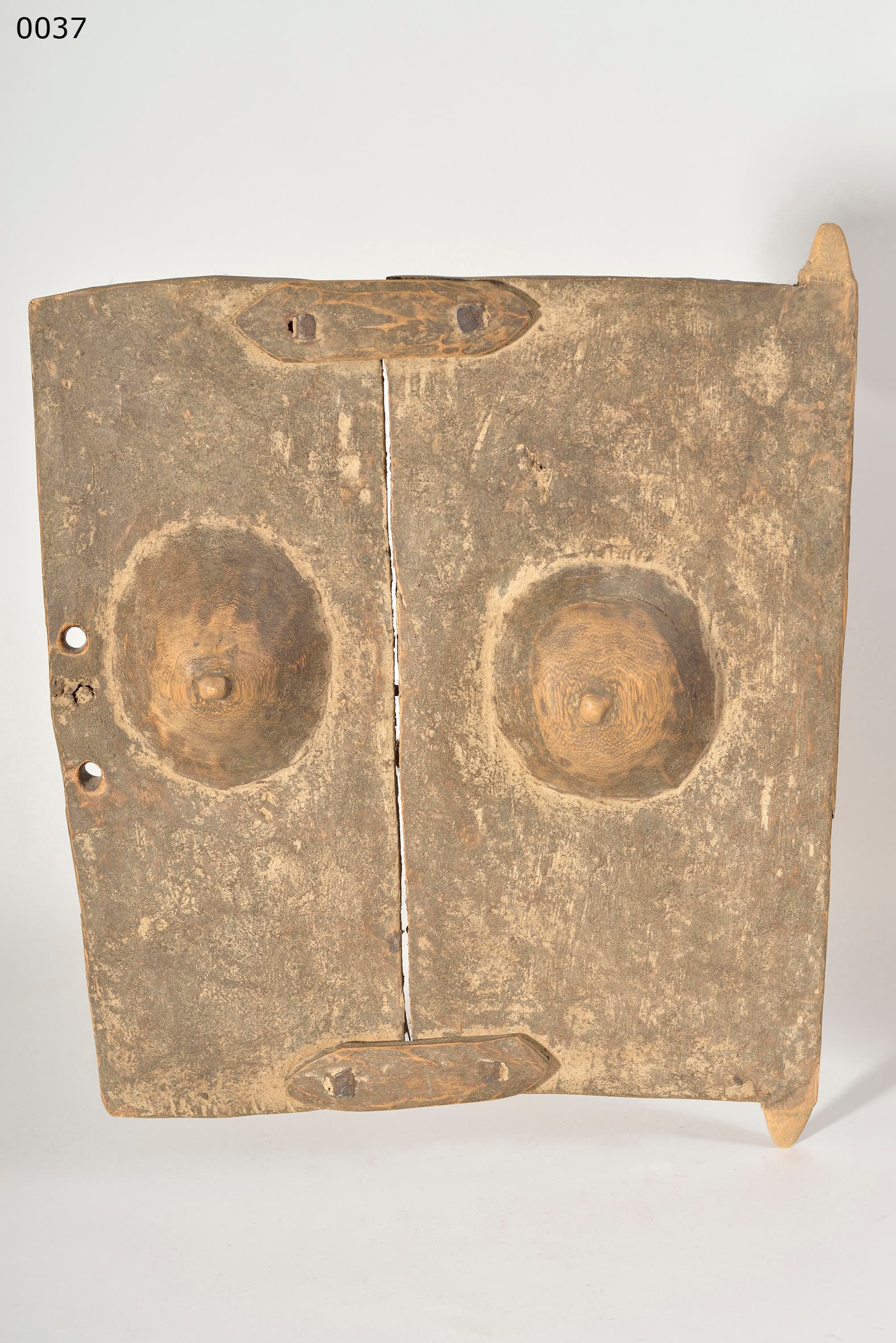
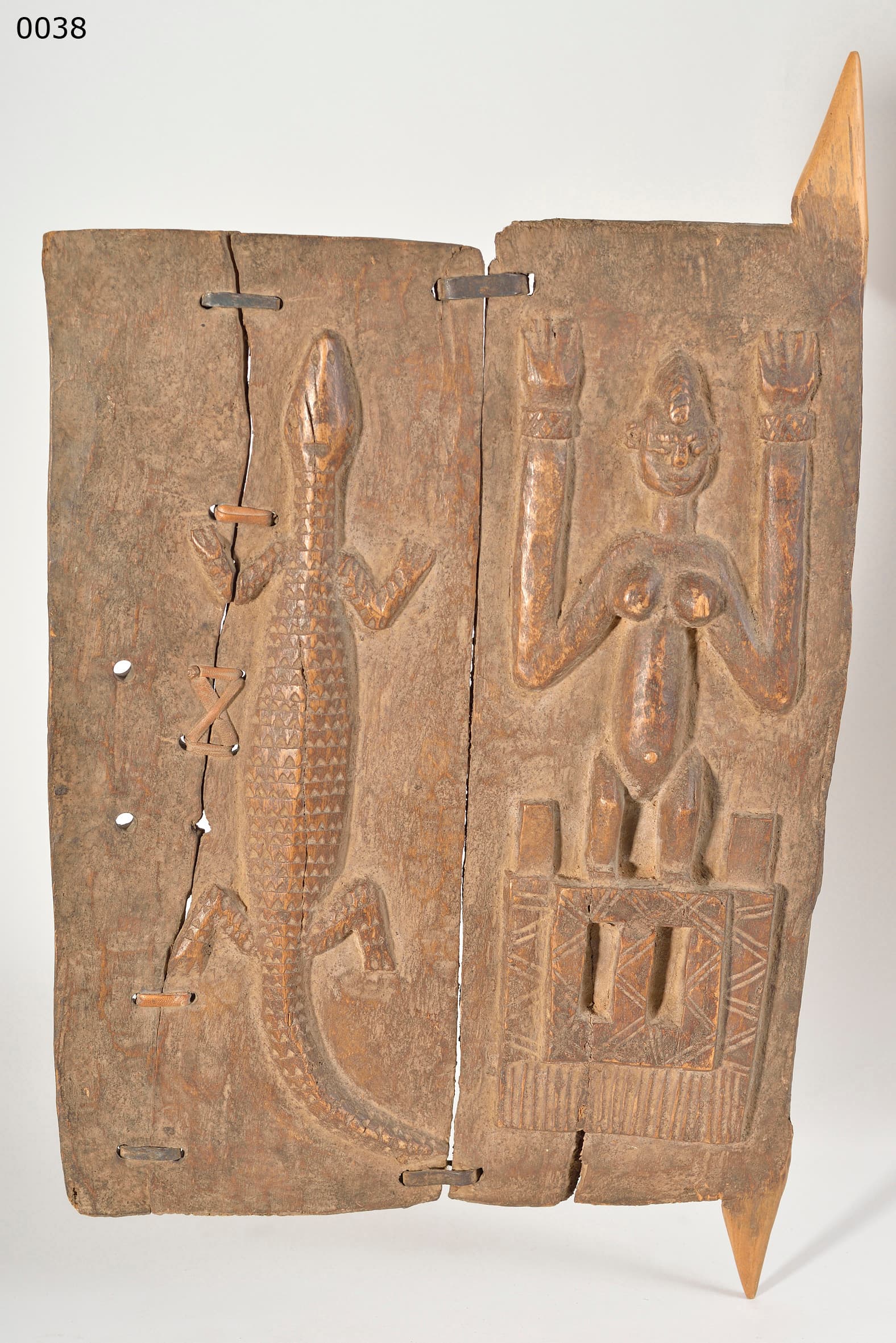
Eine monumentale trogartige Dogon-Holzarche (wohl 19. Jh., 130 cm) aus Mali - geschnitzt in Form eines länglichen pferdeköpfigen Gefäßes, dessen Flanken tief in Hochrelief geschnitzt sind und Reihen von geometrischen, menschenähnlichen Figuren zeigen, die die acht ursprünglichen Nommo darstellen. Das schwere Holz ist stark ausgetrocknet, blass und hat tiefe Risse. Veröffentlicht in DOGON S. 68
1. Narrative Skulptur und komplexes Relief
Während die Kunst der Dogon häufig durch freistehende Solitärfiguren gekennzeichnet ist, zeigt diese massive Arche ihre tiefgreifende Fähigkeit zur komplexen narrativen Reliefschnitzerei.
- Rhythmischer kubistischer Fries: Die dicken Flanken dienen als weitläufige Leinwand - der Künstler schnitzt akribisch einen rhythmischen durchgehenden Fries aus starren kubistischen Figuren, die Schulter an Schulter stehen und sich nahtlos in die geschwungene zoomorphe Form der Arche einfügen.
- Seltenes Format: Die Synthese einer funktionalen Gefäßform mit architektonischen Schnitzereien im Hochrelief ist ein seltenes und geschätztes Dogon-Format.
2. Der Abstieg des Nommo
Dieses Objekt gilt als physische Manifestation des Dogon-Mythos - der Herabkunft der Arche der Welt.
- Ammas himmlische Arche: Nach der von Marcel Griaule aufgezeichneten Kosmologie schickte der Schöpfer Amma eine riesige Arche vom Himmel herab, die von einem Pferd (dargestellt durch den geschnitzten Kopf am Bug) geführt wurde.
- Acht Ahnen an Bord: In ihr befanden sich die acht ursprünglichen Nommo (Ur-Ahnen), die alle Tiere, Pflanzen und das Wissen mit sich führten, das zur Besiedlung der Erde erforderlich war. Diese 130 cm lange Arche wird als Reliquie eines Hogon-Heiligtums interpretiert - sie repräsentierte die Entstehung des Universums selbst.
3. Kanonische Provenienz und Verwitterung am Steilhang
Dieses Stück ist in dem DOGON-Referenzbuch (S. 68) dokumentiert.
- Jahrhundertlanges Trocknen in den Felsenhöhlen: Das massive 130 cm lange Holz zeigt Spuren einer sehr langsamen Austrocknung, wie sie für eine Verwahrung in den Bandiagara-Höhlen typisch ist.
- Wind-geblasen Nommo Erosion: Blasse kalkhaltige Oxidation, tiefe Längsrisse, die über die gesamte Länge des Holzes verlaufen, und die weiche, windgeblasene Erosion der Hochrelief-Nommo-Figuren sprechen für eine Datierung in das 19. Jahrhundert.
Zusammenfassung
Diese massive Arche des Nommo ist ein bedeutendes Artefakt und eine eindrucksvolle Verkörperung der Dogon-Schöpfungsmythologie. Ihre Veröffentlichungsgeschichte, ihre beachtliche Größe von 130 cm und die ausgeprägte Austrocknung, die auf eine lange Verwahrung in Höhlen hindeutet, machen sie zu einem bemerkenswerten Zeugnis der afrikanischen Kunstgeschichte.
KI-unterstützt erstellt aus Sammlungsgutachten, Objektfotografie und eigener Recherche, redaktionell geprüft. Fehler sind möglich — Hinweise darauf sind uns willkommen. Zum Verfahren →