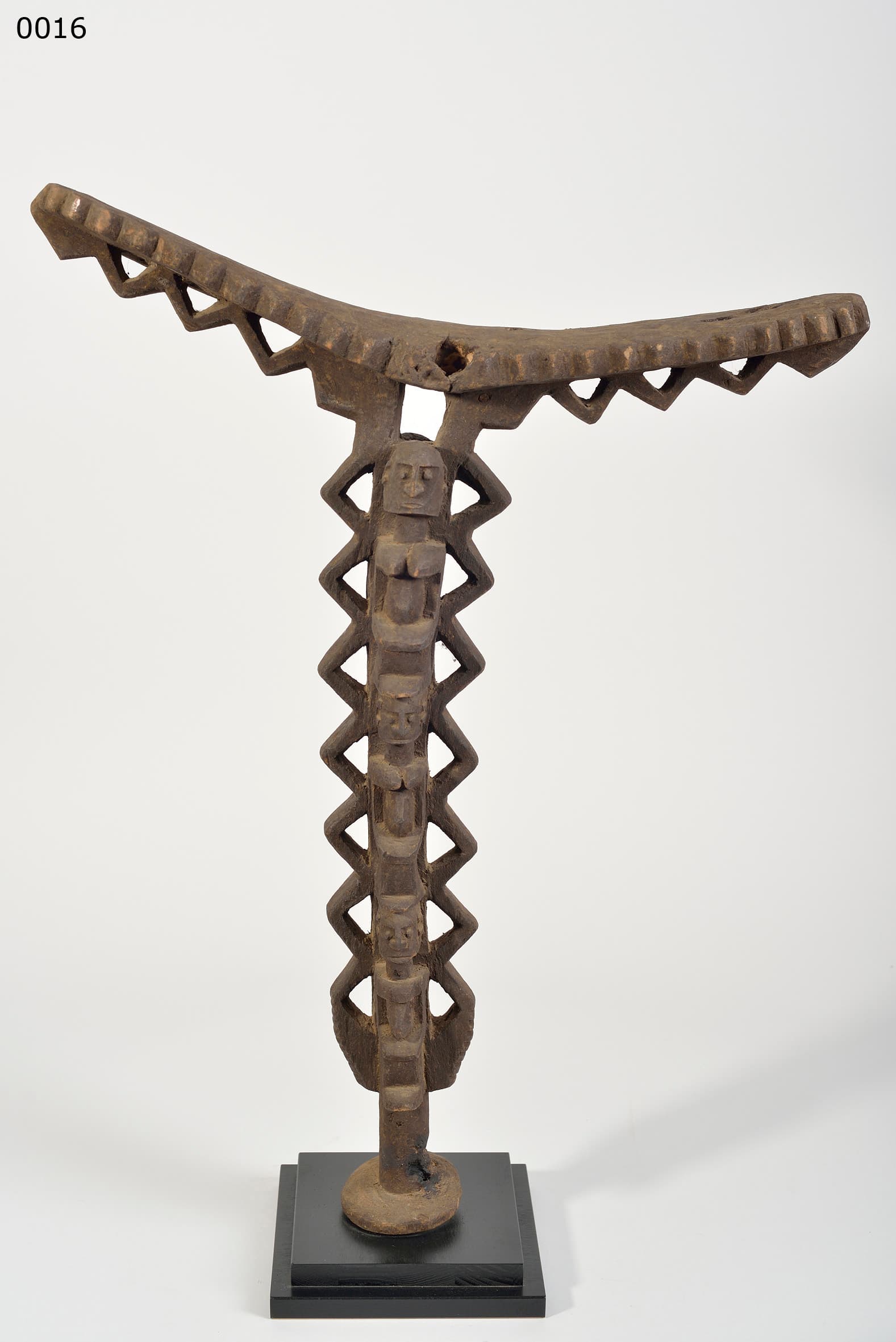
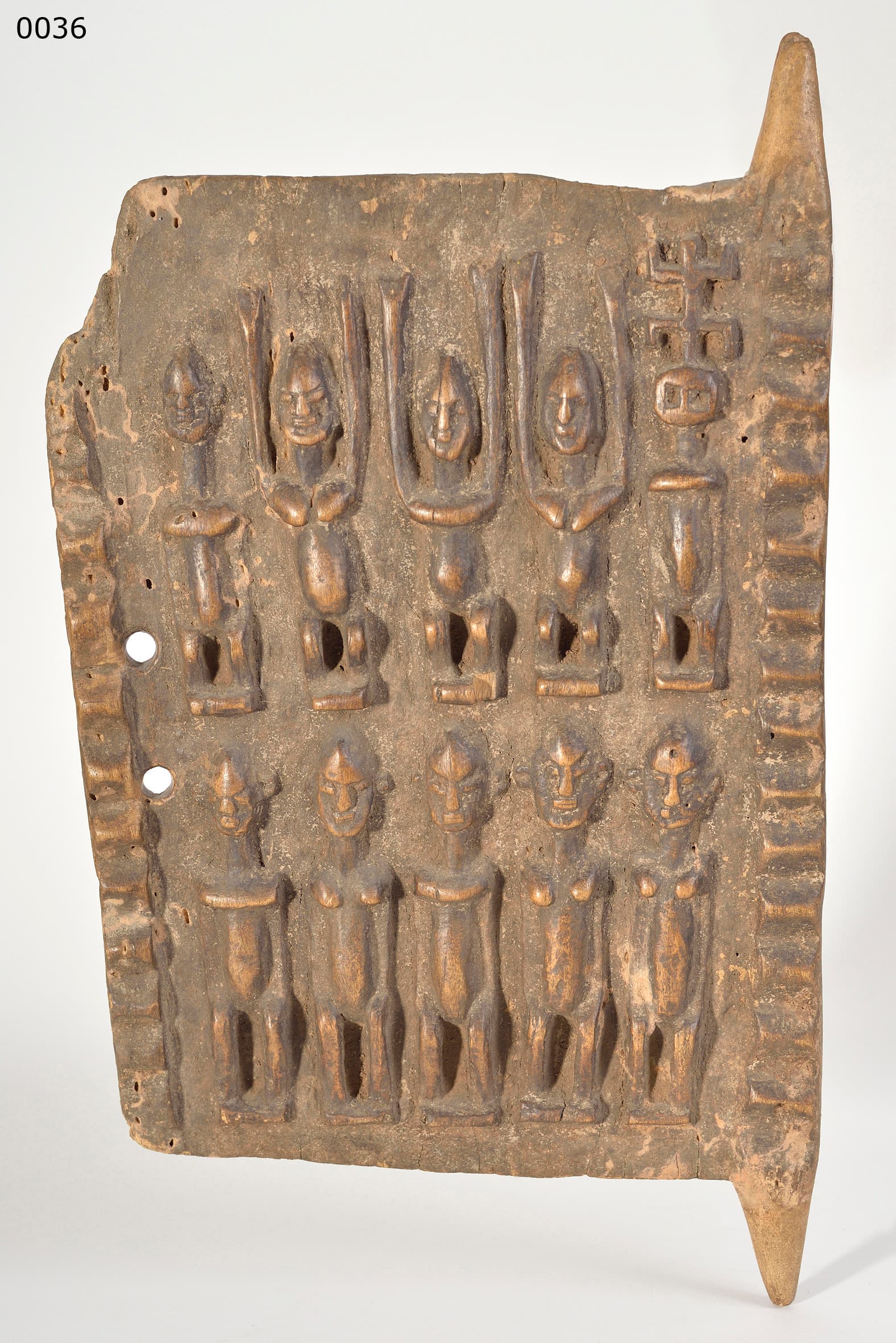
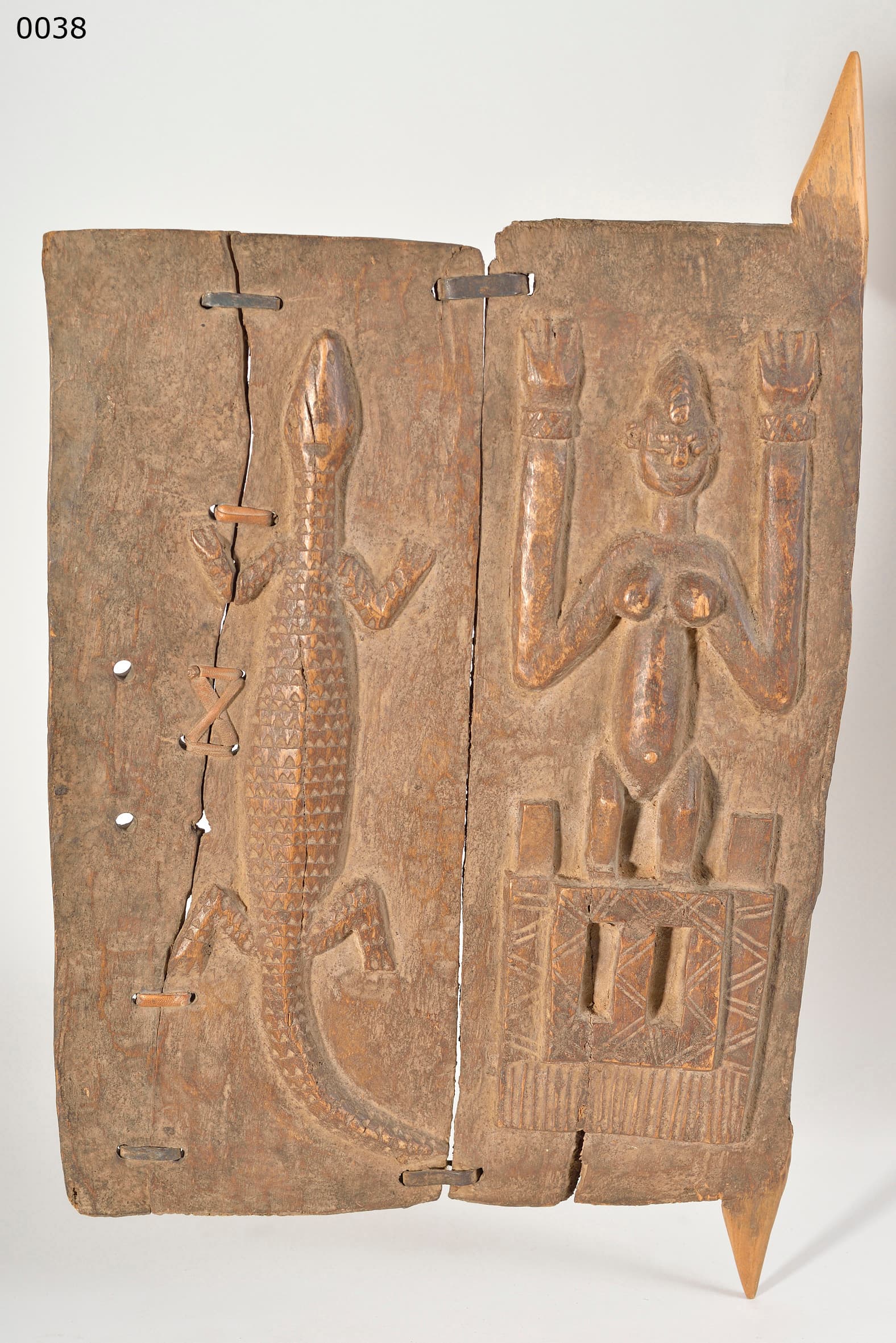
Eine weibliche Ahnenfigur der Dogon (1. Hälfte 20. Jh., 32 cm) aus Mali - geschnitzt in der ikonischen Tellem-Haltung mit erhobenen Armen, die sich in den Himmel strecken. Die stark ausgetrocknete, pudrige und stark zerklüftete graubraune Patina ist charakteristisch für die extreme Alterung durch die Umwelt. Teil eines dreiteiligen Sets (0394, 0395, 0396).
1. Das Tellem-Erbe und die kubistische Vertikalität
Diese Skulptur bringt die architektonische Herangehensweise der Dogon an den menschlichen Körper sehr schön auf den Punkt, indem sie sich auf eine starke vertikale Streckung und kubistische Reduktion stützt.
- Tellem-Motiv der erhobenen Arme: Die Haltung der erhobenen Arme ist ein ästhetisches Überbleibsel der Tellem - des rätselhaften Volkes, das die Bandiagara-Felsen bewohnte, bevor die Dogon im 15.
- Vektor von der Erde zum Himmel: Die Dogon übernahmen dieses Motiv und verwandelten die menschliche Silhouette in einen kraftvollen vertikalen Vektor, der die Erde mit dem Himmel verbindet, wobei sie den starren geometrischen Rhythmus dem fließenden anatomischen Realismus vorzogen.
2. Die Anrufung von Amma und den Regenfängern
Die Haltung des erhobenen Arms ist nicht nur dekorativ - sie ist eine lebenswichtige funktionale Geste des Gebets in der trockenen Umgebung der Sahelzone.
- Bitte an Amma: Die Figur stellt einen Vorfahren oder Nommo (Urgeist) dar, der Amma (den Schöpfergott) aktiv bittet, den lebensspendenden Regen zu schicken, der für die Hirseernte notwendig ist.
- Platzierung im Hogon-Heiligtum: Sie wurde auf den privaten Altären der Dorfältesten oder in den Heiligtümern des Hogon (des obersten spirituellen Führers) aufbewahrt - diese Dege diente als permanentes physisches Gebet.
3. Austrocknung des Steilhangs und Lagerung in Höhlen
Die physische Oberfläche stellt einen unauslöschlichen geologischen Zeitstempel der aktiven Nutzung in Mali dar.
- Keine ölige Küstenpolitur: Die dunkle ölige Politur, die auf afrikanischen Küstenschnitzereien zu finden ist, fehlt völlig - stattdessen weist sie die typische Patina des Steilhangs aus trockener, mürber Kreideoxidation auf.
- Abgestreift durch Saharawinde: In den hohen windgepeitschten Höhlen der Bandiagara Klippe gehalten, wurde das Holz vollständig von seinen natürlichen Ölen durch abrasive Saharawinde und Hitze in der ersten Hälfte des 20. Jahrhunderts gestrippt - die Herstellung der tiefen stabilisierten Austrocknung Risse auf dem Rumpf.
Zusammenfassung
Diese zu einem dreiteiligen Set gehörende Dogon-Ahnenfigur mit erhobenen Armen ist eine Meisterleistung in kubistischer Reduktion und malischer Regenmacher-Ikonografie. Die stark ausgetrocknete und verwitterte Patina ist eine einwandfreie Bestätigung für ihre echte zeremonielle Geschichte auf den Bandiagara-Felsen.
KI-unterstützt erstellt aus Sammlungsgutachten, Objektfotografie und eigener Recherche, redaktionell geprüft. Fehler sind möglich — Hinweise darauf sind uns willkommen. Zum Verfahren →