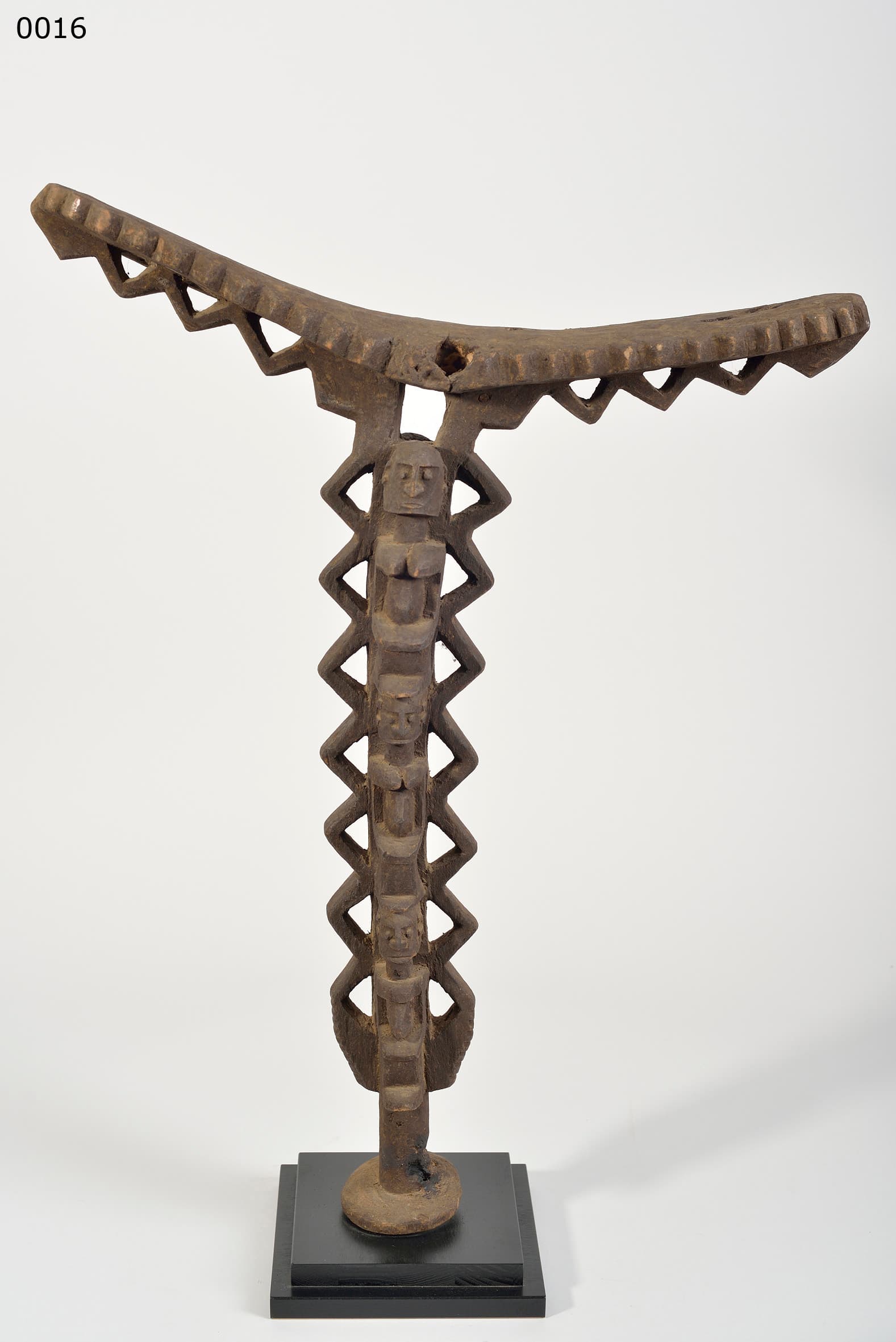
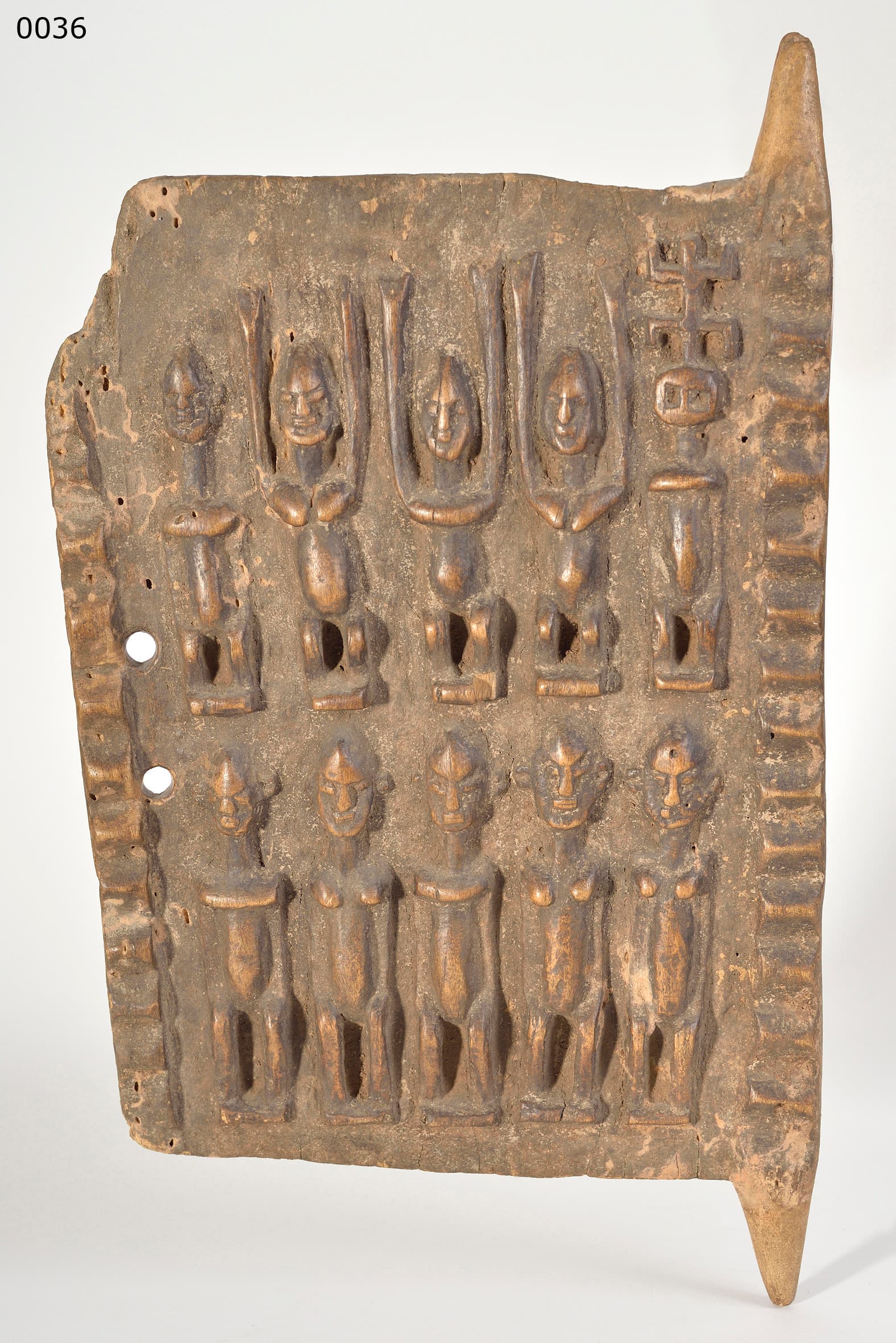
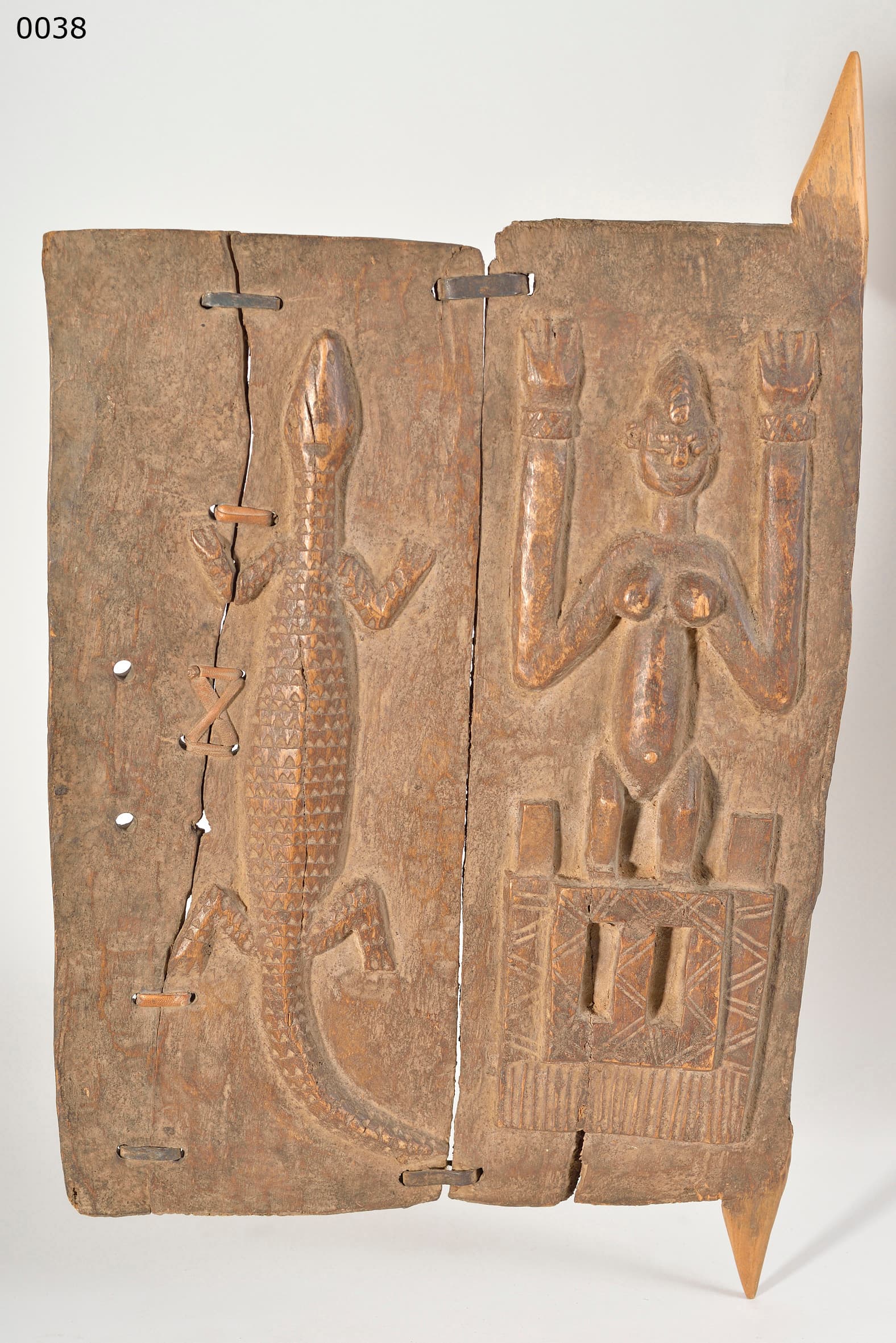
Eine massive, sehr langgestreckte Dogon-Figur (1. Hälfte 20. Jh., 90 cm) aus Mali - die klassische, von Tellem inspirierte Haltung mit erhobenen Armen, mit einem vereinfachten, helmartigen Kopf und einem sehr schlanken, röhrenförmigen Torso. Das helle, trockene Holz ist stark erodiert mit tiefen Längsrissen und einer kalkhaltigen, windgestrahlten Oberfläche. Veröffentlicht in DOGON S. 25
1. Die Tellem-Geste des Flehens
Diese hoch aufragende Figur zeigt eine charakteristische Manifestation des architektonischen Kubismus der Dogon - stark beeinflusst von der vorangegangenen Tellem-Kultur.
- Ungebrochene vertikale Linie: Das bestimmende Merkmal sind die nach oben gerichteten Arme, die eine ungebrochene vertikale Linie bilden, die sich über 90 cm erstreckt.
- Strukturelle Himmelssäule: Der Künstler entfernt alle überflüssigen anatomischen Details, indem er den Rumpf als strengen Zylinder und den Kopf als geometrischen Block darstellt - die extreme Streckung verwandelt den menschlichen Körper in eine permanente strukturelle Säule, die die irdische Erde mit dem himmlischen Reich verbindet.
2. Amma für Regen anrufen
Im unbarmherzigen, trockenen Klima der malischen Sahelzone hängt das Überleben ausschließlich von den kurzen saisonalen Regenfällen ab.
- Universelle Gebetsgeste: Die Haltung der erhobenen Arme - die Arme flach gegen den Himmel gerichtet - ist die universelle Geste der Dogon für Gebet und Flehen.
- Ewiges physisches Gebet: Die Statue stellt einen mächtigen Nommo oder verehrten Vorfahren dar, der Amma (den Schöpfergott) aktiv um Wasser und Vergebung bittet. Die Figur wurde in den offenen Höfen der Hogon oder in hochgelegenen Heiligtümern an den Klippen aufbewahrt und diente als ewiges körperliches Gebet, das den Fortbestand der Landwirtschaft des Dorfes sicherte.
3. Kanonische Provenienz und Verwitterung am Steilhang
Diese Skulptur ist durch ihre Publikationsgeschichte dokumentiert.
- DOGON S. 25: Veröffentlicht im Referenzbuch.
- Sahara-Bleiche: Das Holz ist durch die Sonne und den Wind der Sahara vollständig von seiner natürlichen Farbe gebleicht worden - eine pudrige, blassgraue Patina. Tiefe stabilisierte Austrocknungsrisse, die über die gesamte Länge des Rumpfes verlaufen, sprechen für eine jahrzehntelange Exposition am Bandiagara-Steilhang.
Zusammenfassung
Diese Dogon-Figur ist ein eindrucksvolles Zeugnis ritueller Kunst und ein bemerkenswertes Beispiel vertikaler Abstraktion. Ihre Publikationsgeschichte und die tiefgreifende Verwitterung durch die Witterung des Steilhangs machen sie zu einem bedeutenden Sammlerstück von ethnografischem Interesse.
KI-unterstützt erstellt aus Sammlungsgutachten, Objektfotografie und eigener Recherche, redaktionell geprüft. Fehler sind möglich — Hinweise darauf sind uns willkommen. Zum Verfahren →