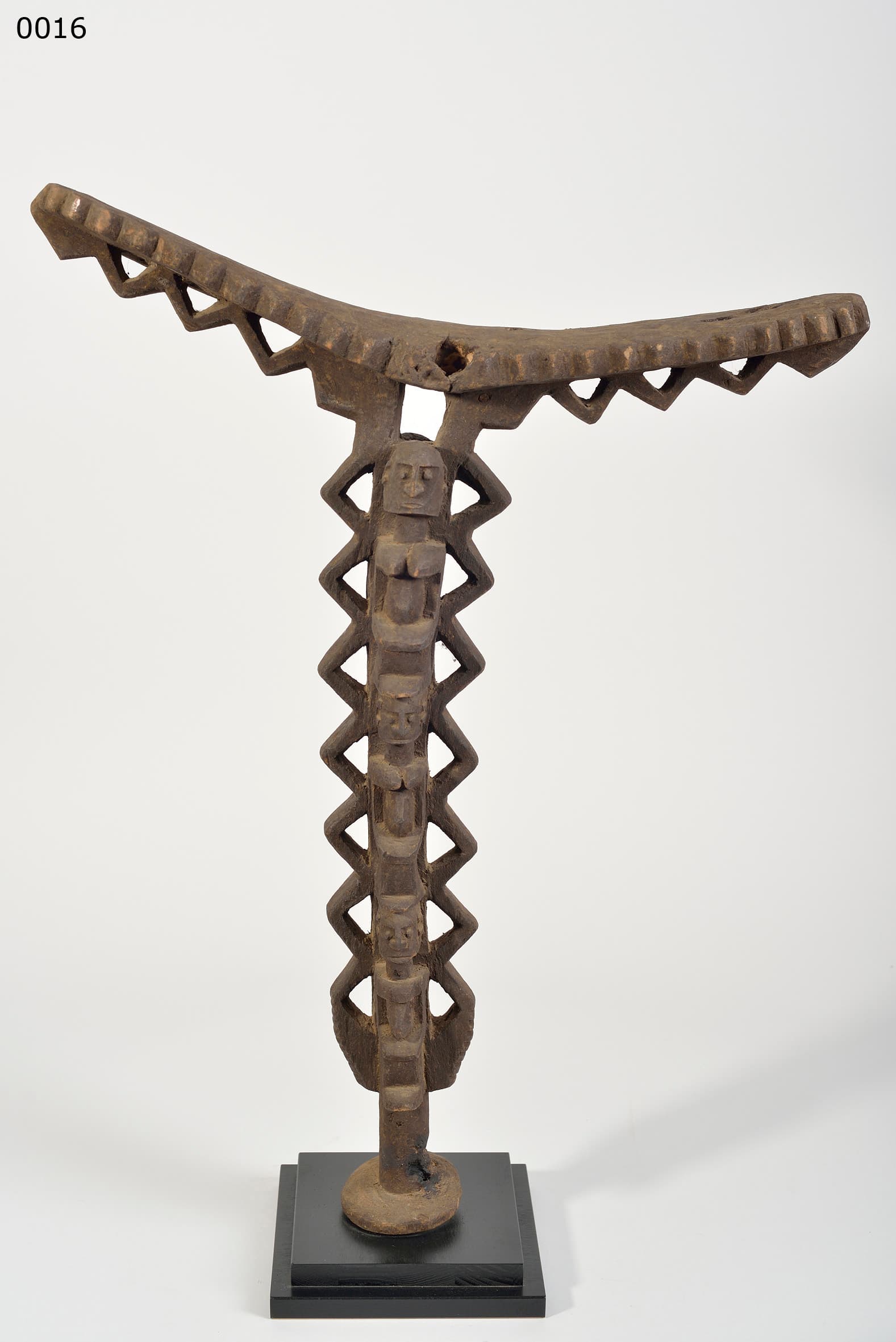
Eine kleine Dogon-Miniatur-Altarleiter (18-19. Jh., 38 cm) aus Mali - geschnitzt in der Form einer traditionellen Y-förmigen Dogon-Leiter mit tief eingekerbten Stufen und einer gegabelten Spitze. Das Holz ist stark ausgetrocknet, blass und stark erodiert und weist eine krustige, oxidierte Patina auf, die für die Lagerung in alten Höhlen charakteristisch ist.
1. Architektonische Miniaturisierung
Die Dogon sind berühmt für ihre Y-förmigen, gekerbten Leitern in Originalgröße, die aus massiven Baumstämmen geschnitzt wurden - unerlässlich für den Zugang zu den flachen Dächern der Lehmhäuser und den hochgelegenen Türen der Kornspeicher.
- Konzeptionelle Verkleinerung: Dieses Objekt ist eine brillante konzeptionelle Verkleinerung dieser lebenswichtigen architektonischen Form - eine perfekte Nachbildung der schweren gestuften Geometrie und der ausgeprägten gegabelten Spitze in einem intimen Maßstab von 38 cm.
- Werkzeug zu Symbol: Verwandelt ein profanes Werkzeug der physischen Erhebung in ein hoch aufgeladenes abstraktes spirituelles Symbol.
2. Der Weg zu den Ahnen
In der Dogon-Kosmologie ist die Leiter (kaga) ein tiefgründiges Symbol des Übergangs und der Verbindung zwischen den Welten.
- Brücke zwischen den Welten: So wie eine physische Leiter die Erde mit dem Kornspeicher (der Quelle der physischen Nahrung) verbindet, fungiert die Leiter des Miniaturaltars als spirituelle Brücke, die die irdische Welt der Lebenden mit dem himmlischen Reich von Amma (dem Schöpfer) und den Ahnen verbindet.
- Platzierung des Heiligtumsaltars: An prominenter Stelle auf einem Binnu-Heiligtumsaltar platziert, bot er einen direkten konzeptionellen Weg für die Geister, vom Himmel herabzusteigen und die von den Hogon oder Dorfältesten dargebrachten Opfer zu empfangen.
3. Erosion des Steilhangs und Altertum
Die Datierung auf das 18. bis 19. Jahrhundert wird durch den extremen natürlichen Verfall des Holzes stark unterstützt.
- Kreideversteinerung: Das Holz ist unglaublich trocken, kalkhaltig und brüchig - es trägt die typische "Steilhangpatina", die durch die lange Lagerung in den trockenen, windgepeitschten Höhlen der Bandiagara-Klippen entstanden ist.
- Opferkruste in den Kerben: Tiefe Längsspalten und die starke Abrundung der einst scharfen geschnitzten Stufen; Reste einer dicken gehärteten Opferkruste (wahrscheinlich Hirsebrei und Blut), die in die Kerben eingebettet sind, bestätigen das lange Leben auf einem aktiven Arbeitsaltar.
Zusammenfassung
Diese Miniatur-Altarleiter, eine tiefgründige Visualisierung der kosmologischen Architektur der Dogon, diente als direkte spirituelle Brücke zum Himmel. Die starke Austrocknung des Steilhangs bietet eine einwandfreie forensische Bestätigung für seine malische Antike aus dem 18. und 19.
KI-unterstützt erstellt aus Sammlungsgutachten, Objektfotografie und eigener Recherche, redaktionell geprüft. Fehler sind möglich — Hinweise darauf sind uns willkommen. Zum Verfahren →