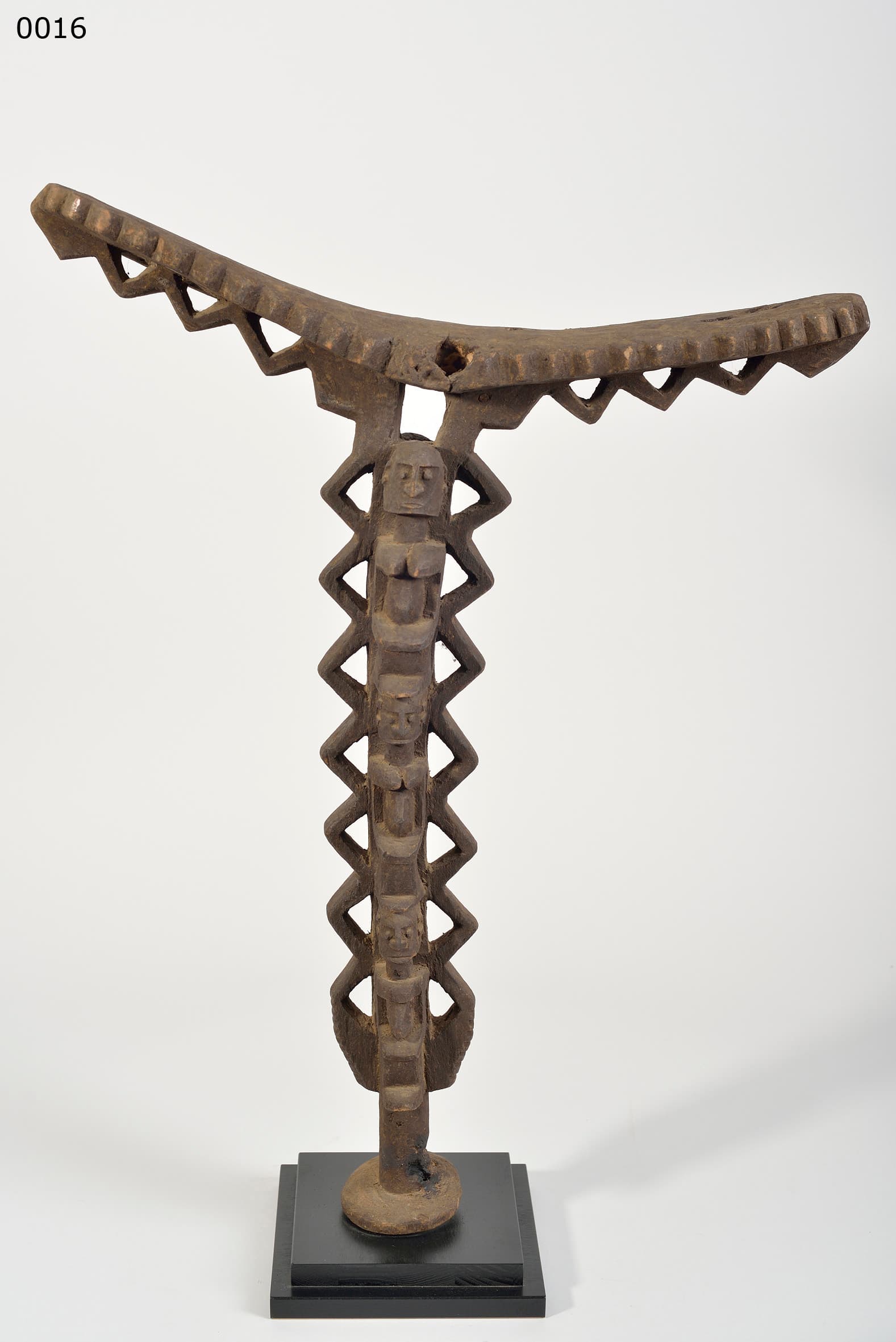
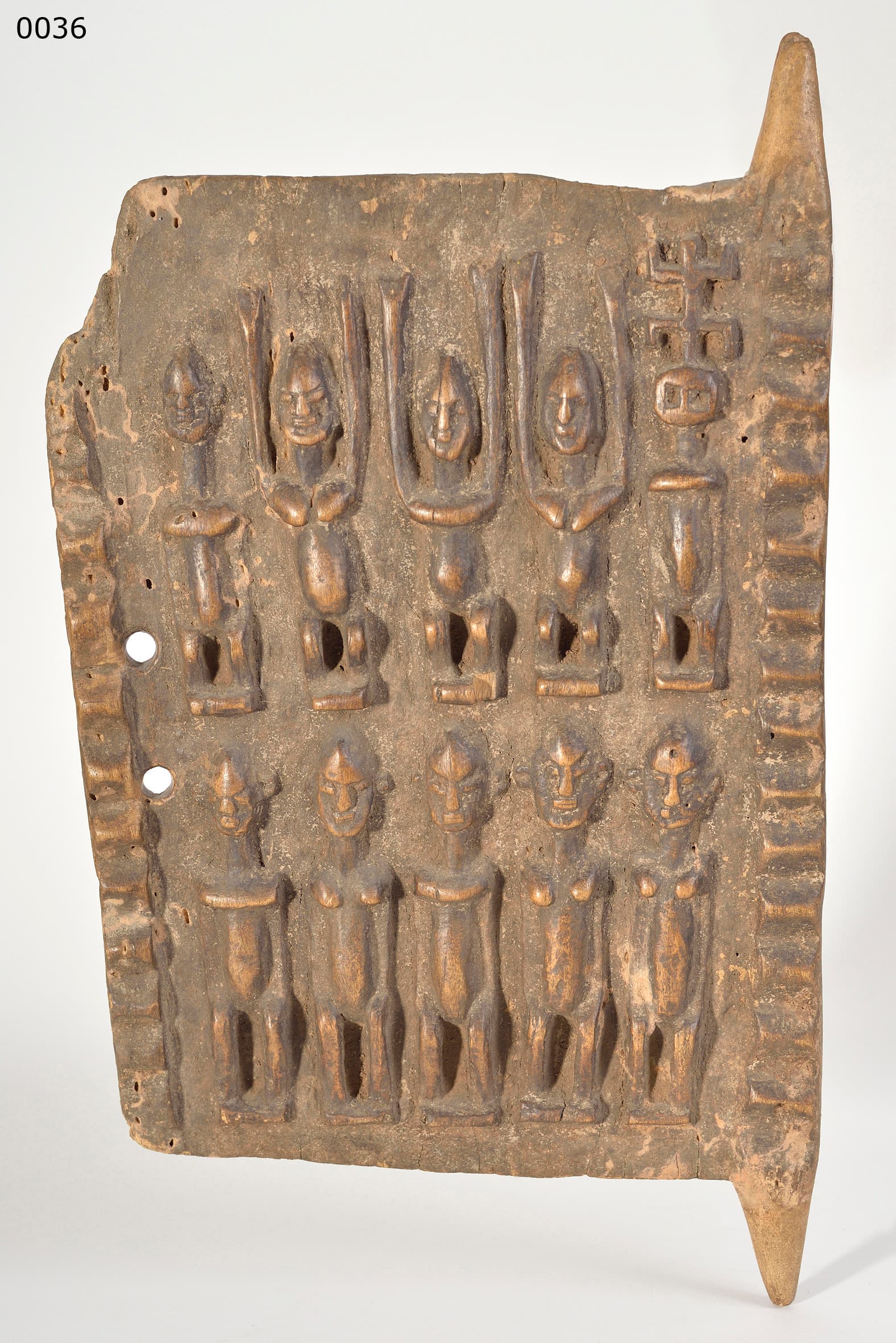
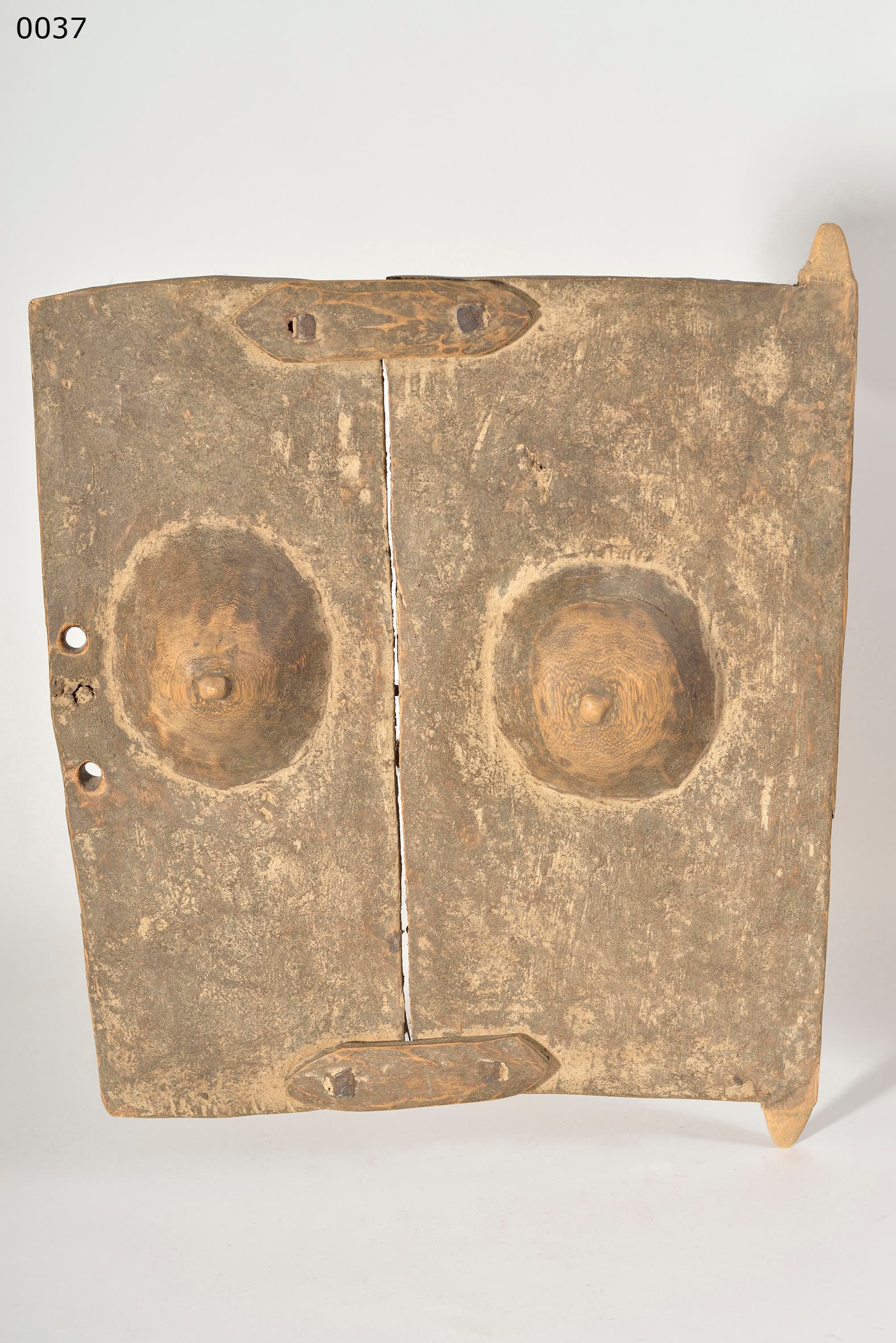
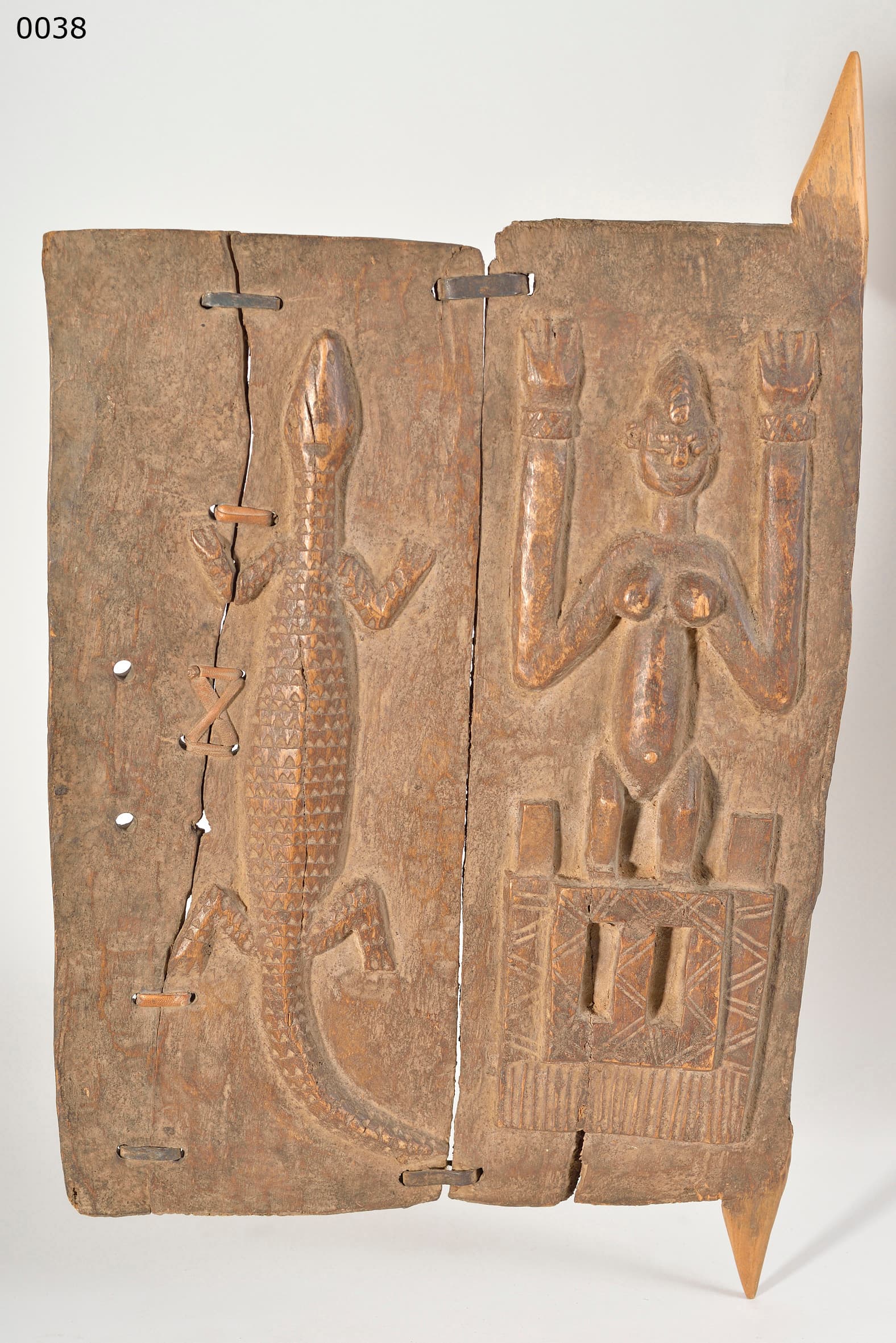
Dieser schwere, runde Holzhocker besitzt eine dicke, abgerundete Sitzfläche, die von einem äußeren Ring aus vier stark stilisierten, abstrakten Karyatidenfiguren (Säulen) getragen wird, die eine zentrale Stützsäule umgeben. Das Holz ist außergewöhnlich dicht und weist eine dunkle, krustige Patina mit tiefen, über die Sitzfläche verlaufenden Altersrissen auf.
1. Ästhetischer Stil und regionale Eigenheiten
Das Dogon-Volk der malischen Klippen ist bekannt dafür, seine komplexe Kosmologie in die alltägliche, funktionale Architektur einzubetten. Dieser Hocker veranschaulicht diese Philosophie in eindringlicher Weise. Die Komposition wird in der Literatur als physikalisches Modell des Universums gedeutet: Die runde Sitzfläche stellt den Himmel dar, der Sockel die Erde und die tragenden Säulen (die Karyatiden) die Nommo - die hermaphroditischen Urahnen, die vom Himmel herabstiegen, um die Welt zu organisieren. Die Schnitzerei ist streng, wobei die strukturelle Beständigkeit und die geometrische Stabilität Vorrang vor dem zarten Naturalismus haben.
2. Rituelle Funktion und Geheimbundkontext
Dieser Hocker wird in der ethnographischen Literatur als zentrales Utensil bei den Beschneidungszeremonien der Dogon beschrieben. Wenn ein Junge beschnitten wird, so glaubt man, dass er seine weiblichen Elemente ablegt, um ein reiner, erwachsener Mann zu werden, der in die Awa (Maskengesellschaft) eintreten kann. Indem er während des schmerzhaften Eingriffs auf diesem Hocker sitzt, wird der Eingeweihte von den Nommo-Ahnen körperlich und geistig unterstützt. Der Hocker absorbiert das Blut und die mächtige spirituelle Energie (Nyama) des Übergangs, was ihn zu einem hochheiligen, streng bewachten Objekt macht.
3. Physische Patina und Altersnachweis
Ein hohes Alter, das mit einer Datierung in das 19. Jahrhundert vereinbar ist, legt sich durch die tiefgreifenden Altersspuren nahe. Das dichte Wüstenholz ist ausgetrocknet, was zu den schweren Austrocknungsrissen geführt hat, die sich durch die dicke Sitzfläche und den Sockel ziehen. Die Oberfläche ist frei von moderner Politur und stattdessen von einer brüchigen, verkrusteten Schicht aus altem Ruß, getrocknetem Blut und Schweiß überzogen. Die Kanten der Karyatiden sind sanft abgestumpft, was von einer intensiven rituellen Handhabung und Reibung zeugt.
Zusammenfassung
Dieser Beschneidungshocker der Dogon gilt als ein eindrucksvolles Zeugnis der funktionalen sahelischen Kosmologie, das den Eingeweihten symbolisch mit den Urahnen verbinden soll. Seine dichte architektonische Struktur und die ausgeprägten Verwitterungsspuren sprechen für ein hohes Alter, das mit einer Entstehung im 19. Jahrhundert vereinbar ist, und stützen die Zuschreibung als rituelles Objekt männlicher Initiationsriten.
KI-unterstützt erstellt aus Sammlungsgutachten, Objektfotografie und eigener Recherche, redaktionell geprüft. Fehler sind möglich — Hinweise darauf sind uns willkommen. Zum Verfahren →