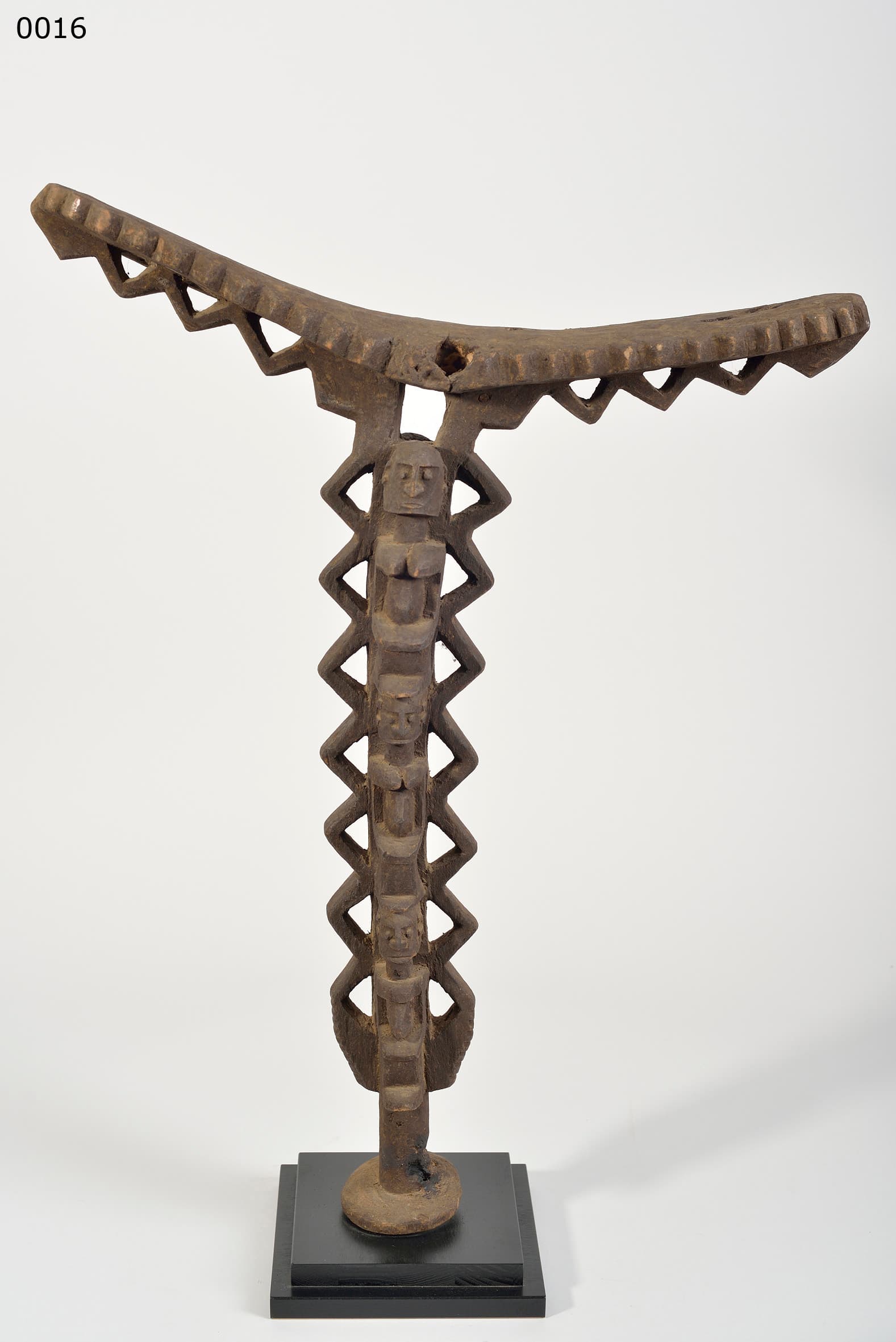
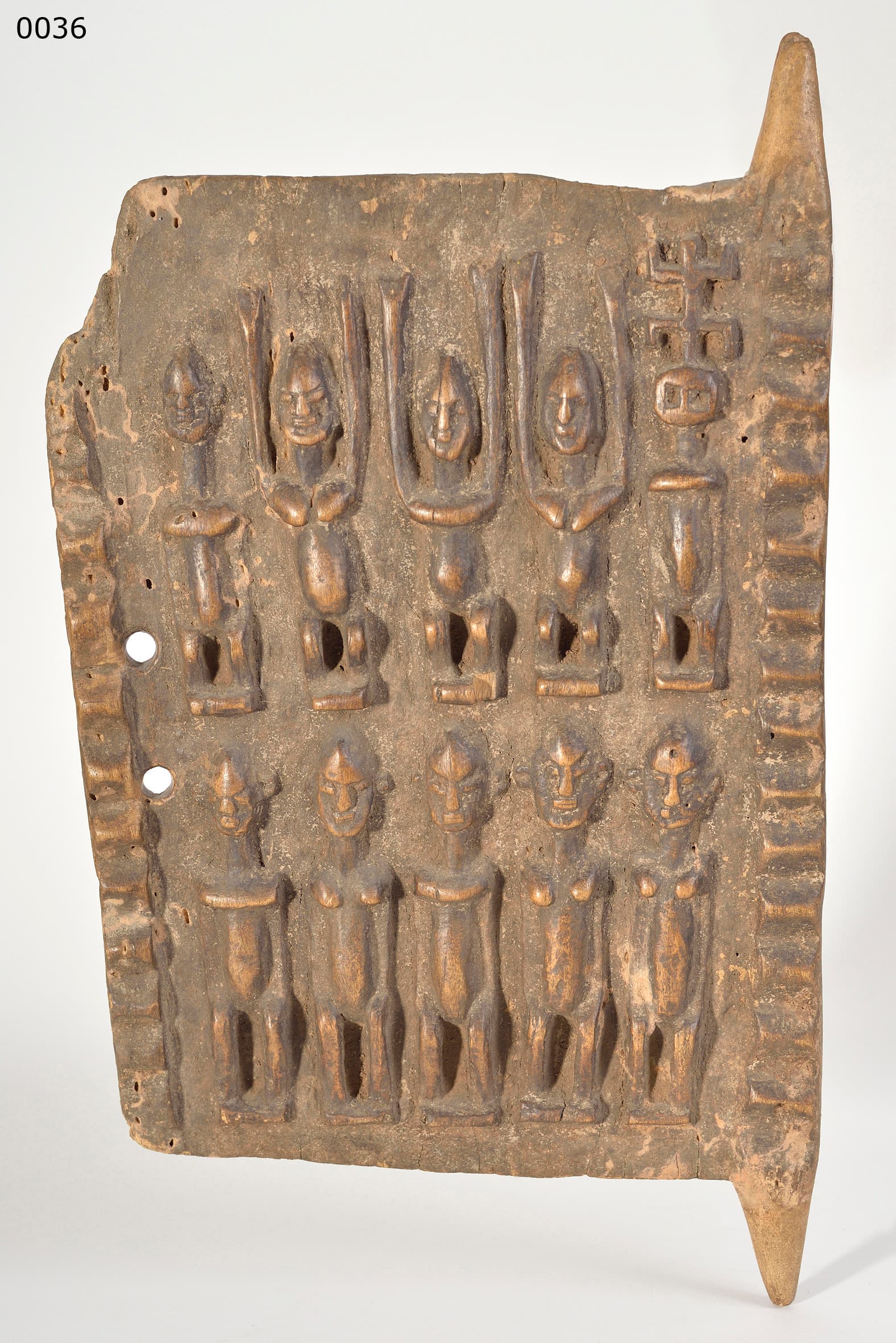
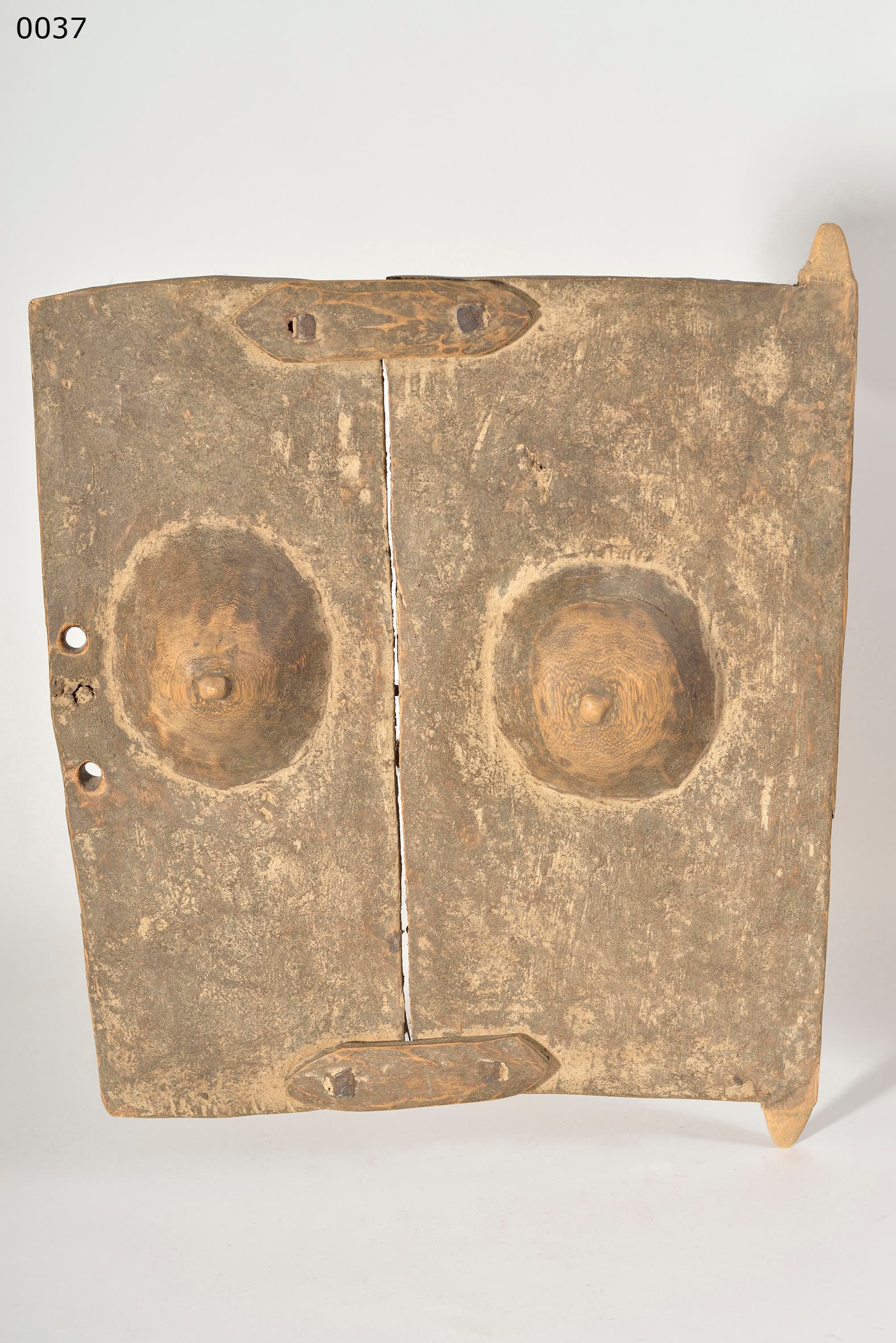
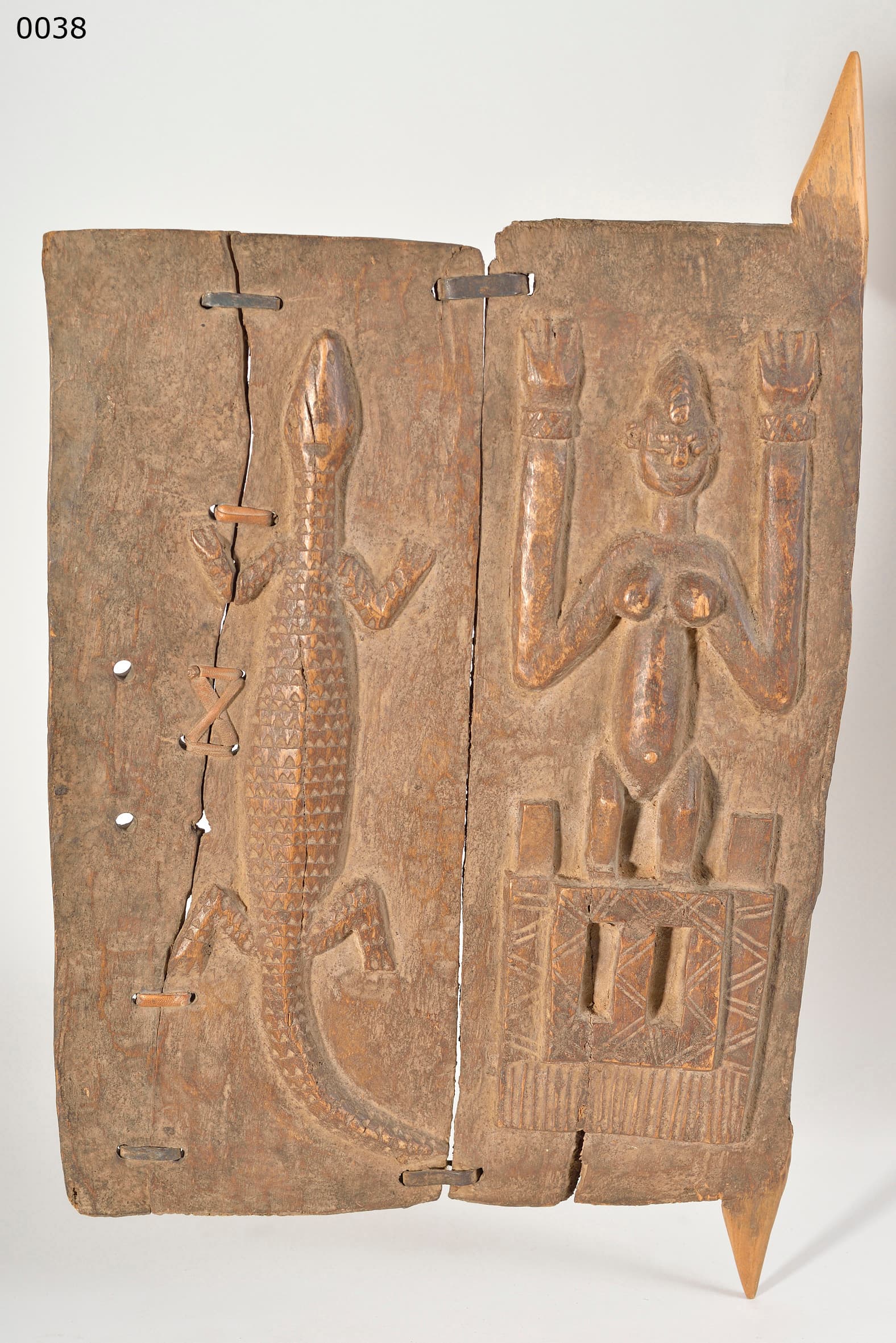
Diese monumentale, stark verwitterte Holzschnitzerei stellt eine abstrakte menschliche Figur dar, die auf einem dicken, stilisierten, fast elefantösen Tier reitet. Das Holz ist stark ausgetrocknet, hat tiefe Risse und ist von jeglicher ursprünglicher Oberflächenbehandlung befreit, so dass die rohe, alte Maserung zum Vorschein kommt.
1. Ästhetischer Stil und regionale Eigenheiten
Diese Skulptur verkörpert die extreme Reduktion der Form in der alten Dogon/Tellem-Kunst. Das Reittier ist als massives, blockartiges Volumen dargestellt, während der Reiter langgestreckt und geometrisch ist. Diese radikale Stilisierung gibt dem spirituellen Gewicht und der mythologischen Erzählung Vorrang vor dem anatomischen Realismus - der Bildhauer stellte nicht ein Pferd dar, sondern die kosmologische Funktion eines Reiters, ein ikonografisches Kürzel für Befehlsgewalt, Abstieg von oben und übernatürliche Mobilität zwischen den Reichen.
2. Rituelle Funktion und kosmologische Rolle
In der Kosmologie der Dogon stellen Reiterfiguren den Hogon (oberster religiöser und politischer Führer) oder den mythologischen Nommo dar, der vom Himmel herabsteigt. Die schiere Größe und das Alter dieses Stücks lassen vermuten, dass es ein zentraler Punkt in einem hochrangigen binu-Heiligtum war und als physischer Anker für Gebete in Bezug auf Regen, Fruchtbarkeit und kosmische Ordnung diente. Ihre monumentale Größe hebt sie von kleineren häuslichen Schreinfiguren ab und deutet auf ein Heiligtum hin, das eher einem ganzen Dorf oder Clan als einem einzelnen Haushalt diente.
3. Physische Patina und Altersnachweis
Die tiefen, strukturellen Austrocknungsrisse und die stark erodierten, weichen Kanten des Holzes deuten auf ein hohes Alter und eine lange Exposition im trockenen Mikroklima der Bandiagara-Felsen hin. Dieser starke physische Verfall steht im Einklang mit einer Datierung auf das 18. bis 19. Jahrhundert (oder älter) und macht es zu einem wertvollen Überbleibsel alter Holzschnitzkunst. Der vollständige Verlust der ursprünglichen Oberflächenbeschichtung - ob als Opfergabe oder anderweitig - ist selbst ein chronologischer Hinweis, da die Figuren aus späterer Zeit zumindest noch Spuren von Altarbeschichtungen aufweisen.
Zusammenfassung
Diese mythologische Reiterfigur ist ein Titan der dogonischen Antike, der die komplexe Kosmologie in eine strenge, monolithische Form bringt. Ihre extreme Verwitterung und ihr hohes Alter weisen sie als museales Relikt der alten spirituellen Landschaft Malis aus.
KI-unterstützt erstellt aus Sammlungsgutachten, Objektfotografie und eigener Recherche, redaktionell geprüft. Fehler sind möglich — Hinweise darauf sind uns willkommen. Zum Verfahren →