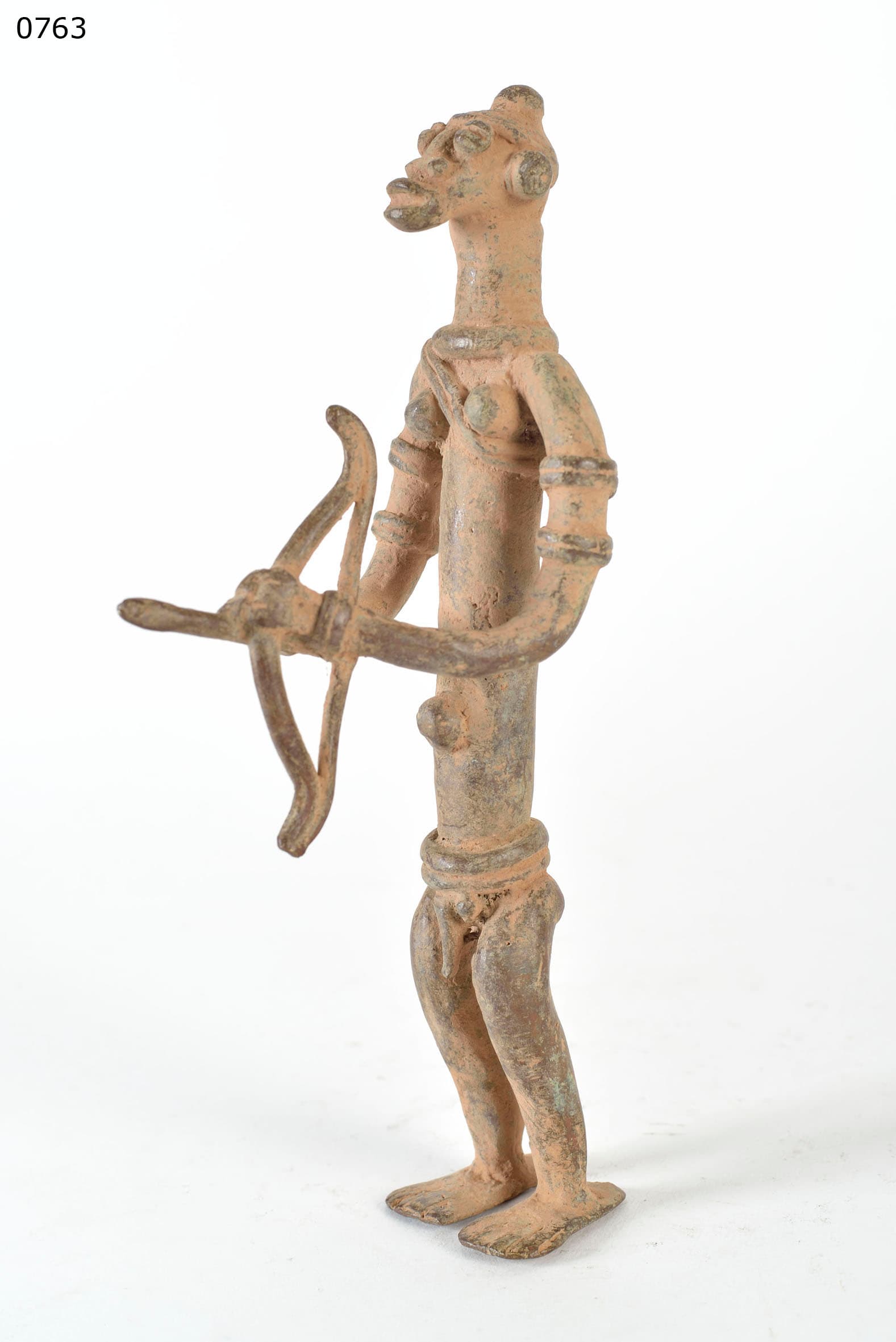
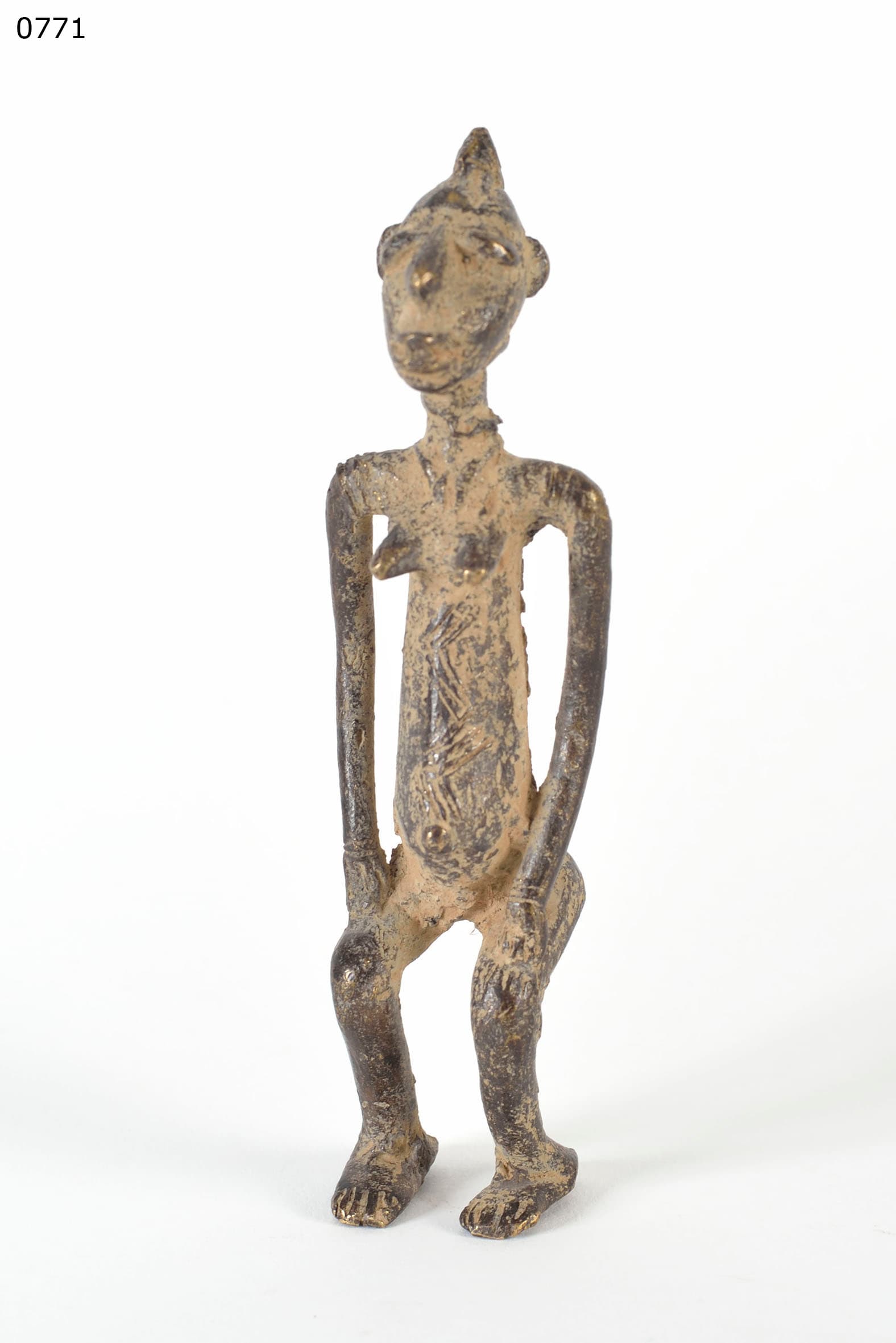
Eine von zwei sehr komplexen, historischen durchbrochenen Gan-Bronzen. Dieses Stück weist eine zentrale Achse mit zwei großen, eckigen Zickzackarmen auf, die in flachen, dreieckigen Köpfen enden. Die Bronze ist stark oxidiert.
1. Ästhetischer Stil und regionale Eigenheiten
Dieses Objekt repräsentiert eine hochentwickelte Form der Gan-Bronzegusstradition. Die technische Schwierigkeit, dieses große, symmetrische, durchbrochene Muster mit mehreren sich kreuzenden Zickzacklinien im Wachsausschmelzverfahren auszuführen, zeugt von beachtlichem handwerklichen Geschick. Die Gestaltung kann als eine komplexe, abstrakte visuelle Landkarte der Kosmologie und spirituellen Architektur der Gan interpretiert werden. Die blitzartigen Zickzack-Motive stehen wahrscheinlich für Sturm oder atmosphärische Kräfte im symbolischen Vokabular der Figur.
2. Rituelle Funktion als Altarinstallation
Objekte von dieser Größe, diesem Gewicht und dieser Komplexität werden in der Literatur oft mit den höchsten Rängen der ganischen Gesellschaft assoziiert. Es handelte sich wahrscheinlich um eine zentrale Installation auf einem großen königlichen oder kommunalen Altar. Die kantigen, blitzähnlichen Motive werden im rituellen Kontext als Reservoir spiritueller Kraft verstanden, das die Gebete der Gemeinschaft bündeln und spirituelle Bedrohungen abwehren soll.
3. Physische Patina und Altersnachweis
Die visuelle Wirkung dieser Bronze wird durch ihre ausgeprägten Alterungsspuren noch verstärkt. Die Oberfläche ist dick mit einer krustigen, stark strukturierten Schicht aus Malachit, Cuprit und verkalkter Erde überzogen. Diese tiefgreifende chemische Zersetzung, die die feineren Details der ursprünglichen Wachsfäden verdeckt, spricht dafür, dass dieses Objekt über einen langen Zeitraum entweder in der Erde vergraben oder auf alten Schreinen im Freien ausgestellt war, was eine Datierung in das 16. bis 19. Jahrhundert nahelegt.
Zusammenfassung
Diese Gan-Altarbronze stellt eine bemerkenswerte Arbeit von komplexer, abstrakter Metallurgie dar. Ihre anspruchsvolle Konstruktion im Wachsausschmelzverfahren und die ausgeprägte, ungereinigte Patina sprechen für ein hohes Alter dieses Objekts aus Burkina Faso. (Artikel stilistisch identifiziert; fehlt in der ursprünglichen Excel-Registrierung)
KI-unterstützt erstellt aus Sammlungsgutachten, Objektfotografie und eigener Recherche, redaktionell geprüft. Fehler sind möglich — Hinweise darauf sind uns willkommen. Zum Verfahren →