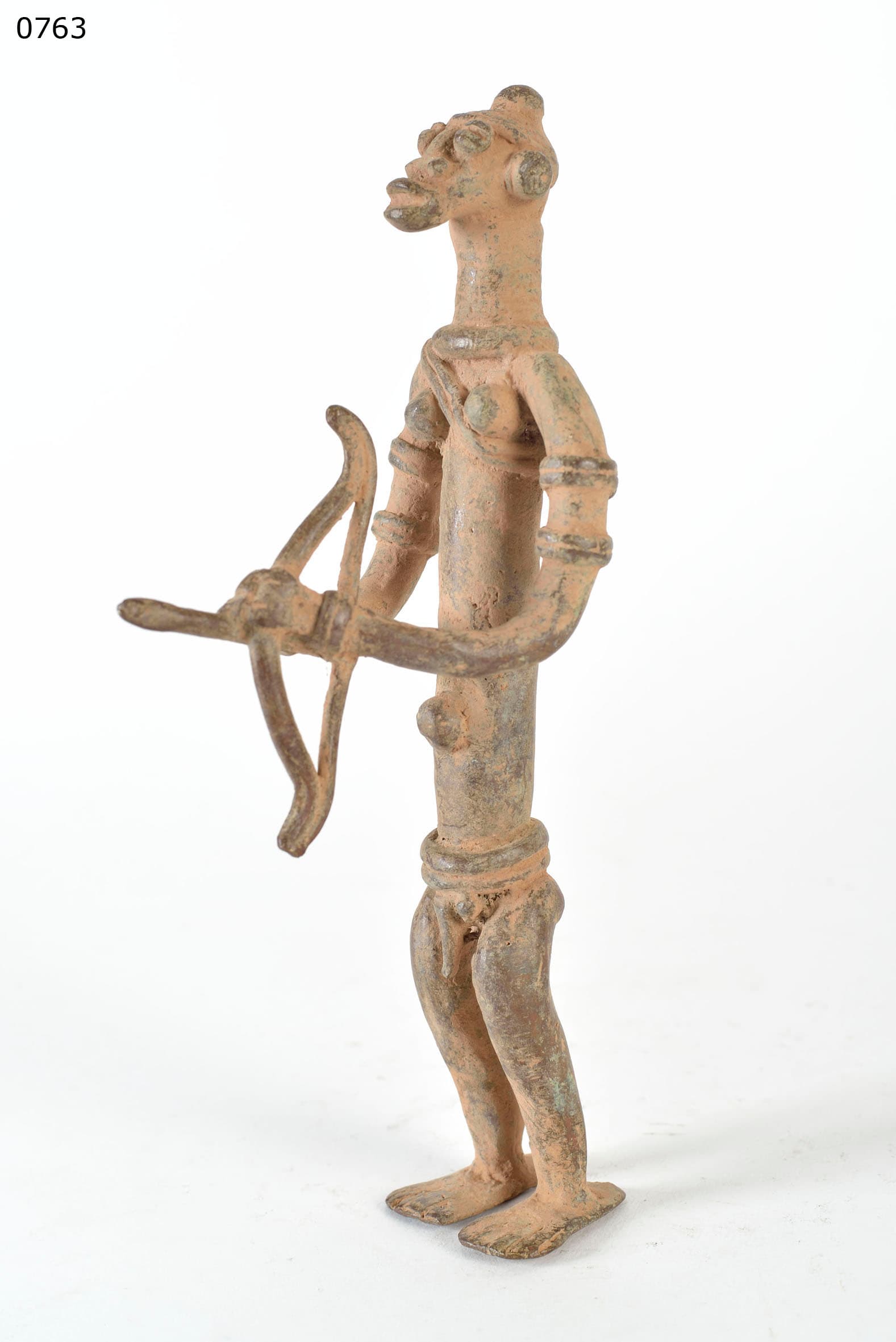
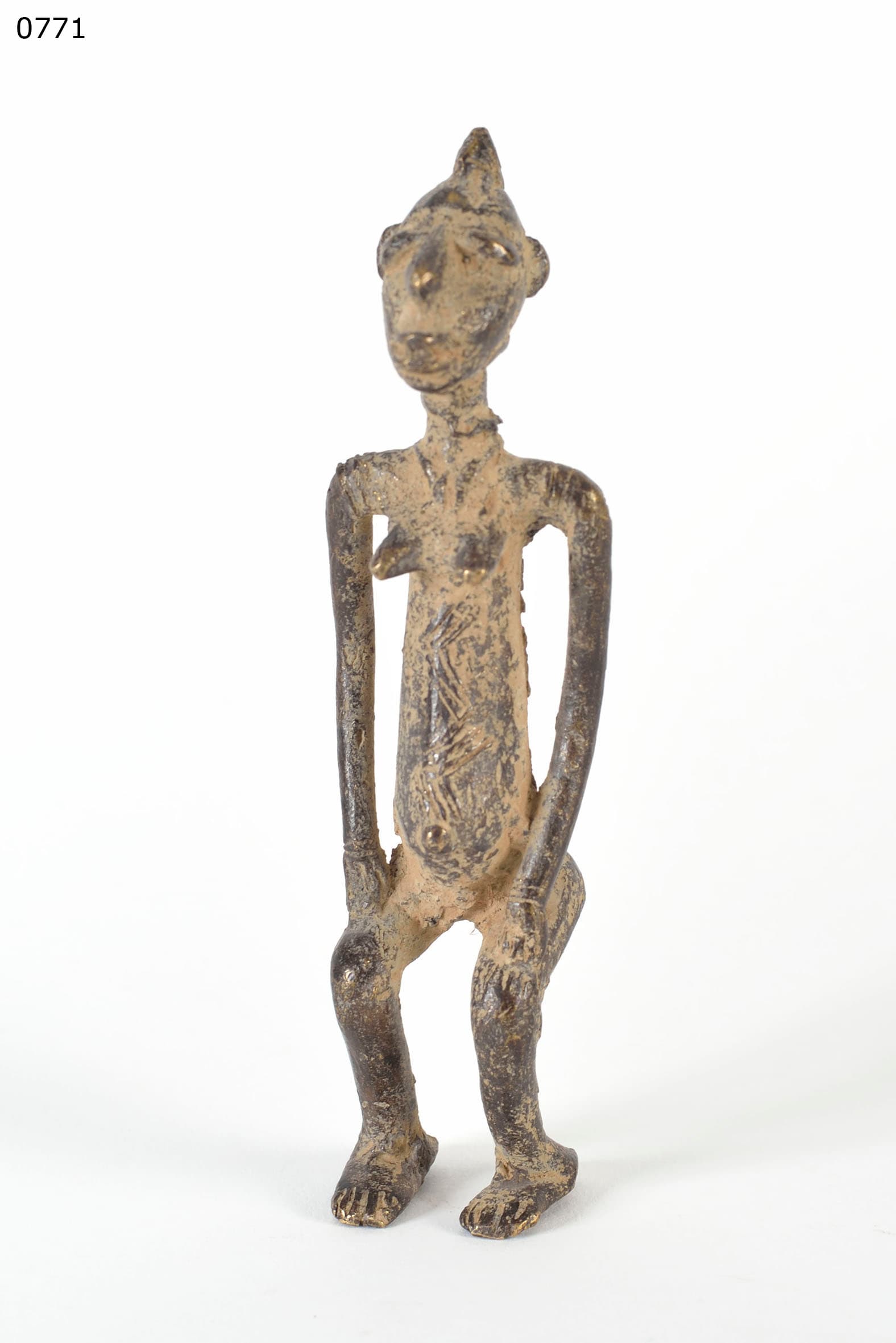
Eines von drei schweren Bronzeornamenten. Dieses Stück zeigt große, konzentrische Scheiben, die als skulpturaler Abschluss aus dem Band herausragen. Das dicke Metall ist stark oxidiert und weist eine tiefe, erdige grüne und braune Patina auf.
1. Ästhetischer Stil und regionale Eigenheiten
Das Volk der Gan in Burkina Faso hat die Technik des Wachsausschmelzverfahrens zu einer tragbaren Architektur weiterentwickelt. Die massiven, ausladenden konzentrischen Scheiben verwandeln die menschlichen Gliedmaßen in einen monumentalen Sockel, wobei das Scheibenformat kosmologische Ikonografie (das Labyrinth, die Sonne, die Wellen im Wasser) in ein tragbares Emblem verschlüsselt. Diese Ästhetik setzt auf schieres Volumen, strukturelle Spannung und räumliche Dominanz und spiegelt eine skulpturale Philosophie wider, in der Masse mit sozialer Macht gleichgesetzt wird.
2. Rituelle Funktion und defensive Magie
In der hochgradig stratifizierten Gesellschaft von Gan waren Ornamente dieses Gewichts ausschließlich den Königen und mächtigen Priesterinnen vorbehalten. Die projizierten Scheiben fungierten als gewaltige apotropäische Werkzeuge; man glaubte, dass sie bösartige Kräfte, Hexerei und den "bösen Blick" physisch und spirituell von den verletzlichen Körpern der herrschenden Klasse ablenken konnten. Die konzentrische Geometrie projiziert strahlende spirituelle Energie nach außen und bildet einen ablenkenden Umkreis um den Träger.
3. Physische Patina und Altersnachweis
Die Oberfläche ist vollständig von einer dicken, stabilen Schicht aus Cuprit und Malachit (grüne und braune Oxidationskruste) umhüllt, die den ursprünglichen Metallglanz effektiv verdeckt. Diese extreme Mineralisierung kann nicht künstlich beschleunigt werden; sie deutet darauf hin, dass das Objekt entweder in einer königlichen Grabstätte beigesetzt oder jahrhundertelang in der feuchten, heiligen Erde eines Ahnenschreins aufbewahrt wurde, was seine Datierung auf das 16. bis 19.
Zusammenfassung
Diese Gan-Bronze stellt den Höhepunkt des voltaischen Wachsausschmelzverfahrens dar und fungiert sowohl als tragbares kosmologisches Diagramm als auch als elitäre architektonische Skulptur. Ihre tiefe, krustige archäologische Patina bestätigt ihre immense Altertümlichkeit.
KI-unterstützt erstellt aus Sammlungsgutachten, Objektfotografie und eigener Recherche, redaktionell geprüft. Fehler sind möglich — Hinweise darauf sind uns willkommen. Zum Verfahren →