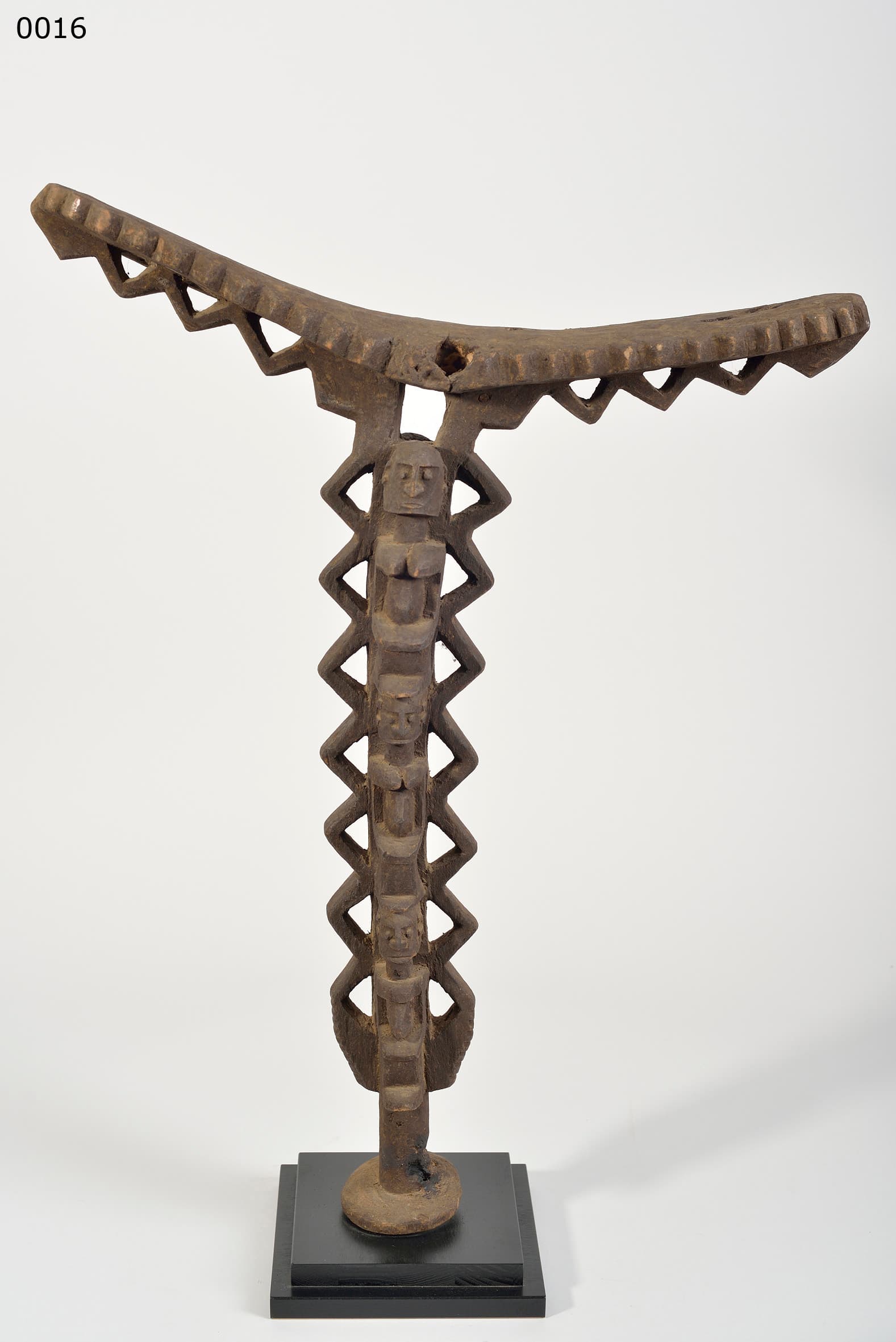
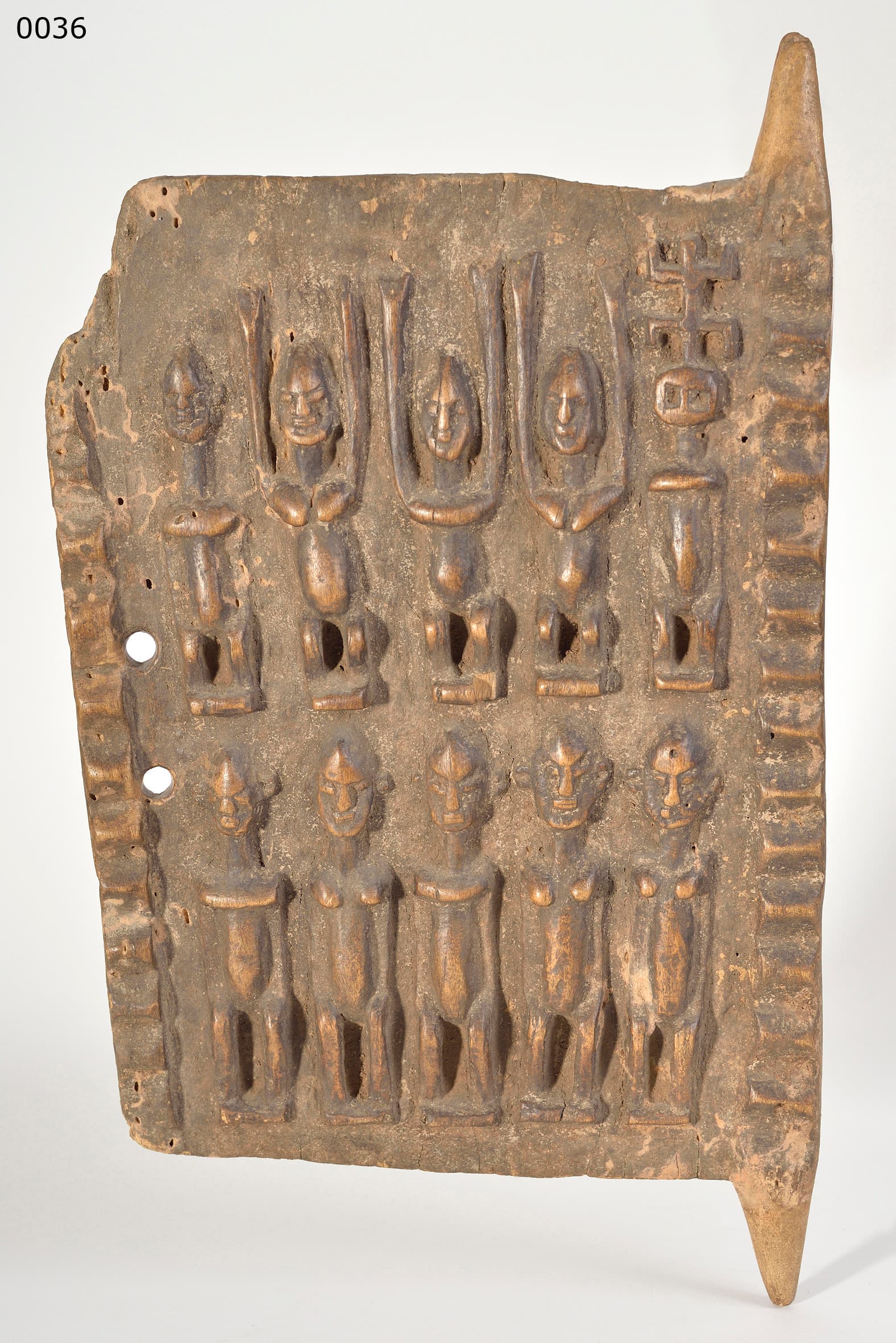
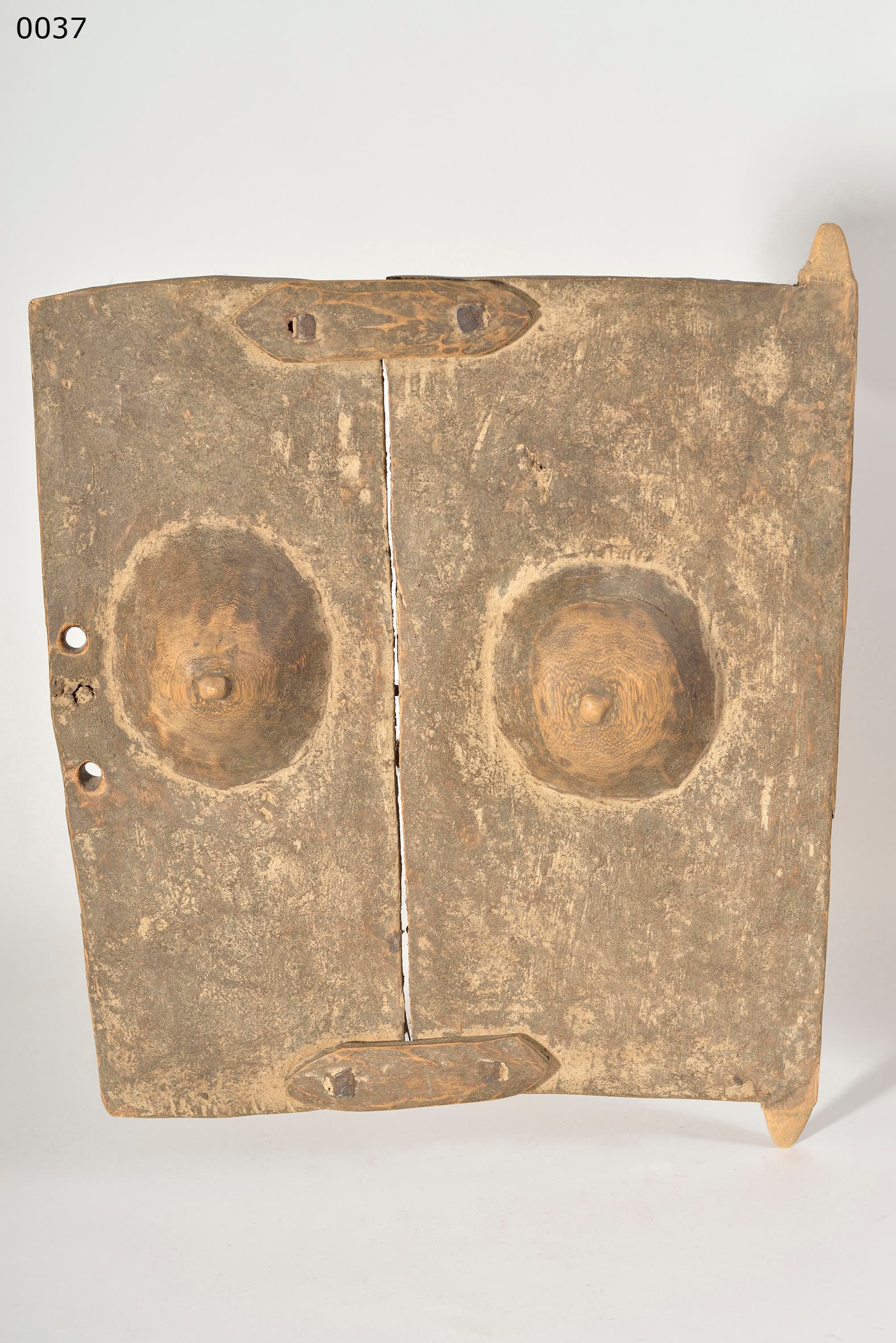
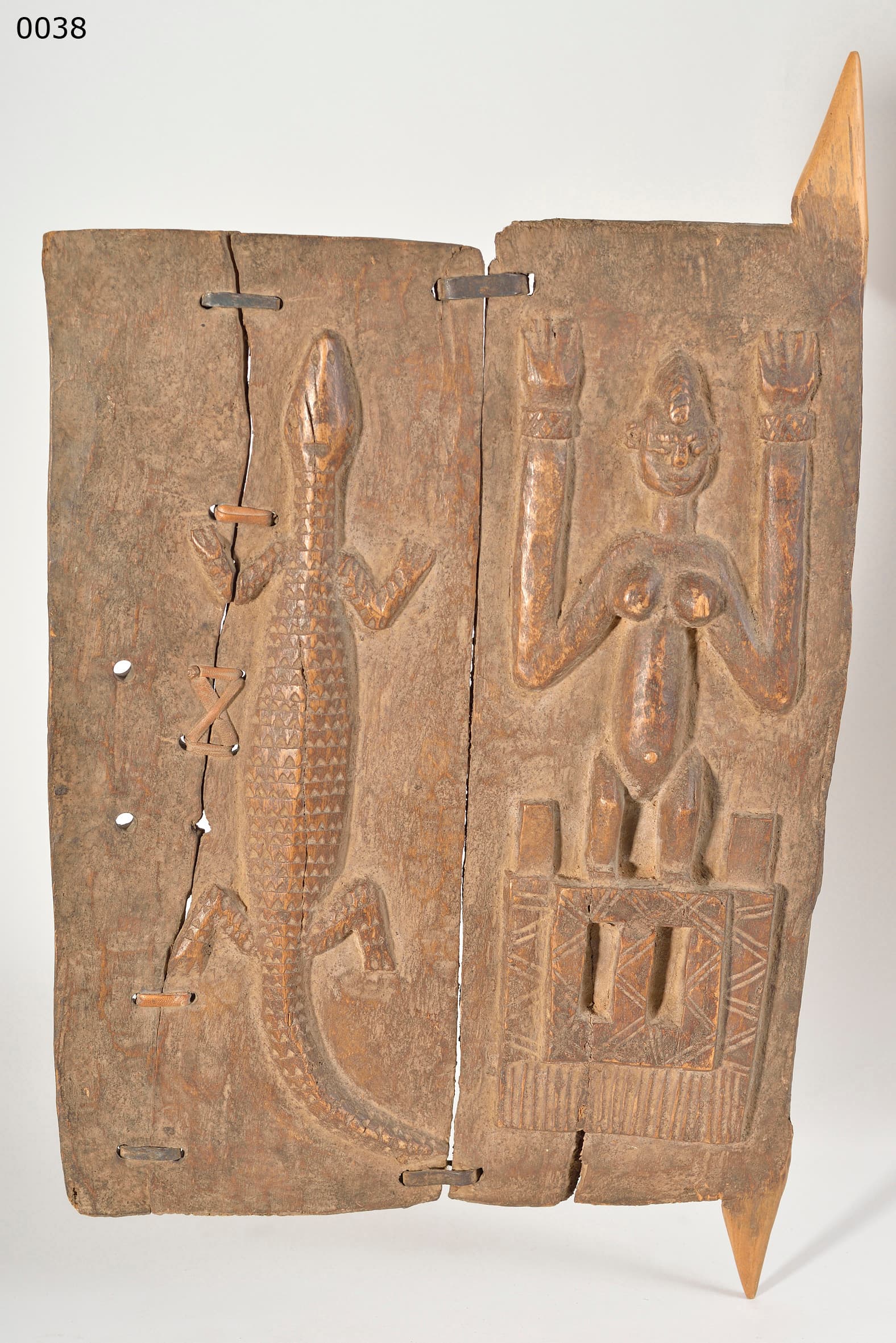
Dieser hohe Eisenstab zeichnet sich durch einen bemerkenswerten, wellenförmigen U-förmigen Querbalken aus, der geschwungene Arme bildet, die in deutlichen, mehrfingrigen Händen enden, die von einem kleinen, abstrakten Kopf auf der Mittelachse gekrönt werden. Das Metall ist vollständig von einem dicken, brüchigen, orange-braunen Erdrost umhüllt.
1. Ästhetischer Stil und regionale Eigenheiten
Dieser hohe Stab zeigt eine bemerkenswerte Verschmelzung menschlicher Anatomie mit abstrakten, kinetischen Wellenformen. Der zentrale vertikale Schaft dient als Rückgrat, aber die "Arme" brechen völlig mit naturalistischen Proportionen. Sie sind in tiefe, gewellte Wellen geschmiedet und ahmen die Bewegung einer Schlange oder den zackigen Blitzschlag nach. Die Skulptur, die in ausgeprägten, abgeflachten Händen endet, überbrückt die Kluft zwischen anthropomorpher Darstellung und geometrischer Energie und verwandelt die menschliche Silhouette in eine vibrierende kosmische Antenne.
2. Rituelle Funktion und landwirtschaftliches Bittgebet
Im Kontext des Bandiagara Escarpment fungiert dieser Stab als hochspezialisiertes Gobo - ein Gerät, das spirituelle Kräfte "einfangen" soll. Die massiven, wogenden Arme und die erhobenen Hände fungieren als verzweifeltes, permanentes körperliches Gebet an den Himmel. Tief in einen Binu-Familienschrein oder direkt in die ausgedörrten landwirtschaftlichen Felder gepflanzt, wurde er von den Hogon geweiht, um aggressiv die regenbringenden Wolken herabzuziehen und das Überleben der Hirseernte und den Fortbestand des Dorfes zu sichern.
3. Physische Patina und Altersnachweis
Die ausgeprägte Rostschicht auf diesem 64 cm langen Stab spricht für ein hohes Alter. Das Eisen weist eine tief strukturierte, körnige Kruste auf, wie sie sich durch die Einwirkung feuchter Erde und zyklischer saisonaler Regenfälle über Generationen hinweg bilden kann. Da er aus der Sammlung von René Salanon stammt, einem frühen Kenner der Dogon-Metallurgie, hat das Stück seine ursprüngliche, ungereinigte Schrein-Patina behalten, was seine ethnografische Integrität als ritueller Anker aus dem 19. Jahrhundert nahelegt.
Zusammenfassung
Dieser Eisenstab verbindet die menschliche Anatomie mit der kinetischen Geometrie von Blitzen und Schlangen und fungiert als Antenne für landwirtschaftliche Bittgebete. Sein ausgeprägter Erdrost und die Salanon-Herkunft stützen seine Einordnung als bedeutendes Werk der Dogon-Schreinarchitektur.
Dokumentation: publiziert in "DOGON".
KI-unterstützt erstellt aus Sammlungsgutachten, Objektfotografie und eigener Recherche, redaktionell geprüft. Fehler sind möglich — Hinweise darauf sind uns willkommen. Zum Verfahren →