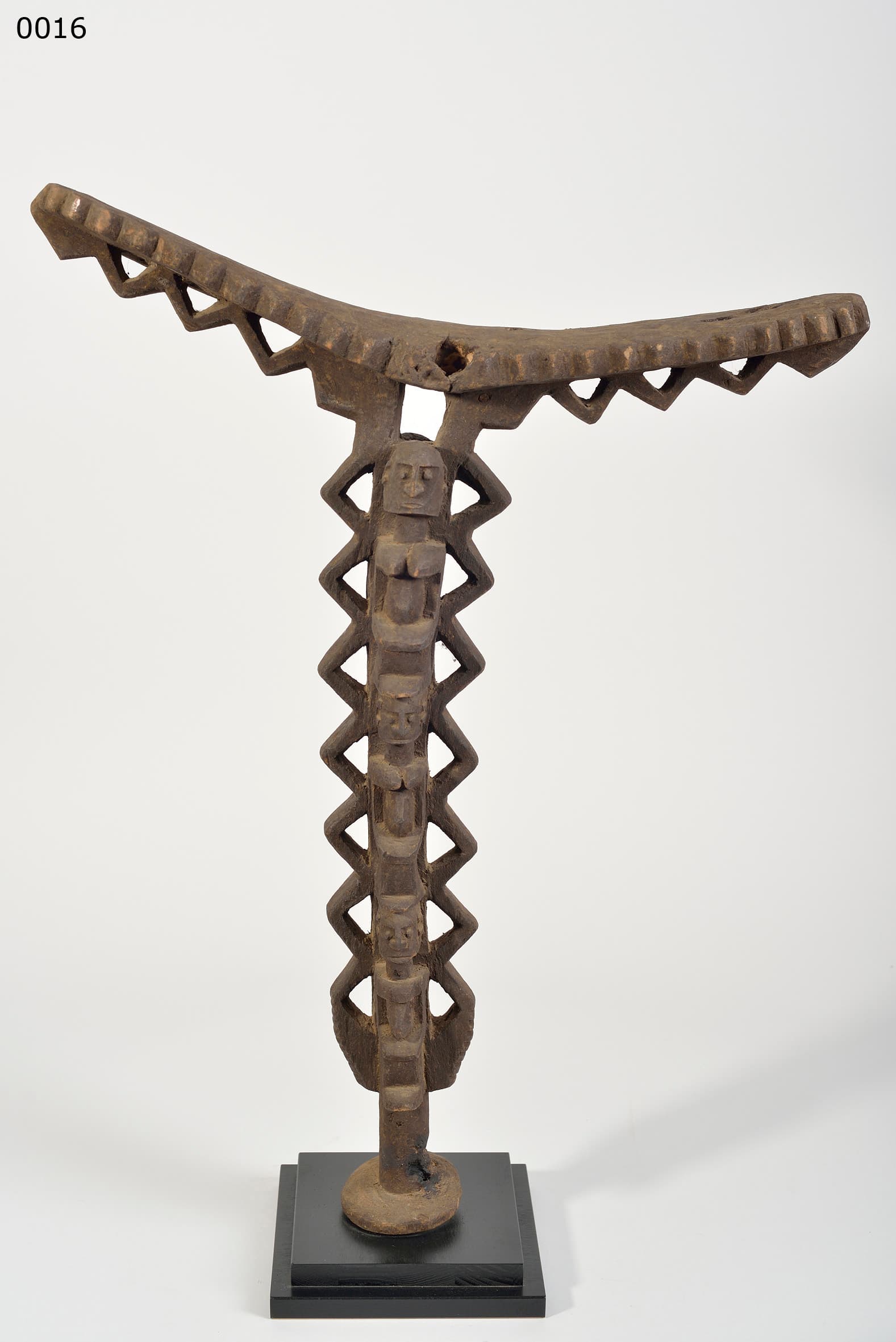
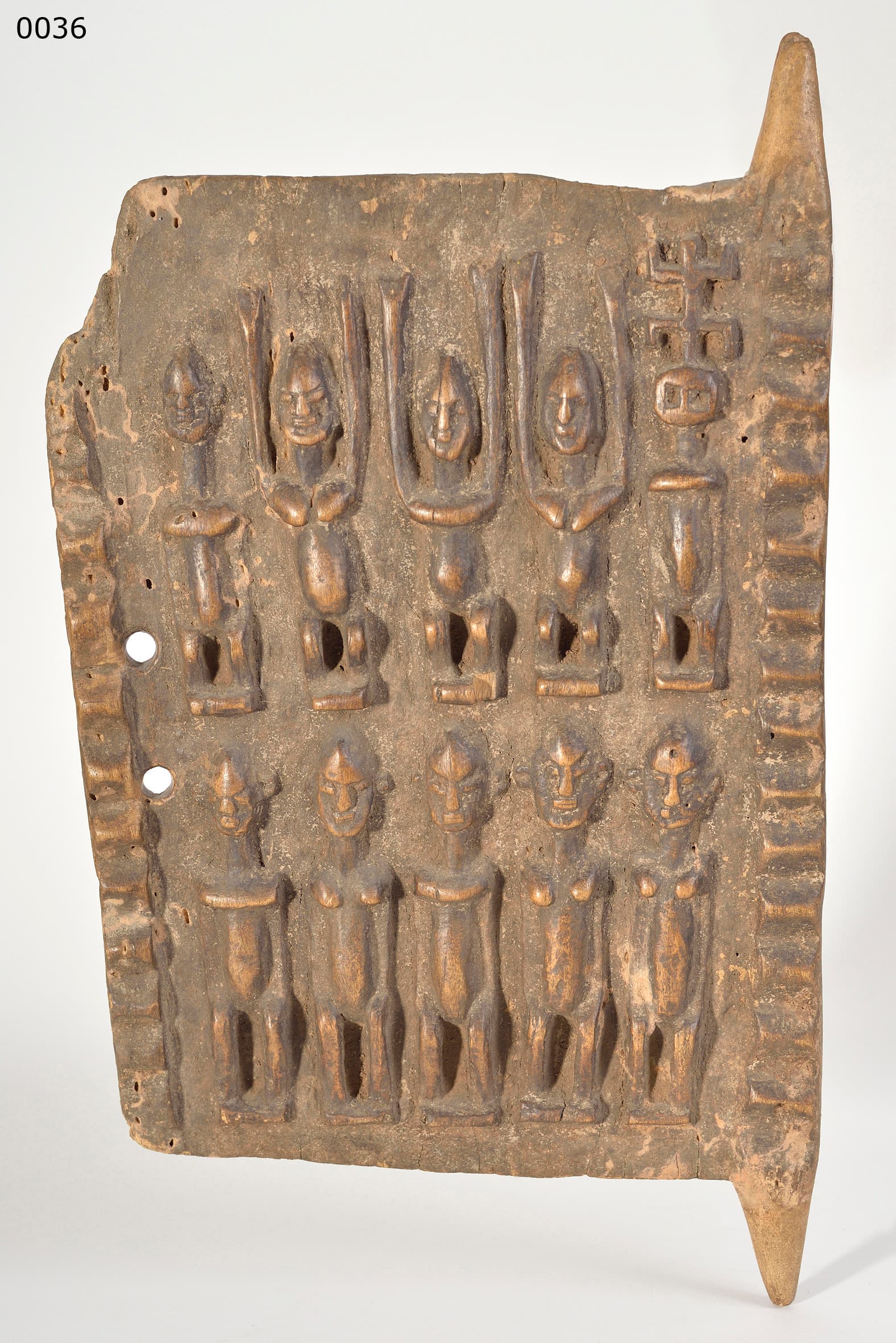
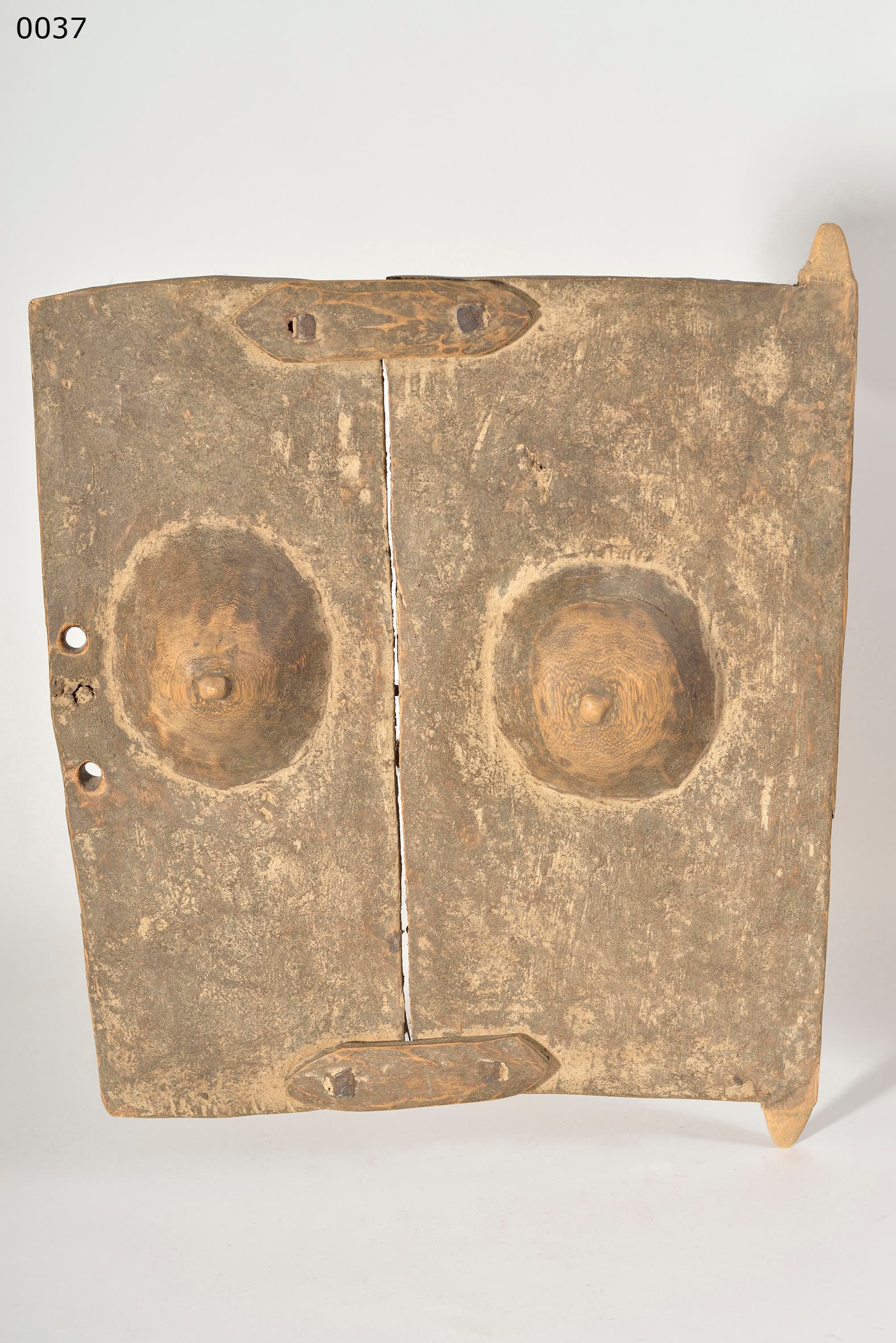
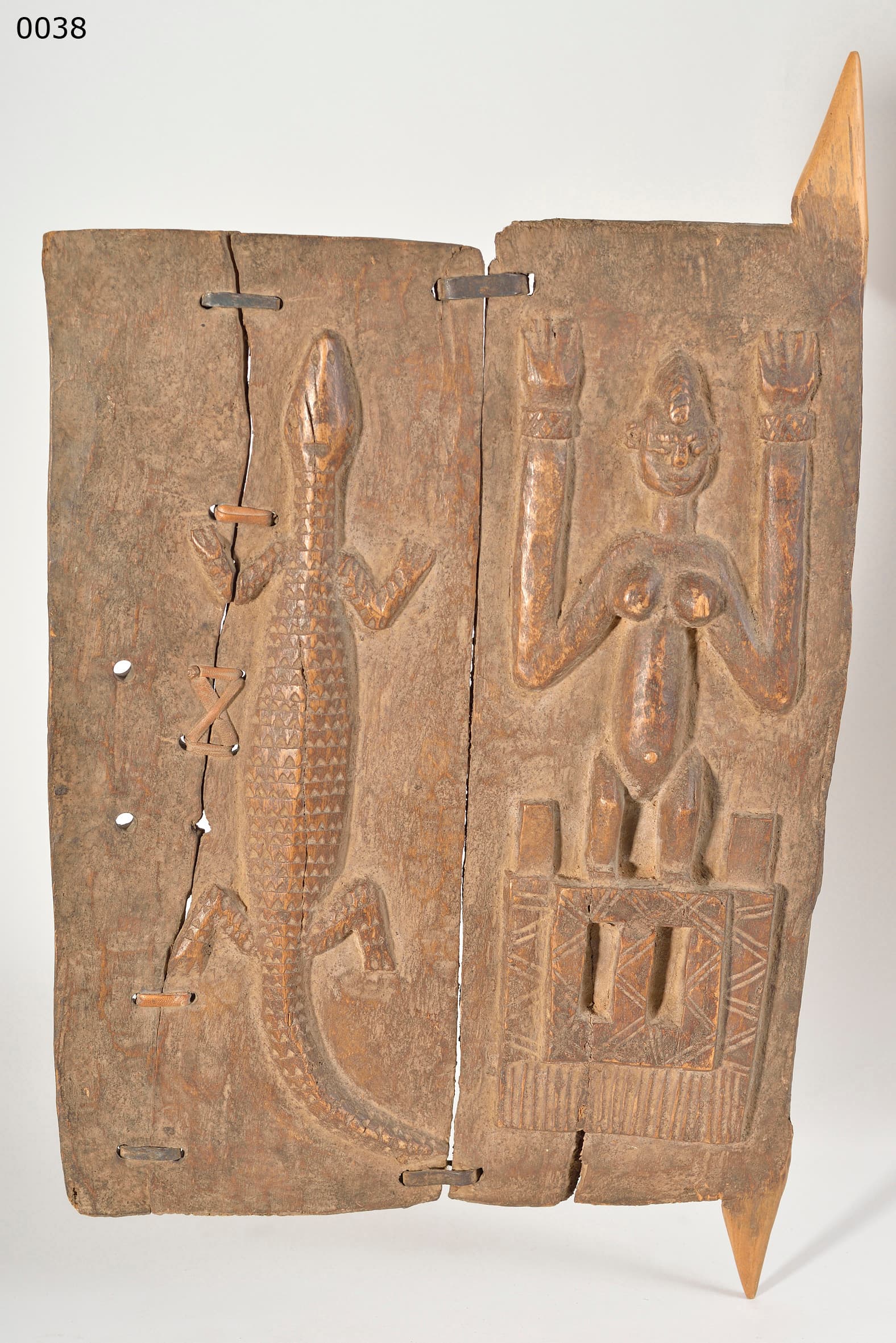
Diese geschmiedete Eisenskulptur hat eine gerade vertikale Basis, die in eine enge, wellenförmige S-Kurve übergeht, bevor sie in einem flachen, geschwungenen horizontalen Querbalken endet, der an eine abstrahierte Tierschnauze erinnert. Das dunkle Eisen ist mit einer gleichmäßigen, brüchigen Schicht aus orange-braunem Rost überzogen.
1. Ästhetischer Stil und regionale Eigenheiten
Dieses Objekt gehört zu der spezifischen Funktionsklasse der Dogon-Eisenwaren, die als Gobo - Krücke oder Haken - bekannt ist. Der Schmied hat das funktionale Konzept einer Schlinge aufgegriffen und mit zoomorpher Energie versehen. Die enge S-Kurve in der Mitte des Schafts deutet die gewundene, kinetische Spannung einer Schlange an, während der geschwungene T-förmige Querbalken an der Spitze die abgeflachte Schnauze eines Tieres suggeriert. Diese absichtliche Zweideutigkeit verwandelt das Eisen von einem bloßen Werkzeug in eine dynamische, lebendige Wellenform, die sich einer strengen geometrischen Abstraktion bedient, um biologische und geistige Kraft darzustellen.
2. Rituelle Funktion und landwirtschaftliches Fangen
In der rauen landwirtschaftlichen Realität des Bandiagara Escarpment erfüllt der Gobo eine verzweifelte, lebenswichtige Funktion. In den Boden eines Binu-Schreins oder eines Hirsefeldes gepflanzt, wird die breite, horizontale obere Stange vom Hogon (Priester) magisch aktiviert und dient als spirituelles Netz. Es soll buchstäblich die regenbringenden Wolken vom Himmel holen und Feuchtigkeit in die Erde ziehen oder umgekehrt umherwandernde bösartige Geister einfangen, bevor sie die Ernte schädigen können.
3. Physische Patina und Altersnachweis
Die Oberfläche dieses Gobos ist ein klassisches Beispiel für den irdischen Verfall im 19. Jahrhundert. Der orange-braune Rost ist stark strukturiert und brüchig, was darauf hindeutet, dass er jahrzehntelang saisonalen Regenfällen und dicken, organischen Getränken ausgesetzt war, die von Anhängern über ihn gegossen wurden. Die Aufnahme dieses Stücks in den renommierten "DOGON"-Katalog unterstreicht seine Authentizität und ethnografische Bedeutung und bestätigt, dass sein roher, ungereinigter Zustand von elitären Sammlern als unverfälschtes Zeugnis des rituellen Lebens in Mali bewahrt wurde.
Zusammenfassung
Diese Gobo-Figur, die meisterhaft die aufgerollte Energie einer Schlange mit der funktionalen Architektur einer spirituellen Schlinge verbindet, ist ein wichtiges Werkzeug der landwirtschaftlichen Magie der Dogon. Ihr dichter, irdischer Rost und ihr veröffentlichter Status festigen ihre Position als höchst bedeutendes Altarartefakt des 19.
KI-unterstützt erstellt aus Sammlungsgutachten, Objektfotografie und eigener Recherche, redaktionell geprüft. Fehler sind möglich — Hinweise darauf sind uns willkommen. Zum Verfahren →