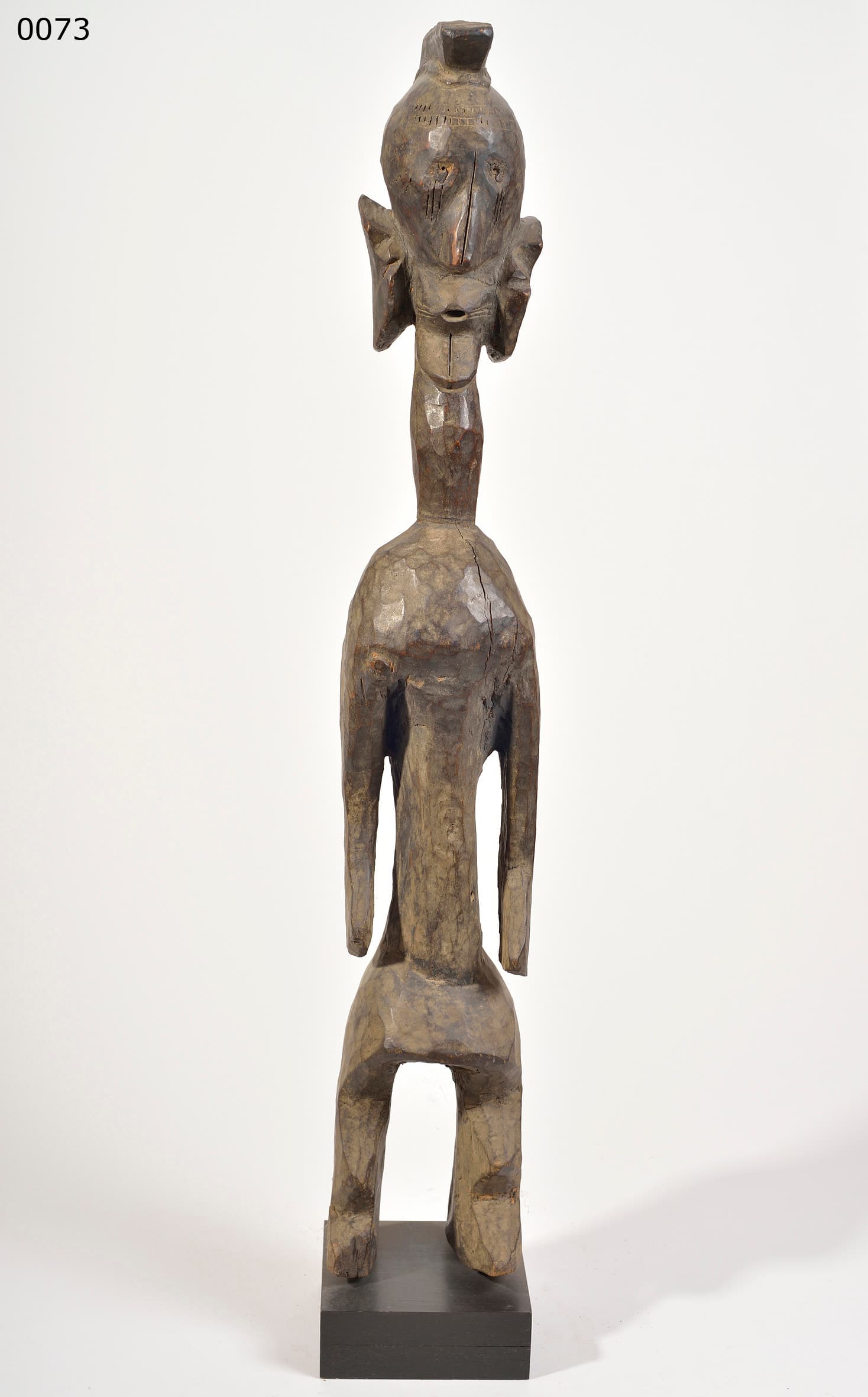
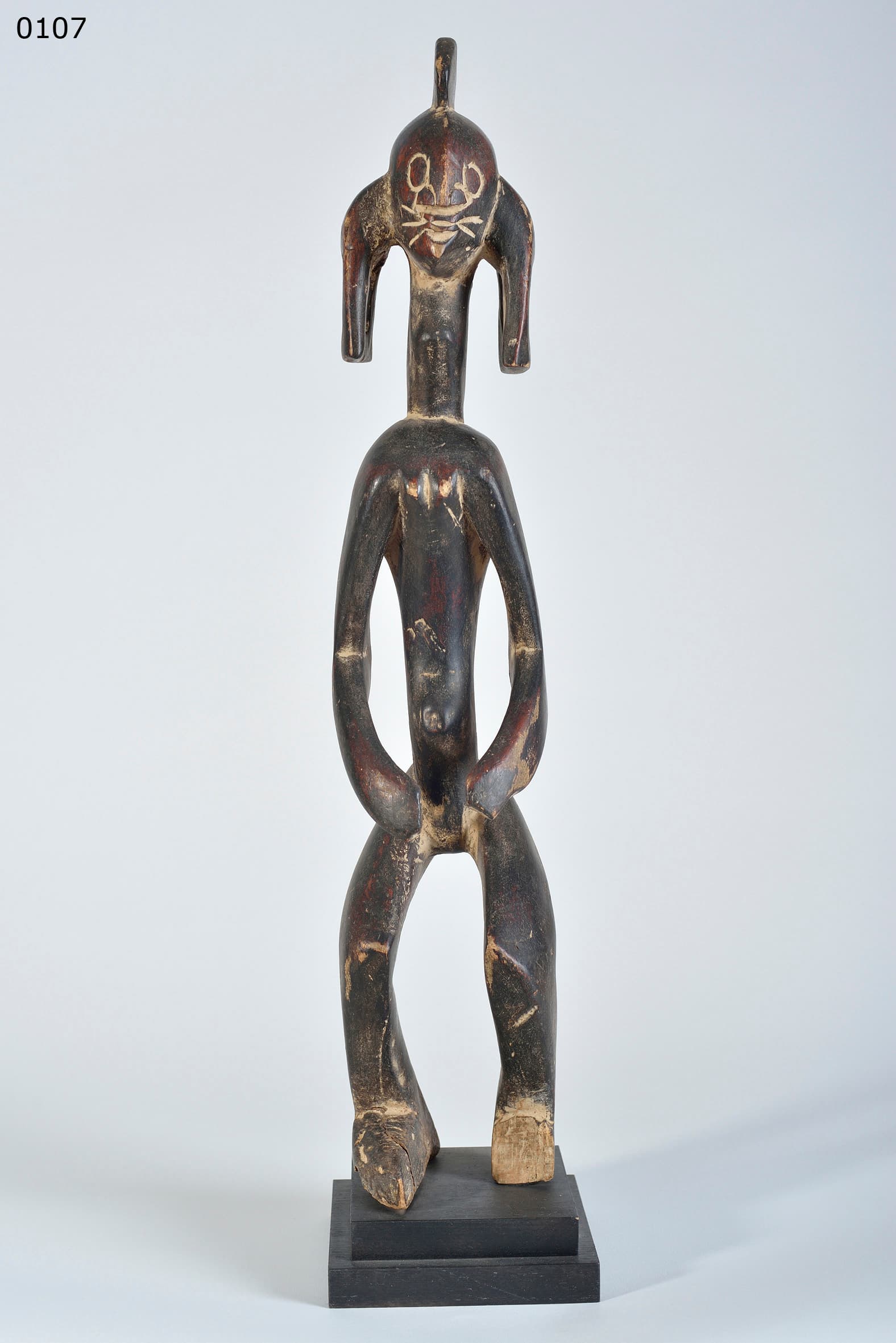
Ein auffälliges Mumuye-Paar geschmiedeter Ahnenfiguren aus Eisen (Mitte 20. Jh., 40 / 42 cm) aus Nigeria - stark abstrahierte, bandartige Körper, abgeflachte Köpfe und geschwungene, bogenförmige Gliedmaßen, die in ausgestellten Sockeln enden. Das Metall ist vollständig von einer dicken, abblätternden, körnigen Schicht aus orange-braunem Eisenoxid umhüllt.
1. Die Abstraktion von Holz in Eisen übertragen
Die Mumuye aus dem Nordosten Nigerias sind weltweit für ihre Holzstatuen bekannt, die sich durch einen dynamischen Negativraum und geschwungene, langgestreckte Formen auszeichnen.
- Gehämmerte Bandgeometrie: Dieses seltene Paar überträgt die ikonische Ästhetik der Holzschnitzerei in geschmiedetes Eisen - der Schmied hat das Metall erhitzt und gehämmert, um die bandartigen Arme und vereinfachten, kammartigen Köpfe der traditionellen Mumuye-Holzschnitzereien nachzuahmen.
- Kinetische Schwerelosigkeit: Die fließende Schleifengeometrie erzeugt ein Gefühl von Schwerelosigkeit und kinetischer Energie - ein unglaubliches Kunststück minimalistischer Eisenarbeiten.
2. Schmiede-Schamanismus und Erdanker
Im Gegensatz zu ihren hölzernen Gegenstücken, die in speziellen Stammesschreinen aufbewahrt werden, sind die eisernen Mumuye-Figuren eng mit der Schmiedekaste verbunden, die als mächtige Schamanen gefürchtet und respektiert werden.
- Eigene Eisenkraft: Eisenobjekte besitzen in der Kosmologie der Mumuye eine angeborene Schutzkraft.
- Regenmacher-Anker: Diese schweren Figuren mit ausgestelltem Sockel wurden wahrscheinlich als Erdanker verwendet - sie wurden während Regenmacher-Zeremonien, Heilungsritualen oder an den Grenzen eines Geländes in den Boden gepflanzt, um die schützende Energie der Ahnen in den Boden zu bringen.
3. Elementare Zersetzung und Oxidation
Die Figuren stammen aus der Mitte des 20. Jahrhunderts und weisen eine fortgeschrittene aggressive Eisenoxidation auf.
- Feuchtigkeit im Benue-Tal: Im feuchten saisonalen Klima des Benue-Tals zersetzt sich ungeschütztes Eisen schnell - der dicke körnige, leicht abblätternde Rost deutet darauf hin, dass die Figuren entweder vergraben oder jahrzehntelang den Elementen ausgesetzt waren.
- Purely Elemental Patina: Das völlige Fehlen von kommerziellen Lacken oder modernen Konservierungstechniken sorgt dafür, dies ist eine rein authentische Umwelt erzeugt Patina.
Zusammenfassung
Als seltene und meisterhafte Kreuzung von abstrakter Mumuye-Geometrie und Schmiedetechnik ist dieses Eisenpaar visuell beeindruckend. Ihr dynamischer negativer Raum und die reine elementare Rostpatina machen sie zu begehrten ethnografischen Raritäten.
KI-unterstützt erstellt aus Sammlungsgutachten, Objektfotografie und eigener Recherche, redaktionell geprüft. Fehler sind möglich — Hinweise darauf sind uns willkommen. Zum Verfahren →