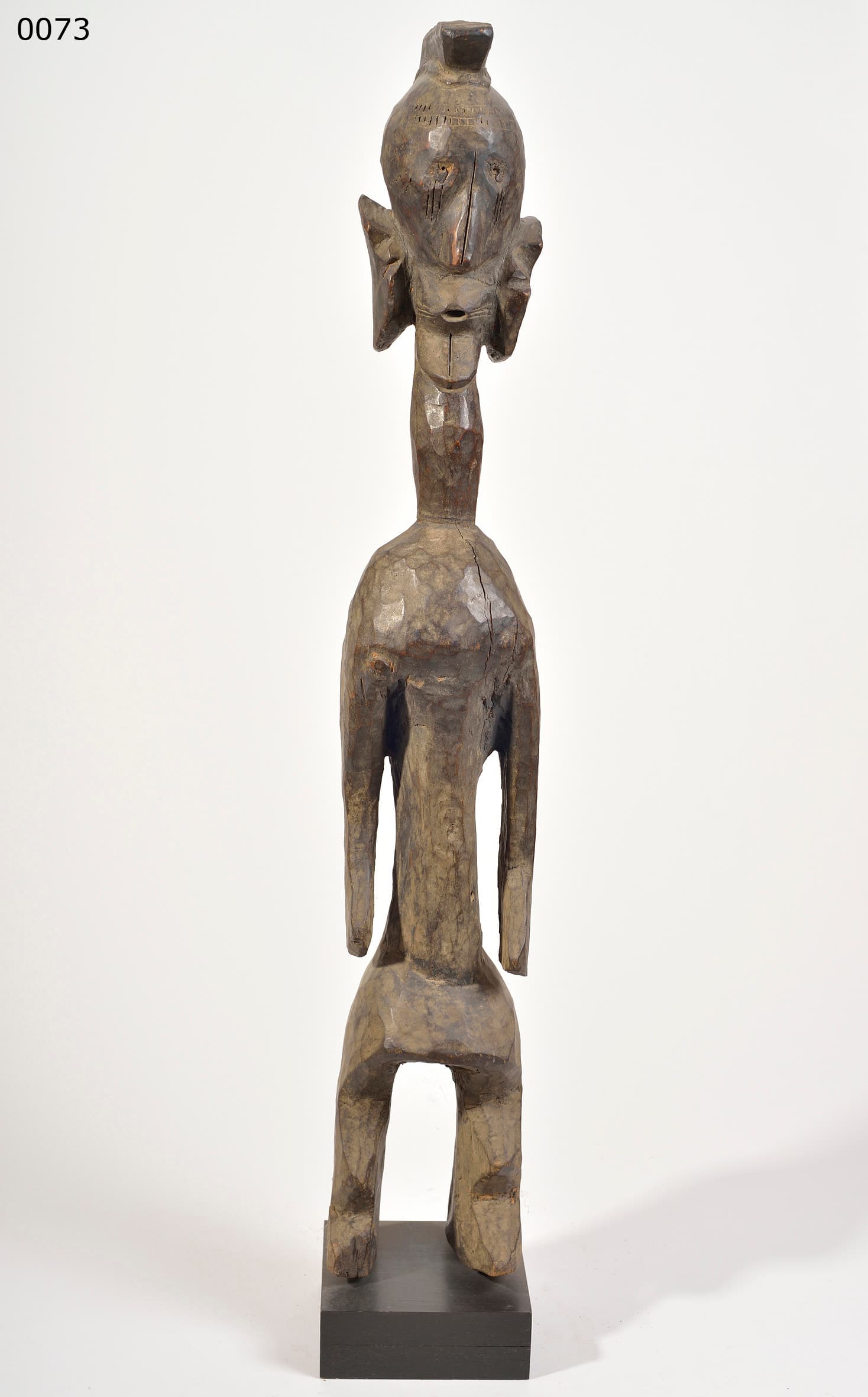
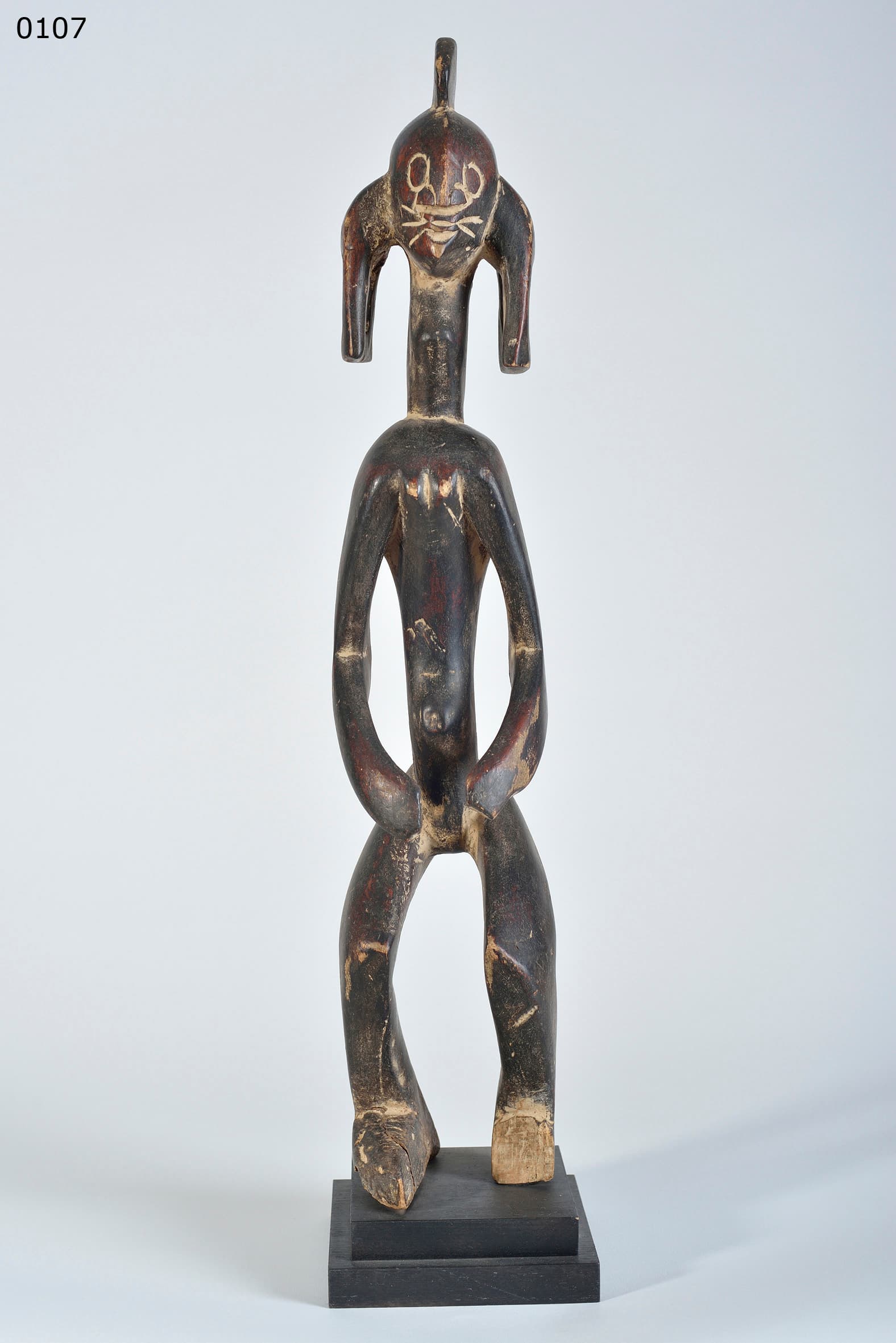
Die größere Ahnenfigur von Mumuye (wohl 1. Hälfte 20. Jh., 114 cm) aus Nigeria - radikal geschwungene Abstraktion mit einem langgestreckten, säulenartigen Torso, flankiert von massiven, bandartigen Armen, die sich um den negativen Raum winden, gekrönt von der klassischen, schlaffen Seitenflanschfrisur, stark oxidiert und trocken erodiert. Gepaart mit 0418.
1. Beispiele der Negativraum- und Bandgeometrie
Die Bildhauerei der Mumuye aus dem Benue-Tal ist für ihre dynamischen, die Schwerkraft scheinbar herausfordernden Skulpturen bekannt.
- Architektonischer Käfig aus Holz: Lange bandartige Arme schwingen, winden und krümmen sich vom Rumpf weg - sie bilden einen architektonischen Käfig aus Holz um einen Kern aus leerem Raum.
- Floppy Lateral Flanges: Die klassische Mumuye Seitenflansch Frisur gibt dem Kopf seine charakteristische asymmetrische visuelle Dynamik - ihr wird ein Einfluss auf europäische expressionistische Bildhauer zugeschrieben.
2. Die Vabong-Gesellschaft und der Regenmacher-Zauber
Diese Figuren gelten traditionell als aktive spirituelle Werkzeuge der Vabong-Gemeinschaft.
- Bewachte esoterische Heiligtümer: Sie wurden in Heiligtümern aufbewahrt, die von mächtigen Wahrsagern und Schmieden geleitet wurden.
- Trance-Dialog: In Zeiten extremer Krisen, Krankheit oder Dürre führte der Wahrsager einen körperlichen, tranceartigen Dialog mit der Statue - er bewegte und manipulierte ihre bandartigen Arme, um die Zukunft zu erahnen und den Regen herbeizurufen.
3. Monumentale Austrocknung und irdene Fäulnis
Der physische Zustand der Statue legt eine Entstehung im frühen 20. Jahrhundert nahe.
- Sonnengebleichte, rohe Oberfläche: Nicht mit schützenden Ölen eingerieben - trockene, pulverige, tief zerklüftete, sonnengebleichte Oberfläche durch extreme Austrocknung.
- Earth-Planted Base Rot: Die Basis zeigt schwere ungleichmäßige Fäulnis und Insektenbefall - dies weist darauf hin, dass diese schwere 114 cm Statue über längere Zeit direkt im Lehmboden eines Heiligtums gestanden haben könnte.
Zusammenfassung
Mit 114 cm ist diese Figur die größere des Mumuye-Paares und ergänzt die Band-und-Flansch-Geometrie ihres hölzernen und eisernen Gefährten 0418. Zusammen bilden sie ein eindrucksvolles Beispiel nigerianischer abstrakter Holzschnitzerei - die bandartige Geometrie fängt den negativen Raum ein, während die tiefe, erdverrottete Patina mit einer langjährigen rituellen Nutzung im Kontext der Vabong-Gemeinschaft vereinbar ist.
KI-unterstützt erstellt aus Sammlungsgutachten, Objektfotografie und eigener Recherche, redaktionell geprüft. Fehler sind möglich — Hinweise darauf sind uns willkommen. Zum Verfahren →