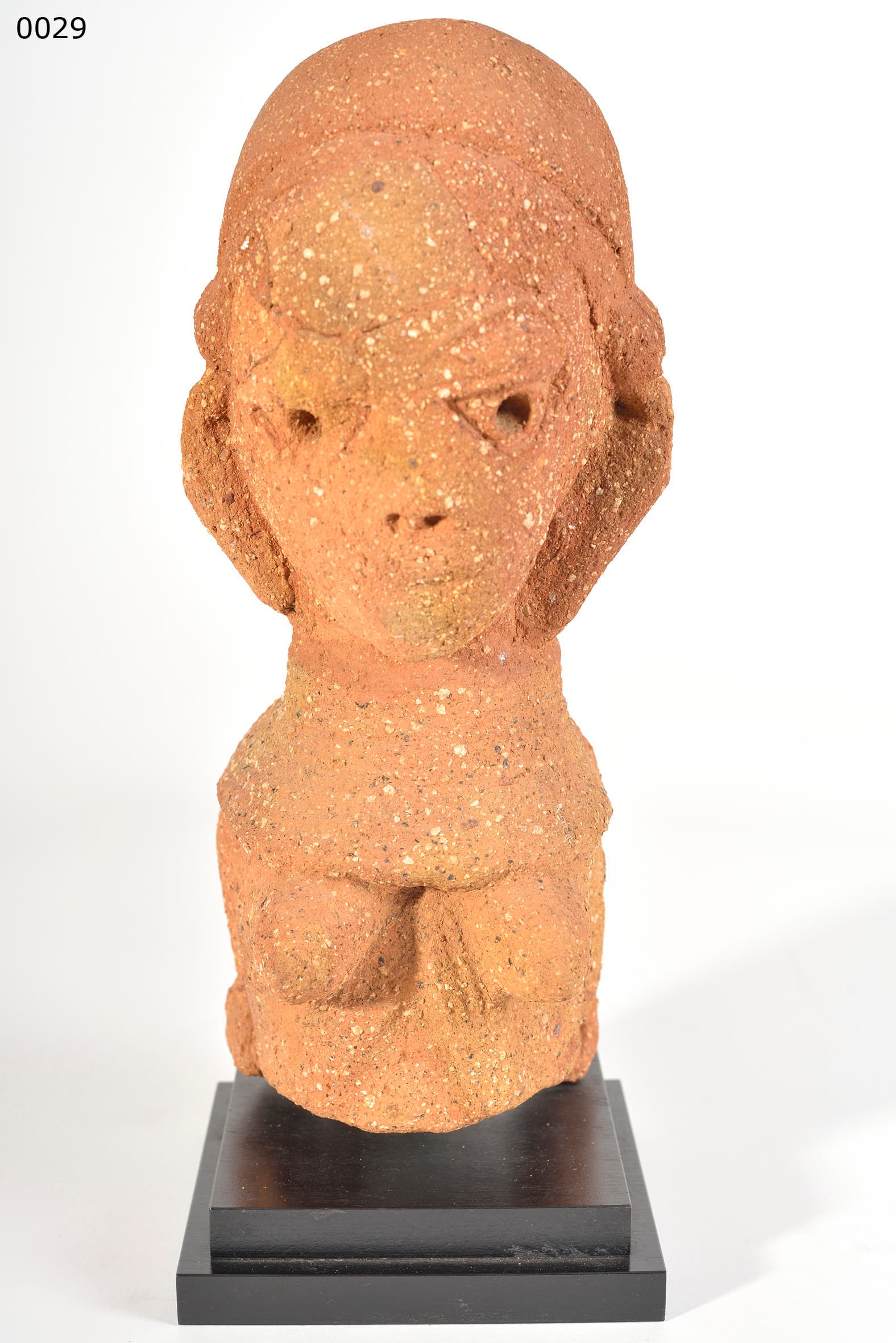
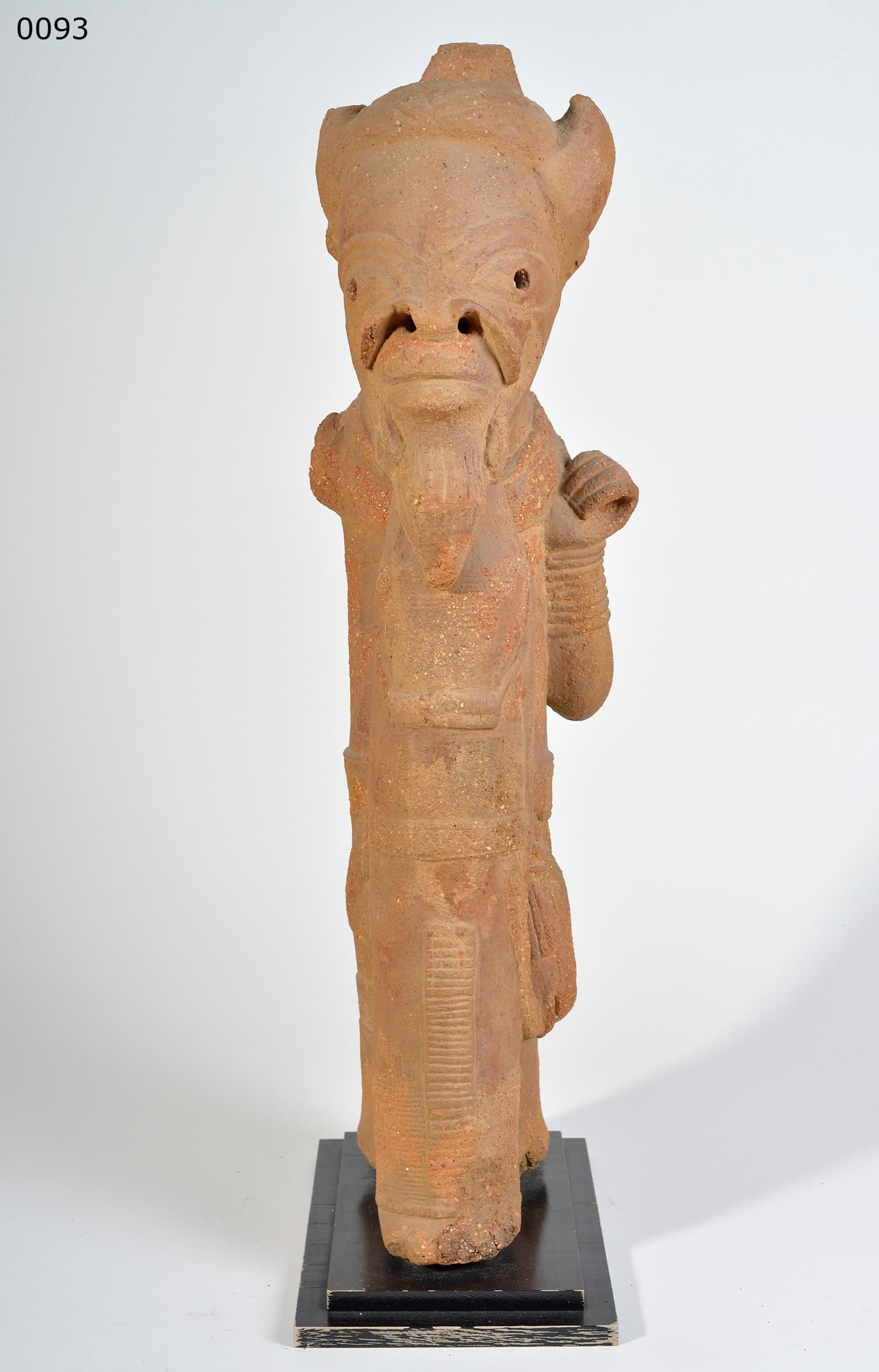
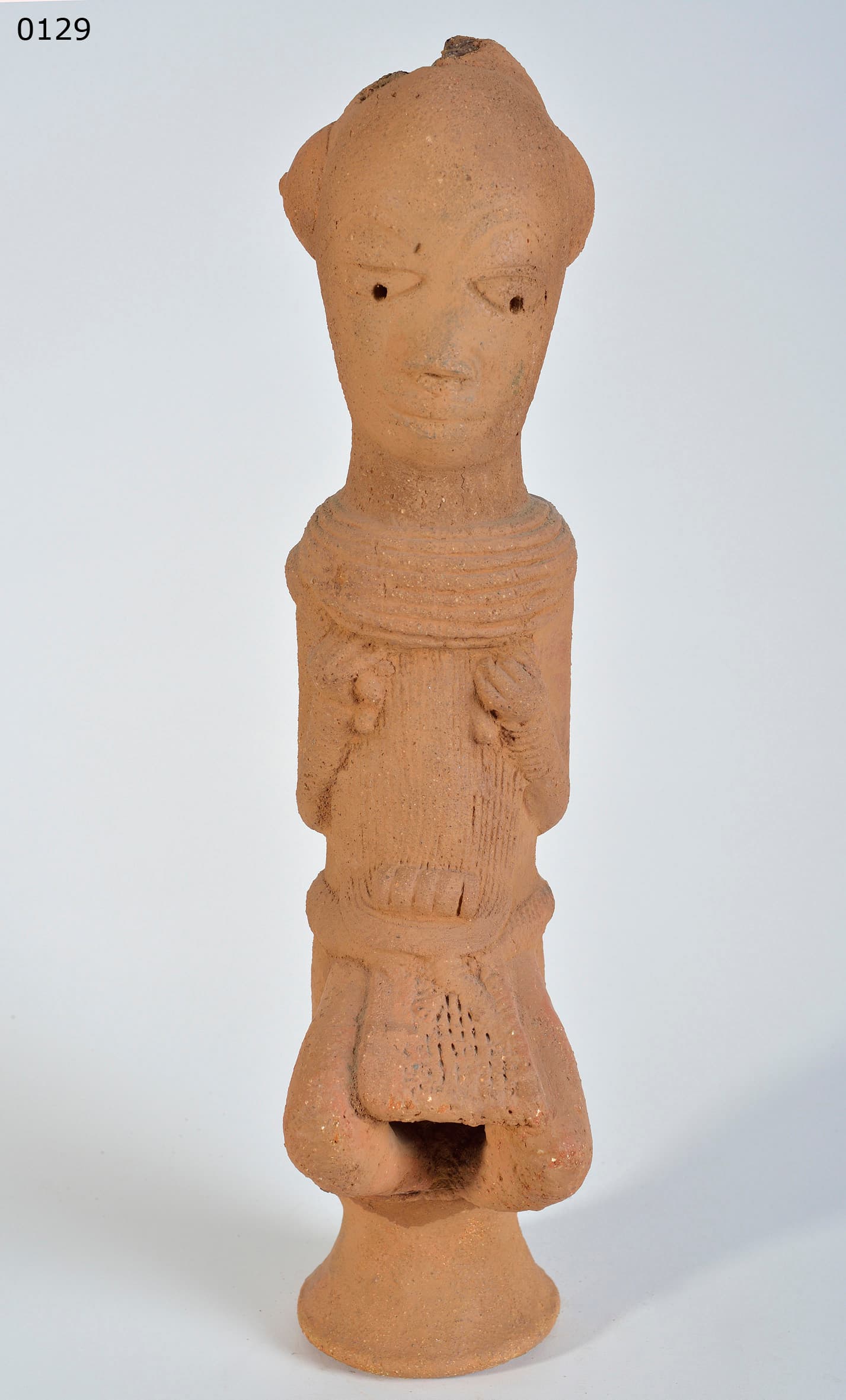
Diese massive, stark fragmentierte Terrakottafigur stellt eine stehende Person mit einem dicken, beringten Hals dar, die eine kleinere, stark abstrahierte Figur (ein Kind oder ein Diener) auf ihrem Rücken hält. Der rote Ton ist stark mit Quarzsand angelassen und vollständig von einer harten, kalkhaltigen Schicht aus alten Erd- und Mineralablagerungen umschlossen.
1. Ästhetischer Stil und regionale Eigenheiten
Dieses monumentale Werk ist ein eindrucksvolles Beispiel für die künstlerischen Ambitionen der Nok-Zivilisation und repräsentiert die älteste figurative Keramiktradition in Subsahara-Afrika. Allein die Größe ist eine gewaltige technische Leistung für niedrig gebrannte Terrakotta. Die stilistischen Merkmale sind trotz der starken Erosion vorhanden: der komplexe Körperschmuck (angedeutet durch den stark beringten Hals und die strukturierten Bänder) und die raffinierte Interaktion zwischen der Hauptfigur und der kleineren Figur auf ihrem Rücken, die eine komplexe Erzählung oder gesellschaftliche Hierarchie andeutet, die es in dieser Epoche noch nicht gegeben hat.
2. Rituelle Funktion und religiöse Bedeutung
Statuen dieser beispiellosen Größe waren keine gewöhnlichen Grabbeigaben; sie waren zentrale Tempel- oder Heiligtumsidole. Das Vorhandensein der kleineren Figur, die sich an den Rücken klammert - oft als Kind, Gefangener oder niedere Gottheit interpretiert - lässt vermuten, dass die Hauptfigur einen übergeordneten Häuptling, einen vergöttlichten Gründervater oder einen Gott der Fruchtbarkeit und des Schutzes darstellt. Dieses hoch aufragende Bildnis, das in einem Gemeinschaftsschrein aufgestellt wurde, war der Mittelpunkt für große landwirtschaftliche Feste, Opfer und die Vermittlung der kosmischen Kräfte für die gesamte Siedlung.
3. Physische Patina und Altersnachweis
Das Alter dieses Denkmals von rund 2.000 Jahren wird durch seine physische Degradation nahegelegt. Die Terrakotta hat unter extremer Verglasung und Erosion gelitten, so dass nur der dicke, quarzlastige Kern des Tons übrig geblieben ist. Die gesamte Oberfläche ist chemisch mit dicken, unbeweglichen Schichten aus verkalktem Lateritboden, Wurzelspuren und Salzausblühungen verklebt. Die Bruchstellen an den Gliedmaßen und der Spitze des Kopfes sind uralt und durch jahrhundertelange tiefe Vergrabung und unterirdischen Druck geglättet.
Zusammenfassung
Diese kolossale Nok-Tempelstatue ist ein bedeutendes archäologisches Zeugnis, das einen tiefen Einblick in die hierarchische und spirituelle Komplexität der frühesten eisenzeitlichen Zivilisation Afrikas gewährt. Ihr schieres Ausmaß, die komplexe mehrfigurige Komposition und die tiefgreifende, auf rund 2.000 Jahre geschätzte Verkrustung machen sie zu einem bedeutenden Artefakt der globalen Menschheitsgeschichte.
Dokumentation: Alterstest vorhanden.
KI-unterstützt erstellt aus Sammlungsgutachten, Objektfotografie und eigener Recherche, redaktionell geprüft. Fehler sind möglich — Hinweise darauf sind uns willkommen. Zum Verfahren →